
Facial Recognition Camera Security: Smart Face Recognition in 200 Stores
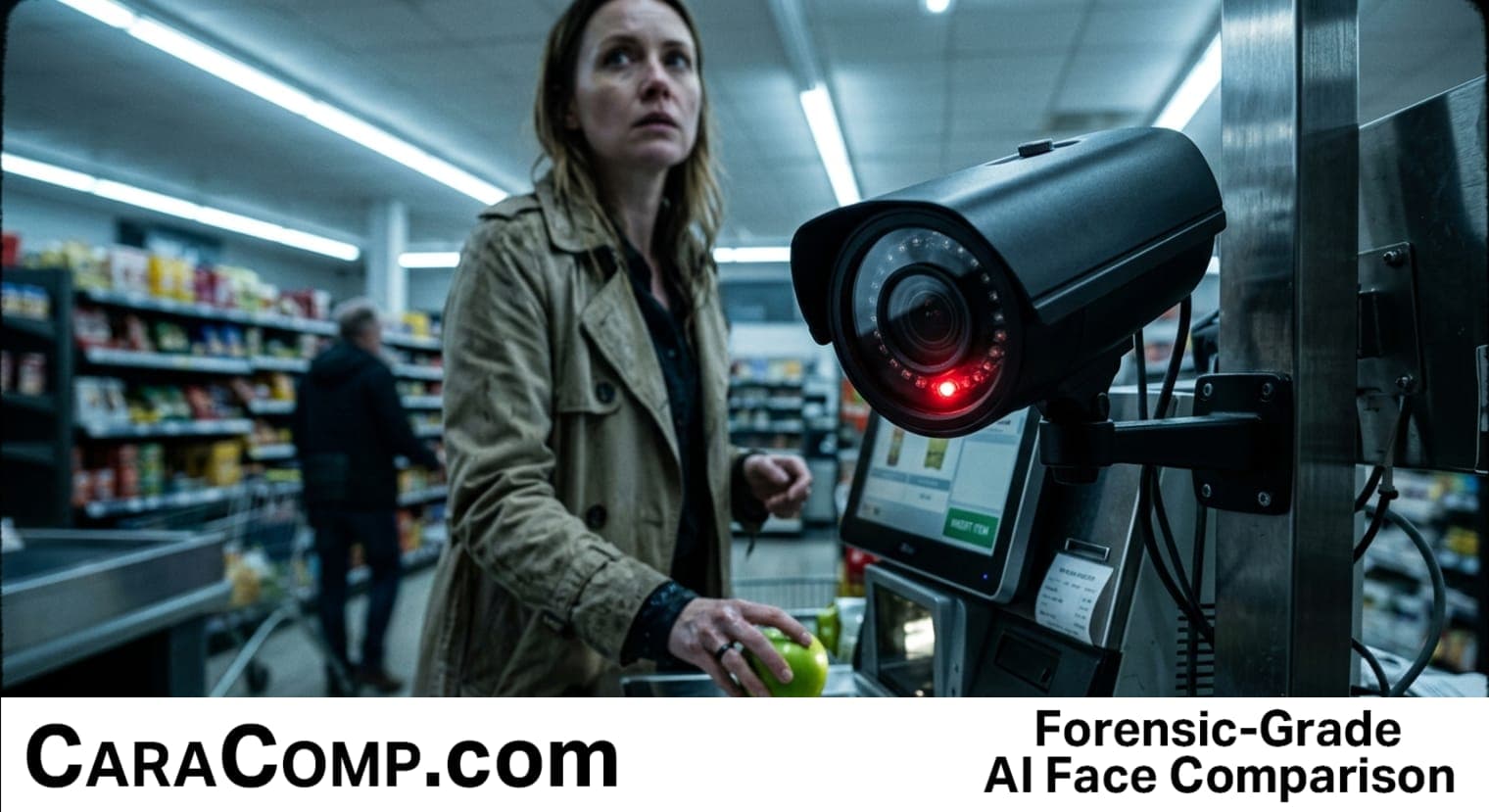
Here's the part that should stop you mid-scroll: the next time you walk into your grocery store, a camera near the entrance might already be comparing your face to a watchlist. No sign, no beep, no cashier mentioning it. Just a quiet scan, a quiet match, and you'd never know unless something went wrong.
A facial recognition camera is being trusted to run in supermarkets across the UK even as police face a possible ban on the same technology, which means the rules protecting your face may end up weaker at the checkout than they are on the street.
TL;DR
Supermarkets are rolling out facial recognition cameras with almost no legal rulebook, while police face tighter restrictions on the exact same security technology.
Let's sit with that for a second, because it's genuinely backwards. You'd expect the cops, who need a court's permission and a real investigation to look at your face, to have more room to operate than a grocery chain. Instead, it's flipped. One major UK supermarket chain, Sainsbury's, has been expanding its use of facial recognition camera systems toward roughly 200 stores by the end of 2026, according to The Register. Meanwhile, police facial recognition camera use is facing legal challenges and calls for formal limits under recognition surveillance rules that haven't caught up to retail. Same technology, wildly different guardrails, and the same security gap keeps widening the longer lawmakers wait.
Why security facial recognition cameras in supermarkets face fewer rules than police tools
There is currently no dedicated UK law that spells out exactly how a supermarket facial recognition camera has to be used. Not one that sets clear standards for accuracy, storage, or telling you it's happening. Police, on the other hand, are dealing with mounting legal pushback and proposed restrictions on the same tools. So while officers argue in court over whether they can scan a crowd during a protest, your local grocery chain is quietly wiring up cameras above the self-checkout with basically nobody watching, and the security gap between the two keeps growing.
Starts at 01:00 — this story
Watch this story, in under a minute
A new briefing every weekday — three stories, three minutes.
Subscribe on YouTubeSainsbury's has defended its rollout by pointing to a real problem: retail crime. The company has said incidents of theft, abuse, and threatening behavior toward staff "continue to rise" despite working with police and the government. That's not a made-up excuse, it's a genuine security headache for anyone stocking shelves or standing at a till all day. But here's the thing nobody's saying out loud: solving that problem by enabling facial recognition camera systems doesn't require skipping the conversation about consent, accuracy, and what happens when the recognition system gets it wrong.
200 This article is part of a series, start with Character Ai Age Verification A Teens Id In A Database.
stores where Sainsbury's plans to have facial recognition cameras running by the end of 2026
Source: The Register
Face module errors and the misidentification problem nobody wants to talk about
This isn't theoretical. Sainsbury's actually had to suspend live AI facial recognition scanning at one London store after a customer was wrongly flagged as a shoplifter, according to Yahoo News UK. Think about that. A real person, doing normal grocery shopping, got tagged as a criminal by a machine, in front of staff, possibly in front of other shoppers. No court order. No detective. Just a facial recognition camera, a face module misfire, and an algorithm that got it wrong.
And the company's own numbers hint at why this technology spreads so fast once it's in the door: Sainsbury's has claimed that 90 percent of people identified through the system did not return to the store afterward. Whether that's the security system working as intended, or people quietly opting out of a store where they got flagged unfairly, is a question the company hasn't really answered. It's not a smart tradeoff for shoppers who never agreed to be scanned in the first place, even if it looks like a smart win on a retailer's internal security dashboard.
Supermarket face recognition versus police face recognition: does the difference matter
Short answer, yes, it matters a lot. A police facial recognition camera is (at least in theory) supposed to come with oversight, warrants in some cases, and a paper trail. A supermarket's face recognition camera is a private company's security tool, running on private company rules, with almost no outside check. When police run a facial comparison, there's a growing legal fight over whether they even should. When a supermarket does it, there's a press release about reducing shoplifting, and very little talk about access control or who reviews the image capture afterward.
Home security technology versus store-level surveillance: the line is blurrier than you think
People are used to home security systems using face recognition, doorbell cameras that recognize the mail carrier, that kind of thing. It feels personal and controlled, because you own the camera and its access control settings. A supermarket's facial recognition camera flips that entirely. You don't own it, you didn't ask for it, and you can't turn it off. It's the same underlying technology as a smart doorbell camera with night vision and cloud storage, just pointed at strangers instead of your own front porch, capturing a facial image every time the door opens.
| Police facial recognition camera use | Supermarket facial recognition camera use |
|---|---|
| Facing legal challenges and proposed bans on live facial recognition in the UK | Expanding toward roughly 200 stores with no dedicated law governing use |
| Requires some form of oversight, review, or court involvement in many cases | Managed entirely by the retailer, with no independent audit required |
| Public debate and media scrutiny over accuracy and civil liberties | Rolled out quietly, often without shoppers being clearly told |
| Errors can trigger formal complaints and legal review | Errors, like Sainsbury's wrongful shoplifting flag, led to a temporary pause, not a rulebook |
| Security status: under active legal review as of 2026 | Security status: expanding with no independent audit as of 2026 |
What's wild is that this isn't some far-off surveillance state scenario. It's happening at the same pace your weekly errands happen. This is what "quiet normalization" looks like in real life: not a dramatic rollout, just a security camera above the door that becomes as unremarkable as the security tag scanner by the exit.
Why video surveillance feels different once a facial recognition camera starts identifying faces
Because a regular security camera just records. A facial recognition camera identifies. That's the whole shift. Old-school video surveillance in supermarkets was passive, footage sat on a hard drive and mostly nobody looked at it unless something went wrong. A facial recognition camera is active. It's running biometric data (your face, the physical thing that's uniquely you) through a database in real time, generating a match score (a number showing how alike two faces are) and deciding, on the spot, whether you're someone worth flagging. Previously in this series: Age Verification Discord Uses 10 Second Scan Misses Adults P.
Why supermarket facial recognition matters for your next grocery run
- ⚡ No clear opt-outmost shoppers aren't given a real choice, just a security camera at the entrance you can't avoid without going elsewhere
- 📊 Accuracy is unverified in publicSainsbury's own misidentification case shows the system can wrongly flag an innocent person as a shoplifter
- 🔮 Rules are backwardspolice face legal limits on the same technology, while retailers largely self-regulate access and management of their own data
- 🚪 It spreads quietlyexpect more stores, not a big announcement, until it's simply the norm
Sainsbury's has said incidents of theft, abuse and threatening behaviour "continue to rise" despite working with the police and government, a justification the company has used to defend expanding its facial recognition camera rollout.
as reported by Hot Minute
If you've ever wondered whether the security camera above a store entrance is actually doing anything with your face, or just sitting there like a prop, that's the exact question this kind of technology exists to answer. Here's the one useful thing you can actually do: pay attention to signage near store entrances, and if you don't see a clear notice explaining that a facial recognition camera is in use and how to raise a concern about a wrong match, that absence itself is information. A store that's confident in its security setup tells you it's there. One that isn't confident, or hasn't thought it through, tends to stay quiet.
What access control and management systems power supermarket facial recognition cameras
Retail security setups generally combine camera hardware from established manufacturers with software layered on top that handles the actual facial comparison. The identity-matching part, the actual "is this the same person as the one on our watchlist" decision, comes from separate facial recognition software running on that hardware. These setups often include night vision for after-hours coverage, cloud storage so footage and match data can be reviewed remotely, and management dashboards that let a store's loss-prevention team review flagged faces and adjust access control permissions.
Do facial recognition webcams and store cameras work the same way?
Not exactly. Facial recognition webcams, the kind built into laptops or used for identity checks online, are usually designed for one face at a time, up close, with the person's cooperation and a simple image capture step. Store-based facial recognition cameras are built to scan crowds of people who don't know they're being scanned, matching many faces against a watchlist continuously. Both use similar underlying technology, but the store version is doing it at a much larger, less consensual scale, with far more security exposure.
There's also a technical wrinkle worth knowing: true facial recognition + white-light cameras tend to produce more reliable matches than lower-quality indoor setups, because good lighting reduces errors. That matters because a lot of supermarket entrances are dim, crowded, and full of motion, exactly the conditions where advanced imaging devices designed for clean, well-lit comparisons can start making mistakes. When AI-driven facial recognition capture systems get facial data from a blurry, backlit doorway camera, the risk of a false match goes up, not down, which is exactly why security teams keep pushing for better hardware before trusting the software fully. A smart rollout would mean pairing that hardware upgrade with clearer signage, not just quietly hoping the accuracy problem fixes itself.
Key Takeaway
The facial recognition camera at your supermarket is currently running with fewer restrictions than the one used by police, so the real safeguard isn't a law, it's whether the store is transparent enough to tell you it's watching, because right now, artificial intelligence in your grocery aisle is arriving faster than the rules meant to keep it in check. Up next: Character Ai Age Verification A Teens Id In A Database Podca.
The bigger prediction here isn't dramatic, and that's exactly the point. Nobody is going to announce "surveillance has arrived at your supermarket" with a press conference. It's going to show up as a small security camera bracket above a door, a tiny sign easy to miss, and a system quietly capturing facial data every time you walk in for milk. By the time most shoppers notice, the infrastructure will already be normal, and any future restrictions on police use of the same technology will feel almost beside the point, because the supermarket version got there first.
So here's the actual question worth asking at checkout: if a machine can wrongly call you a shoplifter in front of your neighbors, and there's no law requiring the store to warn you it's even trying, whose job is it to notice before you do?
facial recognition camera: Frequently Asked Questions
Can a supermarket legally use a facial recognition camera without telling customers?
Right now in the UK, there is no dedicated law forcing supermarkets to give clear notice before running a facial recognition camera, which is part of why campaigners are concerned about security gaps. Some general privacy rules apply to biometric data (the physical, uniquely-you information like your face), but there's no specific retail facial recognition law spelling out signage requirements, access control expectations, or opt-out rights the way there is for other surveillance technologies.
What's the difference between facial recognition webcams and store security cameras?
Facial recognition webcams, like the one on your laptop, usually check one cooperative person's face up close for identity verification through a quick image capture. Store facial recognition cameras, by contrast, are security cameras equipped to scan many people at once, without their knowledge, matching faces against a watchlist. Both rely on similar artificial intelligence underneath, but the scale, management, and consent involved are completely different.
Does poor lighting affect how accurate a facial recognition camera is?
Yes. True facial recognition + white-light cameras generally capture a clean facial image more reliably than dim indoor setups, because consistent, bright lighting helps the system see clear detail. Supermarket entrances are often busy, shadowed, and full of motion, conditions that can confuse advanced imaging devices designed for calmer environments, increasing the security risk of a wrong match like the one that led Sainsbury's to suspend a store's system.
Are major security camera makers involved in supermarket facial recognition systems?
Major security camera makers supply hardware used across home security, video surveillance, and access control worldwide, and their cameras appear broadly in retail settings. The facial matching itself typically runs on separate software layered onto that hardware, handling the actual identity comparison, cloud storage, and management of flagged results, rather than being built entirely by the camera manufacturer alone.
Why do police face more restrictions on facial recognition cameras than supermarkets do?
Police use of facial recognition cameras has drawn legal challenges and proposed bans partly because it touches civil liberties directly, like scanning crowds at protests, which triggers court scrutiny and formal security review. Supermarkets, as private businesses, currently operate with far less oversight for the same underlying technology, largely because no dedicated UK law yet treats retail facial recognition, or the access control behind it, with the same seriousness as law enforcement use.
Ready for forensic-grade facial comparison?
Full forensic reports with detailed similarity scoring. Results in seconds.
Run My First SearchMore News
EU Age Verification: ID Scans Replace the Online Checkbox
The EU wants to kill the "I am 18" checkbox and replace it with real document checks. Here's what that means for your privacy the next time you log into anything.
digital-forensicsDeepfake: 1 in 4 Teen Abuse Cases, One Photo Enough
A new study found AI involved in 1 in 4 teen sexual-abuse cases. Here's why an ordinary school photo is now something families need to protect like a password.
digital-forensicsAI voice cloning: fake relatives cost Greeks €1 million
A Greek crime ring used AI voice cloning to sound exactly like people's relatives on the phone and walked away with over a million euros. Here's the one habit that would have stopped it cold.