CaraComp
Log inStart Free Trial

Education & Guides

In-depth educational content on facial recognition, biometrics, and AI technology.
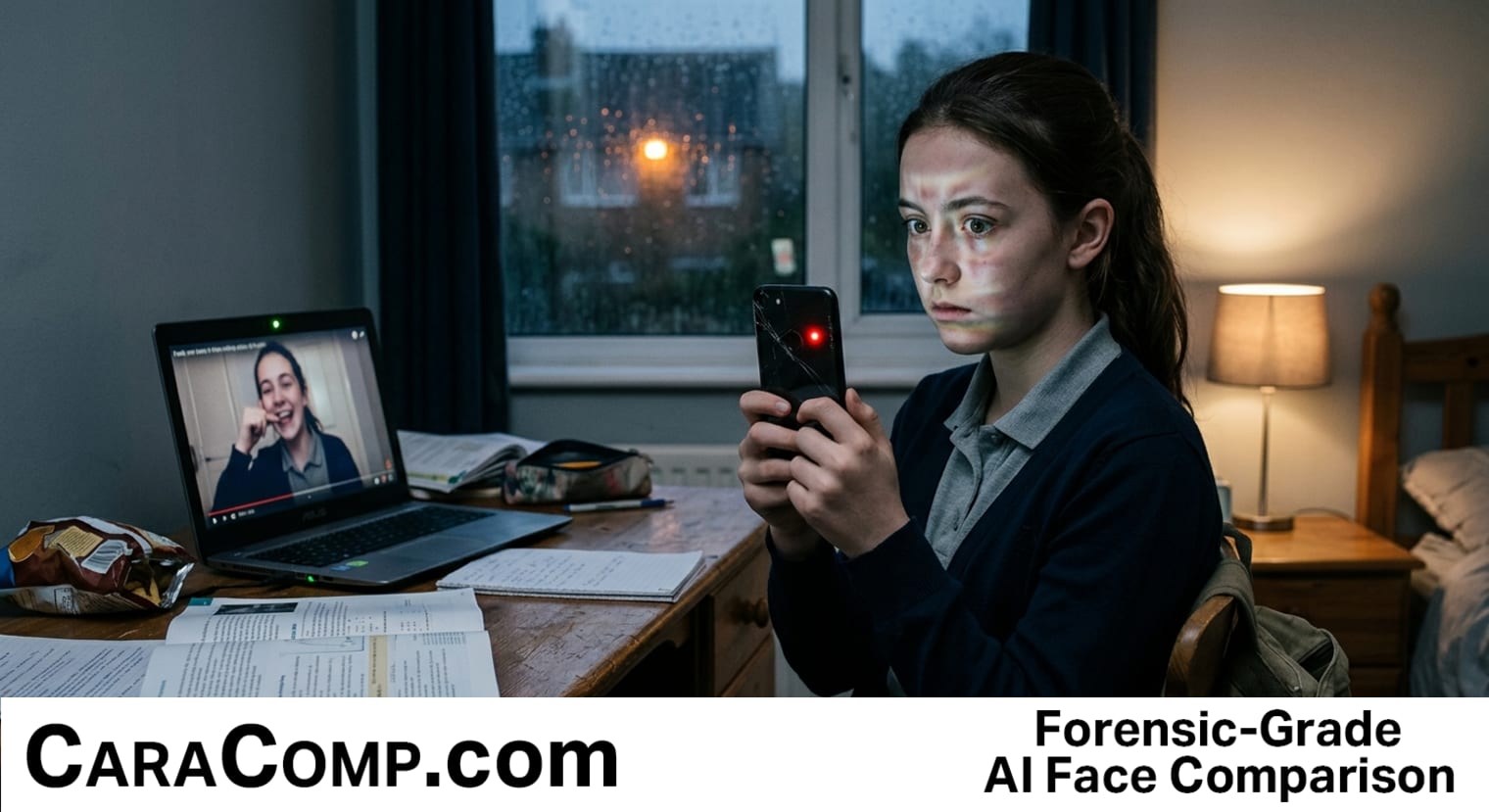
A 0.78 Match Score on a Fake Face: How Facial Geometry Stops Deepfake Wire Scams
digital-forensicsMar 26, 2026

A 0.78 Match Score on a Fake Face: How Facial Geometry Stops Deepfake Wire Scams

Deepfake scam calls now pair synthetic faces with cloned voices in real time. Learn how facial comparison geometry catches what human instinct misses—before the wire transfer goes through.

Why 220 Keystrokes of Behavioral Biometrics Beat a Perfect Face Match
biometricsMar 25, 2026

Why 220 Keystrokes of Behavioral Biometrics Beat a Perfect Face Match

A fraudster can steal your password, fake your face, and pass MFA—but they can't replicate the unconscious rhythm of how you type. Learn how behavioral biometrics silently build an identity profile that's nearly impossible to forge.

Your Visual Intuition Misses Most Deepfakes — Why 55% Accuracy Fails Real Cases
digital-forensicsMar 25, 2026

Your Visual Intuition Misses Most Deepfakes — Why 55% Accuracy Fails Real Cases

Think you can spot a deepfake by watching carefully? A meta-analysis of 67 peer-reviewed studies found human accuracy averages 55.54% — statistically indistinguishable from random guessing. Learn the three forensic layers investigators actually need.

"I Saw It on Video" Is Now the Most Dangerous Phrase in Any Investigation
digital-forensicsMar 25, 2026

"I Saw It on Video" Is Now the Most Dangerous Phrase in Any Investigation

A single video call convinced a finance worker to wire $25 million to fraudsters. The executives on screen weren't real. Learn why "seeing it on video" no longer proves identity — and what structured facial comparison actually requires.

Why a 98% Face Match Still Fails at Age Verification
facial-recognitionMar 24, 2026

Why a 98% Face Match Still Fails at Age Verification

Investigators and platforms keep making the same mistake: treating a facial match as proof of age. Learn why these are completely different technologies solving completely different problems — and why confusing them gets cases thrown out.

"It Sounds Exactly Like Him" Is Now a Scammer's Best Tool — Why Facial Comparison Beats Audio Evidence
digital-forensicsMar 24, 2026

"It Sounds Exactly Like Him" Is Now a Scammer's Best Tool — Why Facial Comparison Beats Audio Evidence

Voice cloning can replicate someone perfectly from a 3-second clip — and humans detect the fake only 60% of the time. Learn why "it sounded like them" is now weaker evidence than a documented facial comparison.

A Perfect Face Match Used to Close Cases. In 2026, It Signals Deepfake Risk.
digital-forensicsMar 24, 2026

A Perfect Face Match Used to Close Cases. In 2026, It Signals Deepfake Risk.

A perfect facial match used to mean case closed. Now it might mean you've been fooled. Learn why deepfakes exploit the very thing investigators trust most — and what the geometry underneath the pixels actually reveals.

A 95% Match Score Sounds Definitive. Here's Why It Might Mean Almost Nothing.
facial-recognitionMar 23, 2026

A 95% Match Score Sounds Definitive. Here's Why It Might Mean Almost Nothing.

Facial recognition doesn't compare photos — it compares vectors in mathematical space. Learn the hidden 6-step pipeline that determines whether a biometric match is court-ready or completely meaningless.

Deepfakes Rebuild Faces From 128 Numbers — Why That Breaks Your Usual Evidence Gut-Check
digital-forensicsMar 23, 2026

Deepfakes Rebuild Faces From 128 Numbers — Why That Breaks Your Usual Evidence Gut-Check

Deepfakes don't cut and paste faces — they rebuild them from compressed mathematical representations. Here's why that distinction is the most important thing an investigator can understand about synthetic media evidence.

A 10-Year Age Swing from Lighting Alone — What Facial Algorithms Are Really Measuring
biometricsMar 23, 2026

A 10-Year Age Swing from Lighting Alone — What Facial Algorithms Are Really Measuring

Before an algorithm estimates someone's age from a photo, it must solve four overlapping problems at once — and a single change in lighting can collapse the entire process. Here's what investigators need to understand about age estimation accuracy.

A 95% Match Score Sounds Like Proof. In a Million-Face Database, It Means 50,000 False Hits.
digital-forensicsMar 22, 2026

A 95% Match Score Sounds Like Proof. In a Million-Face Database, It Means 50,000 False Hits.

A high confidence score doesn't mean a facial match is evidence-ready. Learn the three quality gates every match must pass — and why skipping any one of them is how deepfakes slip through undetected.

Four Hidden Authentication Layers Your Digital Evidence Must Survive Before Trial
digital-forensicsMar 22, 2026

Four Hidden Authentication Layers Your Digital Evidence Must Survive Before Trial

A recent court case on deepfake audio exposes the four-layer authentication process that happens before any digital evidence reaches a jury — and why investigators relying on a single match score are one cross-examination away from disaster.

A "95% Confidence" Deepfake Score Hides 4 Tests You Never See
digital-forensicsMar 22, 2026

A "95% Confidence" Deepfake Score Hides 4 Tests You Never See

That "likely fake" label on a deepfake detection report isn't a single algorithm's opinion — it's the survivor of four hidden tests most investigators never see. Learn what those tests are and when a confidence score is actually trustworthy.

A 95% Confidence Score Falls Apart If the Media Was Faked Before You Ran the Match
digital-forensicsMar 22, 2026

A 95% Confidence Score Falls Apart If the Media Was Faked Before You Ran the Match

Most investigators jump straight to facial comparison — but there's a critical step that comes first. Learn why validating media authenticity before matching faces is the difference between solid evidence and dangerous false confidence.

A 3mm Error Breaks Your Match: What 3D Facial Landmarks Do Before the Score Appears
facial-recognitionMar 22, 2026

A 3mm Error Breaks Your Match: What 3D Facial Landmarks Do Before the Score Appears

Most investigators trust the confidence score. But the real question is whether the landmarks were placed correctly first — because a 3mm error makes a 95% score meaningless. Learn the hidden step that determines whether a facial comparison is actually trustworthy.

"Verified" Doesn't Mean Matched: Why 5–6% of Passed Identity Checks Still Hide the Wrong Face
digital-forensicsMar 21, 2026

"Verified" Doesn't Mean Matched: Why 5–6% of Passed Identity Checks Still Hide the Wrong Face

Investigators routinely mistake "verified" for "identity confirmed." Learn why digital age verification proves credential authenticity — not facial identity — and what that gap costs in real cases.

Deepfake Detection's Biggest Mistake: One "Tell" Fools Investigators Every Time
digital-forensicsMar 21, 2026

Deepfake Detection's Biggest Mistake: One "Tell" Fools Investigators Every Time

The most dangerous deepfakes aren't the obvious ones — they're the ones that pass your gut check. Learn why single-artifact detection fails and what a structured verification process actually looks like.

Deepfakes Fool Your Eyes. These 3 Frame-Level Artifacts Still Expose Them.
digital-forensicsMar 21, 2026

Deepfakes Fool Your Eyes. These 3 Frame-Level Artifacts Still Expose Them.

Most investigators look at a deepfake video and see a convincing face. Here's what they're missing: two types of algorithmic artifacts hidden in the pixels that expose manipulation in every synthetic video ever made.

What "99% Accurate" Facial Recognition Actually Means for Your Case
facial-recognitionMar 15, 2026

What 99% Accurate Facial Recognition Really Means

That "99% accurate" facial recognition claim has a very important asterisk attached to it — one that could make or break an investigation. Here's what the benchmark scores actually mean.

The Face Recognition Error That's Wrecking Investigations
digital-forensicsMar 14, 2026

The Face Recognition Error Wrecking Investigations

"Facial recognition is biased" dominates the headlines — but the mistake quietly wrecking investigations isn't bias. It's investigators treating two completely different technical problems as if they're the same thing.

Why "It Looks Like the Same Person" Is Not Evidence
digital-forensicsMar 14, 2026

"Looks Like the Same Person" Is Not Evidence

Your eyes aren't as objective as you think. The same bias traps that cause AI to misidentify Black and Asian faces are quietly distorting every manual face comparison you make — and the scarier part is that you feel more confident when you're most wrong.

Demographic Bias in Facial Recognition: Why Your Test Set Is Lying to You
facial-recognitionMar 14, 2026

Demographic Bias: Why Your Test Set Is Lying

Validating facial recognition with a handful of familiar test photos isn't a quality check — it's a demographic statement. Here's what the research actually shows about false positive rates, threshold settings, and who gets left behind.

Facial Recognition Bans Don't Mean What You Think They Mean
ai-regulationMar 14, 2026

Facial Recognition Bans Don't Mean What You Think

Lawmakers aren't banning facial recognition — they're drawing a hard legal line between mass crowd-scanning and controlled, one-to-one facial comparison on evidence you already hold. The distinction matters enormously for investigators.

Biometric Law Is Closing In: What Investigators Must Know Now
ai-regulationMar 13, 2026

Biometric Law: What Investigators Must Know Now

The biggest legal risk in facial comparison work isn't an AI error — it's using face photos in ways regulators have already decided are illegal. Here's what the law actually says, and what separates safe investigators from exposed ones.

From 27 Maybes to 3 Solid Leads: How Facial Comparison Triages a Case
digital-forensicsMar 12, 2026

From 27 Maybes to 3 Leads: Facial Comparison Triage

Most detectives think facial tech is about scanning crowds. The real power is quietly collapsing 27 ambiguous faces from 6 cameras into a short, defensible list of priority leads — before human bias ever enters the room.

A Face Match Is a Lead, Not a Verdict — Here's Why That Distinction Saves Cases
facial-recognitionMar 12, 2026

A Face Match Is a Lead, Not a Verdict

When investigators treat a facial match as proof instead of a starting point, innocent people go to jail. Here's the workflow that fixes that — and the science behind why it matters.

From Shaky CCTV Still to Court-Ready Lead: The Discipline Behind Facial Comparison
digital-forensicsMar 12, 2026

From CCTV Still to Court-Ready Facial Comparison

One bad facial "hit" can derail a case. One disciplined comparison can save it. Here's exactly how investigators turn a shaky CCTV still into a court-ready lead — and why the methodology matters more than the algorithm.

Why the #2 Facial Match Result Is Often the One That Matters
digital-forensicsMar 11, 2026

Why the #2 Facial Match Result Matters More

Facial recognition ranks candidates by math, not certainty. The #1 result can be a false positive — and the case-breaking clue is often sitting one slot down. Here's why seasoned examiners never stop at the top hit.

Why Birthdays Are the Biggest Threat to Accurate Facial Comparison
digital-forensicsMar 11, 2026

Why Aging Is the Biggest Threat to Facial Comparison

Most investigators blame bad photos when a facial comparison fails. The real culprit? Biology. Here's why a 13-year age gap can quietly destroy an otherwise solid match — and what to do about it.

Facial Matches Aren't Yes or No — They're Distance Scores
facial-recognitionMar 11, 2026

Facial Matches Aren't Yes or No. They're Scores.

Most people think a facial match is binary. It's not. Behind every "yes" is a hidden distance score — and where you draw the threshold line changes everything. Here's the math nobody talks about.

The Hidden Score That Decides If Your Face Match Means Anything
digital-forensicsMar 11, 2026

The Hidden Score Behind Your Face Match Results

Most investigators blame the algorithm when a face match looks off. The real culprit is something almost no one measures: face quality. Here's what that actually means.

Why Human Face Matching Fails 40% of the Time—And What to Do About It
digital-forensicsMar 11, 2026

Why Human Face Matching Fails 40% of the Time

You think you're good at matching faces. Science says you're wrong about 4 times out of 10. Here's why the human brain is genuinely terrible at unfamiliar face matching—and what investigators should use instead.

Clear ≠ Real: Why High-Res Faces Can Still Be Fake
digital-forensicsMar 10, 2026

Clear Doesn't Mean Real: High-Res Faces Can Be Fake

The most dangerous myth in modern facial investigation? That a clear, high-res face is a reliable one. Deepfakes and presentation attacks have completely changed the rules — here's what your checklist is missing.

Real-Time Face AI vs. Court-Ready Analysis: What's the Difference?
digital-forensicsMar 10, 2026

Real-Time Face AI vs. Court-Ready Comparison

A Raspberry Pi can now run real-time face ID, age estimation, and ethnicity classification simultaneously — but that's nowhere near what court-ready facial comparison requires. The gap between those two things is where investigations fall apart.

A Face Is Just 128 Numbers — Here's the Math That Proves It
facial-recognitionMar 9, 2026

A Face Is 128 Numbers: The Math That Proves It

Your brain takes seconds to "feel" if two faces match. A deep neural network does it in under 200ms — by turning your face into 128 numbers and measuring the distance between them. Here's exactly how that works.

The Hidden Authenticity Check That Runs Before Any Face Is Compared
digital-forensicsMar 9, 2026

The Hidden Check Before Any Face Gets Compared

Most people think facial recognition starts when two faces are compared. It doesn't. Before a single feature is measured, a hidden forensic system is already deciding whether your image deserves to be compared at all. Here's the science behind that invisible first step.

Why One Neural Network Doing Three Jobs Can Break Your Identity Match
facial-recognitionMar 9, 2026

When One Neural Network Doing 3 Jobs Breaks Matches

A single neural network can now identify a face, estimate age, and classify emotion in one shot. Here's why that efficiency is quietly dangerous for anyone who needs identity verification to actually hold up.

How Facial Recognition Accuracy Is Really Measured — And Why It Matters
facial-recognitionMar 8, 2026

How Facial Recognition Accuracy Is Really Measured

That "#1 accuracy" claim your vendor is making? It was probably earned on passport-quality photos in a controlled lab. Here's what the number actually means — and what it hides.

What "99% Accurate" Really Means in Facial Recognition
facial-recognitionMar 8, 2026

What 99% Accurate Really Means for Face Recognition

Facial recognition vendors love to cite benchmark accuracy scores. But for investigators, those numbers can be dangerously misleading — here's what to ask instead.