
Hong Kong Police Force Facial Recognition: Wrong Match Risks
Quick answer
Can facial recognition wrongly flag an innocent person in Hong Kong?
Yes, any facial recognition system can wrongly flag an innocent person. A match is only a lead for officers to check, not proof. Errors rise with grainy or poorly lit street footage, and across tens of thousands of cameras even small error rates add up to real people.
Picture walking past a camera on your way home. You aren't doing anything wrong. But this month, in Hong Kong, a camera like that can start comparing your face to a list of people police want to find. The Hong Kong Police Force is switching on AI facial recognition across its SmartView camera network, and the goal is 60,000 cameras by 2028.
Hong Kong police are adding facial recognition (software that compares a face on camera to a list of faces) to a network headed for 60,000 cameras, and the big unanswered question is how an innocent person would clear their name after a wrong match.
Let's answer the 11pm question first. Are you in danger? Probably not, and a camera flagging someone does not mean that person is arrested. But "probably not" gets shaky at this size. Small error rates turn into real people when you multiply them across tens of thousands of cameras. So let's talk about that.
What the Hong Kong Police Force Is Switching On, and Why the Scale Matters
SmartView is the camera system run by the Hong Kong Police Force. It already includes about 10,000 police cameras, plus links to roughly 10,000 more run by other government departments. According to The Standard (HK), it has already helped solve 2,192 criminal cases and led to 2,831 arrests. It also helped find a missing dementia patient in 20 minutes. That last one is the kind of story that makes anyone say, "Okay, fine, turn it on."
And that's exactly why the Hong Kong Police Force leads with it. Good stories stick in your head. Psychologists call this the availability heuristic: the vivid rescue is easy to remember, so it feels like the whole picture. The quiet stories of people stopped by mistake rarely make a press conference.
Smart View helps solve 2,192 crimes and find missing dementia patient in 20 minutes
Headline, The Standard (HK)
The system will need sign-off from one of the police officers ranked inspector or above. That is a real safeguard, and worth saying so. But a human approving what a computer suggests is only as good as the suggestion. When a screen says "strong match," it's hard to be the person who says "I doubt it." This article is part of a series, start with Facial Recognition False Arrest 9 Wrong Alerts 1 38m Faces.
Hong Kong Police Cameras and the Math of Mistaken Matches
Here's the simple version. Say a system gets one face in a thousand wrong. That sounds tiny. Now point it at a crowded city all day, every day. Tens of thousands of cameras will produce a steady stream of wrong leads. The research behind this story puts it bluntly: even a 0.1% false positive rate (a wrong "yes, that's him") creates false leads across a network this big.
Hong Kong Police Cameras: How Often Does Facial Recognition Get It Wrong?
It depends a lot on the camera and the person. The best software, tested by the U.S. standards lab NIST, is very accurate on clear photos. The research brief for this story cites false positives held to about 0.3% for top systems. That's the good news, and it's real.
The bad news is that streets are not passport photo booths. Real-world errors climb as high as 20% with lower-quality surveillance footage. Grainy, angled, poorly lit video is the normal case for a street camera. And the research also points to a fairness problem: false positive rates up to 100 times higher for Black and Asian people than for white men in some systems. We don't know which software Hong Kong police will use, so we can't say how that plays out there. But it's a fair question to ask before launch, not after.
What Does Misidentification Look Like for Police Officers and the Public?
Facial recognition misidentification means the software says two different people are the same person. The Innocence Project reports at least seven confirmed cases of this in the United States, six involving Black people who were wrongly accused. Seven sounds small. But these are the cases someone proved. Think about everyone who couldn't.
| What supporters point to | What worries critics |
|---|---|
| Top systems show false positives near 0.3% on clean images | Errors can reach 20% on low-quality surveillance footage |
| Police officers of inspector rank or above must sign off | A confident-looking computer result can sway the person signing |
| 2,192 cases solved and 2,831 arrests so far with SmartView | At least seven confirmed wrongful identifications in the U.S., six involving Black people |
| Faster searches, including finding a missing dementia patient in 20 minutes | No published steps yet for how a person proves a match was wrong |
Both columns are true at the same time. That's what makes this hard. Nobody serious says facial recognition never works. The honest question is who pays when it doesn't.
Can Hong Kong Police Facial Recognition Wrongly Flag an Innocent Person?
Yes, any facial recognition system can. A wrong match is a lead, not proof, and officers are supposed to check it. The trouble is that checks are only as strong as the habits behind them. Police have been caught calling unverified matches a "100% match." Once an officer believes the screen, the next steps tend to follow it. Previously in this series: Deepfake 1 In 15 Australians Hit And Familiar Voices Lie.
The research for this story also notes that the Hong Kong Police Force rollout doesn't appear to come with published answers on how a person would find out they were flagged or how they'd get it corrected. That's the gap. Cameras are the easy part. The paper trail is the hard part.
Crime Prevention vs. Wrong Flags: Why Hong Kong Police Facial Recognition Matters Beyond Hong Kong
- Scale turns rare errors into regular ones, because tens of thousands of cameras run all day.
- Bad footage is the norm, and real-world error rates rise sharply with it.
- Uneven accuracy across groups means some people carry more of the risk than others.
- No clear way to appeal means a wrong match could be hard to undo.
This isn't only a Hong Kong story. This same week, a UK minister called for limiting police use of the technology to hunting wanted criminals, and a Sydney school faced an investigation over explicit deepfakes (fake images or video made by AI). Different stories, same thread: your face can be used in ways you never chose.
What One Smart Habit Protects You Against a Wrong Match?
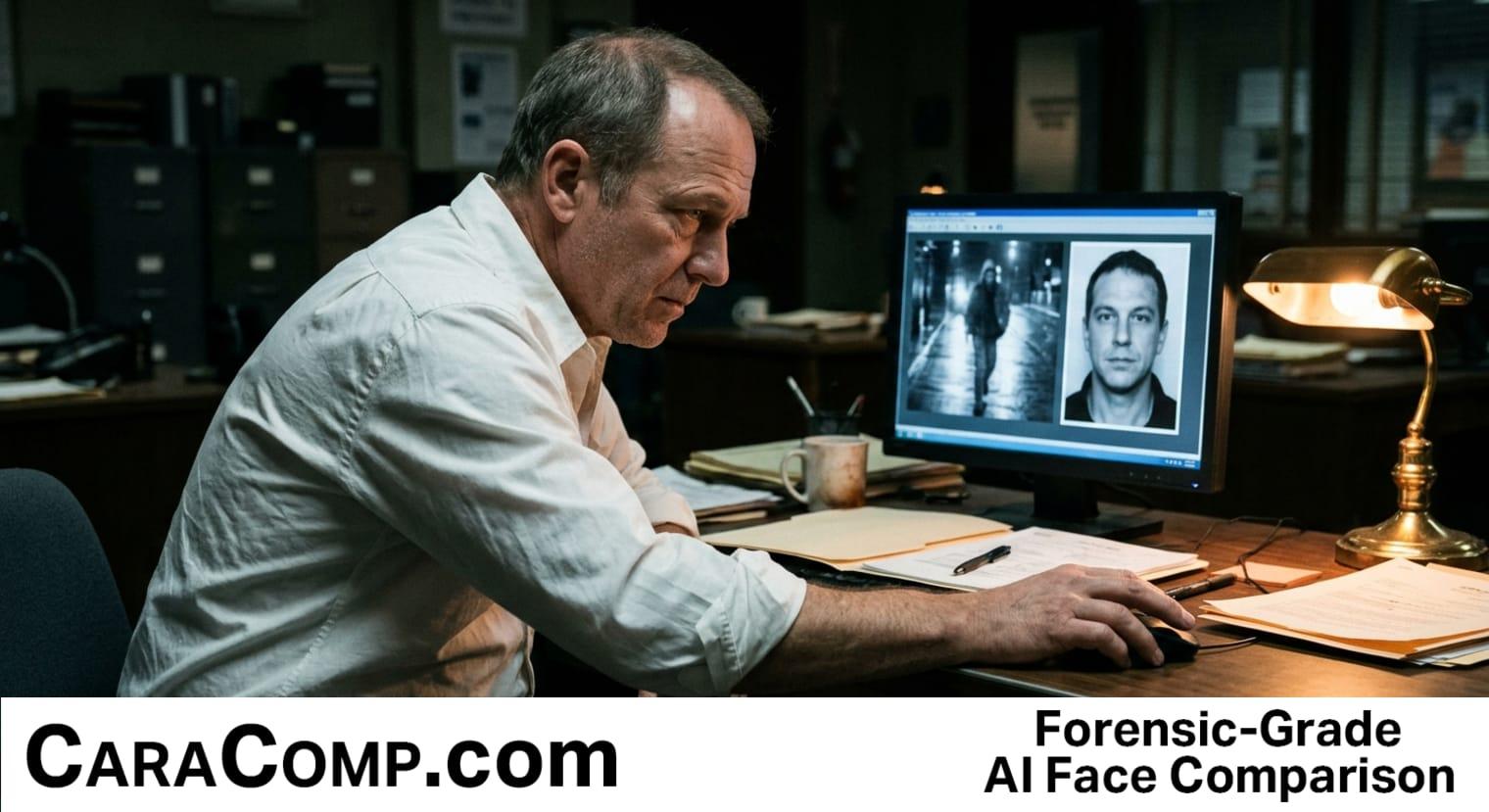
If you've ever wondered whether a photo or a video is really who it claims to be, that is exactly the question this kind of technology exists to answer. The useful habit is to treat any match as a starting point, not a verdict. A trustworthy comparison shows its work: the two images side by side, how good each image was, and a written record of who checked it. When you see a claim like "the camera identified him," ask what the footage looked like and whether a second, separate check was done. A match with no record behind it is just a guess wearing a badge.
The question for the hong kong police and hong kong police cameras is not whether facial recognition works on a good day. It is what a wrongly flagged person can do on a bad one.
Recap: The Hong Kong Police Force is adding face matching to a camera network that is growing toward 60,000 cameras. At that size, even small error rates will hit real people, so a clear way to clear your name matters.
Here's the part I can't shake. SmartView can find a missing dementia patient in 20 minutes. Fair enough, that's remarkable. So how long should it take an innocent person to be un-flagged? If the answer is "nobody has said," that's the number to watch. Up next: Hong Kong Police Face Scans Start No Word On Wrong Matches.
Hong Kong Police Force: Frequently Asked Questions
When will Hong Kong police start using facial recognition on cameras?
According to The Standard (HK), the Hong Kong Police Force plans to add AI facial recognition to the SmartView camera system this month. The longer goal is 60,000 cameras by 2028. SmartView already includes about 10,000 police cameras plus connections to around 10,000 more run by other government departments. Facial recognition here means software that compares faces seen on camera with a list of faces police are looking for. Police officers ranked inspector or above are expected to sign off on its use.
Can facial recognition misidentify a person?
Yes. Misidentification means the software says two different people are the same person. The Innocence Project reports at least seven confirmed cases in the United States, six involving Black people. Errors rise when footage is poor, and the research for this story puts real-world errors as high as 20% on lower-quality surveillance video. That is why a match should be treated as a lead to check, never as proof by itself, whether it comes from Hong Kong police or any other police force.
Are facial recognition systems less accurate for some groups?
Some are. The research for this story says false positive rates, meaning wrong "yes" matches, can be up to 100 times higher for Black and Asian people than for white men in certain systems. Top systems tested by NIST do much better, with false positives held to about 0.3%. Accuracy varies by software, so which product a police force picks matters a great deal, and so does how clear the camera footage is.
Do police officers still have to check what the camera says?
For the Hong Kong Police Force, the plan requires sign-off from an officer of inspector rank or above. Supporters say the system only narrows a huge pile of video down to leads that investigators follow up. Critics respond that people tend to trust a confident computer result, and that unverified matches have sometimes been called a "100% match." A human check helps only if the person truly questions the screen.
How could a person clear their name after a wrong match?
The research for this story says the Hong Kong Police Force rollout does not appear to include published answers on that. In general, a person would want to know they were flagged, see what image was compared, and have a human re-check it with better evidence. Keeping records of where you were, such as receipts or transit logs, can help. Asking for the record of who looked at the match, and when, is a sensible first step.
Ready for forensic-grade facial comparison?
Full forensic reports with detailed similarity scoring. Results in seconds.
Run My First SearchMore News
AI Voice Cloning: Fake Call Takes Rs 1.2 Lakh From Florist
A Kolkata shop owner heard a voice she'd known for years and sent money fast. It wasn't that person. Here's the simple pause that beats AI voice cloning.
privacyTikTok's Response: Nearly 50 Nude Deepfake Apps, 'Not Ads'
A report says nearly 50 apps that make sexual deepfakes were pushed through TikTok ads. TikTok says the examples weren't ads. Either way, a familiar feed is not a safety guarantee.
facial-recognitionFacial Recognition in Stores: False Match Ejects UK Shopper
A shopper was thrown out of a UK store after a face-match alert said she'd stolen meat. She says she hadn't been there in months. Here's why an alert isn't proof, and what to say if it happens to you.