
Reverse Image Search: TinEye, Google Lens, and Lenso Guide
Master the art of finding image sources and verifying visual content with comprehensive tools.
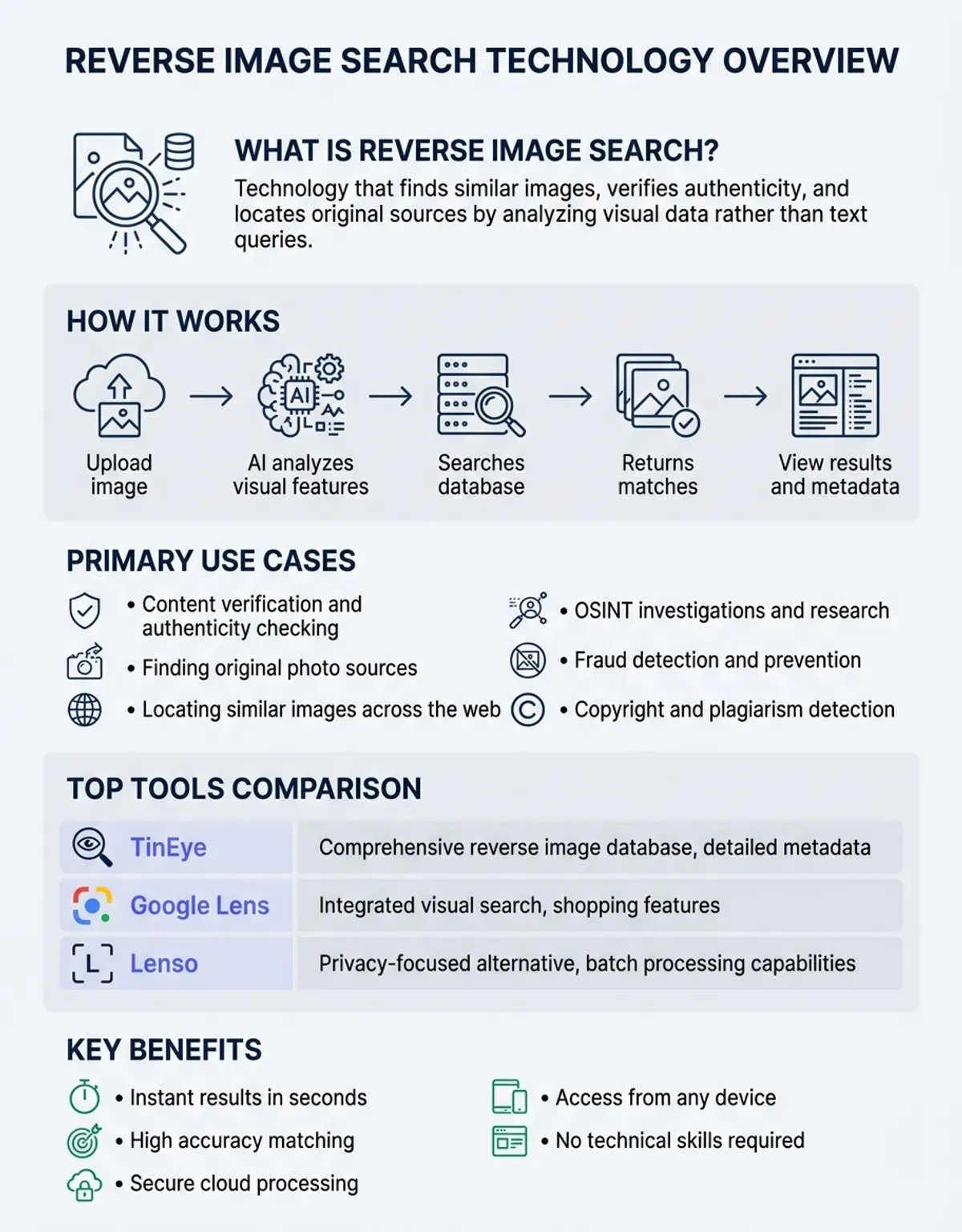
Reverse image search has become an essential tool for anyone looking to quickly locate similar images, verify the authenticity of pictures, or find the original source of a photo. Whether you're conducting a free reverse image search or using a sophisticated reverse search engine, these tools help you search by image rather than text. This comprehensive guide explores the most powerful platforms available, including TinEye, Google Lens, Lenso AI, and specialized catfish detection services like SocialCatfish. By understanding how reverse image searches work, you can leverage image recognition technology to find related photos, verify face matching, and protect yourself from online deception.
The power of reverse image search lies in its ability to analyze visual patterns, recognition algorithms, and image finder capabilities that transform how we interact with digital content. Modern reverse search engines employ sophisticated picture analysis and matching technology to deliver accurate results across billions of images. From basic image finder tools to advanced systems, the landscape of reverse image search continues to evolve, offering users increasingly powerful ways to search and verify visual content.
Reverse image search has become essential for verifying photos and finding image sources online. Whether using reverse image search engines like TinEye, Google Lens image search, or other reverse search tools, these platforms help you search by image to find where pictures appear across the web. Understanding how image search technology works—from basic reverse lookup to advanced image recognition—enables better verification and discovery of visual content.
How Reverse Image Search Works with TinEye
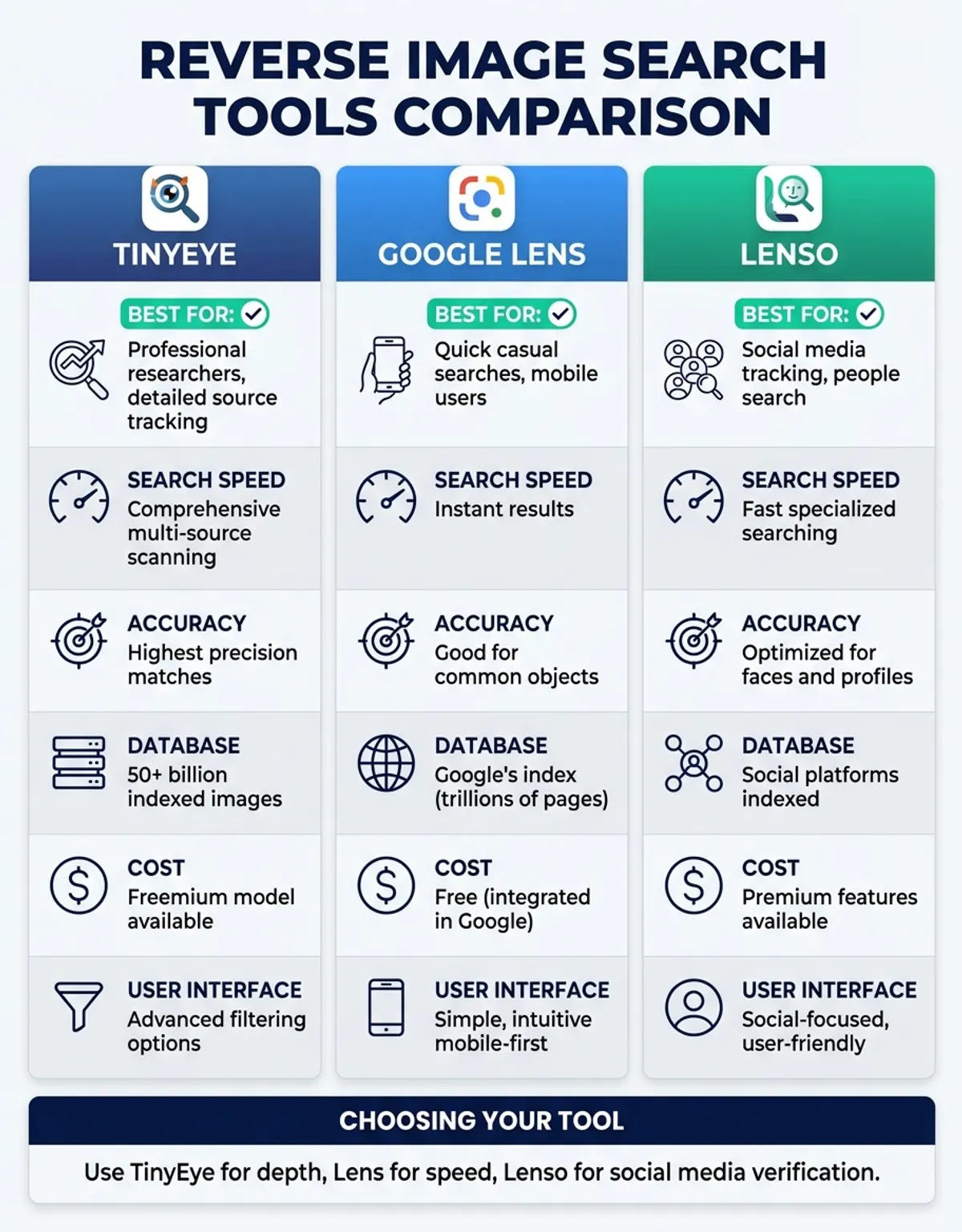
It stands as one of the pioneering platforms in reverse image search technology. Launched in 2008, TinEye revolutionized how users could search by image, creating a powerful image finder that quickly locates similar images across the web. Unlike traditional search methods, TinEye uses advanced image recognition to identify matches based on visual patterns rather than metadata or file names. This makes the platform particularly effective for finding the original source of pictures, tracking image usage, and identifying copyright violations.
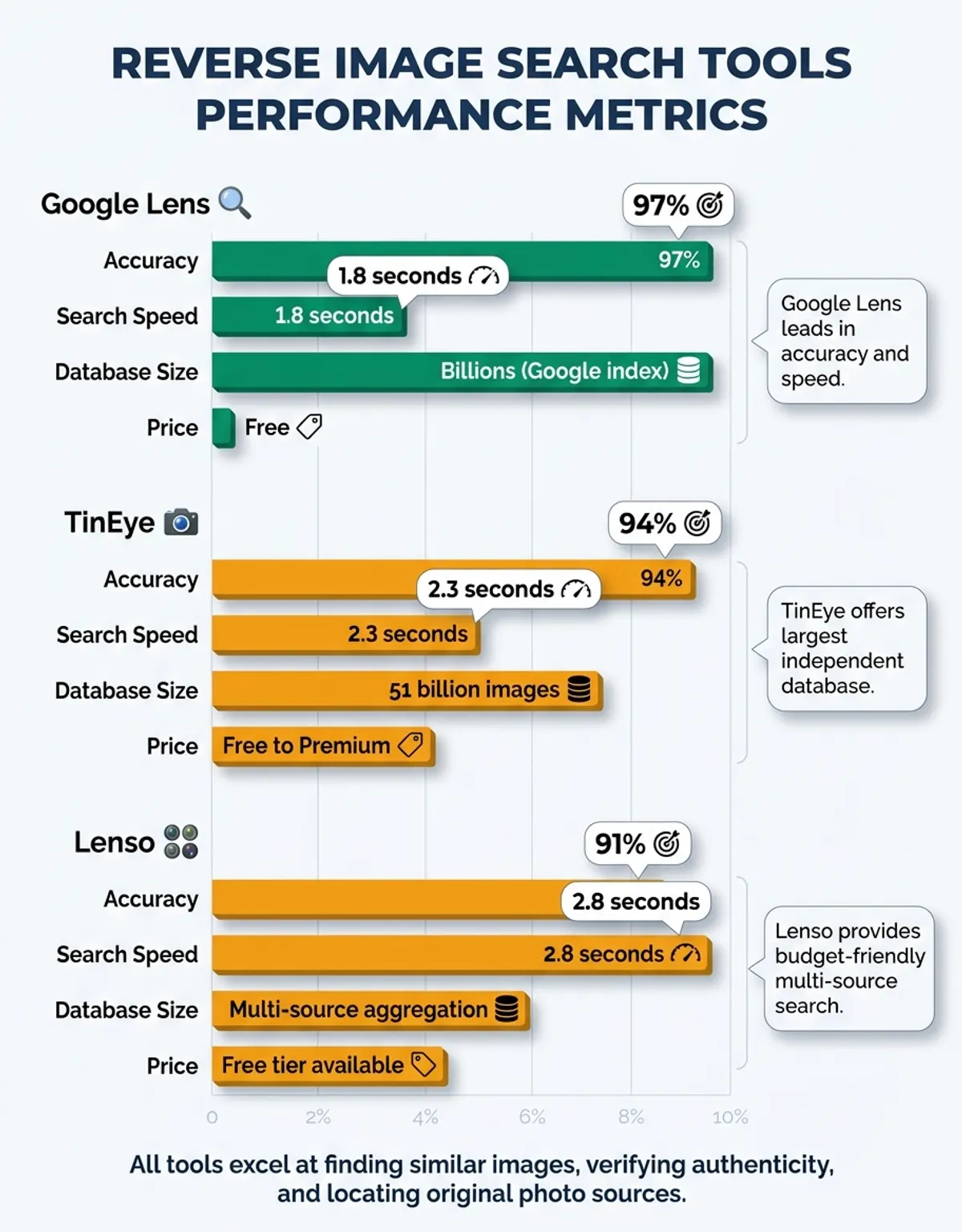
The platform processes billions of images and offers users a free reverse image search tool that delivers results in seconds. It's matching algorithm can detect modified images, including those that have been cropped, resized, or color-adjusted. This robust recognition capability makes it invaluable for photographers, content creators, and anyone concerned about unauthorized use of their visual content. The service provides detailed information about where and when images appear online, helping users understand the full scope of an image's digital footprint.
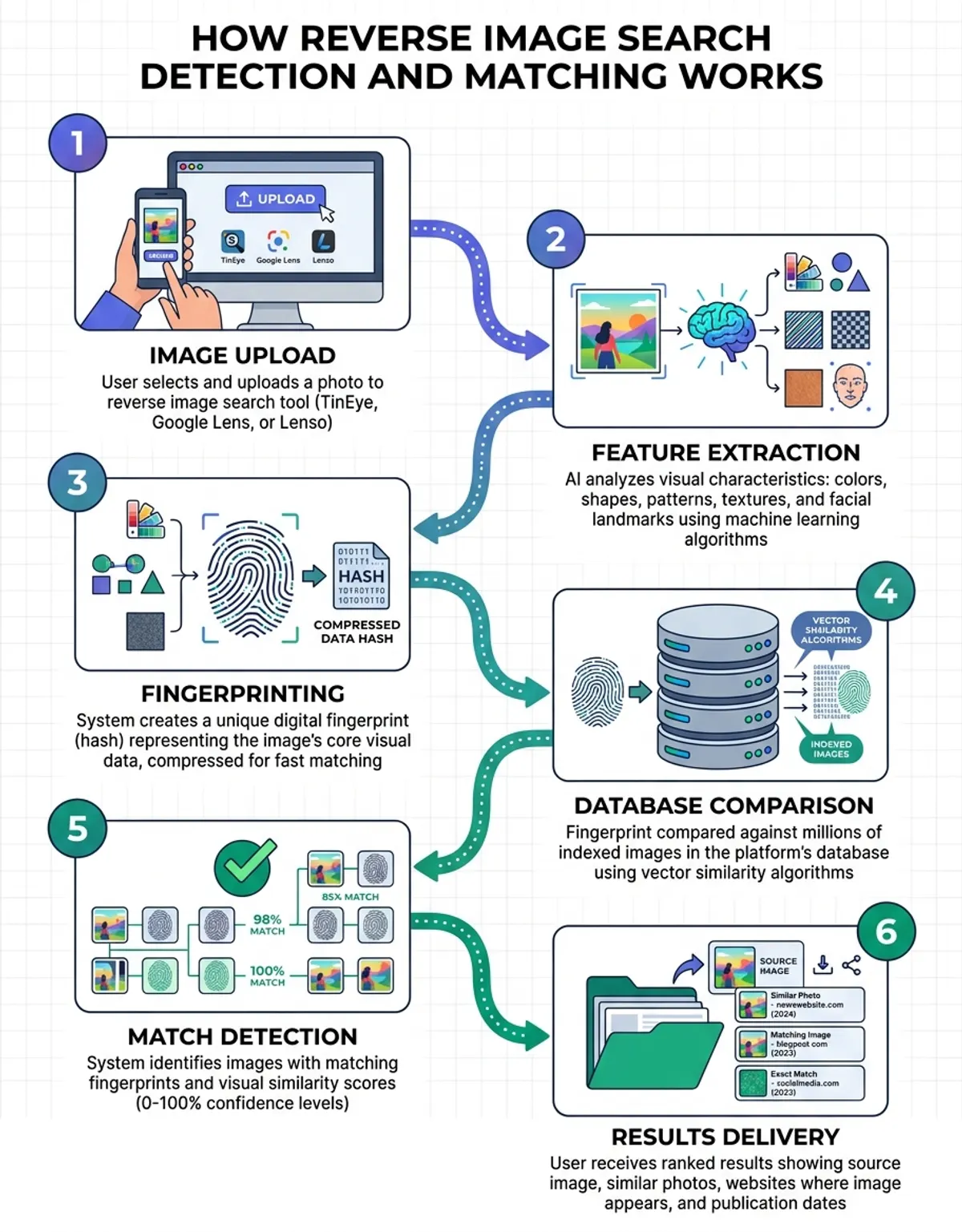
The tool's technology employs sophisticated picture analysis that goes beyond simple pixel comparison. The system creates a unique digital fingerprint for each image, allowing it to identify matches even when images have been significantly altered. This advanced analysis capability has made this service a preferred choice for journalists verifying sources, artists protecting their work, and researchers tracking visual information across the internet. The platform's API also enables developers to integrate reverse image search functionality into their own applications and workflows.
When using the platform for reverse image searches, users can upload images directly, paste URLs, or use browser extensions for seamless integration. The results display all indexed matches, sorted by best match quality, providing users with comprehensive insights into where and how their images appear online. This makes it an essential tool for anyone serious about image verification and protection in the digital age.
Google Lens: Advanced Image Search Technology
Google Lens represents the next evolution in reverse image search technology, combining powerful detection algorithms with Google's vast image database. This free reverse image search tool integrates seamlessly with mobile devices and web browsers, making it one of the most accessible platforms for users who need to quickly locate similar images. Lens goes beyond traditional reverse search by offering real-time object identification, text extraction, and contextual information about images, transforming how we interact with visual content.
The technology behind it leverages artificial intelligence and machine learning to understand not just what an image shows, but also its context and meaning. When you use the service to search by image, the system analyzes visual elements, identifies objects, reads text, and provides relevant information about what it finds. This makes this tool particularly valuable for identifying plants, animals, landmarks, products, and text within images. The platform's ability to perform face comparison and processing adds another layer of utility for users seeking comprehensive image analysis.
Lens excels at helping users find related photos and discover similar visual content across the web. The platform's image service capabilities extend to shopping, allowing users to identify products and find purchasing options. Students and researchers use the system to extract text from pictures, solve mathematical equations, and translate foreign languages in real-time. This versatility makes it one of the most comprehensive reverse image search tools available, serving multiple purposes beyond simple image detection.
Integration with other Google services enhances the service functionality, creating a seamless experience for users across different platforms. Mobile users can access this tool directly through their camera app, enabling instant reverse image searches without switching applications. The continuous improvements to the platform identification technology ensure increasingly accurate results, making it an indispensable tool for anyone who regularly works with visual content or needs reliable image verification capabilities.
Lenso: Comprehensive Image Search Platform
Lenso has emerged as a specialized platform within the reverse image search landscape, offering unique capabilities that complement established services like the tool and the system. This innovative image tool focuses on delivering precise analysis results through advanced analysis algorithms designed specifically for challenging search scenarios. The platform's technology excels at identifying images across different platforms and contexts, making it particularly valuable for users who need comprehensive coverage beyond what traditional reverse search engines provide.
Lenso's approach to reverse image searches emphasizes accuracy and breadth of coverage. It crawls diverse sources across the internet, including social media platforms, forums, and specialized websites that might not be fully indexed by other search engines. This expansive reach makes the tool an excellent choice for users conducting thorough image verification or tracking how pictures spread across various online communities. The system's ability to find related photos in obscure locations sets it apart from more mainstream alternatives.
This service incorporates sophisticated picture analysis that helps users understand not just where images appear, but also how they've been modified or repurposed. The platform's comparison technology can identify similar compositions, color schemes, and visual elements even when images have undergone significant transformation. This capability proves invaluable for content creators, marketers, and researchers who need to track visual content across multiple channels and platforms.
Users appreciate the platform's straightforward interface and quick results delivery. The free reverse image search tool provides detailed information about each match, including upload dates, source websites, and contextual information. This transparency helps users make informed decisions about image authenticity and usage rights. As the platform continues to develop, it represents an important addition to the toolkit of anyone serious about comprehensive reverse image search capabilities.
Lenso AI: Next-Generation Search Technology
This service AI represents the cutting edge of reverse image search technology, incorporating artificial intelligence and machine learning to deliver unprecedented accuracy in image detection and detection. This advanced platform builds upon traditional reverse search capabilities while introducing sophisticated AI-driven features that transform how users interact with visual content. The platform AI's identification algorithms can understand context, identify objects with remarkable precision, and provide insights that go far beyond simple picture identification.
The AI-powered approach enables Lenso AI to perform complex image analysis that traditional systems struggle with. When conducting reverse image searches, the platform can identify subtle patterns, recognize partially obscured objects, and understand compositional elements that human viewers might miss. This makes the tool AI particularly effective for specialized applications including forensics, research, and professional content verification. The system's ability to learn and improve over time ensures increasingly accurate results as it processes more images and refines its algorithms.
This service AI excels at finding related photos across diverse contexts and platforms. The platform's image system capabilities extend to understanding semantic relationships between images, identifying thematically similar content even when visual elements differ significantly. This contextual understanding helps users discover relevant content that traditional analysis algorithms might overlook. Whether searching for inspiration, verifying sources, or tracking content spread, the platform AI provides comprehensive insights through its advanced processing technology.
The platform integrates seamlessly into professional workflows, offering API access and enterprise features for organizations that require robust reverse image search capabilities. It AI's ability to process large volumes of images quickly makes it valuable for businesses managing extensive visual content libraries. The combination of speed, accuracy, and intelligent analysis positions the tool AI as a premium solution for users who demand the most sophisticated reverse search capabilities available in today's market.
The AI-powered approach enables Lenso AI to perform complex image analysis that traditional systems struggle with, identifying subtle patterns and understanding compositional elements that human viewers might miss.
Catfish Detection Using Image Verification
Catfish detection represents a critical application of reverse image search technology, addressing the growing problem of online deception and identity fraud. Services that specialize in identity fraud detection use sophisticated image comparison to verify whether profile pictures are genuine or stolen from other sources. This application of reverse search has become essential for users of dating platforms, social media, and professional networking sites who need to verify the authenticity of people they meet online.
The process of online deception detection involves comprehensive reverse image searches across multiple platforms and databases. These specialized systems check uploaded pictures against billions of indexed images to identify matches that might indicate stolen or fraudulent profiles. The detection technology looks for exact duplicates as well as modified versions of images, helping users identify deception even when catfishers have attempted to alter pictures to avoid detection. This thorough approach provides peace of mind for users concerned about online safety.
Modern scammers detection services integrate multiple reverse search engines including this service, it, and specialized databases to provide comprehensive results. By combining results from various sources, these platforms offer more reliable verification than single-source searches. The analysis capabilities extend to face identification and picture analysis that can identify the same person across different images, helping users build a complete visual content of whether someone's online presence is authentic or fabricated. For more on this topic, see our guide on how to tell if a facebook profile is fake.
Beyond simple image verification, fake profiles detection services often provide additional context about found matches. This includes information about where images originally appeared, when they were first posted, and whether they're associated with different names or profiles. This comprehensive intelligence helps users make informed decisions about online relationships and protects them from emotional and financial harm. As online deception tactics evolve, identity fraud detection through reverse image search remains one of the most effective tools for maintaining digital safety and authenticity.
Understanding Image Platform Tools in Reverse Image Search
Image service technology encompasses a broad range of tools and platforms designed to help users locate, verify, and analyze visual content across the internet. These specialized reverse search engines employ various detection algorithms and analysis techniques to deliver comprehensive results tailored to different use cases. From basic image searches to sophisticated photo analysis, image tool tools serve diverse needs ranging from casual curiosity to professional research and verification.
Modern image system platforms leverage advanced identification technology to process queries and deliver results in real-time. These systems index billions of images, creating searchable databases that users can query through uploads, URLs, or even screenshots. The comparison capabilities extend beyond exact duplicates to include similar compositions, related content, and thematically connected images. This flexibility makes image platform tools valuable for creative professionals seeking inspiration, researchers tracking visual information, and anyone curious about an image's origin or context. For more on this topic, see our guide on how to tell if a linkedin profile is fake.
The evolution of image service technology has introduced features that go beyond simple reverse image searches. Contemporary platforms can identify objects within images, extract text, perform face processing, and even understand scene composition. These advanced capabilities transform image finders from simple search tools into comprehensive visual analysis platforms. Users can discover where pictures appear online, find higher resolution versions, identify manipulated content, and gather contextual information about visual elements within images. For more on this topic, see our guide on how to reverse image search on iphone. For more on this topic, see our guide on reverse image search android.
Integration across devices and platforms has made image tool tools more accessible than ever. Browser extensions, mobile apps, and API integrations allow users to perform reverse image searches from anywhere, on any device. This seamless access has democratized powerful image detection technology, making it available to everyone from casual users to professional investigators. As system technology continues to advance, these tools become increasingly essential for navigating our visually-driven digital landscape and maintaining authenticity in online interactions.
Understanding SocialCatfish in Reverse Image Search
SocialCatfish has established itself as the premier specialized platform for reverse image search focused specifically on online relationship verification and online deception detection. Unlike general-purpose reverse search engines, the platform combines multiple verification methods including image analysis, phone number lookup, email verification, and social media cross-referencing to provide comprehensive identity verification. This multi-faceted approach makes it the go-to solution for users who need thorough background checks on people they meet online. For more on this topic, see our guide on ai photo detector.
The platform's reverse image search capabilities leverage multiple databases and detection algorithms to check pictures against billions of profiles across dating sites, social media platforms, and other online sources. The verification tool's identification technology specifically targets the methods catfishers use to create fake profiles, including stolen photos, stock images, and pictures taken from obscure social media accounts. This targeted approach delivers more relevant results for users concerned about romance scams and identity fraud compared to general image platform tools.
This service's comprehensive reporting goes beyond simple image matches. When the platform finds related photos, it provides detailed context including associated names, profiles, locations, and other identifying information. This intelligence helps users build a complete image of whether someone is who they claim to be. The service also monitors for new matches over time, alerting users if images appear in new contexts or profiles, providing ongoing protection against evolving deception tactics. For more on this topic, see our guide on anti facial recognition makeup.
The platform serves a critical role in protecting users from emotional and financial harm associated with online catfishing. By combining reverse image search with other verification methods, the platform offers a level of thoroughness that free tools cannot match. The service has helped countless users avoid scams, verify legitimate connections, and make informed decisions about online relationships. As catfishing tactics become more sophisticated, it continues to evolve its identification and verification capabilities to stay ahead of fraudsters and protect its users. For more on this topic, see our guide on is this image ai generated.
Understanding Advanced Image Service Technology
Advanced image tool technology represents the convergence of artificial intelligence, machine learning, and computer vision, creating powerful systems that transform how we search, verify, and analyze visual content. These sophisticated platforms go beyond simple analysis to offer deep insights into images, including object processing, scene understanding, contextual analysis, and even emotion detection. The evolution of system technology has made it possible to extract meaningful information from pictures that would have seemed impossible just a few years ago.
Modern image platform systems employ neural networks trained on billions of images to understand visual patterns and relationships. This training enables the platforms to perform complex comparison tasks including identifying specific objects, understanding spatial relationships, reading text in any orientation, and even recognizing artistic styles or photographic techniques. When users perform reverse image searches through these advanced systems, they gain access to insights that extend far beyond locating similar pictures to understanding the content, context, and characteristics of images themselves.
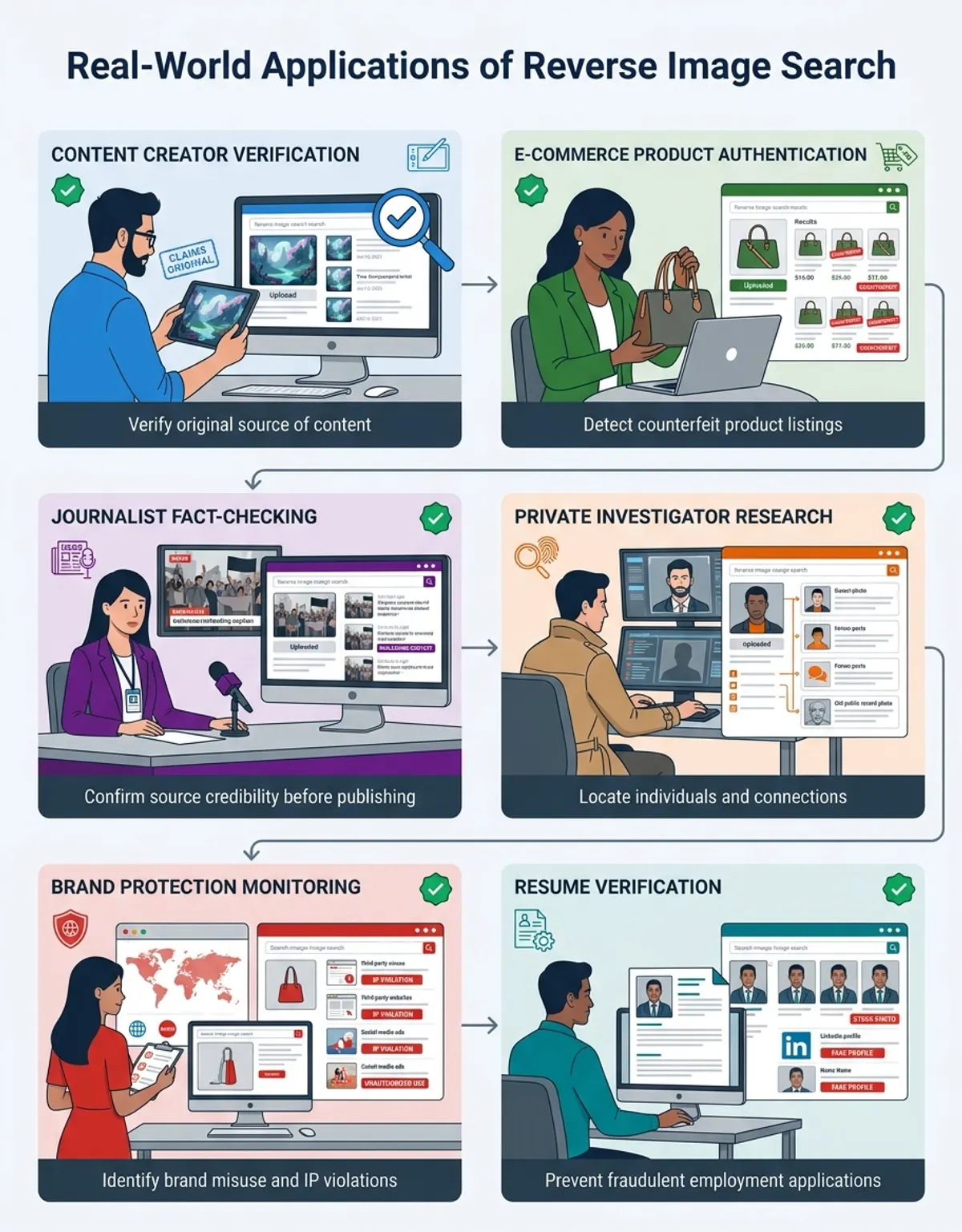
The practical applications of advanced image service technology span numerous industries and use cases. E-commerce platforms use these systems to power visual product search, allowing customers to find items by uploading pictures rather than describing them in text. News organizations employ advanced image analysis to verify photos, detect manipulated content, and trace the origin of viral images. Law enforcement agencies leverage these tools for investigative purposes, while healthcare providers use similar technology for medical image analysis and diagnosis support. For more on this topic, see our guide on google reverse image search iphone. For more on this topic, see our guide on best reverse image search.
Integration of advanced image tool capabilities with other technologies creates powerful combined solutions. Platforms like Reversely AI and enhanced versions of Google the service demonstrate how reverse image search can work alongside augmented reality, natural language processing, and recommendation algorithms to deliver comprehensive user experiences. These integrations transform simple image searches into starting points for discovery, learning, and verification across countless scenarios. As detection technology continues advancing, image system tools will become even more integral to how we interact with and understand visual information in our increasingly image-centric digital world. For more on this topic, see our guide on what is a deepfake.
Modern image platform systems employ neural networks trained on billions of images to understand visual patterns and relationships, enabling insights that extend far beyond locating similar pictures to understanding the content, context, and characteristics of images themselves.
Comparison of Top Reverse Image Search Tools
| Tool | Best For | Accuracy | Price | Privacy |
|---|---|---|---|---|
| TinEye | Finding exact image matches and tracking usage | High for exact matches | Free basic, paid pro | Excellent - doesn't store searches |
| Google Lens | Multi-purpose search with object identification | Very high across all categories | Completely free | Moderate - tied to Google account |
| Lenso AI | AI-powered comprehensive image analysis | Very high with contextual understanding | Freemium model | Good - limited data retention |
| SocialCatfish | Catfish detection and identity verification | High for dating/social verification | Subscription-based | Good - encrypted searches |
| Reversely AI | Professional image verification and analysis | Excellent for modified images | Professional pricing tiers | Very good - enterprise security |
Frequently Asked Questions About Reverse Image Search
How does reverse image searches work?
Reverse image searches work by analyzing the visual content of an image rather than relying on text-based metadata. When you upload a media to a reverse search engine like it or Google the platform, the system creates a digital fingerprint of the image by analyzing colors, patterns, shapes, and other visual elements. This fingerprint is then compared against billions of indexed images to find matches. The processing algorithms can identify exact duplicates as well as modified versions, including images that have been cropped, resized, or color-adjusted. Advanced systems like the platform AI use machine learning to understand context and find related photos even when visual elements differ significantly from the original.
How does quickly locate similar images work?
The ability to quickly locate similar images relies on sophisticated indexing and detection algorithms that process visual data at incredible speeds. Modern reverse search engines maintain massive databases with pre-computed fingerprints of billions of images. When you submit a query, the system compares your image's fingerprint against this database using optimized algorithms that can perform billions of comparisons per second. Platforms like Google the system leverage distributed computing infrastructure to deliver results almost instantaneously. The identification process examines multiple visual characteristics simultaneously, identifying images with similar compositions, color schemes, or objects, allowing the image platform to return comprehensive results within seconds regardless of database size. For more on this topic, see our guide on deepfake app.
How does free reverse image search tool work?
Free reverse image search tools like the tool's basic service and Google it operate by providing access to their image analysis technology without charging users. These platforms generate revenue through advertising, premium subscriptions for advanced features, or by licensing their technology to businesses. The free tools typically offer core functionality including uploading images, searching by URL, and viewing basic results. While free versions may have limitations compared to paid services—such as fewer search results, limited API access, or restricted commercial use—they provide powerful visual content analysis capabilities sufficient for most casual users. The service technology behind free tools is essentially the same analysis system used in premium versions, making them reliable for personal image verification and research.
How does images using reverse search engine work?
Using a reverse search engine for images involves a straightforward process that leverages powerful detection technology behind the scenes. Users can initiate searches by uploading an image file, pasting an image URL, or using browser extensions to right-click on images. The reverse search engine then processes the uploaded photo through its comparison algorithms, creating a unique signature that captures the image's essential visual characteristics. This signature is compared against the platform's database of indexed images from across the web. Results display detection or similar images along with information about where they appear online, their original source, and related contextual data. Advanced platforms like the service and it AI also provide additional insights about objects within images, text extraction, and semantic relationships to related photos.
How does search by image work for verification?
Search by image for verification purposes leverages reverse image search technology to confirm authenticity and identify misrepresentation. When verifying whether an image is genuine, users upload the image to a reverse search engine, which then searches for other instances across the internet. If the image appears on multiple profiles with different names, appears in stock photo libraries, or was posted earlier in different contexts, this indicates potential fake profiles activity or misrepresentation. Specialized platforms like this service combine image identification with additional verification methods including metadata analysis, EXIF data examination, and cross-referencing with social media profiles. The identification capabilities of modern tool tools can identify even modified images, making it difficult for dishonest users to avoid detection simply by cropping or filtering pictures.
How does related photos discovery work?
Related photos discovery extends beyond finding exact matches to identifying visually or thematically similar images. Advanced reverse search engines analyze multiple characteristics of an image including composition, color palette, subject matter, and context. The processing algorithms use machine learning models trained on millions of images to understand relationships between visual content. When you search for related photos using platforms like Google this tool or the tool AI, the system identifies images that share similar elements even if they're not exact matches. This might include photos taken from different angles of the same subject, images with similar color schemes or compositions, or pictures depicting related concepts. The system technology enables creative professionals to discover inspiration, researchers to find relevant visual data, and casual users to explore connected content across the vast landscape of online images.
What privacy considerations apply to reverse image search?
Privacy considerations for reverse image search vary significantly between platforms and use cases. While services like this service emphasize privacy by not storing user search queries or uploaded images beyond the immediate search session, other platforms may retain data for improving analysis algorithms or providing personalized features. Users should understand that performing a reverse search makes their image temporarily accessible to the platform's systems. For sensitive images, it's important to review each platform's privacy policy and consider using services with strong privacy commitments. Some advanced users employ local image platform tools or self-hosted solutions to maintain complete control over their data. When using reverse image searches for personal verification or identity fraud detection, be aware that your search activity may be logged, though reputable platforms protect this data and don't share individual search information with third parties.
Conclusion
Reverse image search technology has revolutionized how we interact with visual content online, providing powerful tools for verification, discovery, and protection. From the platform's pioneering exact match capabilities to Google the platform's comprehensive multi-purpose analysis, from this service's broad coverage to the platform AI's cutting-edge artificial intelligence, and from the platform's specialized online deception detection to advanced image service platforms, users now have access to sophisticated tools that can analyze pictures with remarkable accuracy. These platforms employ complex detection algorithms and comparison technology that transform simple images into gateways for information, verification, and discovery.
Understanding how to effectively use reverse image searches empowers users to protect themselves from online deception, verify sources, track content usage, and explore the connections between visual information across the internet. Whether you need a free reverse image search tool for casual use or require professional-grade image tool capabilities for business purposes, the diverse ecosystem of platforms ensures solutions exist for every need. As identification technology continues advancing and platforms like Reversely AI push the boundaries of what's possible, reverse image search will become even more integral to navigating our image-driven digital world safely and effectively. Explore all our tools at CaraComp.