
Character AI Age Verification: A Teen's ID in a Database
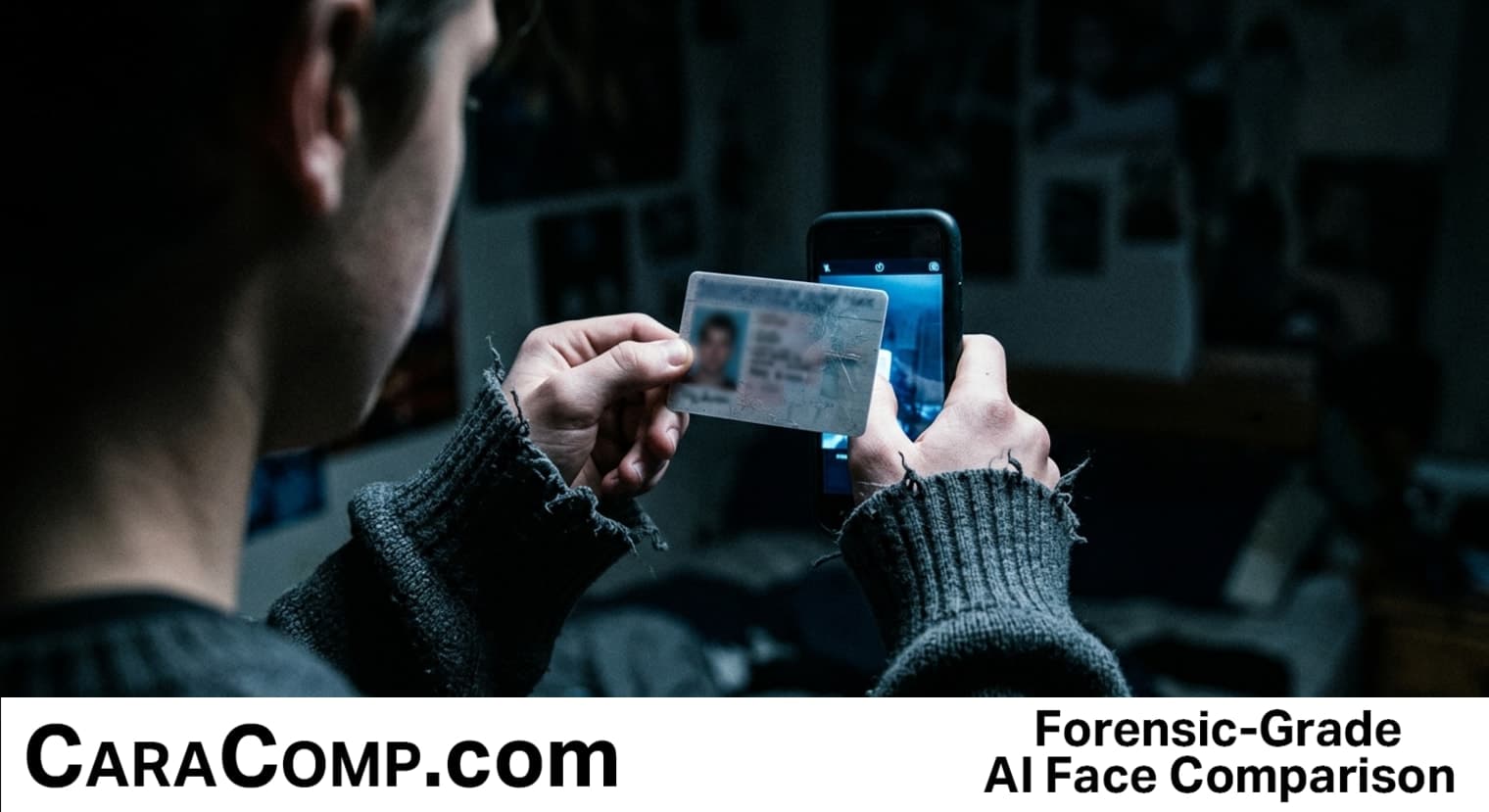
Here's the part that should stop you mid-scroll: when an app asks your teenager to scan their driver's license just to keep chatting, it is not actually checking their age. It's checking whether their face matches a photo on a card. Those are two completely different questions, and the app is only answering one of them. Character AI age verification exists because that gap, between "how old are you" and "does your face match this document," turned out to matter more than almost anyone realized, and it came after real harm, not before it.
Character AI age verification is a warning story, not a how-to: it shows what happens when an app hands your teen's face and ID into a system built to answer the wrong question, and what you can refuse to hand over tonight.
Character AI age verification exists because a chatbot company had no age check at all when a 14-year-old boy died, and the fix that followed mixes up two things, checking your age and confirming who you are, that were never built to work together.
Why Character AI Age Verification Exists At All
Sewell Setzer III was 14 years old. He lived in Orlando. For months, he talked to a Character.AI chatbot, at all hours, including late at night, with no age gate stopping him at the door. In February 2024, he died by suicide. His family sued, and on January 7, 2026, Google and Character.AI settled with the family, one of five families who reached settlements over similar harm, according to CNBC. That is the entire reason age verification showed up on this app at all. Not proactive caution. A dead teenager and a lawsuit.
Character.AI hasn't removed age verification since adding it, and it now sits between users and the app's open-ended chat features for anyone under 18. That sounds responsible on paper. But the mechanics underneath deserve a second look, because "we added age verification" and "we protected your kid" are not the same sentence, no matter how much they sound alike.
What Age Assurance Actually Measures
Age assurance is the umbrella term for any system trying to answer "is this person old enough." It can mean a face scan that estimates age from your bone structure and skin, or it can mean an ID check that compares a photo on a government document to a live selfie. Those sound like the same category. They are not, and confusing them is exactly where this goes wrong.
The Technical Trap Nobody Explains: Identity Versus Age
Here's where most parents get lost, understandably. A face match, the kind that compares your teen's selfie to their driver's license photo, is designed to confirm identity continuity. It answers "is the person in this new photo the same person in that old photo." It learns absolutely nothing about age in the process. None. Zero.
Now flip it around. Facial age estimation, a separate technology, looks at a face and guesses a number: this person is probably 15, or probably 22. It never checks identity at all. It has no idea if the face belongs to the ID it's sitting next to. Two systems, two totally different jobs, frequently bolted together and sold to you as one smooth "age verification process." That's the trap. For a comprehensive overview, explore our comprehensive face recognition analysis resource.
And the failure mode is almost funny if it weren't so serious. Picture a 16-year-old who wants past an age check. They grab a parent's passport, one issued eight years ago when that parent was younger and looked different. They hold up their own current selfie next to it. The face-matching algorithm looks at both, sees two faces that don't look alike, and returns a low match score. The check fails, technically, correctly, by its own logic, but it fails in a way that proves the whole approach was aimed at the wrong target from the start. The system was never built to catch a kid lying about their age. It was built to catch someone using a stolen ID that doesn't match their face.
That statistic isn't about Character.AI specifically. It's about Discord, and it matters here anyway, because it shows what happens to a mountain of driver's licenses once a company decides to collect them. Roughly 70,000 people handed over a government ID to prove how old they were. Then the vendor holding that data got breached, and every one of those IDs, home addresses and all, walked out the door with the attackers, as reported by NBC News. Discord did not get hacked directly. A vendor they trusted did. That distinction should worry you more, not less, because it means "we didn't get hacked" is not a promise any platform can actually make about the companies standing behind their age check.
Verify Age Without Handing Over Everything
You can push back on any app that wants a selfie or ID before your teen goes further. Ask exactly what data gets stored, for how long, and whether it's deleted after the check runs. If the answer is vague, that vagueness is the answer.
How Facial Age Verification Compares to a Full ID Check
Not every age check works the same way, and the differences matter for what your teen actually hands over. Some apps only run a facial age estimate, no document needed. Others demand the full identity package: driver's license, passport, or a state ID photo matched against a live selfie.
| What the check does | What it actually confirms |
|---|---|
| Facial age estimation (selfie only) | A guess at your age, no identity confirmed |
| Face match to a government ID | That the selfie face resembles the ID photo, not your real age |
| Full age verification with document upload | Identity and a document date of birth, plus a stored copy of your ID |
Look at that middle row again. A face match to a government ID confirms resemblance, not age, and not even reliably at that. Around the legally important line, age 13, facial age estimation carries roughly a 1.22-year margin of error. That means a real 13-year-old can scan as 11. A real 11-year-old can scan as 13. There is no algorithm fix for that margin, because faces at that age simply don't map cleanly to a single number. The technology is guessing within a window, and the window straddles exactly the age that matters most for platform access.
Character AI Age Verification and the Data Pipeline Problem
The bigger issue, the one that should actually worry you more than a wrong guess about age, is what happens to the information after the check runs. Age checks across major apps have been found running far more than a simple date-of-birth confirmation. In some documented cases, what looked like a basic age check was quietly running 269 separate background and facial risk checks behind the scenes, including watchlist and political exposure flags that have nothing to do with whether a 15-year-old should be chatting with a bot at midnight, as reported by CaraComp News. The stated purpose was age. The actual pipeline was identity profiling.
Age verification today is like asking someone to prove they're tall enough for a roller coaster by checking their driver's license, and then the park keeps a copy of that ID, sells the photo to data brokers, and if the ID vendor gets breached, your home address walks out the door with it.
CaraComp Education, CaraComp Education
That roller coaster line separates the question being asked (are you tall enough, are you old enough) from the machinery built to answer it (a permanent record, tied to your name, sitting in someone else's database). AI platforms ask for identity documents and call it a safety feature. It's a data collection feature wearing a safety costume, and the costume is doing a lot of work.
Why Character.AI Hasn't Removed Age Verification, But That Isn't the Same as Fixed
Character.AI hasn't removed age verification since adding it in the wake of the 2026 settlements, and that persistence gets read by many parents as "problem solved." It isn't. Keeping a checkpoint in place tells you the company is responding to legal pressure. It doesn't tell you the checkpoint reliably tells a 13-year-old from an 11-year-old, or that the ID photo submitted gets deleted rather than stored.
The Misconception: "A Selfie Is Safer Than an ID"
A lot of parents land here, and it's an understandable place to land: "if my kid just does a face scan instead of uploading their license, that's less risky, right? No document exposed." It's a reasonable guess. It's also wrong, and here's why the guess feels so right in the moment.
A selfie for a dating app and a selfie for an age check both extract the identical thing underneath: your teen's facial geometry, the actual measurements of their face that make them recognizable as them and nobody else. That data point doesn't care what app collected it or why. What changes between platforms isn't the sensitivity of the data, it's whether the company tells you what happens to it afterward, and for how long they keep it. Most don't say. That silence is the actual risk, not the format of the upload. Continue reading: Character Ai Age Verification A Teens Id In A Database Podca.
People assume "no document, less risk" because a driver's license feels more official, more permanent, more like a real government thing. A face, by comparison, feels casual, like a photo you'd post anyway. But a face is biometric data too, the same category of information as a fingerprint, and once a company has a clean digital map of it, that map doesn't expire the way your paranoia about it might. This is the core insight CaraComp keeps returning to across its facial recognition reporting: the format of what you hand over matters far less than the retention policy nobody reads.
What You Just Learned About Character AI Age Verification
- 🧠 Age verification followed harm, not cautionit arrived after a 14-year-old's death and a January 2026 settlement, not before
- 🔬 Face match and age estimation are different jobsone confirms identity, the other guesses a number, and combining them creates blind spots
- 💡 A selfie is not the "safe" optionit collects the same biometric data as an ID scan, just without the paperwork feel
- 🔐 Vendor breaches are the real threat70,000 IDs were exposed through a third party, not the platform itself
What To Refuse, What To Ask, What To Do Tonight
If an app tonight asks your teen for a selfie or an ID before they can keep using it, you have leverage you might not realize. Ask, out loud, in writing if possible: what data is stored, is the document deleted after the check, who is the third-party vendor running this, and does the company have a stated retention window. If any of those answers is missing or evasive, that's your signal to close the app and walk away from that account, not your teen's problem to solve alone.
If you suspect an ID has already been submitted somewhere questionable, or you're worried a document has already been exposed, don't try to chase it down yourself. Go to IdentityTheft.gov, a federal government resource for exactly this. If something feels like fraud or exploitation involving your child online, the FBI's tip line at ic3.gov and your state attorney general's office are the right doors, not a forum post or a company's own support chat. Talk to your teen directly too. Not as an interrogation, just an honest conversation: "if an app ever asks for your ID or your face before you can keep talking to it, come get me first."
Age Verification Process Red Flags Parents Should Know
Watch for apps that ask for ID before explaining why, that don't state a deletion timeline, or that route the check through a vendor you've never heard of. Any of those three is reason enough to say no and close the app.
Character AI age verification asks a question it cannot fully answer, whether your teen is old enough, by collecting information that reveals who they are instead, and that mismatch is exactly the age assurance gap parents need to watch for before handing over your teen's age or face to any app.
So next time an app asks your teen to prove their age with a face scan or an ID photo, ask yourself the real question underneath it: are they trying to find out how old my kid is, or are they trying to find out exactly who my kid is, permanently, in a database somewhere you'll never see. Those are not the same ask. Only one of them was ever actually about protecting a 14-year-old at 1 a.m.
Character AI Age Verification: Frequently Asked Questions
Why does Character AI age verification exist now, and when did it start?
It followed real harm, not caution. Sewell Setzer III, 14, died by suicide in February 2024 after months on the app with no age check. Google and Character.AI settled with his family and four others on January 7, 2026. Age verification was added afterward, tied to a broader ban on open-ended chat for users under 18. It exists because of a lawsuit, not because the company anticipated the risk beforehand.
What information does an age verification app actually collect?
It depends on the method. A facial age estimate collects just a selfie and a computed age guess. A full identity check collects a government ID photo, a live selfie for comparison, and often a date of birth pulled from the document. Some systems have been found running far more checks behind the scenes than users were told about, including background and risk flags unrelated to age. Ask directly what data is stored and for how long before assuming a "simple" check is simple.
Is a selfie safer to submit than a driver's license for an age check?
No, and this trips people up constantly. A selfie for an age check extracts the same biometric data, your teen's facial geometry, as an ID upload does. The difference is not sensitivity, it's whether the company tells you what happens to that data afterward and whether it gets deleted. A selfie without a stated retention policy carries the same long-term risk as a scanned license without one.
What should I say to my teen about apps that ask to verify age?
Tell them plainly: if any app asks for your face or your ID before letting you keep using it, come get me first, don't just hand it over to keep chatting. Explain that "verify age" often means the company is also collecting identity data it doesn't need. Make it a household rule, not a one-time warning, since these prompts show up across many apps, not just one.
What do I do if my teen's ID or photo may have already been exposed?
Go straight to IdentityTheft.gov, a federal resource built for exactly this situation, and follow its steps. If you suspect fraud or exploitation tied to the exposure, file a report with the FBI's tip line at ic3.gov. You can also contact your state attorney general's office. Don't try to track down the data yourself or negotiate with the app's support chat, those channels are not equipped to fix an actual breach.
Does age verification actually stop a determined teenager from lying about their age?
Not reliably. Facial age estimation carries roughly a 1.22-year margin of error right around age 13, meaning a real 13-year-old can register as younger or older than they are. Face-matching an ID to a selfie checks resemblance, not age, and can be defeated with an older document that simply doesn't visually match a current face. No current process closes that gap completely.
Ready for forensic-grade facial comparison?
Full forensic reports with detailed similarity scoring. Results in seconds.
Run My First SearchMore Education
Medical Identity Theft: 210 Hours to Fix a Wrong Chart
Learn how medical identity theft quietly rewrites your medical records, why hospitals rarely catch it, and where to look first if you suspect it's happening to you.
biometricsIdentity Verification Process: 128 Numbers Stored With an ID
You take a selfie, hold up your ID, and get verified in two seconds. But behind that flash is a math problem, three hidden checks, and a data risk almost nobody talks about.
privacyGoogle Age Verification: 14 Days Before Accounts Vanish
Google age verification doesn't check your birthdate, it profiles your searches. Learn the common mistakes that lock adult users out of their own accounts.