
Digital Identity Protection: When Software Jails a Grandmother
Quick answer
What is digital identity protection and does it cover a wrong face match?
Digital identity protection means guarding your name against misuse by thieves and by faulty software. Locking down email and freezing credit helps against stolen information. A wrong face match happens inside a police investigation, so no product blocks it. Keep records of your devices and whereabouts, and ask what evidence started any case.
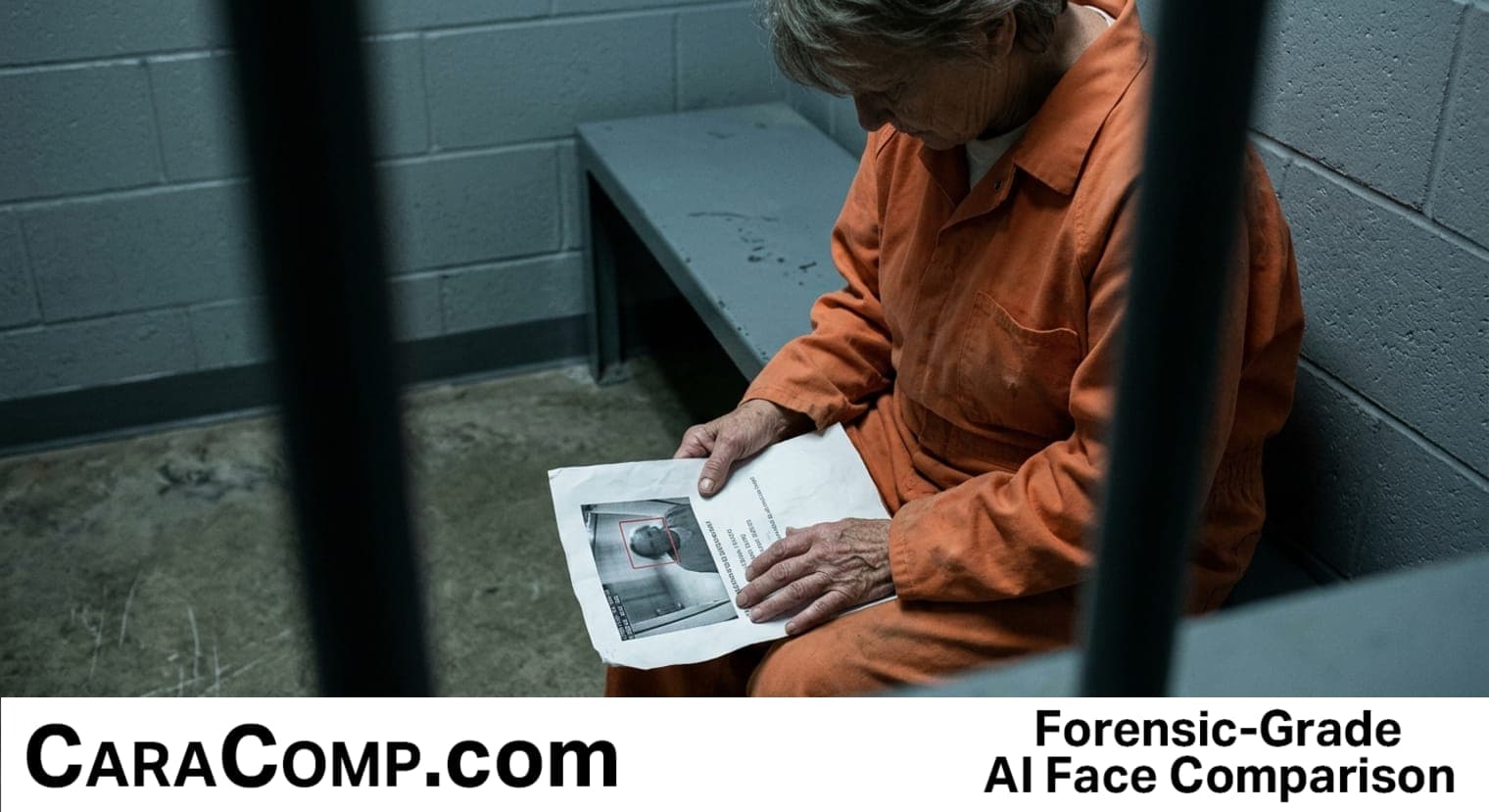
Here is the unsettling part of digital identity protection: the person sitting in the cell often has no idea why they are there. Angela Lipps, a Tennessee grandmother, spent more than five months in jail over bank fraud in North Dakota, a state she says she had never visited. Police had run an AI face-matching tool. They arrested her at gunpoint. No stolen password in her story, no hacked account. A piece of software pointed at her face, and people trusted it.
Digital identity protection has to cover two doors, stolen personal information and a wrong face match, and three moves do most of the work: secure accounts early, keep proof of what is yours, and know your first questions if a charge lands.
You have probably seen the standard advice. Scan the dark web, buy an alert service, change your passwords every week. Some of it helps a little. Most of it is theatre, because it does nothing about the way innocent people actually end up in handcuffs. Let's sort the useful from the decorative, one mistake at a time.
Digital identity protection: the two doors to a false charge
A name can land on a criminal charge in two very different ways. In the first, someone steals your personal information (your name, birth date, account logins) and poses as you. William Woods knows this one. According to KCCI, a man was convicted in 2024 after a 35-year identity theft that got Woods wrongly jailed and committed to a mental hospital.
In the second, nobody steals anything. Software simply says your face looks like the face on a camera. Harvey Murphy Jr. was held in a Texas jail for two weeks, and was assaulted there, after facial recognition falsely named him as an armed robber, according to CBS News. He was in another state when the crime happened.
Security people call routes used to steal or misuse your personal information identity attack vectors (the different doors someone can use to get at your name). A wrong face match is a different kind of risk: it can happen without an attack. Most consumer advice guards door one. Door two is where Lipps, Murphy and Nijeer Parks got hurt. A good plan covers both, and that starts with seeing what you are protecting.
Digital identities and the data trail they leave
Your digital identities are the pile of accounts, numbers and photos that stand in for you online and in databases. Every one of them leaves data behind. Most users never see how much data that adds up to, yet it is the raw material for both a thief and a matching system. Your digital footprint is that trail: the logins, the posts, the purchases, the tagged pictures. A thief can copy pieces of it. A computer system can compare pieces of it. Either way, a small slice of data can start speaking for the whole person.
How does a data breach turn into a false charge?
A data breach (unauthorized access to or exposure of company records) can hand thieves your name, personal information and sometimes login credentials. With those, they may open accounts or pose as you. Later, a fraud investigation may find an account in your name, and the paper trail can point to you first. A breach can be the beginning of a chain that ends in a charge.
Digital identity protection mistakes: credit monitoring after the damage
Mistake one is treating an alert as protection. Credit monitoring (a service that watches your credit reports and pings you when something changes) is a smoke detector. It tells you about the fire. It does not stop the match from being struck. A dark web scan works the same way: it reports that your information or credentials turned up where criminals trade, which means an account using those credentials may be at risk.
That is useful to know. It is also late. And nothing in the reporting on the Lipps case suggests a stolen password was involved, so no monitoring service would have changed her story. Here is how the common moves stack up. This article is part of a series, start with Biometric Face Scan Brazil Ties 280m Phones To Verification.
| Common move | What it really does |
|---|---|
| Credit monitoring | Sends an alert about changes to your credit report, which may include new credit opened in your name. It watches, it does not block. |
| Dark web scan | Reports that your personal information or credentials showed up in breach data, sometimes before they are misused. |
| Credit freeze | Restricts access to your credit reports at the three big credit bureaus, making many new credit accounts harder to open in your name. |
| Security on your main email account | Guards the account that can reset many of your other accounts. |
Security basics that close the door early
The first of the three moves that matter is boring on purpose. Freeze your credit at each of the three big bureaus. Then lock down your main email with a long, unique password and two-step sign-in (a second step, such as an authenticator code, on top of the password). Email is the master key: reset links for your bank, your phone company and your shopping accounts all land there. Use different credentials for every important account, so one compromised login does not become ten. This is the dull end of digital security, and it beats any flashy dashboard.
The second move is a "this is not me" kit. A report from FZAO on a 2026 Pennsylvania case shows why. A fake payment-app account put an innocent person at risk of jail. What helped clear the accused was technical: connection logs showed the fake accounts were reached through phone carriers the accused never used, and the devices ran operating systems from years before the accused even owned their phones.
So know your own facts. Which carrier is yours? Which phones have you owned, and when? Keep receipts, travel records and anything else that shows where you were. One more catch from that report: victims who try to pull account records themselves often get stonewalled, because they cannot prove they own an account they never opened. A lawyer can usually push on that door harder than you can.
What is the best identity protection when police software points at the wrong face?
No product blocks a wrong face match, because the error happens inside a police investigation, not inside your accounts. The best identity protection here is preparation: know your proof, ask what evidence started the case, say little, and get a lawyer fast. Facts you can show beat protests you can only make.
The Lipps case shows how fast things move. Police used an AI facial recognition tool to link her to crimes in North Dakota, according to CNN. Police in Fargo later admitted "a few errors" and promised changes but stopped short of a direct apology, per Valley News Live.
Nijeer Parks lived an earlier version. Officers in Woodbridge, New Jersey leaned on a face match alone to name him as the man who stole $39 in merchandise from a hotel, despite his insistence that he had never been to the township, as the New Jersey Monitor reported. CBC News says he spent 10 days in jail. Coverage of the case also notes the suspect in the photo wore earrings and Parks wore none, the kind of detail a second look would catch. For the original arrest breakdown, see CNN's report on Parks.
14
people known to have been wrongfully arrested because police relied on facial recognition, with Lipps as the fourteenth
Source: ACLU
That number comes from the ACLU, and it only counts cases that came to light. Here is why that matters. The reporting highlights a gap: Previously in this series: Deepfake Ai Apps Pet Editors Hid Sexual Face Swap Tools.
You can have people who are being sent to jail wrongly who never know that facial recognition played a role in their arrest.
A researcher quoted in reporting on wrongful facial recognition arrests
If you cannot see the evidence, you cannot argue with it. That is the whole trap.
Why a "possible hit" is not an identification
Think of a bloodhound at a crime scene. It picks up a scent fast and narrows the search. But a dog cannot testify, so a smart detective treats the alert as a lead, then checks everything else before arresting anyone. A face match is the dog. The mistake in these cases is skipping the checking.
Now some toy math, only to show the shape of the problem, not to describe any real system. Say a tool makes an incorrect decision in 5 percent of 1,000 comparisons. That would be about 50 incorrect decisions. A real system's overall accuracy does not tell you what fraction of its reported matches are wrong: that also depends on the test data and how often a true match is present. At a large scale, even a small error rate can still produce many errors.
It also does not miss evenly. Multiple studies have found higher false match rates for people of color, women, younger people and the elderly. The weakest evidence lands hardest on people who already get less benefit of the doubt.
Authority bias: how a bad lead gets a stamp on it
So why does a shaky lead survive? Authority bias is our habit of trusting anything that looks official. Follow the chain. The software returns a "possible hit." An officer trusts the software. A sergeant trusts the officer. In one case described in the research, officers submitted blurry photos, the system returned only a possible hit, and the warrant application stated, "It is the same person." Then a judge trusts the paperwork. Each person trusts the layer below, and nobody re-checks the layer at the bottom.
Misconception: An appeal will catch a facial recognition mistake before it causes lasting harm. That is a reasonable belief, since we learned it from TV courtrooms where evidence gets tested early. In real life, the error can be baked into the warrant. By the time a lawyer sees it, the client may already be in custody, often held without bail in a county jail, sometimes in a distant state, unable to answer until after transfer. People can feel pressure to plead just to get out. The fix may come from outside records: bank statements, phone logs, alibis. A lawyer can use them to challenge the case, and knowing that a face match started it can help the lawyer investigate.
Here at CaraComp, we spend our days thinking about how faces get compared, and the habit we would hand anyone is this: treat a match as a question, never as an answer. A story like Lipps's raises awareness, but awareness is not a plan. Plans are the three moves below.
What You Just Learned
- Close the doors early. Freeze credit, protect your email, and use unique credentials for important accounts.
- Keep a "this is not me" kit. Know your carrier, your phones and where you were, so records can contradict a false story.
- Learn the first-hour questions. Ask what evidence started the case, ask whether facial recognition was used, and call a lawyer. (I am not a lawyer, so treat this as a starting point.)
If a fake account or fraud is already in your name, report it to the FTC through its identity theft site and to your local police. For online fraud, the FBI's Internet Crime Complaint Center takes reports. If the trouble is inside one of your own existing accounts, contact that platform directly through its official help page. Up next: Digital Identity Protection Software Jails Grandma 5 Months.
If this were happening to you tonight, would you know where to look first? If police have arrested you over an unknown charge, ask for a lawyer and ask what evidence led them to you, including whether facial recognition was used. A match with nothing behind it is a rumor in a uniform, and the person in the cell is usually the last to learn who started it.
Real digital identity protection addresses two doors, your personal information and your face. A credit freeze and email security can reduce account fraud, while a "this is not me" kit can help challenge a false accusation. A lone "possible hit" is a lead, not proof of identity theft or guilt.
Recap: Protecting your identity means covering stolen information and wrong face matches, and three moves do most of the work. Secure accounts early, keep proof of what is yours, and ask what evidence started any charge.
Digital identity protection: Frequently Asked Questions
Is there a top identity theft protection service that would have kept Angela Lipps out of jail?
No. A top identity protection service usually offers credit monitoring, an alert when your information shows up in a breach, and help after fraud. Those tools watch your accounts. Lipps's case involved a face match inside a police investigation, and nothing in the reporting points to a stolen password. Monitoring cannot stop software from pointing at the wrong person. Preparation and a quick call to a lawyer matter more in that situation.
What are identity attack vectors in plain English?
Identity attack vectors are the different doors someone can use to get at your name. One door is a data breach that leaks credentials and other data, which thieves may use to access accounts or pose as you. Another is a phishing message that tricks you into handing over a login. A wrong face match can also put your name on a charge, but it is an error rather than an attack. Each risk needs a different response, so one product rarely covers all of them.
How much does your digital footprint matter in a false charge?
Your digital footprint, the trail of accounts, photos and purchases you leave online, gives thieves data to copy and gives investigators data to compare. The reporting does not say how each wrongly matched person ended up in a search, so it would be wrong to blame any one habit. What you can do is keep records that show your real footprint, such as your carrier, your devices and your location history, so a lawyer can point to the facts.
Does a data breach alert mean my digital identity is compromised?
Not automatically. A data breach alert means records that may include your personal information were exposed or accessed without authorization. It does not necessarily mean someone has used your information, though exposed credentials can put accounts at risk. Still, treat the alert as a signal to act. Change the password for that account and any account sharing it, turn on two-step sign-in, and freeze your credit with the three big bureaus. Breaches are common, so a calm routine works better than panic.
Can cybersecurity habits stop a wrong facial recognition match?
No. Good cybersecurity habits protect your accounts and credentials from a thief, which is a real threat, but a wrong face match comes from a police tool, not from anything you did online. Habits still help, because strong security on your email and accounts reduces the risk of account fraud. Against the second door, keep records that may support your account and know to ask for a lawyer and what evidence started the case.
What is digital identity protection in one sentence?
Digital identity protection is the set of habits that help prevent or challenge other people, and other people's software, speaking for you. That means locking accounts so thieves cannot get in, keeping proof of which devices and accounts are really yours, and knowing to ask what evidence started a case. Alerts and scans can help, but they do not prevent every kind of harm. The three moves in this article address risks they cannot.
Ready for forensic-grade facial comparison?
Full forensic reports with detailed similarity scoring. Results in seconds.
Run My First SearchMore Education
Best AI Image Detector: Top Tool Wrong on 1 in 5 Images
Even the top detector tested was wrong on nearly one in five images. Here is why scores can fall outside the lab, and what to do first if a fake of your child shows up.
digital-forensicsHow to Tell If an ID Is Fake: Check the Face, Not the Card
Counterfeit cards now pass the light, the touch and the barcode scan. Learn why one quick look fails, and what actually catches a real card on the wrong face.
biometricsASC Biometrics Appointment: 1 Missing Paper Can Cost 8 Weeks
A 20 minute visit can turn into a two month delay over one missing paper. Here is what actually happens at the three stations, and the common mistakes that restart the clock.