
Facial Recognition Camera: 200 Sainsbury's Stores Scan Your Face
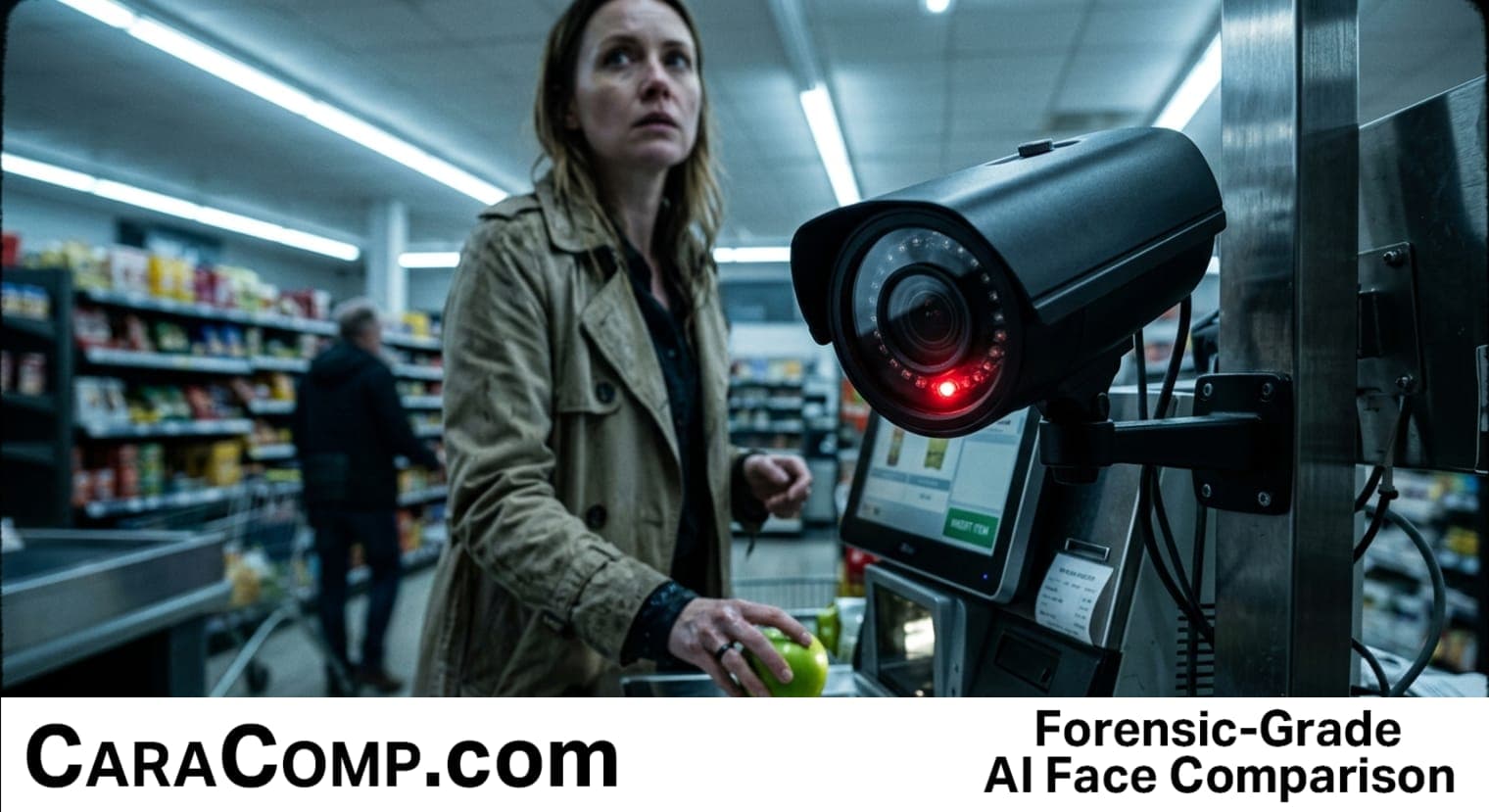
Picture this: you walk into your local supermarket for milk and bread, and a camera above the door has already scanned your face, run it against a watchlist, and decided whether you're a "person of interest" before you've even grabbed a cart. No cop involved. No warrant. Just a private company's facial recognition camera doing the job police might soon be banned from doing the same way.
TL;DR: A facial recognition camera in your grocery store may soon operate under looser rules than the same technology would face if police tried to use it, and almost nobody has explained to shoppers what that actually means for their face, their data, or their rights.
A facial recognition camera at your grocery store may face fewer rules than the same camera would if police used it, and that gap is exactly what should make you pay attention next time you walk through automatic doors.
Here's the part that should stop you mid-scroll: this isn't a hypothetical debate happening in some government meeting room far away from your life. It's happening at the checkout. According to The Register, Sainsbury's is planning to expand its facial recognition camera setup to 200 stores by the end of 2026. That's not a pilot program anymore. That's infrastructure.
Facial Recognition Camera Rules: Why Your Grocery Store Gets More Freedom Than the Police Do
Let's answer the obvious question first, because if you're reading this at 11pm wondering "wait, is my face being scanned right now at Tesco," the answer is: maybe, and the rules for that are still being written in real time. The UK has no dedicated law spelling out when a facial recognition camera can watch you, store your face, or flag you to a security guard. Police, who face actual legal scrutiny and are staring down a possible ban on certain uses of the technology, are somehow more constrained right now than the supermarket down the street. That's the flip nobody warned you about.
Starts at 00:14 — this story
Watch this story, in under a minute
A new briefing every weekday — three stories, three minutes.
Subscribe on YouTubeA 2019 survey found that only 38% of the UK public supported retail use of facial recognition, but more than 80% were fine with police using it, according to research cited by Coda Story. In other words, the public wanted the exact opposite of what's happening now. People trusted cops with this tech and were wary of shops. The system built since then does the reverse.
Facial Recognition Camera Data: Where Does Your Face Actually Go?
This is the question that actually matters at checkout: once a store's camera captures your face, where does that information travel? The uncomfortable answer, based on the UK's own Retail Crime Action Plan, is that it doesn't necessarily stay with the store. Retailers are asked to submit facial recognition captures into police digital evidence systems, where officers can then run that image against the Police National Database. Your grocery run just became part of a national biometric (your face, voice, or fingerprints, the body stuff that's uniquely you) search tool, and you were never asked. This article is part of a series, start with Character Ai Age Verification A Teens Id In A Database.
Nobody's saying every shop is doing this, or that every camera above a self-checkout is quietly feeding a police database. But the pipeline exists, and it exists without a clear law telling companies exactly when they're allowed to use it, how long they can keep your face on file, or who gets to see the match score (a number that tells the system how alike two faces are) when your face pops up as a "possible match" to someone on a watchlist.
Facial Recognition Camera Accuracy: What Happens When the System Gets It Wrong
Here's where it gets uncomfortable. Sainsbury's has claimed that 90% of people flagged by its facial recognition camera system never return to the store, framed by the company as evidence the tool works. But "they didn't come back" isn't the same as "we got it right." A customer at a Sainsbury's location was wrongly flagged as a shoplifter and told to leave the store, an incident the supermarket later chalked up to "human error," according to reporting cited by The Register. That's not a hypothetical edge case. That's a real person, standing at a real checkout, being accused of a crime they didn't commit because a machine matched their face to the wrong person.
"The biggest breakthrough for catching criminals since DNA matching."
UK Policing Minister, describing police facial recognition results, as reported by industry coverage of Metropolitan Police deployments
The Met Police made roughly 1,300 arrests over two years using live facial recognition camera deployments, including more than 500 arrests this year alone, with about 50 tied to serious violence and another 50 involving registered sex offenders breaching court conditions. Those are real numbers, and they explain why police keep expanding this tool even while lawmakers debate restricting it. The Met is projected to scan around 1.7 million faces in 2026, an 87% jump from 2025.
So you've got two systems running side by side. One (police) produces arrest numbers that politicians love to quote. The other (retail) produces a customer wrongly accused of theft in front of other shoppers. Guess which one is currently under more legal pressure to slow down?
Facial Recognition: Comparison Versus Recognition, and Why the Difference Matters
Industry people draw a line between facial "comparison" (checking your face against a small, specific watchlist a store built itself) and facial "recognition" (running your face against a huge government database to find out who you are). In theory, that distinction should matter for the law. In practice, once a supermarket's comparison data flows into a police recognition database, the line gets blurry fast. You thought you were being checked against a shop's own list of known shoplifters. You may have actually become searchable against a national criminal database.
| Where the facial recognition camera is used | What actually happens to your face |
|---|---|
| UK supermarket checkout | Camera compares your face to a private watchlist; minimal dedicated legislation currently governs storage or notice |
| UK police deployment | Live scan of the crowd against the Police National Database; facing possible legal restriction and new rules within roughly two years |
| Combined pipeline (Retail Crime Action Plan) | Store-captured facial recognition data can be submitted into police evidence systems and searched nationally |
Look, nobody's saying facial recognition camera technology is inherently bad. Police point to genuine wins, including catching people wanted for serious violence. But the accuracy problem doesn't disappear just because a use case sounds noble. Any system built on artificial intelligence comparing your face to a stored image can misfire, and when it does, a real shopper eats the consequences while the company or department involved calls it "human error" and moves on. Previously in this series: Kyc Process Why The Bank Selfie Maps 68 Face Points Podcast.
What This Means for You: One Real Thing to Watch For
If you've ever wondered whether a photo, a profile, or a face flagged by a camera is really who it claims to be, that's the exact question this whole category of technology exists to answer, for better or worse. Here's the one useful, concrete thing you can actually do: next time you're in a UK supermarket with visible security cameras near entrances or self-checkout, look for posted signage explaining facial recognition camera use. Under UK data protection law, stores using biometric identification are generally supposed to notify customers that it's happening. If you don't see a notice and you suspect a camera is doing more than basic loss-prevention monitoring, you can ask a staff member directly, or submit a subject access request to find out if the store holds a facial image or profile tied to you. That's not paranoia. That's just reading the label on what's actually happening at checkout.
Why This Facial Recognition Camera Gap Matters
- ⚡ No unified lawthe UK currently regulates police and retail facial recognition camera use through different, uneven rules, leaving shoppers unsure which set applies where they stand
- 📊 Real people get flagged wronglyat least one documented case shows a shopper accused of theft due to a facial recognition camera mismatch later blamed on human error
- 🔮 Data can cross overfacial captures from a store's own comparison system can end up inside police-run recognition databases under existing UK retail crime guidance
- 🔮 Public opinion got reversedpeople originally trusted police more than shops with this technology, and current policy runs the opposite direction
Where Facial Recognition Camera Technology Is Headed Next in UK Stores and Policing
New legislation covering police facial recognition camera use is expected within roughly two years, according to UK Parliament's own research body. That sounds reassuring until you remember retail deployment isn't waiting around for lawmakers. Sainsbury's 200-store rollout target lands in 2026, years ahead of any dedicated legal framework arriving to govern it. The gap between "the tech is already in your local shop" and "the law finally catches up" is exactly where ordinary shoppers get caught without protection.
This is the same pattern you see across the wider identity-tech world right now, whether it's a face recognition tool at a till, an age check on a gaming platform, or a digital ID app on your phone. The technology ships first. The rules show up later, sometimes years later, and usually only after enough people get hurt or wrongly flagged that it becomes a news story. Facial recognition cameras at UK supermarkets are just the version of that story currently playing out at the checkout line nearest you.
A facial recognition camera at your local UK supermarket currently answers to fewer rules than a police officer trying to use the same face recognition capability, and until the law catches up, the burden of noticing that gap falls on you at the checkout.
Facial Recognition Camera Notice: What UK Shops Are Supposed to Tell You
UK data protection rules generally require companies using a facial recognition camera for biometric identification to be transparent about it, meaning clear signage or notice before you're scanned. In practice, enforcement is inconsistent, and not every store posts obvious signage near self-checkout or entrance cameras. If you don't see a notice, that's worth asking about directly rather than assuming no camera is analyzing faces at all.
The strangest part of this whole story isn't that a supermarket wants to catch shoplifters. It's that the checkout lane, of all places, is now more legally permissive than a police officer standing on the same street corner. Next time the automatic doors slide open and a little green light blinks above them, ask yourself: who's actually watching, and who gave them permission? Up next: Character Ai Age Verification A Teens Id In A Database Podca.
facial recognition camera: Frequently Asked Questions
Do UK supermarkets have to tell you if a facial recognition camera is watching?
Generally, yes. UK data protection law expects businesses using biometric identification, including a facial recognition camera, to give clear notice, often through signage near entrances or self-checkout areas. Enforcement varies, and not every store is consistent about posting it. If you don't see a notice but suspect a facial recognition system is running, you can ask staff directly or request records the store holds about you.
What's the difference between true facial recognition and simple video monitoring in stores?
True facial recognition systems compare your face against a database or watchlist to identify or verify who you are, while ordinary video monitoring just records footage without matching faces to identities. Retail loss-prevention systems often blend both, using AI-driven facial recognition capture systems that analyze faces while also recording standard video for staff review.
How is home security facial recognition different from what supermarkets use?
Home security cameras with facial recognition features typically only recognize people you've pre-approved, like family members, rather than scanning strangers against a criminal watchlist. Supermarket systems flip that logic. They scan everyone entering and compare faces to a store-built list of flagged individuals, which raises very different privacy questions than a home security camera protecting your own front door.
Can police access facial data collected by a store's facial recognition camera?
Under the UK's Retail Crime Action Plan, retailers are encouraged to submit facial recognition captures into police digital evidence systems, where they can be searched against the Police National Database. This means data gathered by a store's own facial recognition camera isn't necessarily contained to that store. It can become part of a much larger law enforcement search tool without the shopper being directly informed at the moment of capture.
Why do some facial recognition camera systems produce blurry or low-quality facial data?
Poor lighting, camera angle, and older sensor technology can all reduce accuracy for a facial recognition camera, making it harder to capture high-quality facial data needed for reliable matching. Top equipment used in newer retail and home security deployments often includes better night performance and higher resolution specifically to reduce false matches, though even improved hardware hasn't eliminated wrongful flagging cases entirely.
Is facial recognition camera technology considered artificial intelligence?
Yes. A facial recognition camera relies on artificial intelligence to analyze facial features, generate a digital map of your face, and compare it against stored images or watchlists. This is the same underlying technology behind identity verification tools, some home security products, and law enforcement systems, though how each one is regulated, stored, and overseen differs enormously depending on who's operating it.
Ready for forensic-grade facial comparison?
Full forensic reports with detailed similarity scoring. Results in seconds.
Run My First SearchMore News
Deepfake lawsuit: Grok turned a clothed photo into abuse
An Arkansas family says an AI chatbot turned their daughter's ordinary photo into abuse material. The lesson for every parent: a photo doesn't have to be explicit to be dangerous.
digital-forensicsAI Deepfake Laws: 15,736 Victims in Six Months
A Henderson case involving AI-generated images of middle schoolers shows deepfakes aren't just a celebrity or scam-call problem anymore. Here's the tell that could protect you and your family.
facial-recognitionPolice facial recognition: AI tossed 94% of 108,000 faces
Interpol says it used AI to sort through more than 100,000 images and identify 126 suspected terrorists. The number that should worry you isn't the 126, it's the 94% a computer threw out before any human looked.