
EU Age Verification: European Commission Ends the ID Checkbox
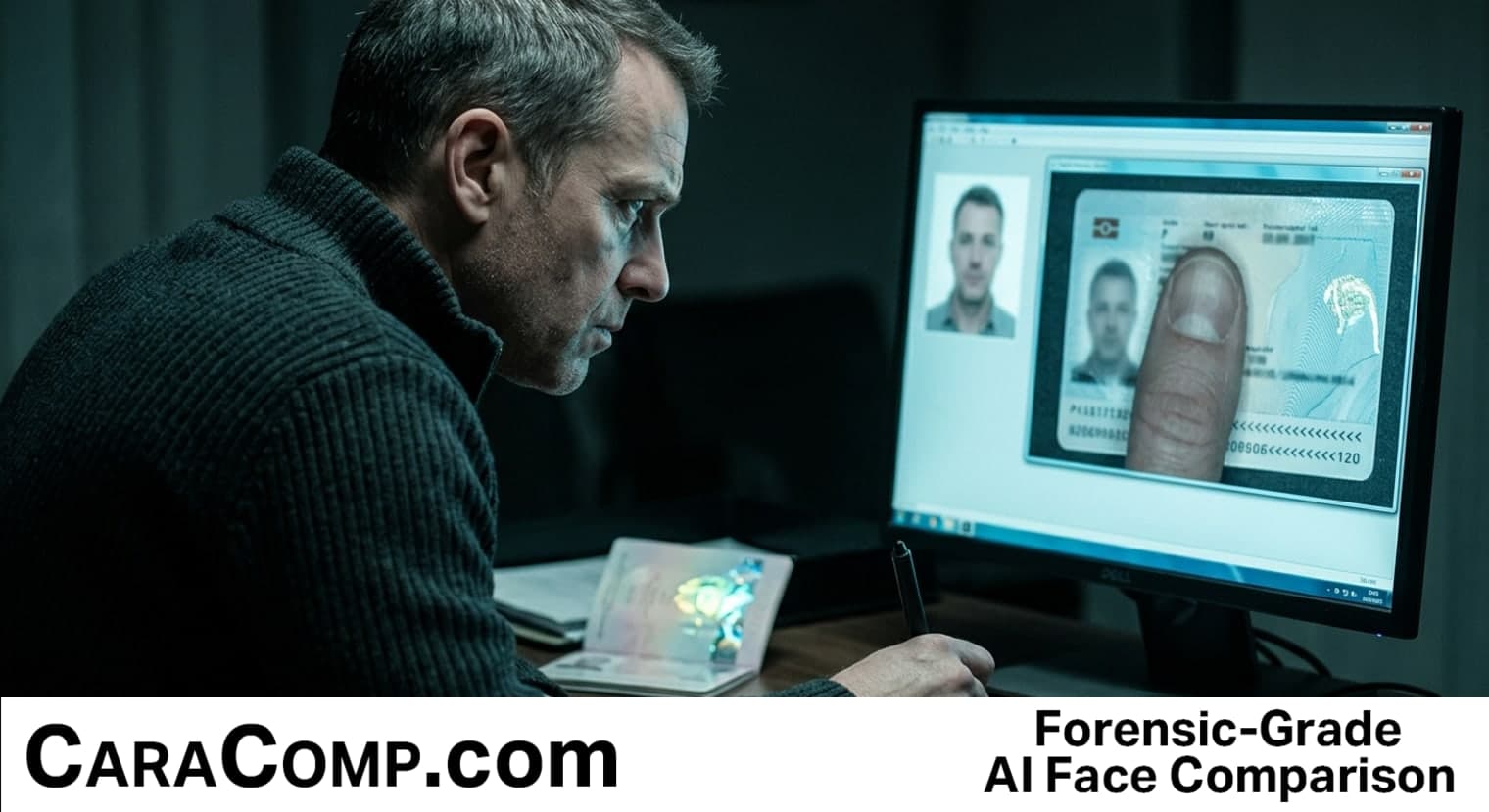
Picture this: it's 11pm, you're scrolling on your phone, and a site asks you to prove you're over 18. You've clicked that button a thousand times without thinking. But under a new EU plan, that click might not cut it anymore. Soon, you could be asked to scan an ID card instead.
TL;DR: EU age verification is moving away from the honor-system "I am 18" button toward document checks and a digital ID wallet, meaning adults across Europe may soon have to prove they are old enough to browse sites they already use every day.
Here's the thing nobody tells you about that little checkbox: it has never actually checked anything. You click "yes," the site shrugs, and you're in. A ten-year-old can click it just as easily as a grown adult. The European Commission has apparently had enough of that fiction. According to Around Prague, the European Commission is building toward a world where online services have to confirm your age with something real, not a click of good faith. This is a European effort, meant to work the same way for every member state rather than country by country.
This is part of a bigger push called the EU Kids Act, and it's not messing around. Platforms that don't put in place real age checks (meaning document-based or verified checks, not a checkbox) could face fines up to 6% of their global revenue, according to reporting cited by Around Prague. That is not a slap on the wrist. That's the kind of number that makes a company's lawyers cancel their weekend plans. The European Commission has framed this as a digital child-safety measure first and a compliance headache second, with children's online safety cited as the driving reason for the whole framework.
6%
of a company's global revenue is the potential fine for failing to properly verify user ages under the EU Kids Act framework
Source: Around Prague reporting on the EU KIDS Act
What eu age verification and the age verification app mean for the "I am 18" button
So what does eu age verification look like in practice, instead of in policy documents? The plan on the table is to swap the honor system for a check tied to something you actually own, like a government ID or a digital identity credential (basically a verified digital version of your ID that lives on your phone). Instead of clicking a box, you'd open an app, scan a document, and the site would get back a simple yes-or-no: old enough, or not. This article is part of a series, start with Character Ai Age Verification A Teens Id In A Database.
That "yes or no" part matters more than it sounds like it should, especially for data protection. The design the European Commission is reportedly building does not hand your birthdate, your name, or your ID photo over to the website that's asking. It just tells the site whether you clear the bar. That's a real shift in privacy terms from how identity checks have worked online until now, where you'd usually have to type your whole life story into a form just to buy something or sign up for a forum. The information a site receives is deliberately limited to a single yes or no answer.
Is the eu age verification app the same as a digital identity wallet?
Sort of, yes. The idea researchers describe is that you download the app once, load a document into it, and then reuse that same proof everywhere you need to access legally age restricted sites. Think of it as one credential you carry with you, rather than handing over your ID to every random website that asks. This identity wallet approach is meant to cut down on how much personal data any single site ever sees.
Why this eu age verification and digital identity shift is happening now
The honest answer is: because the current system is a joke, and everyone in the industry knows it. Self-declaration checkboxes have been the default for two decades, and they have never worked. According to data cited in reporting, over one-third of organizations report that underage users have already tried to get around their age gates. And despite that, most platforms are still leaning on the same checkbox from 2003. Only about 28% currently use anything closer to real biometric age assurance (systems that estimate your age from a scan of your face or from documents, rather than just asking).
Regulators across Europe, and the European Commission specifically, seem to be converging on two real verification methods: document-based checks, where you scan an ID, and facial age estimation, where a camera estimates roughly how old you look. Self-declaration is getting pushed out of the room entirely in regulated spaces. That's a big deal, because it means the "click here to confirm you're an adult" button that has defined the online world since forever might genuinely be on its way out.
The EU's solution uses cryptography that reveals only whether a user meets the age threshold, with no identity, date of birth, or other attributes stored or shared.
reporting via Around Prague
There's also a darker reason this is moving fast: deepfakes. Fake images and fake video made with AI are now good enough that people are using them to trick age verification tools, either to pretend to be older than they are or, disturbingly, to pretend to be younger. Reporting cited in the research found that 59% of people say they struggle to tell whether media is real or fake at all. When a screen full of pixels can lie convincingly, a click-through checkbox stops being a security feature and starts being a formality nobody trusts.
Why eu age verification app rollout matters for european member states
- ⚡ Real checks, real frictionadults will need to prove they are old enough more often, even for ordinary browsing
- 📊 Privacy by design, if it worksthe goal is a yes/no answer, not handing your ID over to every site, protecting data the site never needed in the first place
- 🔮 Faster fraud, faster fixesdeepfakes are already being used to fool age gates, so the system has to outpace fakes as they evolve
- 🌍 27 countries, one targetthe plan is for interoperable checks that allow EU users to move between member states with checks that work the same way by late 2026
Eu age verification methods vs the old "I am 18" button: what changes
Let's put the old system and the new one side by side, because the difference is genuinely stark once you see it laid out. Previously in this series: Deepfake 1 In 4 Teen Abuse Cases One Photo Enough Podcast.
| Old self-declaration button | New document-based check | Status |
|---|---|---|
| Anyone can click "yes" regardless of age | You must scan a real document or use a verified credential | Proposed 2026 |
| No proof, no record, no accountability | The site gets confirmation the user meets the requested age threshold | Proposed 2026 |
| Sites often collect your full birthdate anyway | Designed so sites only learn a yes or no, not your personal data | Privacy by design |
| Easy for kids to bypass in seconds | Harder to fake, though not impossible with deepfake tricks | Under review |
| No nationally designated issuer behind it | Tied to a nationally designated issuer, like a government ID authority | Member state led |
The table above is really the whole story in miniature. The old button asked nothing of you and protected nobody, especially not children. The new approach asks more of you upfront, but in theory gives back more privacy on the back end, because the website never actually sees your ID or your other personal data.
Does the european union identity app share my information with websites?
Based on the design described in the reporting, no, not in the way you might fear. The system is built so a website only learns that the user meets the age bar, not your name, birthdate, or document details. It's a one-way confirmation, not a data dump, and the information exchanged is kept to the bare minimum needed to allow eu users to prove they qualify.
The privacy trade-off around digital age and data nobody's talking about honestly
Look, nobody's saying this is simple. Here's where it gets uncomfortable: even a privacy-preserving age verification solution still requires you to trust the app, the phone it's on, and whoever built the verification system in the first place. Critics quoted in industry coverage worry about exactly this. Even a well-designed system creates new failure points: what if a fake app spoofs the real one? What if a shady "verification provider" pops up pretending to be legitimate? What happens when 27 different European member states try to make their own systems talk to each other without cutting corners?
And here's the part that should make you pause before you get too comfortable: it's still technically possible to dodge these checks using something like a VPN (a tool that disguises where your internet connection is coming from), which some critics point to as proof the system isn't airtight. But that doesn't mean the whole effort is pointless. A locked door that a determined burglar can eventually pick is still a lot better than no door at all, and it still raises the bar for casual attempts by minors to get around it.
If you've ever wondered whether a photo, a profile, or a login really belongs to who it claims to, that's the exact question this whole category of technology exists to answer. And here's one thing you can actually do, starting now, before any of this becomes mandatory: pay attention to whether a site asks you to prove your age or just asks you to declare it. If a service suddenly switches from a checkbox to asking for an ID scan or a verified digital credential, that's not a random annoyance. That's this exact policy shift showing up in your browser, months or years before most people notice it happening.
Eu age verification is shifting from a checkbox you click to a document or digital credential you actually have to produce, and the real test will be whether it can confirm you're old enough without collecting more of your personal data than necessary.
What happens next with the digital eu age verification app across member states
The reported timeline points to interoperable rollout across EU member states by late 2026, with the app itself described as open-source and built around minimal data collection. If that holds, this becomes less of a "one country tries something new" story and more of a continent-wide European standard, the kind that other governments outside Europe tend to copy once it's proven out (see also: how GDPR became the template for privacy rules well beyond Europe's borders). Up next: Character Ai Age Verification A Teens Id In A Database Podca.
For now, the honest takeaway is this: the "I am 18" button had a good, lazy run. It asked nothing of anyone and protected almost no one, least of all children. What replaces it will ask more of you, the ordinary adult just trying to check a site, in exchange for actually keeping kids off places they shouldn't be. Whether that trade feels fair probably depends on one thing: whether the sites on the other end of that scan can be trusted to only take the "yes" and leave the rest of your data alone.
eu age verification: Frequently Asked Questions
Will I have to show ID just to browse normal websites in Europe?
Under the proposed system, you likely won't need to show ID for every website, only ones that are required to check age, like adult content sites or certain social media platforms. The idea is that once you prove your age once through a verified digital identity app, you can reuse that proof to access legally age restricted sites across European member states without repeating the process each time, keeping your personal information out of most sites' hands.
How does the eu age verification app know I'm actually old enough?
You download the age verification app once and load a real document, like a national ID, that comes from a nationally designated issuer, meaning an official government body responsible for identity documents. Once verified, the app can confirm to a website that you clear the requested age threshold without revealing your actual birthdate or other personal information to that site, which is the whole point of the privacy design.
Does the European Commission's plan store my personal data somewhere?
Based on the reported design, the goal is the opposite: the system is built around data protection, avoiding storing or sharing your identity, birthdate, or documents with the websites you visit. Instead, it's meant to give a simple confirmation that the user meets the age requirement. Whether every implementation actually holds to that standard once 27 European member states build their own versions is the real open question for online safety.
Can someone still fake their age using AI or a deepfake?
It's a real risk regulators are actively worried about. Researchers note that a majority of people already struggle to tell real media from fake, and there have been documented attempts to use AI-generated faces or documents to trick verification systems. Document-based checks tied to a verified digital identity credential are considered harder to fool than simple face-based age estimation, but no security system is completely immune yet.
Why is the EU doing this instead of just improving the checkbox?
Because the checkbox was never a real check to begin with, it was just a click. Data cited in reporting shows more than a third of platforms have already seen underage users bypass their existing age gates, yet most still rely on self-declaration. European regulators decided that a system anyone, including children, can lie their way past in one second isn't worth calling "verification" anymore.
What's the difference between this and the digital ID used in UK pubs?
They're related ideas but different systems. The UK's approach lets pubs accept digital ID as proof of age for buying alcohol in person, while the EU age verification proposal is aimed at online services and social media, using a broader document-based or app-based check across European member states rather than one country's specific use case, with a stronger focus on protecting children online.
Ready for forensic-grade facial comparison?
Full forensic reports with detailed similarity scoring. Results in seconds.
Run My First SearchMore News
Deepfake: 1 in 4 Teen Abuse Cases, One Photo Enough
A new study found AI involved in 1 in 4 teen sexual-abuse cases. Here's why an ordinary school photo is now something families need to protect like a password.
facial-recognitionFacial recognition camera: face recognition in 200 stores
Supermarkets are getting the green light to use AI facial recognition cameras on ordinary shoppers, even as police face new limits on the same technology. Here's what that means for your next grocery run.
digital-forensicsAI voice cloning: fake relatives cost Greeks €1 million
A Greek crime ring used AI voice cloning to sound exactly like people's relatives on the phone and walked away with over a million euros. Here's the one habit that would have stopped it cold.