
Australia Deepfake Romance: Six Fingers, $180,000 Gone
Quick answer
How do deepfake romance scams fool people in Australia?
They work because trust is built over weeks of daily contact before any flaw appears, so victims explain glitches away. Scammers use AI photos, cloned voices and live-looking video. Scamwatch recorded $28.6 million in romance scam losses in Australia in 2025. Asking for an unscripted live video action can expose a fake.
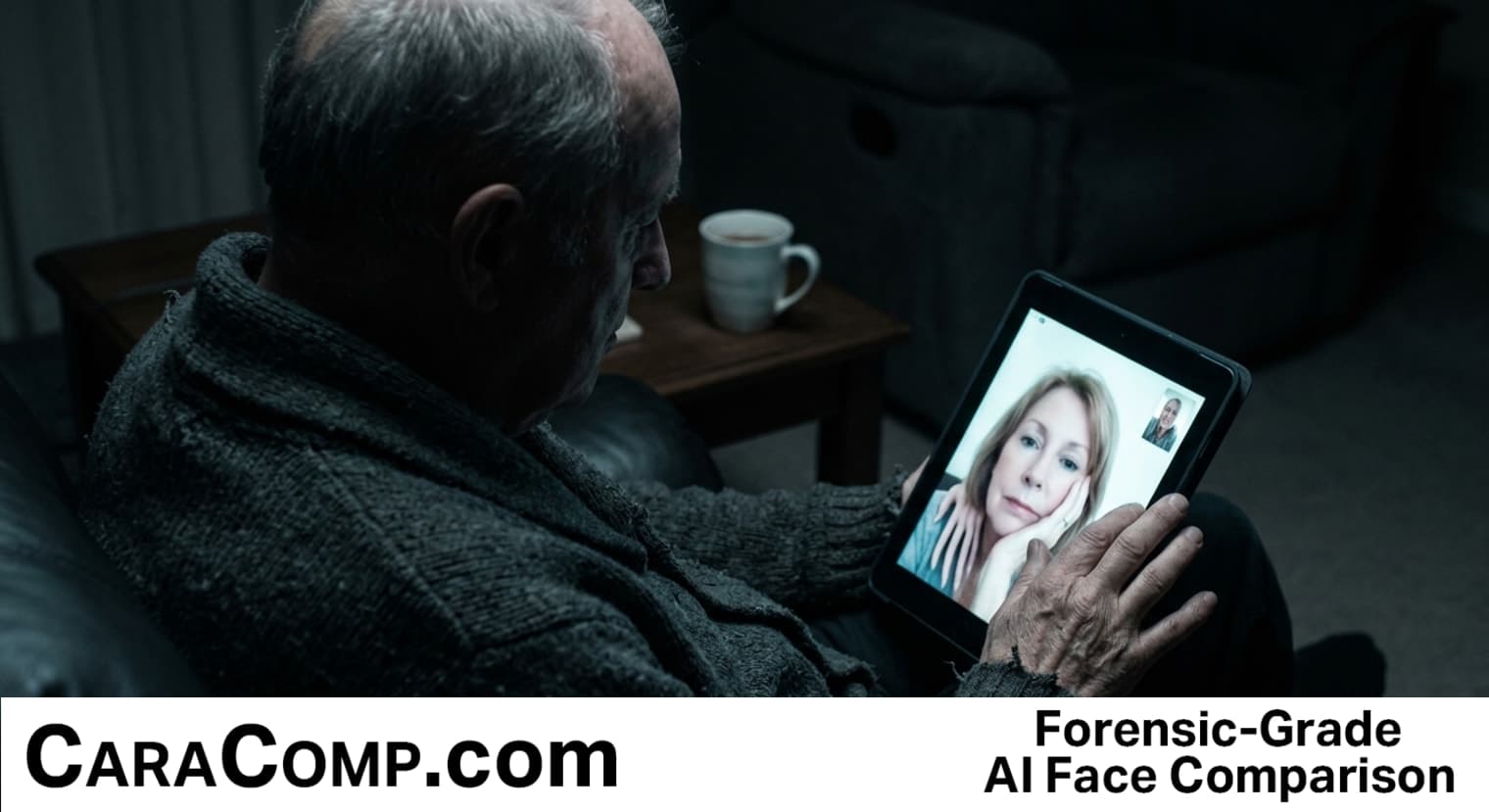
Six fingers. That's the detail that should have ended everything. Instead, a 73-year-old retired psychologist in Australia kept talking to "Melanie" for months, kept believing her, and eventually handed over $180,000 before anyone, including him, caught on.
Australia deepfake romance scams are no longer rare internet horror stories, they're a documented, growing pattern where AI-generated partners exploit loneliness so effectively that even an obvious visual glitch, like a hand with an extra finger, doesn't stop the money from moving.
Australia deepfake romance scams are hitting record numbers, and this week's most striking case proves that a visible AI mistake, six fingers on camera, isn't enough to break the emotional grip once someone's invested.
Here's the part that should worry you more than the money. According to YourLifeChoices, the Australian man, a retired psychologist, someone whose entire career was built on understanding how people think, didn't spot the glitch himself. It took a cybersecurity expert looking at the video calls to notice Melanie's hand had one finger too many. A man trained to read human behavior missed a warning sign that, once pointed out, looks almost comically obvious. That's not a knock on him. It's the whole point of this story.
Why Australia Deepfake Romance Scams Keep Working Even When the Fake Looks Fake
Let's get the numbers on the table first, because they're bigger than most people realize. Scamwatch, Australia's official scam-tracking service, recorded more than $28.6 million in romance scam losses between January and December 2025, a 21.8 per cent jump, spread across 1,330 reported victims. That's not a handful of unlucky people. That's a pattern, and it's accelerating.
Starts at 00:12 — this story2:48
Watch this story, in under a minute
A new briefing every weekday — three stories, three minutes.
Subscribe on YouTubeWhat's changed isn't the scam itself, con artists have been faking love for money since long before the internet existed. What's changed is the tooling. Scammers can now generate a convincing profile photo in seconds, write messages that sound emotionally responsive (not stiff, not robotic, genuinely warm), clone a voice from a few seconds of audio, and produce a short video that "proves" the person is real during a live call. The technical wall that used to protect people, "a scammer would never bother faking video just for me", basically doesn't exist anymore. This article is part of a series, start with Deepfake Audio.
And yet the six-fingered hand got past a man smart enough to spend a career studying human psychology. That's not a story about gullibility. It's a story about timing. By the time the visual flaw showed up on screen, "Melanie" had already been messaging him daily, remembering details about his life, responding to his loneliness with exactly the warmth he needed. The fake romance had already done its job before the fake finger ever appeared.
How Do Deepfake Romance Scams Actually Trick Australians?
They don't rely on perfect fakes. They rely on time and repetition. A scammer builds trust slowly, days, sometimes weeks, before ever asking for money, so by the time something looks off (a blurry hand, a laggy video, skin appears too smooth), the victim has already built an emotional habit around this person. Breaking that habit feels like a loss, not a relief.
The Psychology Behind Why an Obvious Deepfake Still Fools You
There's a reason your brain doesn't treat "one weird detail" as proof of fraud. Psychologists call it the availability heuristic, basically, your brain reaches for the explanation that's easiest to imagine, not the one that's most accurate. If you've spent six weeks talking to someone who feels caring and consistent, "bad lighting" or "cheap webcam" is a much easier thought to reach for than "this entire person is generated by software." Nobody wants to conclude they've been talking to a machine. So they don't.
Researchers at UNSW Sydney have been studying exactly this vulnerability pattern, pointing to loneliness, impulsivity, trust in perceived authority, and a deep psychological need for consistency with decisions you've already made. Translation: once you've told yourself "this person loves me," walking that back feels like admitting you were wrong about something important. Scammers know this. They're not just faking a face. They're exploiting a well-documented feature of how human commitment works.
The quality of deepfakes varied widely, from highly realistic to low-quality, so we cannot guarantee these technologies have reached a point of trusted authenticity that can't be detected most of the time.
research summary via Centre for Emerging Technology and Security, Alan Turing Institute
That's a fair counterpoint, and worth sitting with. Amateur deepfakes still get caught by trained eyes and sharp tools all the time. But here's the flaw in treating that as reassuring: victims aren't hiring cybersecurity experts to vet their new romantic interest in week two. They fall in love first, or something close to it, and the glitches only get spotted afterward, usually by a worried adult child, a bank, or, in this case, an expert brought in once the money was already gone. Previously in this series: Texas Deepfake Law One School Photo Is Now Enough.
Why Australia Deepfake Romance Cases Are Becoming a National Pattern
- ⚡ Scale is realAustralian Federal Police have issued more than 5,000 text alerts warning citizens about active romance scam campaigns, according to SecurityBrief Australia.
- 📊 Money follows trust, not logicthe $180,000 lost in this case wasn't handed over in one lump sum; it built up gradually, the same way the relationship did.
- 🔮 AI fraud is projected to hit $40 billion globally by 2027this isn't one sad story, it's infrastructure-level financial harm.
- 🎥 Video calls no longer prove anythinga live-looking video can now be generated in real time, which is exactly what happened to "Melanie."
What Real Video Evidence Looks Like Compared to a Deepfake Romance Scam
People assume a fake video will "obviously" look fake. It doesn't, most of the time, that's the entire point of the technology. But there are consistent tells, and knowing them in advance (before you're emotionally invested) is a lot more useful than trying to spot them once you already care.
| What real video usually shows | What a deepfake video call often shows |
|---|---|
| Natural hand and finger movement | Extra or missing fingers, blurred or "melted" hand shapes |
| Consistent lighting across the face and background | Lighting on the face that doesn't match the room behind them |
| Skin texture with pores, small blemishes, natural shadows | Skin appears too smooth, almost airbrushed, even in bad lighting |
| Audio and lip movement that line up exactly | A slight delay or mismatch between the voice and the mouth |
| Willingness for an unscripted, spontaneous video call | Constant excuses, bad connection, camera broken, "can't call right now" |
Notice something about that table: none of these tells matter if you're not looking for them. That's the real lesson from this Australian case. The technology to catch a fake exists and isn't even that exotic. What's missing, almost every time, is the moment where someone actually stops and checks, before the relationship, not after.
Can You Spot a Deepfake Romance Scam Before Sending Money?
Yes, but only if you check early, not after months of messaging. If someone avoids live video, reuses oddly polished photos, or moves fast toward affection and then toward money, treat those as connected warning signs, not isolated quirks. The moment someone asks for money is the moment to stop and independently verify who you're actually talking to, using a method they don't control.
If you've ever swiped past a dating profile and had a flicker of "does this person actually look like this photo," that instinct is worth trusting more, not less. That's exactly the question this kind of identity-checking technology exists to answer, not "is this person nice," but "does this face and this story actually connect to a real, verifiable person." One genuinely useful thing you can do right now, before any of this gets emotional: ask for an unscripted, live video call where you request a specific, unplanned action, touch your ear, hold up three fingers, turn sideways under different lighting. Real-time deepfake generation still struggles with sudden, unscripted requests. A person stalling, refusing, or freezing on that ask is telling you everything you need to know.
Australia deepfake romance scams don't succeed because the fakes are flawless, they succeed because emotional trust gets built long before anyone thinks to look for a mistake, and by the time the deepfake shows a crack, like six fingers on one hand, the victim's judgment has already been quietly overridden.
The retired psychologist in this story reportedly shut down his internet accounts entirely after the scam came to light, not just the dating profile, all of them. Think about what that says. This wasn't a man who got fooled by a bad Photoshop job. This was a man who trusted his own decades of professional judgment about people, watched it fail against a piece of software, and decided the safest response was to disappear from the internet altogether. That's not paranoia. That's a rational response to discovering the ground you were standing on wasn't real. The scarier question isn't whether "Melanie" had six fingers. It's how many other AI girlfriends and boyfriends are out there right now with exactly five. Up next: Behavioral Biometrics.
australia deepfake romance: Frequently Asked Questions
What exactly happened in the australia deepfake romance case involving six fingers?
A 73-year-old Australian man, a retired psychologist, developed an online relationship with an AI-generated woman named "Melanie" and lost roughly $180,000 over time. A cybersecurity expert reviewing the video calls afterward noticed Melanie's hand showed six fingers, a common deepfake glitch, but the man himself had not caught it during months of contact, according to YourLifeChoices.
Are deepfakes making romance scams worse across Australia news coverage this year?
Yes. Scamwatch data shows romance scam losses reaching $28.6 million in 2025, a 21.8 per cent increase, and Australian Federal Police have sent more than 5,000 text alerts warning citizens about active scam campaigns. Australia news outlets have increasingly flagged AI-generated video and cloned voices as the newest tools scammers use to make fake identities feel real during calls.
What role does esafety play in protecting Australians from AI romance scams?
Australia's eSafety Commissioner focuses on online abuse, image-based abuse, and digital safety education, and increasingly addresses AI-generated content as part of that mission. While eSafety doesn't handle every scam report directly, it's a key resource for understanding online abuse patterns, reporting harmful content, and finding safety guidance if you or someone you know has been targeted by a deepfake.
Why do scam victims stay convinced even after seeing a video call?
Because video no longer proves someone is who they claim to be. Real-time deepfake tools can generate a convincing face and voice live during a call, and once someone feels emotionally attached, their brain looks for reasons to explain away small flaws rather than question the whole relationship. This is a documented psychological pattern, not a personal failing, it's exploited deliberately.
Where can I report an online scam or abuse involving a fake profile?
In Australia, Scamwatch is the main government service for reporting scams, and eSafety handles online abuse and harmful content reports. Reporting matters even if you didn't lose money, it helps authorities track patterns, warn others, and, in some cases, take down networks of fake profiles running the same scam script across multiple platforms and dating apps.
Ready for forensic-grade facial comparison?
Full forensic reports with detailed similarity scoring. Results in seconds.
Run My First SearchMore News
Social Media Age Verification: Apps Want Parents' IDs Next
The "enter your birthday" box is on its way out. Here is what social media age verification and parental consent could ask of your family, and what to check before you hand anything over.
ai-regulationAI Voice Cloning: 3 Seconds of Audio Can Fake a Loved One
Lithuania wants people to have legal rights over their own voices. That tells us a familiar voice on the phone is no longer proof of who is calling.
ai-regulationDeepfake: Fake Kiss Photo of Georgia Mayor Outran the Law
A fake photo of College Park's mayor spread before anyone was held accountable. Here's why that could happen to anyone, and what to do first.