
Social Media Age Verification and Parental Consent Rules
Quick answer
Does social media age verification actually keep kids safe?
Not reliably. Research evaluating deployed age checks found they do not consistently protect minors and can raise privacy risks, and no tested method held up against a determined attacker. Roblox users also reported wrong age guesses. Supporters, including a Federal Trade Commission official, still call the technology child-protective.
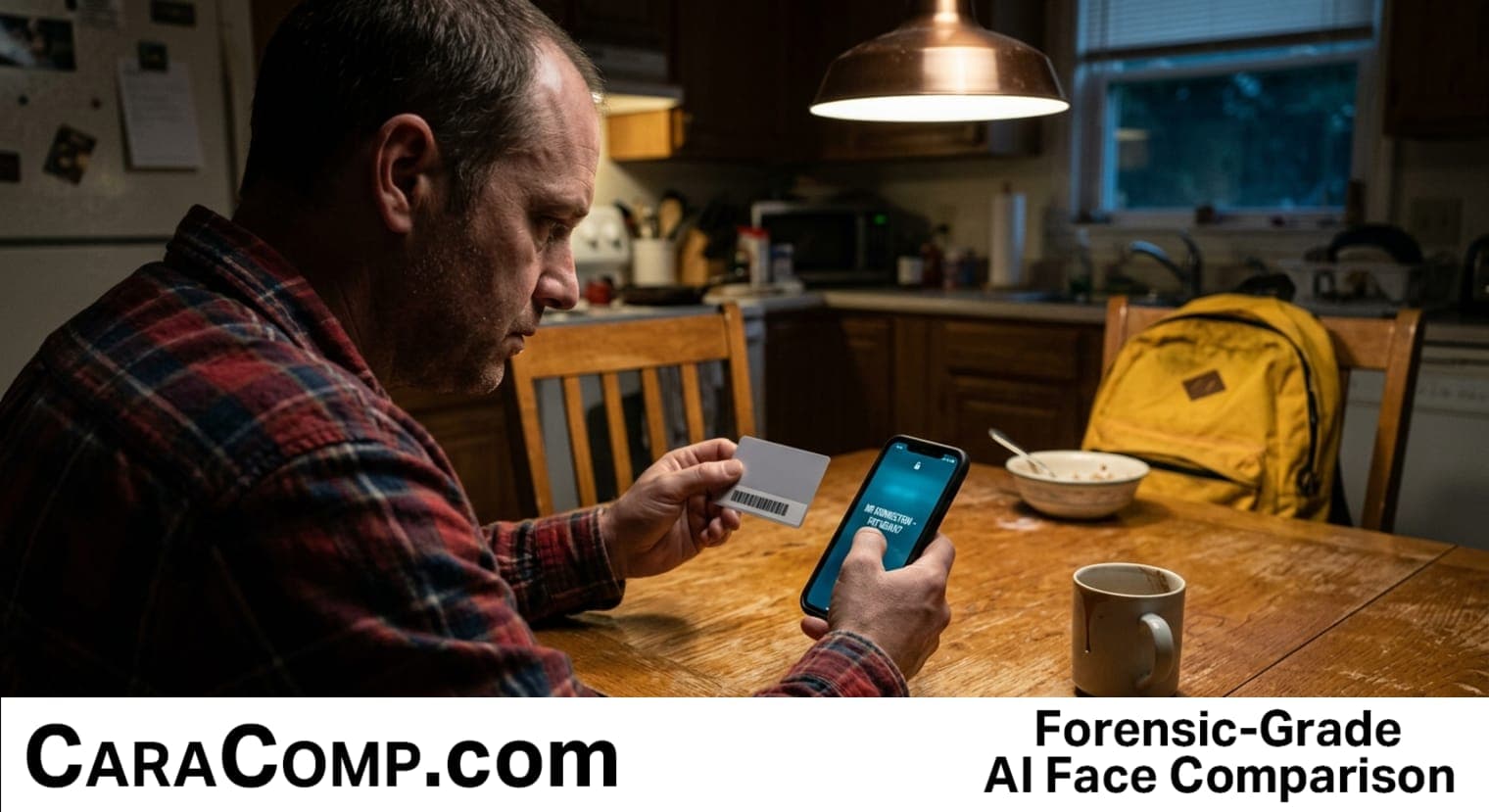
Picture the next time your kid begs for a new app. They type a birthday, tap "continue," and you never hear about it. That quiet little moment is ending. Social media age verification is moving from a typed-in date to something that may involve you, your ID, and your face.
Social media age verification is coming for families, which means parents may soon approve children's accounts and hand over personal information to do it, so know what is being asked before you say yes.
Social Media Age Verification Is Coming: What Changes for Parents
Here is the short version. Lawmakers and child-safety groups are pushing for two things at once: proof of age, and parental consent for children on social media platforms. In Pakistan, a news report from the Associated Press of Pakistan urged exactly that combo. In India, a draft rule would make parental consent mandatory for children's social media accounts. And in the United States, the pieces are already falling into place.
New York's SAFE For Kids Act is set to take effect on January 25, 2027. That is not a typo from the far future. It is a calendar date you can put on your phone. A state-by-state breakdown on Wikipedia shows a growing number of other states, Indiana among them, with parental consent requirements and age-verification laws of their own. Some are enacted. Others are still pending or tied up in court.
Sit with that number for a second. Age verification asks you to trust a company with an ID. Companies have already lost IDs. Both things are true at once, and the laws mostly talk about the first one.
Social Media Age Verification Laws: What "Commercially Reasonable" Really Means
Many of these laws say social media platforms must use "commercially reasonable" methods to verify age. That is lawyer language for "whatever works well enough and doesn't cost too much." In practice, age assurance usually means one of three things: uploading a government ID, taking a video selfie that estimates your age from your face, or linking a child's account to a parent's profile for approval.
It is already happening. YouTube runs AI age estimation across the US and applies age restrictions to accounts it flags as under 18. Meta puts every user under 18 into restricted Teen Accounts with parental oversight built in. Industry write-ups, like this overview of how platforms handle age checks, describe it as routine. In reality, the debate moved from "should we" to "it's live" while most of us weren't looking. This article is part of a series, start with Deepfake Fake Kiss Photo Of Georgia Mayor Outran The Law.
Does Social Media Age Verification Actually Protect Children?
Not reliably, according to the best evidence we have so far. A research paper on arXiv evaluated deployed age-verification systems and found they do not consistently protect minors, while raising privacy risks. The researchers found no tested method that held up against a determined, realistic attacker. Think of a teenager with a borrowed ID or a clever workaround, which describes roughly all young people.
The Electronic Frontier Foundation, a digital rights group, reached a similar view in its 2025 review of state laws. Its title says it all: states chose surveillance over safety.
Real life backs this up. After Roblox began requiring face-based age checks (biometric data, meaning your face or voice, the body stuff that is uniquely you) to unlock chat, some users reported wrong age guesses. Other users found ways around it. NBC News covered both the failures and the growing worry about data breaches.
Age verification technologies are some of the most child-protective technologies to emerge in decades.
An FTC official, describing the Federal Trade Commission's support for limited data collection for age checks
That is the other side, and it deserves a fair hearing. The Federal Trade Commission recently said it supports platforms collecting limited personal information to check ages. Supporters also argue that building parental consent into social media signup creates accountability, even when the technology is imperfect. I think that is partly right. A parent in the loop beats a kid alone with a birthday box. My worry is the word "limited." Who decides what limited means?
Parental Consent Online: What You May Be Asked to Do
Expect your role to grow. A platform may ask you to confirm you are an adult, link your profile to your child's, and approve content and features one at a time. That is a real chore, and it comes with a real question. Is this social media platform asking for the minimum, or for everything it can get? Previously in this series: Ai Voice Cloning 3 Seconds Of Audio Can Fake A Loved One.
Social Media Age Verification Law News Today: What Is Passed, Pending, or Still Unclear
Social media laws change fast, and court fights keep reshaping them. Here is how the common methods compare, using what the research found.
| Method | What the family hands over | Biggest worry |
|---|---|---|
| Typed birthday (age attestation, the old way) | Nothing but a date; no proof of age needed | Children can lie, so it protects almost no one |
| Government ID upload | A photo of your license or passport | A breach exposes an ID; a 2025 breach exposed 70,000 |
| Video selfie age estimate | Your face, scanned by software | Wrong age guesses, as Roblox users reported |
| Parent profile link (parental consent) | Your account details and approval | Platform may collect more about the whole family |
Notice the pattern. Each step up in proof asks for more of your information. None of them is a clean win.
Why Social Media Age Verification Matters to Your Family
- Your role changes because social media platforms may need a real adult to approve a child's account.
- Your data is the price since IDs, selfies, and account details may be requested to prove who you are.
- Protection is not guaranteed because researchers found deployed systems do not reliably stop minors.
- Timing is close with New York's law due January 25, 2027, and social media platforms already rolling out checks.
What Should Parents Do Before Handing Over an ID for Age Verification?
Ask one question before you upload anything: what happens to this the moment the check is finished? If the platform cannot say plainly whether it keeps your ID or selfie, and for how long, treat that as your answer. Check the privacy page of the app and of any websites that run the check, and prefer options that only need an age estimate over ones that store a full ID.
If you have ever wondered whether a photo or a profile is really who it claims to be, that is the exact question this kind of age-verification technology exists to answer. It runs both ways here. The platform wants to know you are a real adult. You deserve to know the platform is a real, careful keeper of what you hand it. Be as picky about the second as they are about the first.
Honest caveat: I could not find one single article matching the exact headline from the Pakistani report, so treat that piece as a sign of where the global conversation is heading, not as a source of specific rules. The US dates and research above are what I can stand behind.
Social media age verification is arriving with parental consent online attached, and the safest move is to treat every request for your ID or your child's face as a trade, where you decide what you will give and ask what they will keep. Up next: Social Media Age Verification Apps Want Parents Ids Next.
Here is the part nobody puts on the signup screen. The old birthday box asked your kid to lie. The new age verification system asks you to trust. Which one is the bigger gamble: a child typing the wrong year, or a parent uploading a driver's license to a company that may lose it?
Social Media Age Verification: Frequently Asked Questions
What is social media age verification?
Social media age verification is a check that a user is old enough to use an app or certain features. Instead of just typing a birthday, users may upload a government ID, take a video selfie that estimates age, or have a parent approve the account. The goal is to keep younger children away from content and features meant for adults, though researchers say current age verification systems are not reliable.
When does New York's SAFE For Kids Act take effect?
New York's SAFE For Kids Act is set to take effect on January 25, 2027. It requires platforms to use commercially reasonable methods to check age, and it requires parental consent before minors get certain features. Other states have their own rules, and some are enacted while others are pending, so the details vary depending on where your family lives.
Do age checks really keep kids safe?
The evidence so far is mixed at best. Research evaluating deployed systems found they do not reliably protect children and can raise privacy risks. Roblox users reported inaccurate age estimates, and some users found ways around the checks. Supporters, including a Federal Trade Commission official, say the technology is still child-protective, so the honest answer is that it helps a little and has real costs.
Is it safe to give a platform my ID for parental consent online?
It depends on how the company handles it. A 2025 data breach at a customer service firm exposed 70,000 government IDs, so the risk is real. Before you upload anything online, look for how long the platform keeps your ID, who else sees it, and whether a less revealing option, such as an age estimate, is offered instead.
Where can I find social media age verification law news today?
Because rules change often and courts keep reshaping them, check a state-by-state tracker such as the Wikipedia breakdown of US age verification laws, then confirm with your state's official pages. Look for whether each law is enacted, pending, or blocked. Digital rights groups like the Electronic Frontier Foundation also publish yearly reviews that explain what the laws mean in plain terms.
Ready for forensic-grade facial comparison?
Full forensic reports with detailed similarity scoring. Results in seconds.
Run My First SearchMore News
AI Voice Cloning: 3 Seconds of Audio Can Fake a Loved One
Lithuania wants people to have legal rights over their own voices. That tells us a familiar voice on the phone is no longer proof of who is calling.
ai-regulationDeepfake: Fake Kiss Photo of Georgia Mayor Outran the Law
A fake photo of College Park's mayor spread before anyone was held accountable. Here's why that could happen to anyone, and what to do first.
digital-forensicsJanhvi Kapoor Deepfake: Any Face Online Can Be Faked
Janhvi Kapoor called deepfake abuse "bordering on sexual assault." Her point reaches far past celebrities: anyone with a photo online can be targeted, and a pause could protect you.