
AI Voice Cloning: Can Someone Clone Your Voice From 3 Seconds?
Quick answer
Can AI voice cloning fake a family member's voice?
Yes. Cloning software can copy how someone sounds from a few seconds of audio, and people often cannot tell the copy from the real voice. A familiar voice on the phone is therefore not reliable evidence of who is calling. Check urgent money requests by calling back on a saved number.
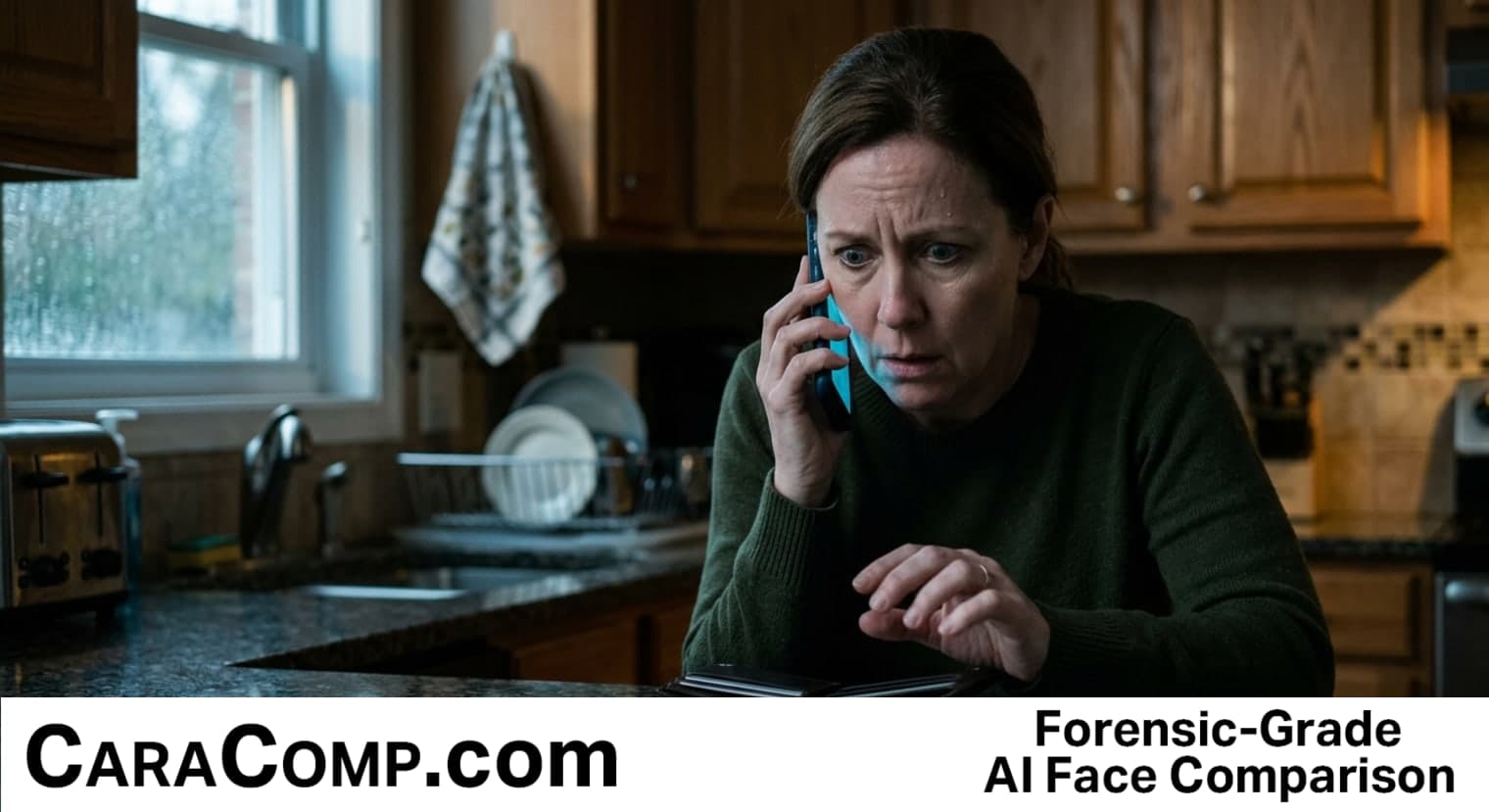
Picture a call at 11pm. It's your daughter, crying, and she needs money right now. It sounds exactly like her. Every instinct says to act, and that is exactly what AI voice cloning (software that copies how a person sounds) is built to exploit.
AI voice cloning has gotten so good that Lithuanian lawmakers want to make your voice legally yours, and the lesson for everyone is simple: a familiar voice is no longer proof of who is calling.
AI voice cloning is moving from weird tech story to personal safety problem, and the safest habit is to confirm any urgent money request on a second channel before you act.
Why AI voice cloning just became a matter for lawmakers
Here's the short version. Lawmakers in Lithuania have proposed changes to the country's Civil Code (its main rulebook for private disputes). Under the plan, nobody could reproduce, publish, or use your voice without your consent. Anadolu Agency reported the proposal.
One of the authors, lawmaker Vytautas Kernagis, made a point that should land with anyone who owns a phone. As AI improves, it gets harder to tell a real recording from an imitation. That raises the risk of both fraud and disinformation (false stories spread on purpose).
AI advances make it increasingly difficult to distinguish genuine recordings from AI-generated imitations, raising the risk of disinformation and fraud.
Lawmaker Vytautas Kernagis, proposal author, as summarized by Anadolu Agency
I think this is bigger than one small country's paperwork. When a government has to write down that your voice belongs to you, it's admitting something. The old assumption, that a voice is hard to fake, has already broken in real life. The law is chasing cloning technology, not predicting it.
How AI voice cloning works with only three seconds of audio
You don't need a recording studio to clone a voice. According to Vectra AI, about three seconds of audio can create a clone with roughly 85% accuracy. Think of the clips you and your family already post: a birthday video, a voicemail greeting, a story on social media. This article is part of a series, start with Deepfake Fake Kiss Photo Of Georgia Mayor Outran The Law.
The tools are cheap too. The research I reviewed describes consumer voice cloning software that costs less than a streaming subscription. A scammer can grab a short voice sample, run it through one, and create a usable fake voice in under 30 minutes. That's an afternoon errand, not a Hollywood operation.
That 148% figure comes from Adaptive Security. It tells you this isn't a "someday" worry. A voice cloning scam is a thing that is happening to ordinary people this year.
What the Lithuania voice cloning proposal would actually change
Let's be honest about what a law can and can't do. A consent rule gives a person something to point to. If unauthorized cloning of your voice ends up published without your say-so, you'd have a clear legal claim. That matters for a singer, a teacher, or a local news anchor whose voice is part of their livelihood.
But a scammer running a fake emergency call isn't going to read the Civil Code first. The Lithuania voice cloning bill is a safety net after the damage. It does not stop the call from ringing. Which means the daily protection still has to come from habits, not statutes.
Is a voice now something you own, like a photo?
That is the idea. Your face, your voice, and your fingerprints are all biometric data (the body stuff that's uniquely you). Lithuania's plan treats the voice as part of that bundle. Photos and faces already get this kind of thinking in many places. Voices are catching up.
| Old assumption | What AI voice cloning does to it |
|---|---|
| "I know that voice, so it's them" | A cloned voice can sound the same, so recognition alone proves nothing |
| A bank using voice biometrics (your voice as a password) | One fake voice can unlock a system built on a single check |
| Fraud needs hacking skill | A cheap app and a short clip from social media are enough for creating a cloned voice and running a voice cloning scam |
| Voice rights are a celebrity issue | Proposed rules in Lithuania would give every person consent rights over a copied voice |
Can AI voice cloning fool a family member?
Yes, and often. Research summarized for this piece says people can't reliably tell a cloned voice from the real one. Panic makes it worse. A frantic tone, a bad connection, and a crying "please don't tell Dad" are exactly the cover a fake needs. Trusting your ears is no longer a safe plan.
Money is where it gets expensive. Interface AI reports that a deepfake scam ring used AI-generated voices to open accounts at HSBC, with losses above US $193.2 million. The same source says 91% of U.S. banks are rethinking voice authentication. In other words, the people with the most to lose have already stopped trusting a voice by itself. Previously in this series: Deepfake Fake Kiss Photo Of Georgia Mayor Outran The Law.
Sam Altman, the CEO of OpenAI, warned the Federal Reserve in July 2025 about a "significant fraud crisis" tied to voice cloning, according to Aurigin AI. When the people building the tools say that out loud, it's worth listening.
Why AI voice cloning changes more than phone scams
- Families need a way to prove who is calling that doesn't depend on how someone sounds.
- Employers face real money risk. One report puts 2025 losses from business email compromise using voice cloning at $3.046 billion.
- Banks are learning that voice authentication used alone is a single point of failure (one thing breaks and everything falls).
- Schools and clinics that confirm identity by phone will need a second check too.
Is this really a new problem, or just old fraud?
Fair question. Impersonation scams existed long before AI. The strongest counterpoint I found says the real gap is discipline: no callback number, no code word, no second confirmation for big requests. That's true, and it's good news, because discipline is something you can build tonight. But cloning does remove the old tell, the voice that sounded slightly off.
What to do before the next AI voice scam call arrives
Start with the unglamorous fix. Pick a family passphrase (a secret word only your household knows) and agree that any money request must include it. Choose something that can't be guessed from your social media. Tell the grandparents first, since they're the favorite target.
Next, use a separate channel. Hang up and call the person back on the number you already have saved. Or text them. A real emergency survives a 60-second pause. A scam usually can't.
What a voice cloning scam wants from you
Speed. Every one of these calls pushes you to act before you think: wire it, buy gift cards, don't tell anyone. If a call combines panic, secrecy, and money, treat the voice as a claim to be checked, not as proof.
Here's the gentle CaraComp note. If you've ever wondered whether a photo, a profile, or a voice is really who it claims to be, that's the exact question identity-checking technology exists to answer. The one useful thing to carry away: ask for proof that doesn't live in the voice itself. A passphrase, a callback, a second channel. The Entersekt view for banks is the same advice: use layers, not one lock.
AI voice cloning means a familiar voice is no longer proof of identity, so confirm every urgent money request through a second channel or a family passphrase before you act. Up next: Ai Voice Cloning 3 Seconds Of Audio Can Fake A Loved One.
Lithuania is asking whether your voice belongs to you. The sharper question for the rest of us is what happens the first time a voice we love asks for help and we have no way to know. Decide your passphrase now, while the phone is quiet. Do it before AI voice cloning picks the moment for you.
AI voice cloning: Frequently Asked Questions
What is AI voice cloning?
AI voice cloning is software that learns how a person sounds and then produces new speech in that voice. It can say things the person never said. Research cited in this article says about three seconds of audio can be enough for a clone with roughly 85% accuracy. A short clip from a social media video is often all a scammer needs to create a convincing fake.
What is the Lithuania voice cloning proposal?
Lithuanian lawmakers have proposed changes to the Civil Code that would require consent before a person's voice is reproduced, published, or used. Lawmaker Vytautas Kernagis, one of the authors, pointed to how hard it has become to tell real recordings from AI imitations. It is a proposal, so details could change before anything becomes law.
How can I tell if a call is an AI voice scam?
You often can't tell by listening, because people struggle to spot a cloned voice. Watch for pressure instead: urgency, secrecy, and a request for money or private information. Hang up and call the person back on a number you already have, or send a text. Ask for your family passphrase. A real loved one will understand the delay.
Why are banks rethinking voice biometrics?
Voice biometrics means using your voice like a password. If a cloned voice can pass, one fake call can open the door. Interface AI reports that 91% of U.S. banks are rethinking voice authentication for this reason. The safer approach is layers: a voice check plus a device check or a one-time code, so no single trick works alone.
Does a family passphrase really help against a voice cloning scam?
Yes, because it moves the proof away from the voice. A scammer can copy how someone sounds, but they can't guess a secret word that was never posted online. Pick something unusual, share it in person, and agree that no money moves without it. Change it if you think it leaked. Pair it with calling back on a saved number.
A voice clone is a digital copy of how a person sounds, built from a recording of their speech. The software studies pitch, rhythm, and tone, then produces new sentences in that voice. Voice clones are not magic. They are pattern copying, and a short clip gives the software enough to start.
People often ask whether a scammer can clone your voice from a single social media video. The research in this article says a few seconds of audio can be enough for a rough copy. That is why it makes sense to think twice about posting long, clear recordings of your voice where strangers can download them.
Voice cloning is the umbrella term, but you will see other names for the same idea. Some people say vocal cloning, others say a custom voice, and some products describe themselves as AI-powered voice cloning. The label changes while the risk stays the same: a copied voice that sounds like someone you trust.
Not every use of this technology is harmful. A cloning tool can help a person who has lost their speech, or let a creator narrate a video. The trouble starts when someone uses a cloning tool without the owner's consent. That is the gap the Lithuanian proposal is trying to close.
Scammers like a cloning voice that is easy to build and hard to spot. They do not need a perfect copy. A rough clone, a bad phone line, and a frightened listener are often enough. Pronunciation slips or odd pauses can be explained away as stress, so do not count on catching a mistake in the moment.
Today's AI technology can also work across languages and accents, which makes the problem wider than one country or one community. A clone does not have to stay in the speaker's first language. That is one more reason the safest check is not about how a call sounds at all.
If you want to protect yourself, think about which voice clones could be made from what you share. A public video with clear speech gives more material than a private chat. You do not have to disappear from social media. Just know that quality audio posted publicly can be reused, so share with care.
Many people hope that tools will simply detect every fake. Detection can help, but it is a race, and a clone that fools a listener can also fool a rushed check. That is why a simple habit beats hope. Agree on a family passphrase now, and you can clone voices all day without winning a single trick on your household.
For banks and workplaces, the lesson is the same. If a system trusts a voice alone, one clone voice can slip through. Adding a second check, such as a one-time code or a callback to a known number, makes the attack much harder. A few extra minutes of checking is cheap next to the cost of a mistake.
If you ever get an alarming call, take a few minutes before you do anything. Hang up, breathe, and call back on a saved number. Real family members can wait for minutes while you check. A scammer relying on a voice clone needs you to skip that step.
If you want a plain rule to remember, here it is. Do not use a voice as proof, because anyone could clone your voice or the voice of someone you love. Use a passphrase, a callback, and a second channel instead. These habits cost nothing, and they work no matter how good AI voice cloning becomes.
Talk about this with your family this week, including the children and the grandparents. Explain that a voice can be copied, that a scary call may not be real, and that checking is never rude. Teaching everyone the same simple steps is the best defense against a voice clone built from a few seconds of speech.
Ready for forensic-grade facial comparison?
Full forensic reports with detailed similarity scoring. Results in seconds.
Run My First SearchMore News
Deepfake: Fake Kiss Photo of Georgia Mayor Outran the Law
A fake photo of College Park's mayor spread before anyone was held accountable. Here's why that could happen to anyone, and what to do first.
digital-forensicsJanhvi Kapoor Deepfake: Any Face Online Can Be Faked
Janhvi Kapoor called deepfake abuse "bordering on sexual assault." Her point reaches far past celebrities: anyone with a photo online can be targeted, and a pause could protect you.
digital-forensicsDeepfake Financial Fraud: Cloned Bosses Steal €95 Million
A bank lost €95 million to a fake voice and face on a video call. Here is what it means for your own family, and the one rule that protects you.