In-depth educational content on facial recognition, biometrics, and AI technology.
Most investigators look at a deepfake video and see a convincing face. Here's what they're missing: two types of algorithmic artifacts hidden in the pixels that
That "99% accurate" facial recognition claim has a very important asterisk attached to it, one that could make or break an investigation. Here's what the benchm
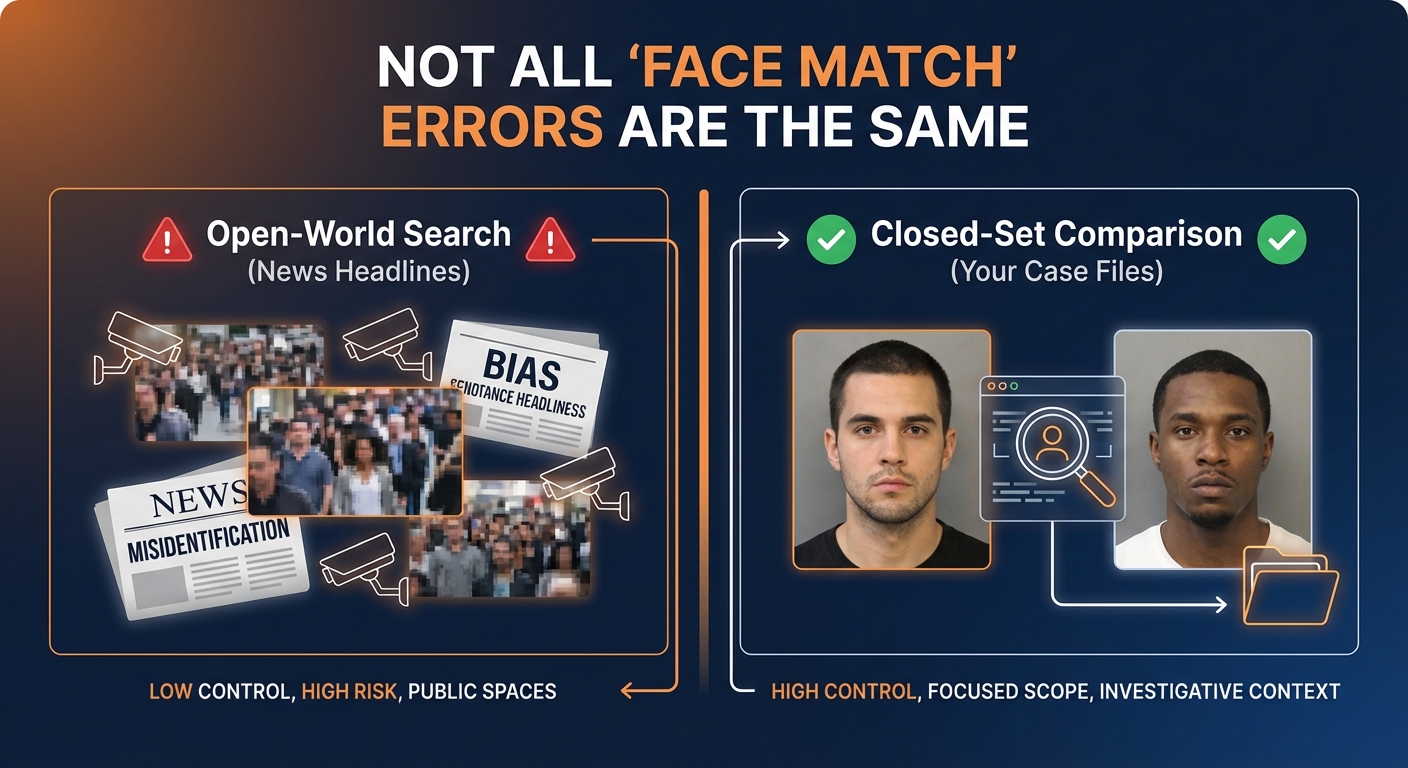
"Facial recognition is biased" dominates the headlines, but the mistake quietly wrecking investigations isn't bias. It's investigators treating two completely d
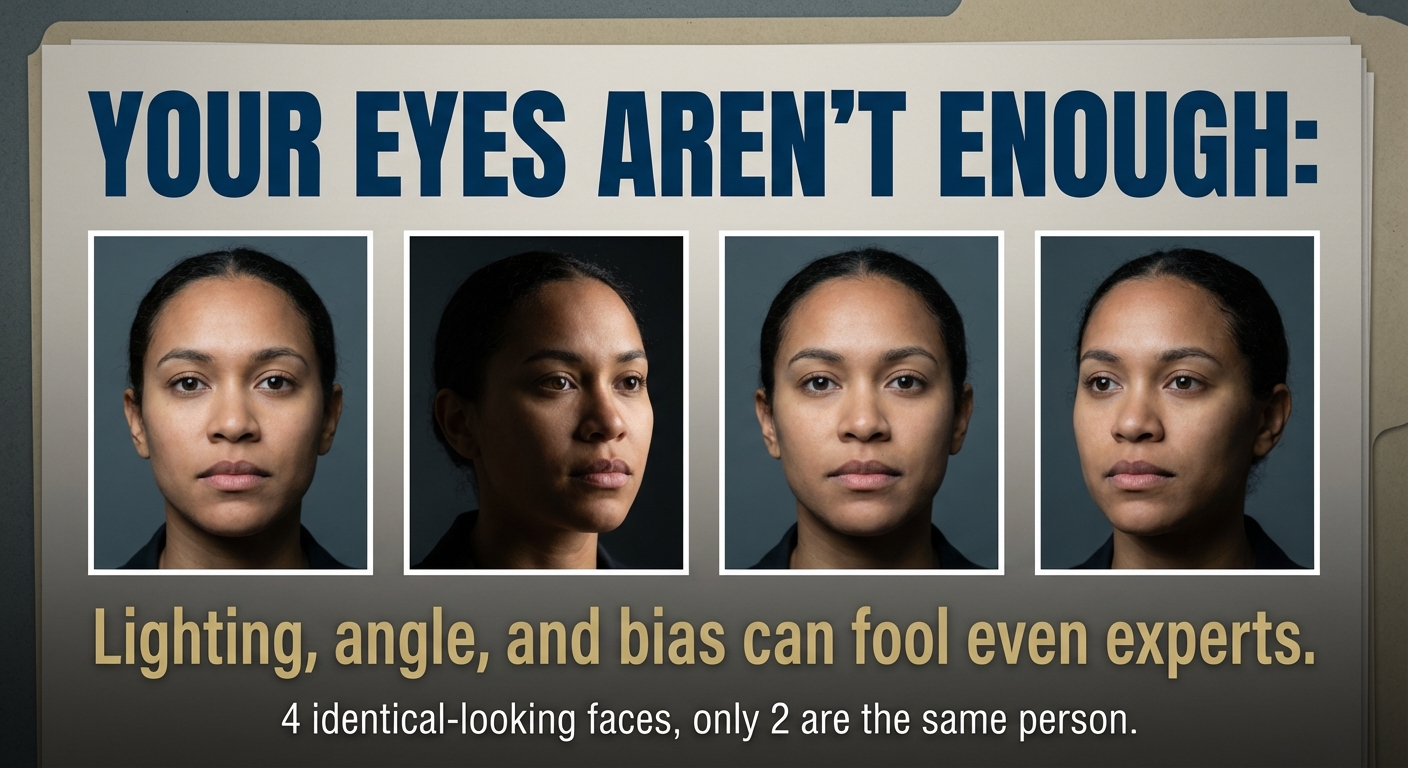
Your eyes aren't as objective as you think. The same bias traps that cause AI to misidentify Black and Asian faces are quietly distorting every manual face comp
Validating facial recognition with a handful of familiar test photos isn't a quality check, it's a demographic statement. Here's what the research actually show
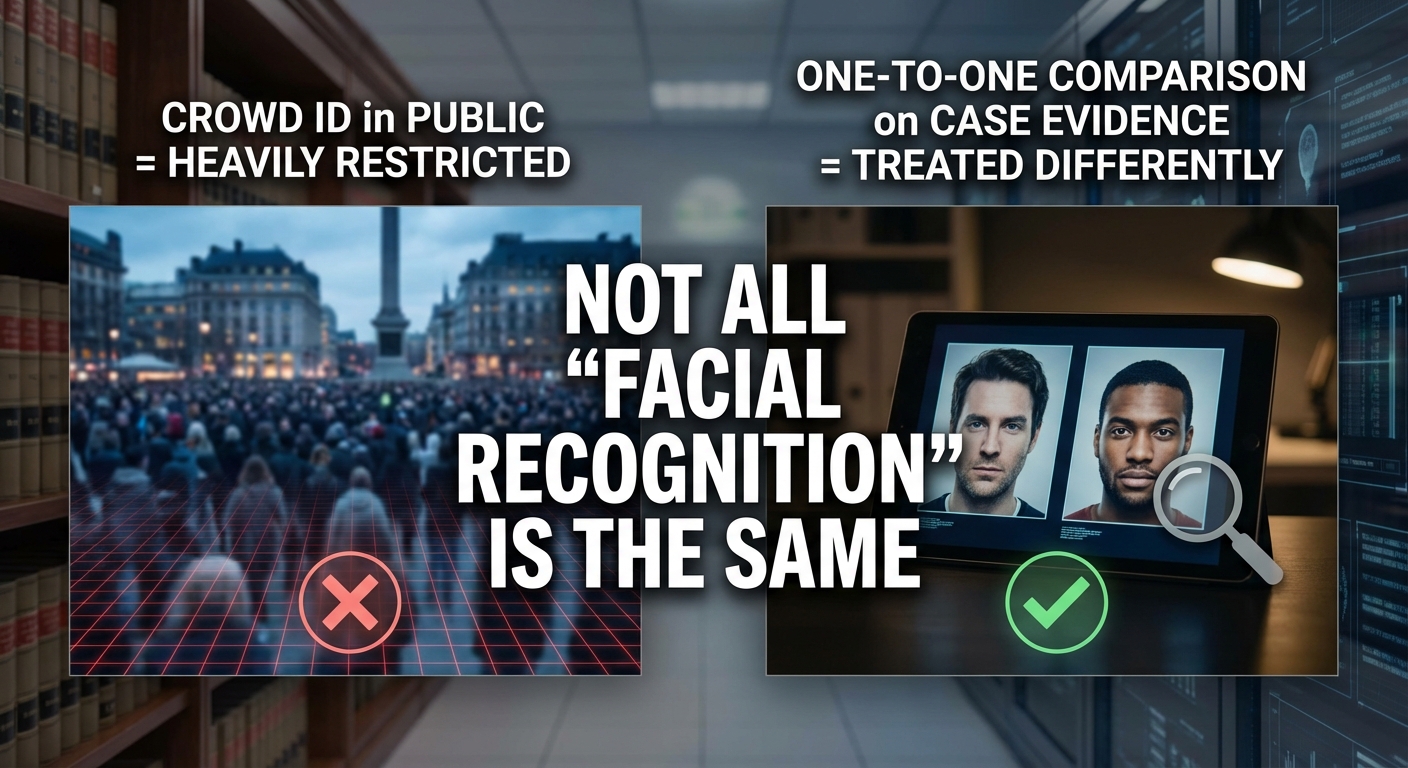
Lawmakers aren't banning facial recognition, they're drawing a hard legal line between mass crowd-scanning and controlled, one-to-one facial comparison on evide
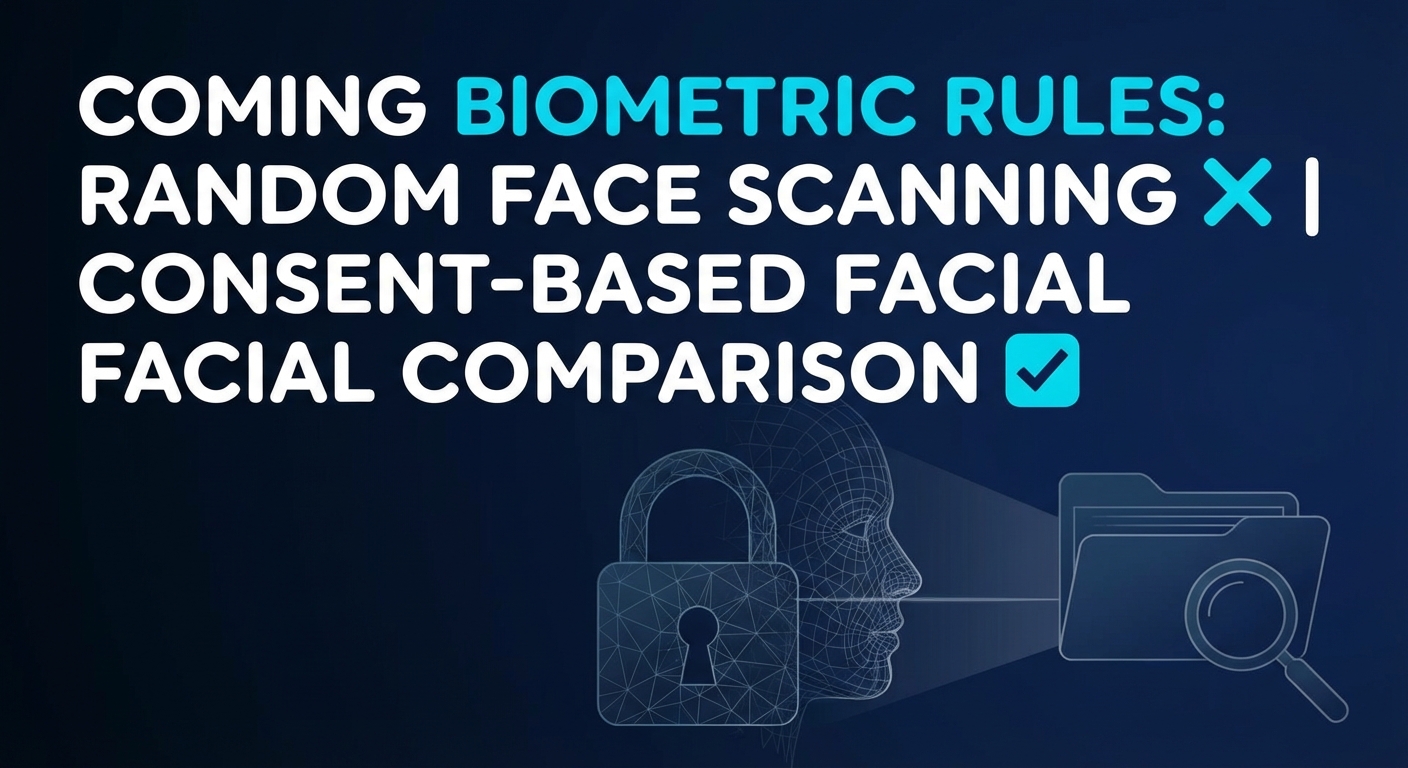
The biggest legal risk in facial comparison work isn't an AI error, it's using face photos in ways regulators have already decided are illegal. Here's what the
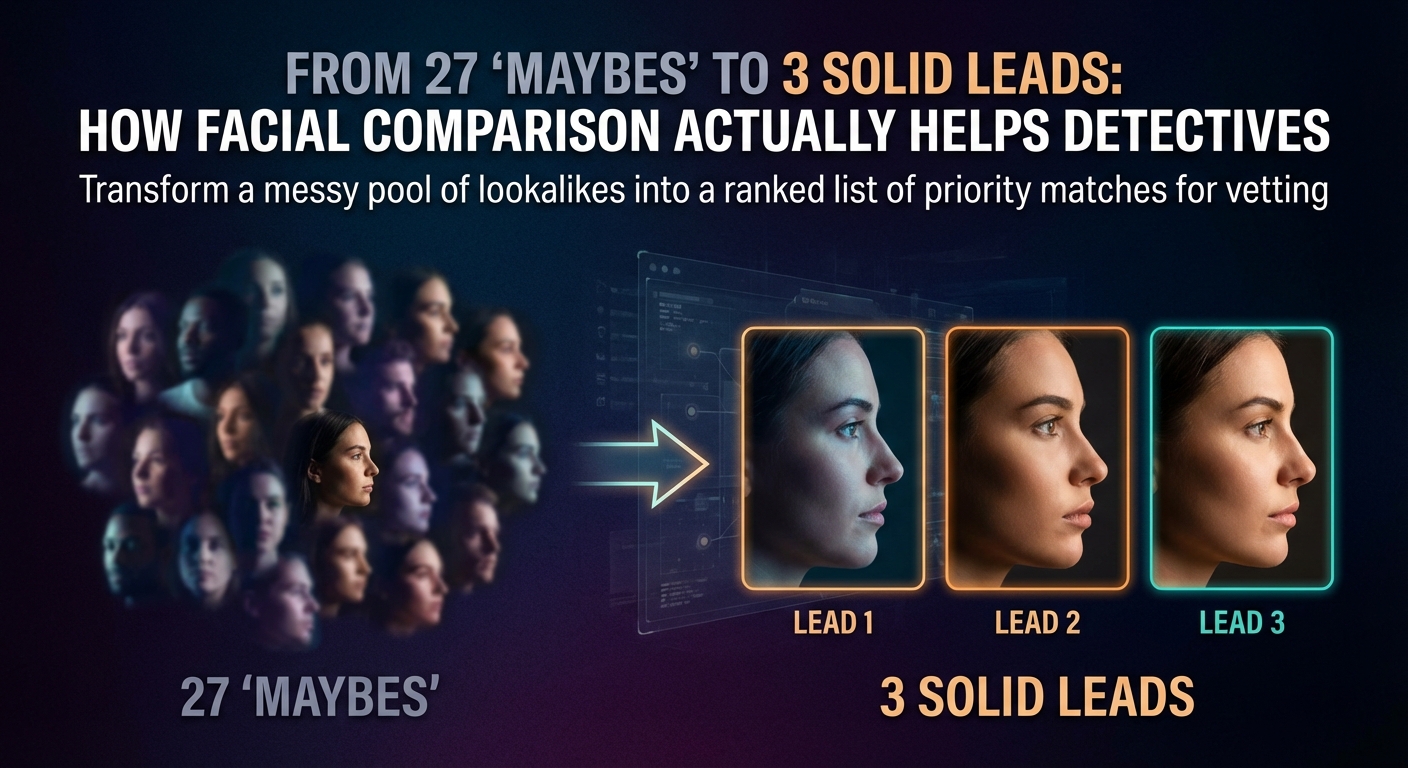
Most detectives think facial tech is about scanning crowds. The real power is quietly collapsing 27 ambiguous faces from 6 cameras into a short, defensible list
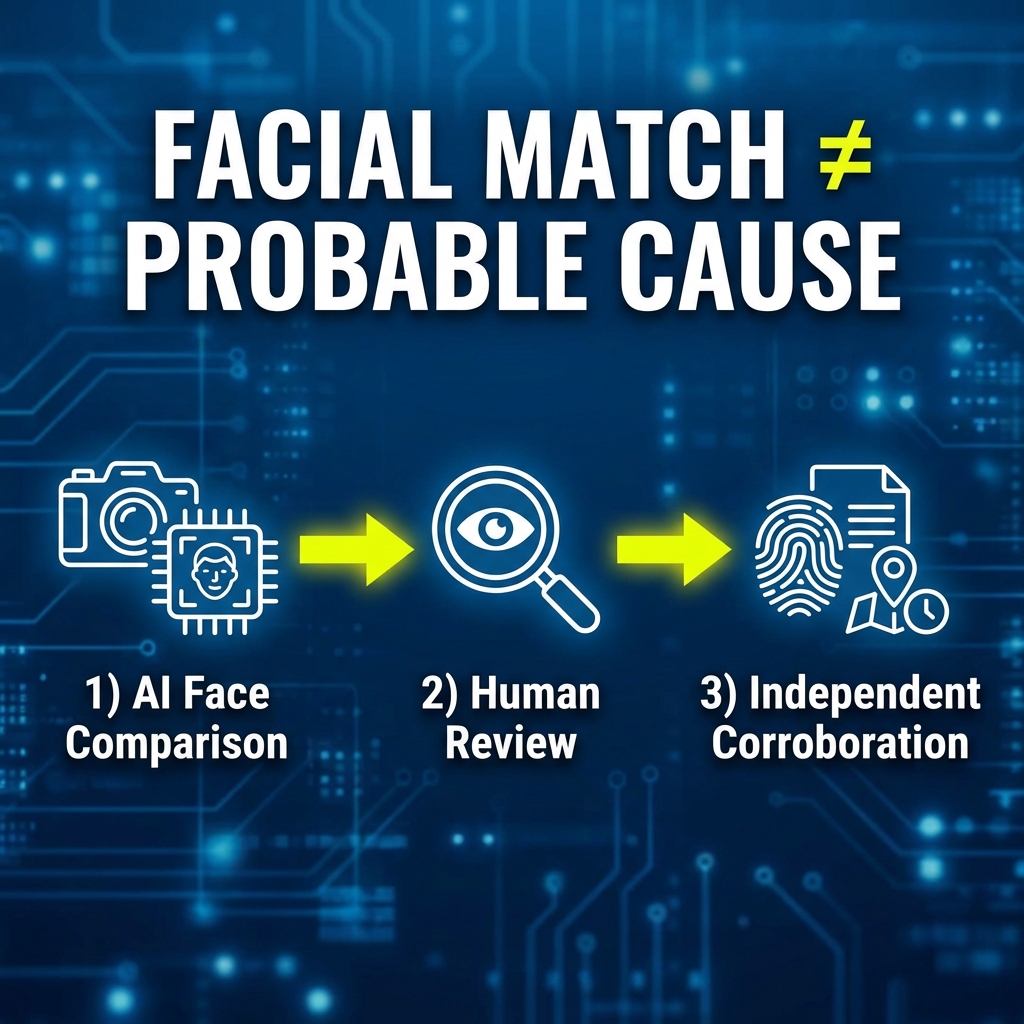
When investigators treat a facial match as proof instead of a starting point, innocent people go to jail. Here's the workflow that fixes that, and the science b
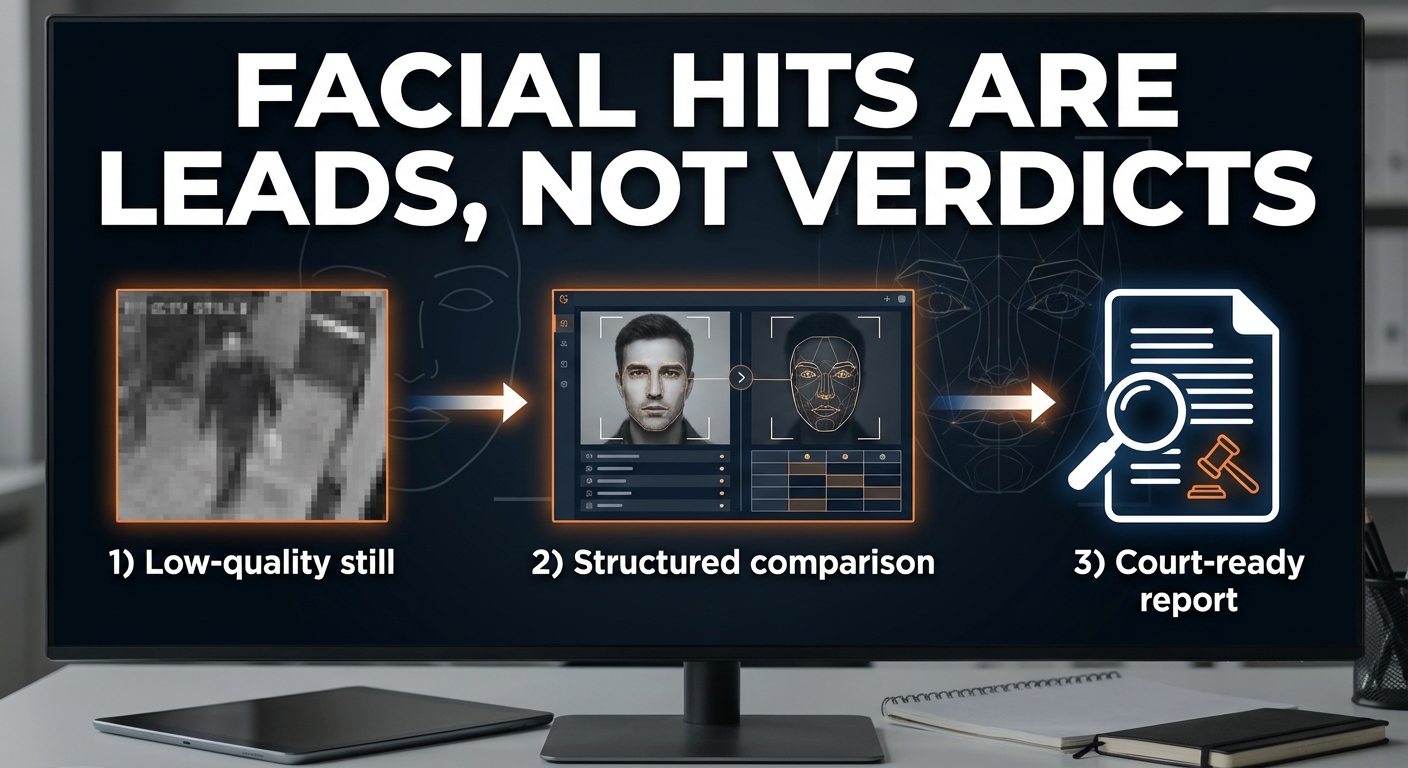
One bad facial "hit" can derail a case. One disciplined comparison can save it. Here's exactly how investigators turn a shaky CCTV still into a court-ready lead
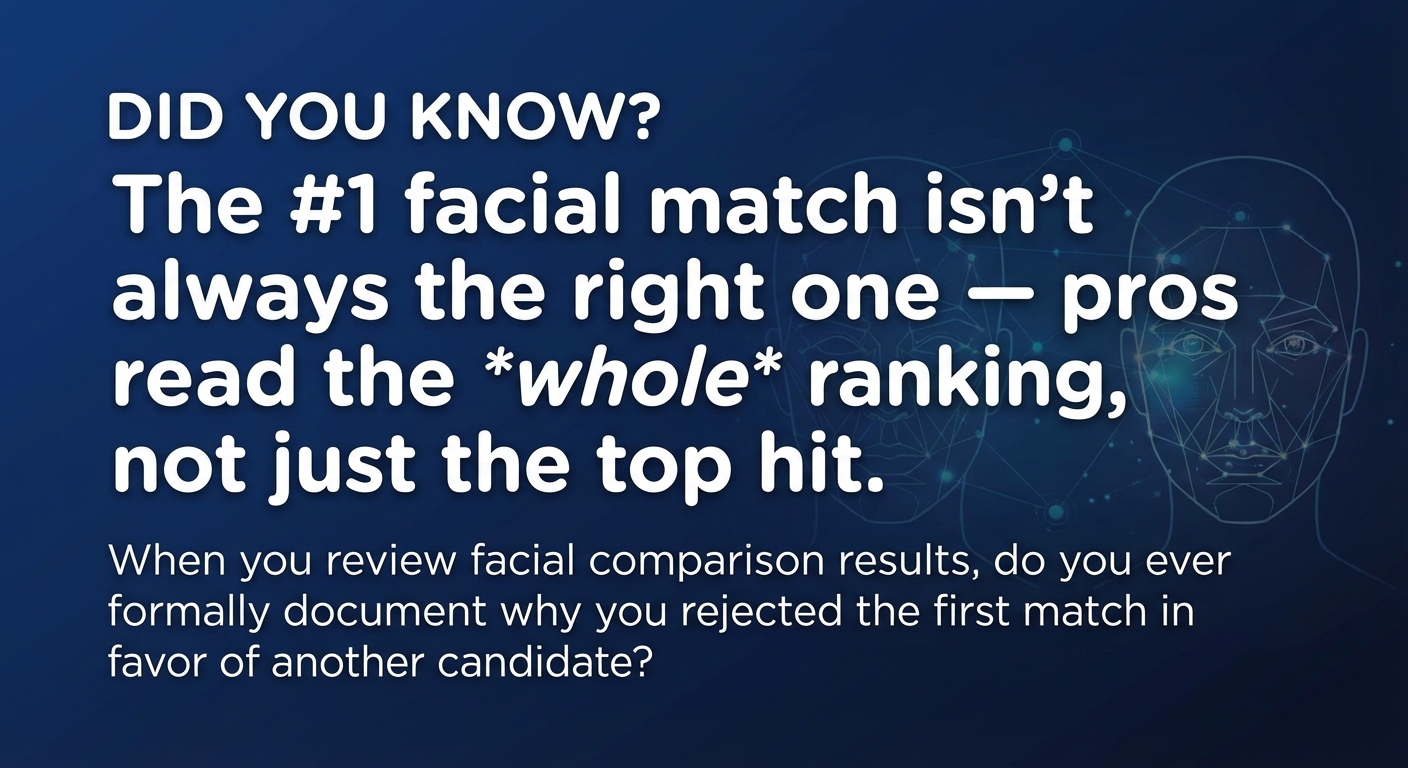
Facial recognition ranks candidates by math, not certainty. The #1 result can be a false positive, and the case-breaking clue is often sitting one slot down. He
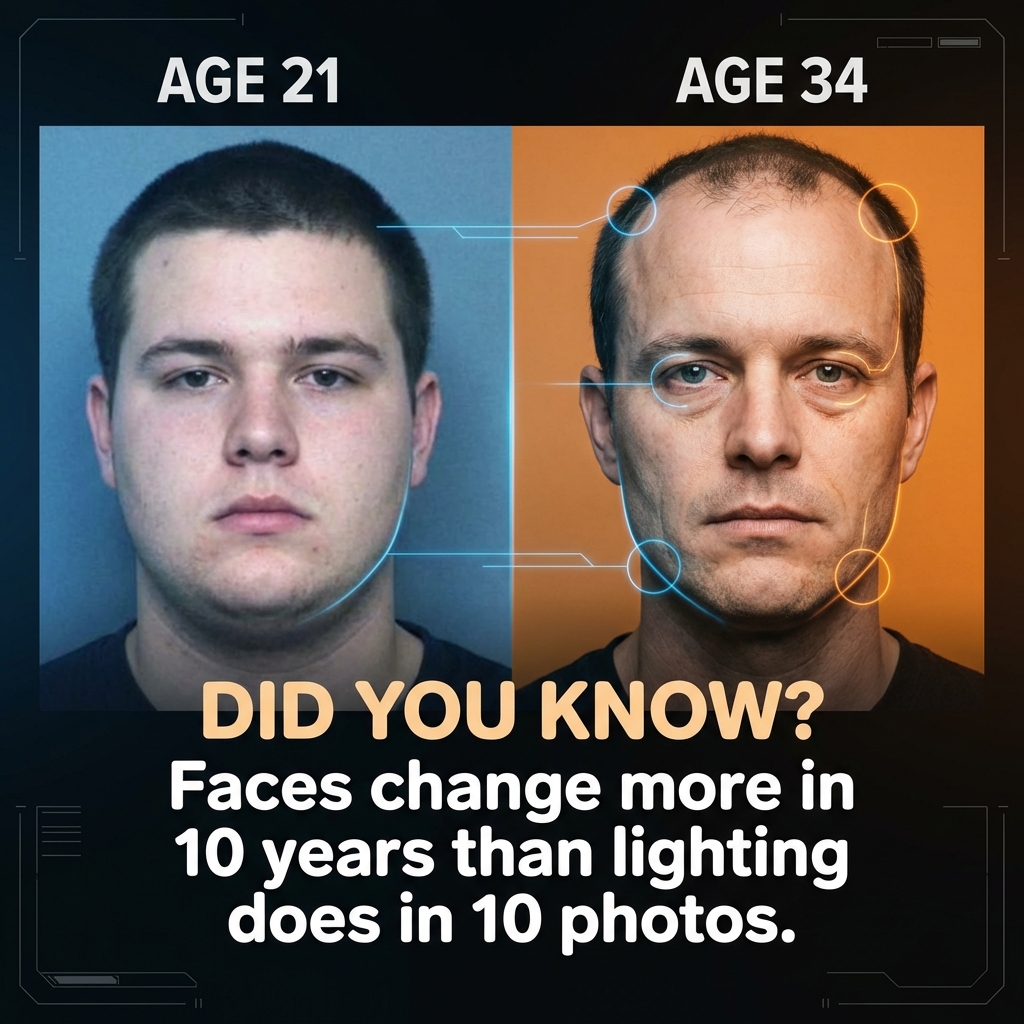
Most investigators blame bad photos when a facial comparison fails. The real culprit? Biology. Here's why a 13-year age gap can quietly destroy an otherwise sol
