
Voice Cloning Technology: 3 Seconds of Audio Fakes Family Content
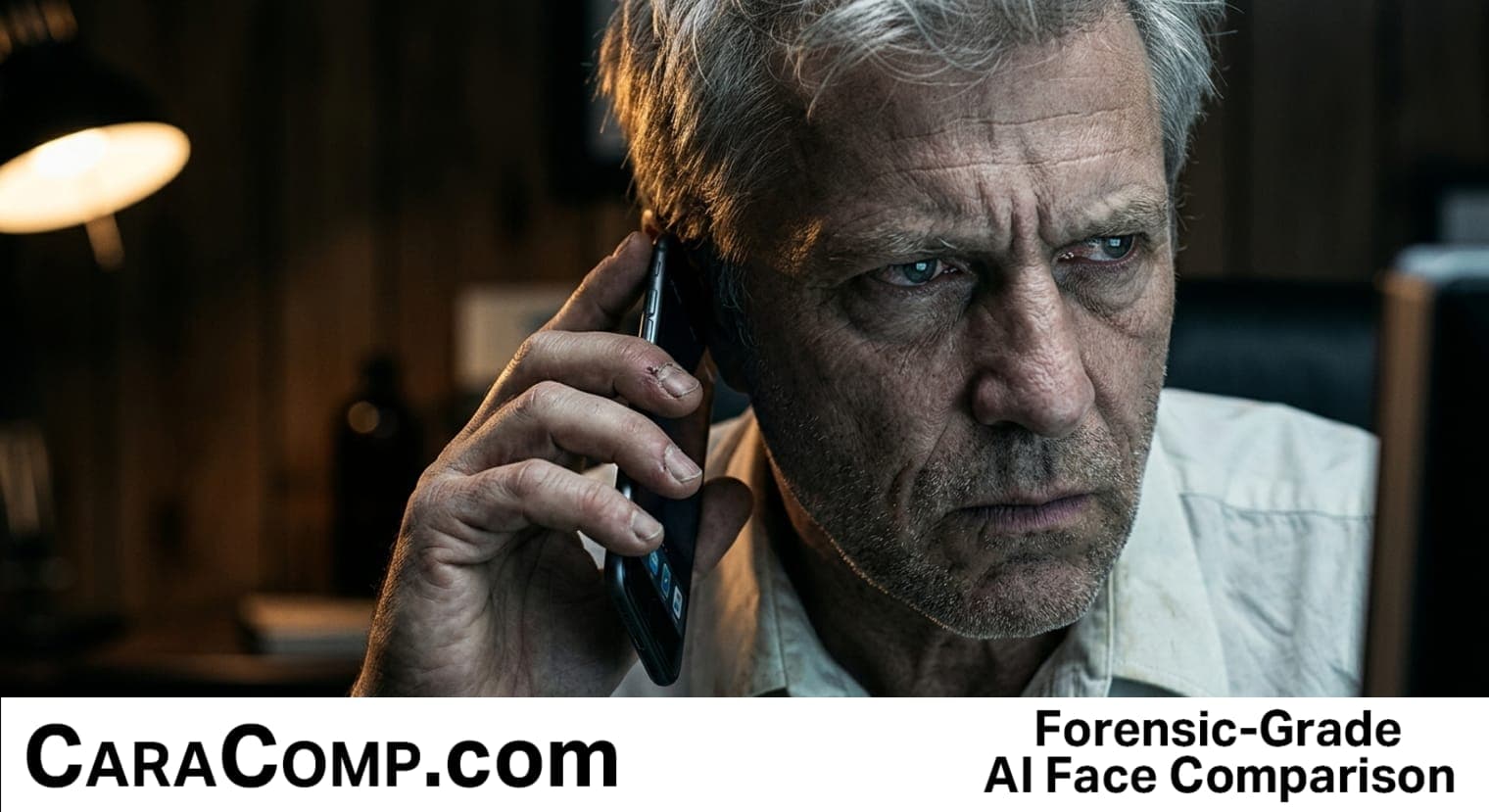
Quick answer
How does voice cloning technology work, and can it fake a family member's voice?
Yes. Voice cloning software trains AI models on real recordings of a person, then generates new speech in that voice from typed text. Reported figures suggest a few seconds of audio can be enough for a close match. Because listeners often miss good clones, a familiar voice on a call should not be trusted alone.
Romania's police chief got a phone call from himself. Not a prank, not a glitch, a cloned version of his own voice, generated by criminals, used to test how convincing voice cloning has gotten. A Romanian journalist almost sent money to someone she was sure was her sister. She wasn't. Both stories come from the same wave of fraud alerts sweeping Romania right now, and they point to one uncomfortable fact: the thing you've trusted your whole life, recognizing a voice, doesn't work as proof anymore.
Voice cloning technology has gotten so good, and so cheap, that a stranger can build a convincing digital copy of your mom's, your kid's, or your boss's voice from just a few seconds of audio, which means "I know that voice" is no longer a safe way to know who's really calling.
Voice cloning technology can now build a scarily accurate digital replica of someone's unique voice from a tiny audio clip, and Romania's newest fraud alert warns it's already being used against everyday people, not just celebrities or executives.
Here's the part that should genuinely worry you: this isn't some far-off future risk. According to fraud alerts reported by Informat.ro, Romanian criminals are already mixing voice cloning in with older tricks like fake utility bills and phishing links, layering a fake-but-familiar voice on top of an already convincing scam. And it's not just random citizens getting targeted. Romanian outlet Digi24 reports that journalists and even police officials, people whose entire job is spotting fraud, have been targeted with cloned voices of their own relatives. If the pros are getting fooled, "I'd know if it wasn't really them" isn't a plan anymore. It's wishful thinking.
How voice cloning technology turns a few seconds of audio into a convincing scam
Let's talk about how little the scammers actually need. Voice cloning builds a digital replica of a person's unique voice using AI models trained on real recordings, and according to data reported by Vectra AI, a scammer can hit 85% accuracy using just three seconds of someone's audio. Three seconds. That's shorter than most people's voicemail greeting. A TikTok clip, a YouTube comment reply, a wedding speech posted to Facebook, a customer service call your dad made last month, any of it is raw material for building voice clones. Vectra also reports AI-driven scams overall surged 1,210% in 2025, which tells you this isn't a niche crime wave. It's the new baseline.
Starts at 00:13 — this story
Watch this story, in under a minute
A new briefing every weekday — three stories, three minutes.
Subscribe on YouTubeThe scam script itself hasn't really changed. It's the same "family emergency, send money now" call that's existed for decades, a kid supposedly in jail, a relative supposedly in a car crash, a grandparent supposedly stranded. What's changed is the delivery. The voice on the other end isn't a stranger doing a bad impression anymore. It's a startlingly accurate copy, generated in minutes, of someone you'd trust without a second thought.
Why voice cloning fools even careful people
Because your brain isn't built to fact-check a voice, it's built to recognize one instantly and trust it. Research cited by SQ Magazine found that human ability to spot an AI-generated voice drops below 30% accuracy for high-quality clones, and in some tests, as low as 24.5%. That's worse than a coin flip. This is the availability heuristic at work, a mental shortcut where the most familiar-feeling explanation ("that's obviously my daughter's voice") wins out over the less comfortable, more accurate one ("someone could have faked this"). This article is part of a series, start with Texas Age Verification Law 25 States Now Demand Id Checks Po.
accuracy achievable with just 3 seconds of someone's voice, using modern AI voice cloning
Source: Vectra AI, 2026 AI Scam Statistics
What makes this so unsettling isn't just the technology, it's how ordinary the targets are. This isn't a plot against billionaires. It's a mom, a retired teacher, a guy who just wants to pay his electric bill without getting robbed. The Romanian alerts specifically call out fake E-ON utility bills mixed in with voice-based scams, meaning the same criminal group is happy to fake your power company AND your niece in the same afternoon.
Synthesis models are continuously optimized to evade detection signatures, while detection tools must be trained on patterns that already exist, creating a structural lag where detection-based defenses will always trail the generation curve.
Analysis via Adaptive Security
Translation of that jargon-heavy quote: the tools built to catch fake voices are always a step behind the tools that make fake voices, because the fakers get to see the detectors coming and adjust. It's a game of cat and mouse where the mouse gets to read the cat's playbook first.
What no voice cloning detection tool can promise you yet
Companies selling detection tech love to quote impressive numbers, SQ Magazine notes some AI detection systems claim up to 90% accuracy, but only in controlled lab conditions, not real phone calls with background noise, bad signal, and a panicked target. Treat detection tools as one signal among several, never as your only line of defense. Previously in this series: Ai Voice Cloning Scam Rs 11 8 Lakh Lost In Maharashtra Podca.
This isn't the first time we've seen this kind of scam either, it's just a scarier version of an old one. Analytics Insight reported a case in Maharashtra, India, where a man used AI voice cloning in a matrimonial (arranged-marriage) scam to steal roughly Rs. 11.8 lakh, about $14,000, from a victim who trusted the voice on the phone. Different country, same playbook: fake voice, fake urgency, real money gone.
Why voice cloning technology matters for your family's phone habits
- ⚡ Any public audio is fuelvoicemail greetings, social videos, and even a few seconds from a livestream can be used to generate realistic speech in someone's voice.
- 📊 Speed beats skepticismscammers script the call for urgency on purpose, so you stay on the line and don't stop to think.
- 🔮 Detection tech isn't ready to save youhuman ears and current software both struggle with high-quality clones, so process (how you verify) matters more than tools right now.
- 👴 Older relatives are prime targetsthe same "grandchild emergency" scam that's worked for years just got a terrifyingly convincing voice upgrade.
Voice cloning technology vs. old-school phone scams: what actually changed
| Old-school phone scam | Scam using voice cloning technology | Status |
|---|---|---|
| Voice sounds off, accent slips, doesn't sound like your relative | Digital replica sounds like an exact match to someone's unique voice | Changed by voice cloning |
| Requires the scammer to talk long enough to build trust | Trust is instant because the voice itself feels like proof | Changed by cloning software |
| Detection relies on "that doesn't sound right" | Human detection accuracy drops below 30% against high-quality clones | Changed by voice synthesis |
| Built from guesswork and social engineering alone | Built from real audio samples using deep learning and neural networks | Changed by the cloning model behind it |
| Stopped by hanging up and calling back the real number | Still stopped by hanging up and calling back the real number | Unchanged, verify by callback |
Notice that last row. It's the one thing that hasn't changed, and it's the whole point of this article.
Does hanging up and calling back actually work against voice cloning?
Yes, it's still the single best defense. Voice cloning can fake a voice, but it can't fake a phone number you already have saved, and it can't answer a private question on the spot. Hang up. Call the person back on the number you already have. If they don't answer, wait. Don't send money based on a voice alone, no matter how real it sounds.
If you've ever wondered whether a photo, a video, or a voice really is who it claims to be, that's the exact question this kind of technology exists to answer, and it's exactly why "verify, don't trust" has quietly become the smartest habit a person can build in 2026. One real, doable thing you can set up tonight: agree on a private code word or question with your close family, something a scammer scraping your social media could never guess, like the name of your childhood pet's vet or an inside joke from a specific trip. If a "family emergency" call ever comes in, ask for it. A cloned voice can say anything scripted for it. It can't answer something it was never trained on.
Voice cloning technology can now generate realistic speech that mimics someone's unique voice from just a few seconds of audio, so a familiar voice on the phone is no longer proof of anything, a callback and a private code word still are.
So here's the question worth sitting with tonight: if a voice that sounds exactly like your kid, your spouse, or your bank called you right now asking for money, what's the one thing they could tell you that a machine, no matter how well-trained, never could? Up next: Digital Identity Security Stolen Faces Crack Open By 2035.
voice cloning technology: Frequently Asked Questions
What is voice cloning technology and how does it work?
Voice cloning technology uses deep learning and neural networks to study recordings of a person and build a digital replica of their speech patterns, tone, and rhythm. Commercial voice-cloning services can convert a short WAV audio file into new sentences the person never actually said. The process, sometimes called AI voice cloning or speech synthesis, can analyze short audio samples, sometimes just seconds long, to generate realistic speech in that person's voice for text you type in. This is what voice cloning allows computers to do that older text-to-speech systems never could: mimic a specific individual, not just a generic voice generator style, with a person's unique voice preserved closely enough to fool friends and family.
Can voice cloning tools clone someone's voice without their consent?
Technically, yes, and that's the core problem behind scams like the ones Romania is warning about. Legitimate companies building cloning technology require consent and licensing before creating a voice model, and often build in testing and security checks around voice conversion and synthetic voice content. But criminals ignore all of that, pulling audio from social media, voicemails, or public videos without anyone's permission, then using AI voice cloning purely for social engineering and fraud.
Can voice cloning technology work in different languages?
Yes, many modern cloning technology models can generate speech across multiple languages, not just the one the original speaker used. Some tools can even take a person's voice and have it "speak" a language they don't personally know, keeping the vocal identity intact. This makes voice cloning attractive for legitimate uses like dubbing and accessibility, but it also means scammers aren't limited to targeting people in one country or one language.
How can you detect a cloned voice during a phone call?
Detection is genuinely hard right now, studies show human listeners catch high-quality clones less than 30% of the time, and AI detection tools only hit strong accuracy in lab-controlled testing, not messy real-world calls. Listen for unnatural pauses, flat emotion, or natural-sounding speech that still feels slightly compressed or off, but don't rely on your ears alone. The reliable move is behavioral: hang up, call the real number back, and ask a private question a cloned voice couldn't answer.
Why do scammers use social engineering along with voice cloning?
Because a scary-sounding voice alone doesn't guarantee a payout, the fear and urgency do. Social engineering is the psychological trick that pushes someone to act fast, before they think to verify. Scammers script "emergency" calls specifically to overwhelm judgment, pairing the cloned voice with pressure tactics like "don't tell anyone" or "I only have a minute to talk," because a rushed human is far easier to fool than a calm one.
Is romania voice cloning fraud different from scams in other countries?
Not really in method, Romania's fraud alerts describe the same family-emergency and impersonation scams showing up worldwide, just layered on top of local tricks like fake utility bills. Cases reported in India involving AI voice cloning in matrimonial fraud, and warnings targeting families sending remittances abroad, all use the same core technology and the same emotional pressure. What changes by country is the specific cover story, not the underlying voice cloning technology, and both cases show voice clones spreading well beyond any one region or language.
Ready for forensic-grade facial comparison?
Full forensic reports with detailed similarity scoring. Results in seconds.
Run My First SearchMore News
Age Verification Georgia: ID Scanning Could Reach All Adults
A federal appeals court just cleared the way for Georgia to enforce its social media age-check law. Here is what that could mean for your family's ID, face and data.
ai-regulationDeepfake Laws by State: 8 States Push ChatGPT ID Checks
Eight states are suing OpenAI and want age checks for every ChatGPT user. Before you upload an ID or a selfie to any chatbot, here is what to ask about where it goes.
biometricsEU Biometric Border Checks: EES Queues Hit 5 Hours at Peak
Airlines and airports say the EU's face-based border system is causing queues of two to five hours. Here's what to do if your face scan fails.