
Age Verification Georgia: Identity Verification Could Reach Adults
Quick answer
What is Georgia's social media age verification law?
Georgia's SB 351 requires social media services to use commercially reasonable efforts to confirm users' ages. Children under 16 need parental consent, and platforms face limits on ad targeting and data collection for young users. An appeals court lifted the block, so the law can be enforced while the case continues.
Picture your 14-year-old opening an app tonight. Type a birthday, tap Continue, done. That has been the whole age check for years. In Georgia, that shortcut just got much harder to defend, and age verification georgia is now something families may actually feel, not just something politicians argue about.
Age verification georgia is back in play: a federal appeals court lifted the block on the state's social media age-check law, so platforms may soon ask for real proof of age instead of a typed birthday.
Here is what happened. On October 15, the U.S. Court of Appeals for the Eleventh Circuit wiped out the preliminary injunction (a judge's pause button on a law) that had been freezing Georgia's SB 351, according to ID Tech Wire. Georgia's government can enforce its age-verification law again, at least for now.
Age Verification Georgia: What the Appeals Court Actually Changed
Georgia age verification law: the parental consent rules in plain English
The short version is that Georgia law requires social media sites to verify users' ages. Georgia's law says social media services must use “commercially reasonable efforts” to do it. That phrase is fuzzy on purpose. Kids under 16 need parental consent (a parent saying yes before the account works). The bill also limits how platforms can aim ads at those young users and how much data (personal information) they can collect from them.
Here is the part people miss. The court did not say the law is constitutional. Judge Amy Totenberg ruled in June 2025 that the industry group suing was likely to win its First Amendment argument (the free speech protection). The appeals court only removed her pause and sent the case back for a full trial. The law is live, but the fight is not over.
“commercially reasonable efforts”
The standard written into Georgia SB 351, as described in ID Tech Wire's reporting on the ruling
Why does that vague wording matter? Because nobody has said which age verification methods pass. A platform that guesses too lightly risks trouble. A platform that guesses too hard may scare off users. My bet: companies will over-collect first and ask questions later. This article is part of a series, start with Deepfake Laws By State 8 States Push Chatgpt Id Checks.
And checking a teen means checking all users. An app can't spot the 14-year-old without asking everyone, including you. So platforms will verify user ages via something sturdier than a typed birthday, like a selfie, an upload, or a check through another service.
Age Verification Georgia: Where Family Data and Privacy Get Risky
Now the 11pm worry. Every check leaves a record. According to Promise Legal, platforms and their vendors often need to keep ID images and verification logs long enough to defend their decisions to regulators. That turns each record into a breach target. A server full of kids' faces and IDs (identification cards) is a jackpot for hackers, and your identity is what is sitting in it.
ID scanning versus a selfie check
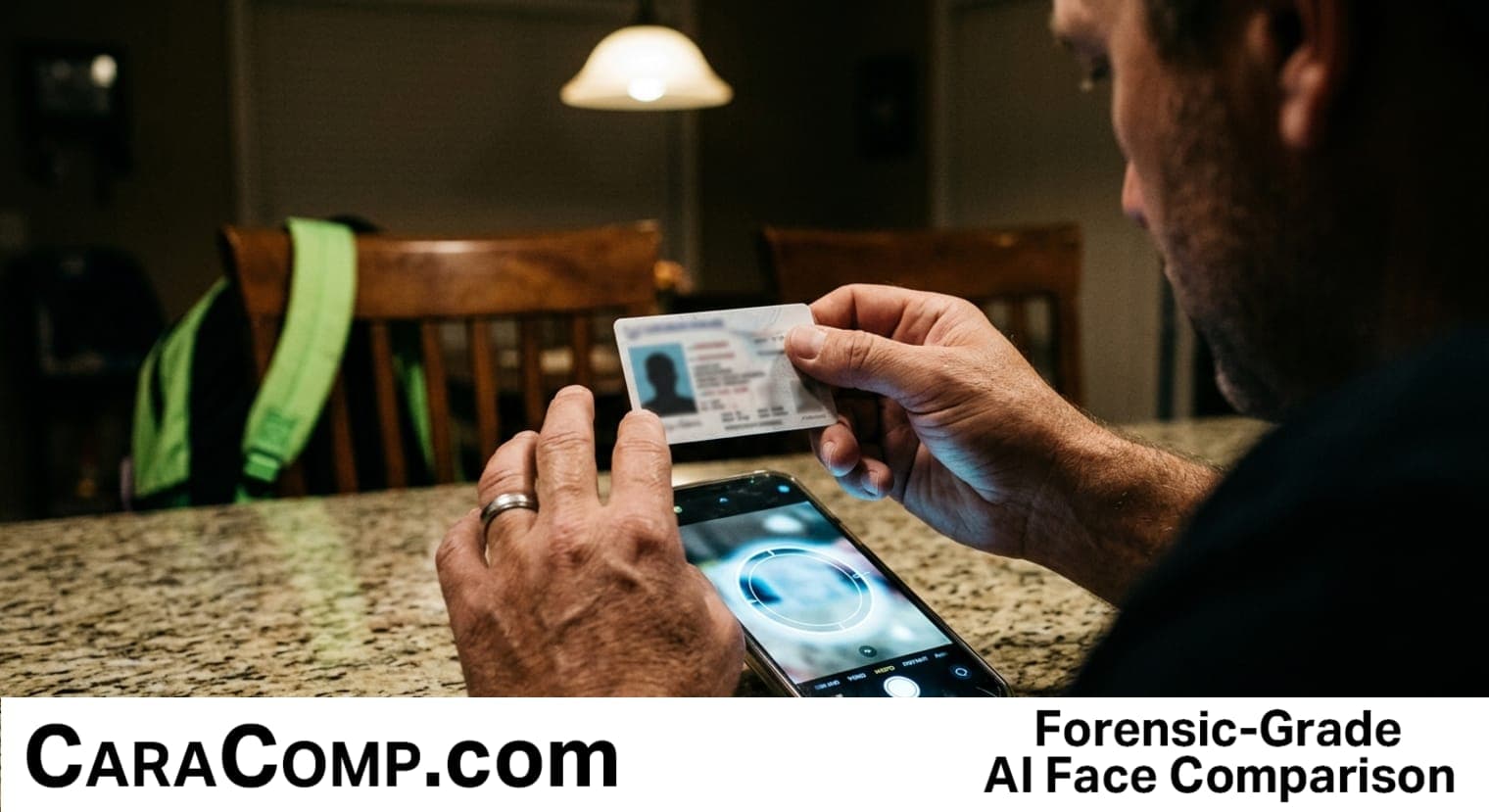
ID scanning means photographing a card, maybe even a passport, and reading the identity details off it. That proves age well, but it also hands over a name, a birthday and an address. A selfie check works differently. The system estimates age from a face and, in better setups, never needs a name. It is still a face scan, though, and that is biometric data (body stuff that is uniquely you).
The Audience Science write-up draws a helpful line. Age estimation guesses how old a face looks. Facial recognition tries to work out whose identity a face belongs to. Those are very different promises, and a platform should say which one it is making.
Why face scanning can misjudge an adult
Face-based age guessing is not equally accurate for everyone. Promise Legal says these models fail unevenly across age, gender and race. The Electronic Frontier Foundation has also researched racial bias and access barriers for people with disabilities. Translation: a 52-year-old who looks young, or someone with a facial difference, could get locked out of lawful content. Blocked by a machine, over their own face.
| The old birthday box | What enforcement can bring |
|---|---|
| Age verification: a typed birthday on any internet sign-up | A selfie, ID scanning, or a passport check for identity verification |
| Who gets asked: whoever is honest | All users, because the app has to find the minors |
| Parent role: a tap-through checkbox online | Parental consent for minors under 16 |
| What is left behind: almost nothing | Stored images and logs, so more data and more privacy risk |
Can a VPN Get Around Age Verification Georgia Now Enforces?
Maybe sometimes, but nobody should count on it. A VPN (a tool that makes your internet connection look like it comes from somewhere else) can change where a service thinks you are. Whether Georgia or the platforms will treat that as dodging the law is not settled in my sources. An ID or selfie check also does not care where you appear to be. Previously in this series: Uk Online Safety Act Ofcoms 3 Age Checks Every Adult Faces.
The Mysterium VPN blog offers a technical explainer on SB 351. The researcher's counterpoint is worth knowing too: tech industry groups have argued that platforms may simply block Georgia rather than build costly checks. Either way, families could see changes fast.
Age verification laws across state lines
Georgia is not alone. Regulators on three continents now expect platforms to know, with real confidence, whether a user is a child. Biometric Update also reported that Florida can keep enforcing its own age-based social media limits. One state is a headache for a platform. Many state rules at once is a pile-up, and that is exactly why some companies may choose the easy exit.
What an adult should do before handing over ID
Ask three questions before uploading anything. Who is collecting this? How long will they keep it? Is it deleted after the check? If an app can't answer, treat that as the answer. Dig through the privacy settings for any way to ask what a company holds on you, and use your rights to ask.
If you've ever wondered whether a photo or profile is really who it claims to be, that's the exact question this kind of tech exists to answer. The useful flip side is that a good check should answer that one question and then forget your face. Demand that result in advance, before you upload a thing.
Why Age Verification Georgia Matters
- Enforcement is real: the block is gone, so the rules can be applied while the trial is still ahead.
- More proof, more data: every check can create a stored record that someone has to protect.
- Uneven accuracy: face-based guessing can be wrong for some adults more than others.
Age verification georgia is now enforceable, and the real test is not whether Georgia can enforce its age-verification law but whether platforms protect the data they collect to do it.
Here is the question I can't shake. If a company wants a copy of your kid's face to prove they are 15, shouldn't it have to prove, first, that it can keep that face safe? Up next: Age Verification Georgia Id Scanning Could Reach All Adults.
age verification georgia: Frequently Asked Questions
Is there a harmful content act in Georgia's law?
The reporting I reviewed does not describe a harmful content act as part of SB 351. What it does describe is a rule that social media services make commercially reasonable efforts to verify ages, require parental consent under 16, and limit ad targeting and data collection from those users. The aim is protecting minors online. Details of any separate content rules are not in my sources, so check the bill text before assuming anything.
Was the Georgia bill signed, and is it in effect now?
SB 351 was signed into law before the court fight began, though the reporting I reviewed does not give a signing date. What changed on October 15 is that the Eleventh Circuit removed the injunction, so the law can go back into effect while the case returns to a lower court. In plain terms, it can be enforced now, but a full trial on its constitutionality is still ahead. Rules for apps could shift again.
Does Georgia require one reasonable method for checking age?
Not in the reporting I reviewed. Georgia law uses the phrase commercially reasonable efforts instead of naming one reasonable method. Platforms are therefore choosing among age verification methods such as facial age estimation, document scanning, and attribute-based systems. Document checks could involve a passport or driver's license, though no single choice is mandated in my sources. Because the standard is vague, expect different apps to ask for different proof.
Will minors be the only ones asked to prove age?
Probably not. To find minors, a platform has to check all users, or at least everyone who signs up, since it cannot spot a 14-year-old without asking. That means an adult may also be asked for proof, and any adult who looks young to a face scanning tool could be flagged by mistake. The parental consent rules apply to kids under 16, but the age check itself reaches much further.
Do parents have rights over a child's online information under this law?
The law as described requires parental consent for children under 16 and limits how platforms can aim ads at those users. Beyond that, the reporting I reviewed does not lay out a full list of parental rights. Read each app's privacy settings and ask what it keeps. Whether an internet company deletes ID images after a check is exactly the question to ask before a teen uploads anything.
Is age verification georgia going to stick?
Nobody can promise that. The appeals court did not rule on the First Amendment questions, and tech industry groups argue platforms may block Georgia instead of building costly checks. Others will keep pushing for protection of kids. Watch the trial court, and watch whether any app starts asking for an ID, a selfie, or a passport photo. That is when age verification georgia becomes real for your family.
Ready for forensic-grade facial comparison?
Full forensic reports with detailed similarity scoring. Results in seconds.
Run My First SearchMore News
UK Online Safety Act: Ofcom's 3 Age Checks Every Adult Faces
The UK Online Safety Act is meant to protect children, but adults now face face scans, ID uploads and card checks. Here is what to ask before you hand anything over.
privacyMissouri Age Verification: App Scans IDs to Shield Children
Missouri's new age-check app promises to keep your ID data on the device. Before you cheer or panic, here are the three questions every family should ask.
digital-forensicsDeepfake Scam: 94% Fraud Filter Misses a Fake Kid's Cry
A telecom says AI blocks 94% of fraud. Officials still warn that deepfakes can reach kids. Here is what slips through, and the one habit that stops it.