
Missouri Age Verification Law: App Scans IDs for Retailers
Quick answer
How does Missouri age verification work at the register?
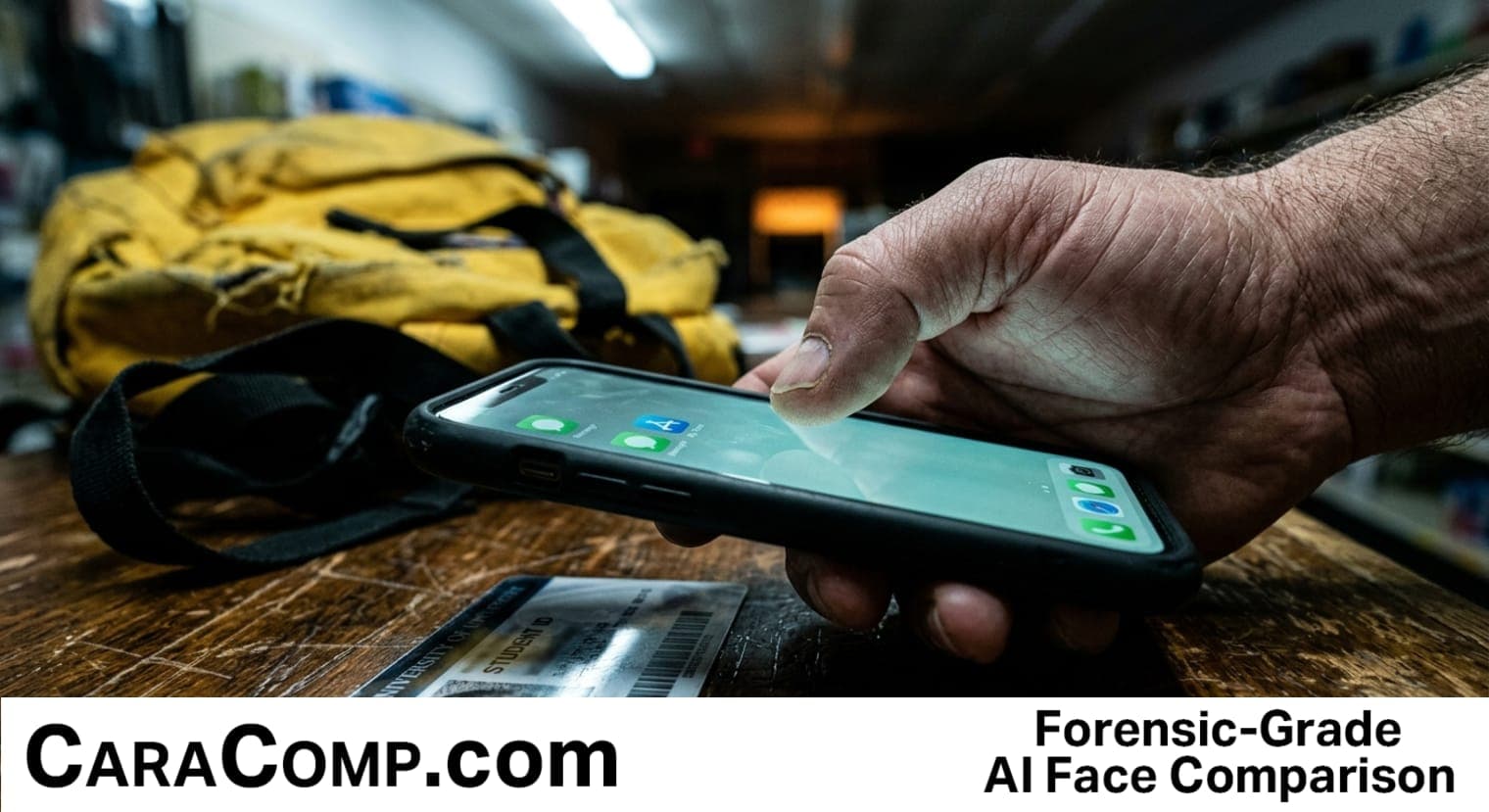
Missouri age verification uses a state-made app called Show Me Your Age. A retailer scans the barcode on a driver's license, and the phone reports whether the customer is old enough. According to ID Tech Wire, the ID details are processed on the device and are not stored or sent to the State.
A clerk points a phone at the back of a driver's license, and a few seconds later the screen says whether the person is old enough. That is Missouri age verification at the register, and it raises a question every parent and teenager should be asking: where does that information go?
Missouri age verification now includes a state-built app that checks IDs for sales to minors, and the state says your data stays on the device, so the smart move is to ask what is collected, who holds it, and for how long.
Short version: the goal is good, and the early design sounds better than most. But "sounds better than most" is not the same as "safe forever." Let's walk through it like friends at the kitchen table.
Missouri Age Verification: What the Show Me Your Age App Actually Does
Missouri just dropped a state-made app called "Show Me Your Age," according to FOX 2 St. Louis. Retailers use it to scan the barcode on a driver's license and learn whether a customer is old enough to buy something age-restricted. The target is sales to minors.
The part that matters most is where the work happens. According to ID Tech Wire, the system keeps the ID details on the phone doing the scanning.
Missouri's system processes identification information only on the user's device and does not store, transmit or retain personal information to the State.
As described by ID Tech Wire in its coverage of the app launch
That is a real promise, and it is the right one. Most age checks ask you to upload your ID to a company you have never heard of. This one, on paper, does not.
Missouri's Age Verification and Children: Who Is Being Protected?
Selling restricted products to children is a real problem, and a fake ID or a clerk who "didn't look closely" is how it happens. A scanner takes the guesswork out. Nobody serious argues that kids need no protection. The argument is about the price of that protection, and whether the family pays it in personal data. This article is part of a series, start with Deepfake Laws By State 8 States Push Chatgpt Id Checks.
Is Missouri the First State to Put Age Verification at the Register?
The sources I have do not say Missouri is the first state to do this, so I won't claim it. What they do show is that Missouri is the latest US state to put age checks in the news. According to the National Law Review, more than 25 states now have some form of mandatory age verification.
Here is where it gets confusing. Some of those states ask people to prove their age with a government ID, a face scan, or a third-party service before they can open certain websites. Headlines love a "new law that'll make you flash your ID" framing, and they often blur very different systems together. A store scanner and an online upload are not the same thing. The online version, according to Breached.company, often means handing government IDs or biometric data (your face, the body stuff that's uniquely you) to outside companies.
Where the Attorney General Fits In
When a state sets up a rule like this, a state attorney general (the state's top lawyer) is usually one of the people who would answer questions about enforcement. My sources do not spell out the attorney general's role in Missouri's app, so I won't guess. But it is a fair place for a worried parent to start asking.
Missouri Age Verification Law Questions: Is There a Missouri HB Behind It?
Good question, and an honest answer: the material I reviewed never names a Missouri HB (a House Bill number), so I won't invent one. If you want to know exactly what the bill requires, find the text itself. Look for what it says about collection, storage, and who can see the records. Those three lines matter more than any press release.
Old ID Check Versus the App: What Changes for the Public
For the public, the difference shows up at the counter. Here is how the two approaches compare, based on what the reporting describes.
| Question | Eyeballing an ID | The Missouri app |
|---|---|---|
| How age verification happens | A clerk looks at the card and guesses | The phone reads the license barcode |
| Where the ID details go | Nowhere, they stay in the clerk's memory | Processed on the device, not stored or sent to the State, per ID Tech Wire |
| Fake or expired cards | Easy to miss | The app can flag scans of expired identification |
| Record of the check | None | Counts and reports for administrators |
Look at that last row. It is the one that deserves a second glance.
The Digital Paper Trail Hiding in the Reports
ID Tech Wire notes that administrators can track total scans, daily and monthly volume, successful verifications, expired-ID scans, caution alerts, and scan failures. Counts are not names. Still, every digital reporting tool tends to grow. A dashboard that today shows "how many scans" can tomorrow be asked "which store, which hour, which result." Outside parties love data like that. The rule of thumb: whatever can be counted can eventually be asked for.
Why Missouri Age Verification Is Really About Function Creep
Function creep is a fancy name for a simple thing: a tool built for one job slowly picks up others. A scanner built to stop a teenager from buying something becomes a scanner that logs who bought what. Nobody has to plan it. Someone just says, "while we're here, couldn't we also..." Previously in this series: Deepfake Scam 94 Fraud Filter Misses A Fake Kids Cry.
I'd rather say this plainly than scare you: nothing in my sources shows that is happening in Missouri. The design, as described, leans toward keeping data local. But the pressure to centralize usually shows up later, often dressed as "compliance reporting." Worried that Missouri will become the template other states copy? Then the details of this version matter far beyond one state.
Why Missouri Age Verification Matters
- It sets a model. Device-only processing is a better starting point than uploading IDs to third parties, and other states may copy it or ignore it.
- It normalizes ID scanning. Once showing a barcode feels routine, the next request for your ID feels smaller.
- It tests the promise. "We don't keep it" is only as strong as the audit trail (the record of who looked at what, and when) behind it.
Content Rules Are Not the Same as Retail Rules
A store scan for a physical product is one thing. Rules about online content are another. You may have seen banners saying users must now verify their age on some websites. Those rules cover things like adult content and social media, and they often rely on outside vendors. According to Marketplace, privacy worries grow when sensitive personal data is collected or stored by those third-party vendors. Any age-verification rule now has to be judged by where the data lands, not by how kind its goal sounds.
Three Questions to Ask Before Handing Over Anything
If you've ever wondered whether a photo, a profile, or a person is really who they claim to be, that is the exact question identity verification technology exists to answer. It is a fair question, and it cuts both ways: you get to ask it of the system, too. Here is the one useful habit I'd steal. Before you agree to any age check, ask three things out loud. What exactly is collected? Who holds it? How long does it stay?
A trustworthy answer is short and specific. "Nothing leaves the phone" is a good answer. "We take security seriously" is not an answer at all. Nothing should force a family to accept a vague one.
Missouri age verification looks better than many systems because the ID data stays on the device, but any age verification regulation will begin to look different once reports, vendors, and requests pile up, so ask what is collected, who holds it, and how long.
So here is the line I can't shake. If an app only needs to tell a store "old enough" or "not old enough," a plain y or n, why would anyone ever need to keep a record of who asked?
Missouri Age Verification: Frequently Asked Questions
Is Missouri the latest US state to adopt age checks?
Missouri is the latest US state to make headlines for it, but it is far from alone. Reporting cited by the National Law Review says more than 25 states now have some kind of age verification mandate, and the list keeps growing. Each state's verification requirements differ. Some focus on retail sales, others on websites, so always check which kind of rule a headline is actually describing. Up next: Missouri Age Verification App Scans Ids To Shield Children.
Does age verification for pornographic websites that is now fully in place apply to Missouri's app?
Not from what my sources show. The Missouri app described by FOX 2 is about scanning driver's licenses at retailers to stop sales to minors. Rules aimed at adult websites are a separate type of law, and many states have them. Don't assume a headline about one covers the other, because the data risks are very different.
What does it mean when a story says Missouri recently began enforcing age checks?
My sources describe the launch of a state app, not a specific enforcement date or penalty under Missouri law. If you see a claim that Missouri recently began enforcing age checks, look for the bill text and the official announcement. A state can only enforce age verification legislation if it defines who must check, what counts as proof, and what happens when someone skips the check.
Is this the new law that'll make you flash your ID everywhere?
No, not based on the reporting. Missouri's age verification rule, as covered, lets retailers scan a license barcode. It does not tell every website to demand your ID. Still, the bigger trend matters, because no one should be made to hand over sensitive details without knowing where they go and how long they stay.
Will Missouri require dual age verification?
My sources do not say Missouri will require dual age verification, meaning two separate checks. They describe a single barcode scan at the register. If you hear that claim, treat it as unconfirmed and ask for the source. Any added step, such as a face scan on top of an ID, would change the privacy picture and deserves its own questions.
Which Missouri HB created the app, and what does the attorney general do?
The material I reviewed does not name a Missouri HB number, and it does not describe the attorney general's role, so I won't guess either one. Read the bill itself and look for what it says about collection and storage. Then ask the attorney general's office, or your own lawyer, how complaints about misuse of that data would be handled.
What should a store learn from a scan: only a y or n?
Ideally, yes. The cleanest design tells the clerk only whether the user is old enough, nothing more. Missouri just dropped a state app that, per ID Tech Wire, processes the ID on the device and does not send it to the State. That is the right idea. Missouri's age verification still needs clear answers on reports and retention.
Where does the Missouri age verification law touch children and the public?
The stated target is sales to minors, so children are the people being protected. Everyone else, meaning the public, is who gets scanned. The worry is that a safety tool for kids also builds a digital record of adult behavior. That is why parents and shoppers should ask what is stored, and what content or purchases could ever be linked to a scan.
Ready for forensic-grade facial comparison?
Full forensic reports with detailed similarity scoring. Results in seconds.
Run My First SearchMore News
Deepfake Scam: 94% Fraud Filter Misses a Fake Kid's Cry
A telecom says AI blocks 94% of fraud. Officials still warn that deepfakes can reach kids. Here is what slips through, and the one habit that stops it.
privacyAge Verification Georgia: ID Scanning Could Reach All Adults
A federal appeals court just cleared the way for Georgia to enforce its social media age-check law. Here is what that could mean for your family's ID, face and data.
ai-regulationDeepfake Laws by State: 8 States Push ChatGPT ID Checks
Eight states are suing OpenAI and want age checks for every ChatGPT user. Before you upload an ID or a selfie to any chatbot, here is what to ask about where it goes.