
Police Facial Recognition Technology: How AI Filtered 108,000 Facial Images
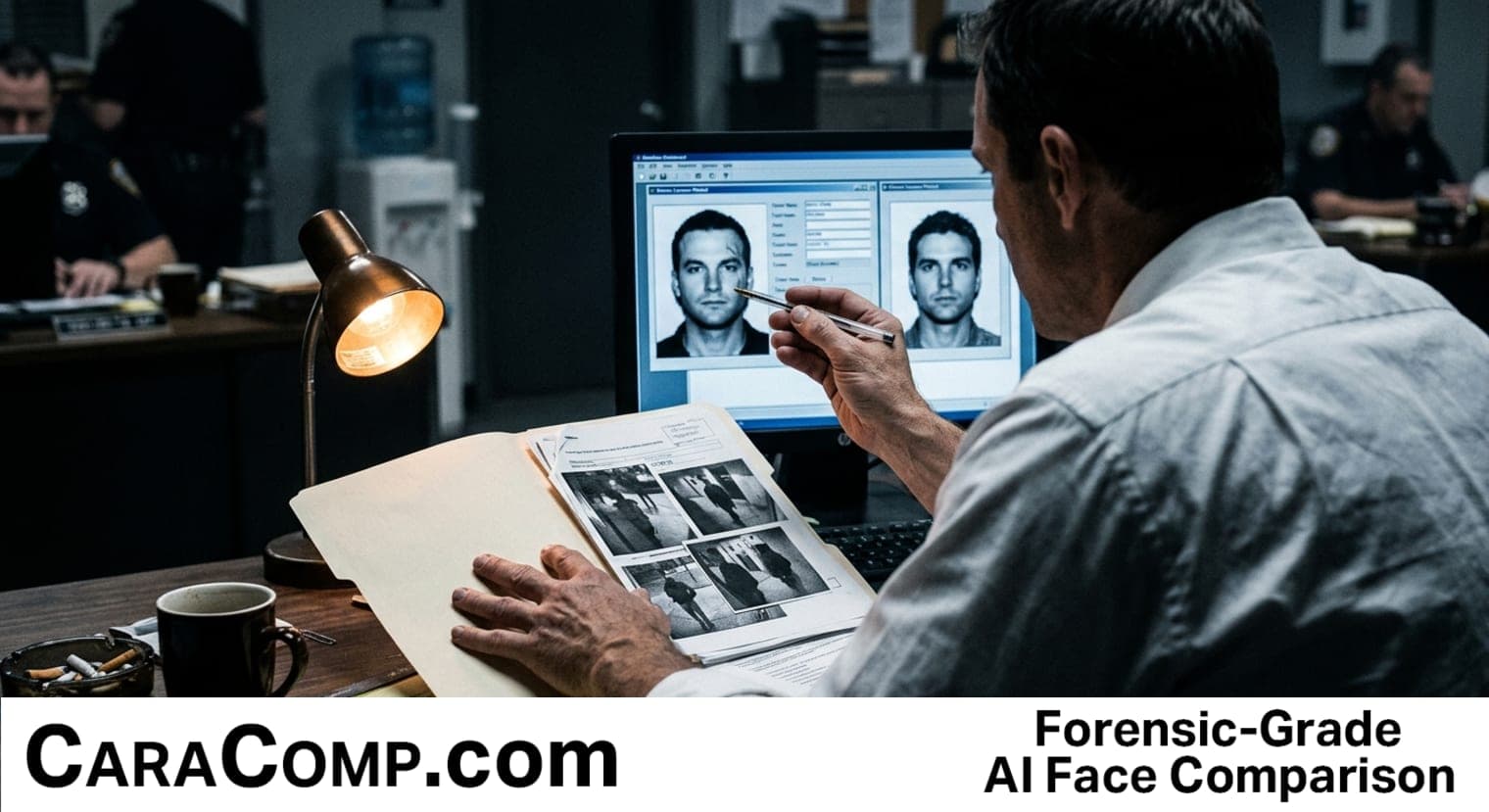
Here's the number that should stop you mid-scroll: Interpol says it fed more than 100,000 facial images into its computers, and a piece of recognition technology quietly threw away 94% of them before a single human being looked at a single face. What was left, about 6,362 images, is what actual investigators reviewed using face recognition. From that pile, they say they identified 126 suspected terrorists. That's the story everyone's writing about police facial recognition this week. It's also, weirdly, not the part that should worry you most.
TL;DR: Police facial recognition just processed over 108,000 facial images from an Interpol counterterrorism operation, but a computer quietly deleted 94% of them before any investigator saw a single face, and that hidden filtering step matters as much as the 126 names it produced.
So let's slow down and talk about what actually happened, because the headline (126 terrorists identified!) is the easy part. The hard part, the part that should live in your head next time someone says "the AI flagged you," is how that 126 got narrowed down in the first place. This is a live example of how law enforcement agencies now lean on face recognition and recognition cameras to do work that used to belong entirely to people, and it raises real questions about public trust in law and policing more broadly.
Police facial recognition and law enforcement agencies: why one operation just moved the goalposts
Between June 1 and June 5, Interpol ran something called Operation Shams II. Twenty-eight officers from 11 countries pulled together to comb through jihadist propaganda, the kind of grainy, recycled, duplicated facial images terror groups post online to recruit and intimidate. Investigators started with 108,076 raw facial images. That's not a typo. That's roughly the population of a small city, all faces, all pulled from the same murky corner of the internet.
Manually reviewing that many facial images would eat months, maybe years, of a trained analyst's life. Nobody has that kind of time when there's an active threat, and public safety pressures push agencies toward faster tools. So Interpol used AI agents and scripts to do the boring, brutal part first: find duplicates, toss blurry or low-quality shots, and narrow the haystack down to something a human could actually hold in their hands. What came out the other side was 6,362 images. Those went into police facial recognition software (the kind of tool that compares one face to a database of other faces and spits out a match score, a number showing how alike two faces are) for real comparison work, the same kind of live facial matching that police forces around the world are now piloting.
That's how you get from 108,000 facial images to 126 identifications. And on paper, it's a genuinely impressive piece of engineering, one that shows how far recognition technology has come. It's also, if you think about it for more than ten seconds, a little unsettling, and it's a big reason public debate around this technology keeps growing.
Facial images, facial recognition, and what actually gets thrown away first
Here's the part almost nobody is asking about: who, or what, decided which 94% of those facial images never made it in front of a human? A machine did. Not a detective with twenty years of pattern-matching instinct. A script. The investigators reviewing matches weren't independently scanning the full 108,000-image haystack anymore, they were reviewing a curated shortlist the algorithm already built for them. That's a different job than the one we imagine when we hear "trained officers reviewed every match." Critics argue this is a country using dangerous facial recognition technology faster than it can build public trust in the process. This article is part of a series, start with How To Protect Yourself From Identity Theft 6 Free Moves Pod.
Why police facial recognition, law, and public safety depend on humans who never saw the full picture
Interpol says every single one of those 126 identifications was checked by trained officers and analysts, operating under the agency's official Rules on the Processing of Data. That's a real, meaningful safeguard for public safety and for public confidence in law enforcement generally. It means a computer's guess never became an arrest warrant on its own, and it never became probable cause to make arrests without a person double-checking the work. But that safeguard was applied to a dataset the computer had already shaped. The investigator wasn't asking "is this a match, out of all 108,000 facial images?" They were asking "is this one of the few thousand faces the algorithm decided were worth my time?"
Think about what that does to the job. A human reviewer checking a machine's homework feels rigorous. But if the machine's first pass buried a face that mattered, or over-represented a certain kind of image because of how the deduplication script was built, no human ever gets the chance to catch it. You can't verify what you never see, and that's exactly why face recognition has been used carefully, and with layers of review, in operations like this one.
Investigators had to sift through thousands of duplicate propaganda images to identify potential targets, a task that would consume months of specialist time if done manually. reporting on Operation Shams II, CyberInsider
This isn't a knock on Interpol specifically. It's a structural thing happening across every corner of law enforcement that touches AI right now, and it's meant to help law enforcement generate leads faster, not replace judgment. Police face match systems don't just compare facial images anymore, they decide, ahead of time, which faces are even worth comparing. That's a quiet but massive shift in where the actual power sits, and it's one that touches policing, public trust, and the law far beyond this single case.
Why facial recognition curation matters more than police accuracy scores
- ⚡ Pre-filtering hides bias accuracy tests can't catcha system can score 99% accurate on the facial images it's shown and still quietly exclude the images it never shows anyone.
- 📊 "Verified by a human" now means something narrowertrained officers reviewed every one of the 126 matches, but only from a pool the software already trimmed by 94%.
- 🔮 The false-positive problem doesn't disappear at scale, it hides betterthe more facial images a system processes, the harder it is for any one police service or single person to audit the whole pipeline.
- 🕵️ Wrongful identification is not hypotheticalas of March 2026 there were at least nine documented wrongful arrests in the U.S. tied to facial recognition misidentification.
Does police facial recognition and face surveillance actually work at this scale?
In lab conditions, yes, remarkably well. The top algorithms on the NIST leaderboard (a U.S. government benchmark that ranks facial recognition software by accuracy) currently post false negative rates under 1% and false positive rates around 0.3%, according to The Conversation. That's genuinely strong. But controlled testing means clean lighting, cooperative subjects, high-quality photos. Real propaganda images pulled off the internet are the opposite of that: blurry, cropped, low-resolution, sometimes years old. The gap between "works great in the lab" and "works great on a grainy screenshot from a terror group's Telegram channel" is exactly where mistakes creep in, and it's exactly where broader face surveillance debates tend to focus.
| Lab testing conditions | Real-world field conditions | Policy status |
|---|---|---|
| Clean lighting, cooperative subject, facial images are sharp | Grainy propaganda facial images, low resolution | Standard lab benchmark, ongoing |
| False negative rate under 1% | Error rate rises with image quality and demographic bias | Monitored under NIST testing, ongoing |
| Single clear photo per person | Duplicates, crops, and years-old images mixed together | Handled by AI pre-filtering, active use |
| Match score treated as one data point | Some officers call an unverified match a "100% match" | Flagged as a training gap, unresolved |
| Human review of the full dataset | Human review of an AI-curated subset only | Interpol procedure, enacted for public safety during Operation Shams II |
That last row is the one that should stick with you. Some officers, according to research on facial recognition bias, have started referring to an unverified computer match as a "100% match", as if the software's confidence score were a courtroom verdict instead of a tip. It's not. A match score is a number showing how alike two facial images look to a machine. It's a lead. It has never been proof of identity, and Interpol's own procedure, requiring trained human verification, quietly admits that.
What everyday people should watch for as police facial recognition, public policy, and policing evolve
If you've ever wondered whether a photo or a profile really is who it claims to be, that's the exact question this kind of technology exists to answer, and it's a fair question to ask about the people investigating you too, not just the people you're investigating. Here's the one useful thing to actually hold onto: whenever you hear that "AI identified" someone, whether it's a news story about terrorism suspects or a much smaller story about your own community, ask the follow-up question nobody asks. Not "was there a match?" Ask "who decided which facial images the system even looked at?" If the answer is "a human reviewed everything," great. If the answer is "a human reviewed what the algorithm already narrowed down," that's a different level of confidence, and you're allowed to say so out loud. Previously in this series: Deepfake 15 Dutch Lawmakers Demand A Crackdown Podcast.
This matters because facial recognition images used by law enforcement aren't neutral evidence sitting in a drawer waiting to be examined. They're pre-sorted, ranked, and trimmed before anyone with judgment and context gets a look. That's not automatically bad. It's just not the story most headlines tell, and it's a public conversation worth having openly, one that touches public trust in law enforcement as much as it touches the technology itself.
Police facial recognition is only as trustworthy as the step nobody talks about: what got filtered out before a human ever looked. A face match is a lead, not a verdict, and that's true whether the dataset has 100 facial images or 100,000.
Look, nobody's saying Interpol should have manually reviewed 108,000 facial images by hand. That's not realistic, and honestly, demanding it would just mean slower investigations into genuinely dangerous people. The counterargument holds up: high-volume terrorism cases need this kind of triage, and a documented, rules-based human review of every flagged match is more careful than a lot of investigative work gets. But "more careful than most" and "fully verified" are two different sentences, and the gap between them is exactly 94 percentage points wide.
Police face match systems, law, and the wrongful arrest problem
The nine documented U.S. wrongful arrests tied to facial recognition misidentification didn't happen because the software was broken in a lab sense. They happened because someone treated a lead like a conclusion, sometimes even as probable cause when it should never have been treated that way. That's a human failure sitting downstream of a machine's suggestion, and it's the exact failure mode that scales up, not down, as datasets get bigger and pre-filtering gets more aggressive. Getting the law right on how these matches can be used is just as important as getting the facial recognition itself right, and it's a public safety question as much as a legal one.
So here's the actual question worth sitting with tonight: Interpol says 126 people were correctly identified out of 108,076 facial images. Nobody's published what happened to the people in the 94% the algorithm threw away before anyone with a badge and a decade of training ever got to look at their face. Maybe nothing. Maybe that's exactly the point, and maybe that's the part future law enforcement policy needs to address directly.
Police facial recognition: Frequently Asked Questions
What is liveness detection and does it relate to police facial recognition?
Liveness detection checks whether a camera is looking at a real, live person or just a photo, mask, or video being held up to trick the system. It's mostly used in things like phone unlocking or ID verification apps rather than in operations like Interpol's, which compares still facial images against a database rather than checking someone standing in front of recognition cameras in real time. Up next: Biometric Authentication 40 Of Systems A Photo Can Fool.
Can facial recognition images be wrong even with a high match score?
Yes. A match score is just a number showing how alike two facial images appear to the software, not a guarantee of identity. Lab testing shows top systems have false positive rates around 0.3%, but that number climbs with blurry, cropped, or low-quality real-world facial images. There are at least nine documented U.S. wrongful arrests tied to facial recognition misidentification, which is exactly why human verification and public accountability matter so much here.
How does police facial recognition handle biometric data (your face, voice, and fingerprints, the body-based information that's uniquely you)?
In Interpol's operation, biometric data meant facial images pulled from propaganda sources, processed under the agency's official Rules on the Processing of Data. Those laws and rules require trained officers to verify every AI-suggested match before it's treated as an identification, a safeguard meant to help law enforcement agencies act responsibly and protect public safety. It applies only to the facial images that made it through the AI's earlier filtering step, not the full original dataset.
Why would skin appear too smooth in a facial recognition image and does that affect accuracy?
When skin appears too smooth in a photo, it's often a sign of heavy compression, filtering, or in some cases AI generation, and any of those can throw off a facial recognition system's ability to map real facial features accurately. Blurry or over-processed propaganda facial images, like the kind Interpol worked with, are exactly the sort of low-quality material that makes face recognition matching harder and increases the chance of an error.
What's the difference between facial recognition and facial comparison?
Facial recognition usually means a system automatically scans and identifies a face out of a database of facial images on its own, often using recognition technology built for large-scale searches. Facial comparison is narrower: it's checking whether two specific facial images show the same person, with a human choosing the images and directing the search. Interpol's process was closer to comparison, since a curated shortlist of images was checked against known suspects, with humans verifying results throughout.
Why did Interpol only review 6,362 out of 108,000 facial recognition images?
AI tools removed duplicate and low-quality facial images first, cutting the original 108,076 down to 6,362 usable images before any human analyst reviewed them. That's a 94% reduction. Doing this manually would have taken specialists months or years, so the filtering step made the investigation realistic to complete for law enforcement, though it also means the humans only ever saw the portion of facial images the software chose to keep.
Ready for forensic-grade facial comparison?
Full forensic reports with detailed similarity scoring. Results in seconds.
Run My First SearchMore News
Deepfake lawsuit: Grok turned a clothed photo into abuse
An Arkansas family says an AI chatbot turned their daughter's ordinary photo into abuse material. The lesson for every parent: a photo doesn't have to be explicit to be dangerous.
digital-forensicsAI Deepfake Laws: 15,736 Victims in Six Months
A Henderson case involving AI-generated images of middle schoolers shows deepfakes aren't just a celebrity or scam-call problem anymore. Here's the tell that could protect you and your family.
ai-regulationDeepfake: 15 Dutch Lawmakers Demand a Crackdown
Fifteen women in Dutch parliament just said out loud what a lot of people whisper about: any photo of you can be turned into fake porn in minutes. Here's what they're demanding, and what it means for the rest of us.