
Face Recognition Online: Search and Match Faces With Face Search
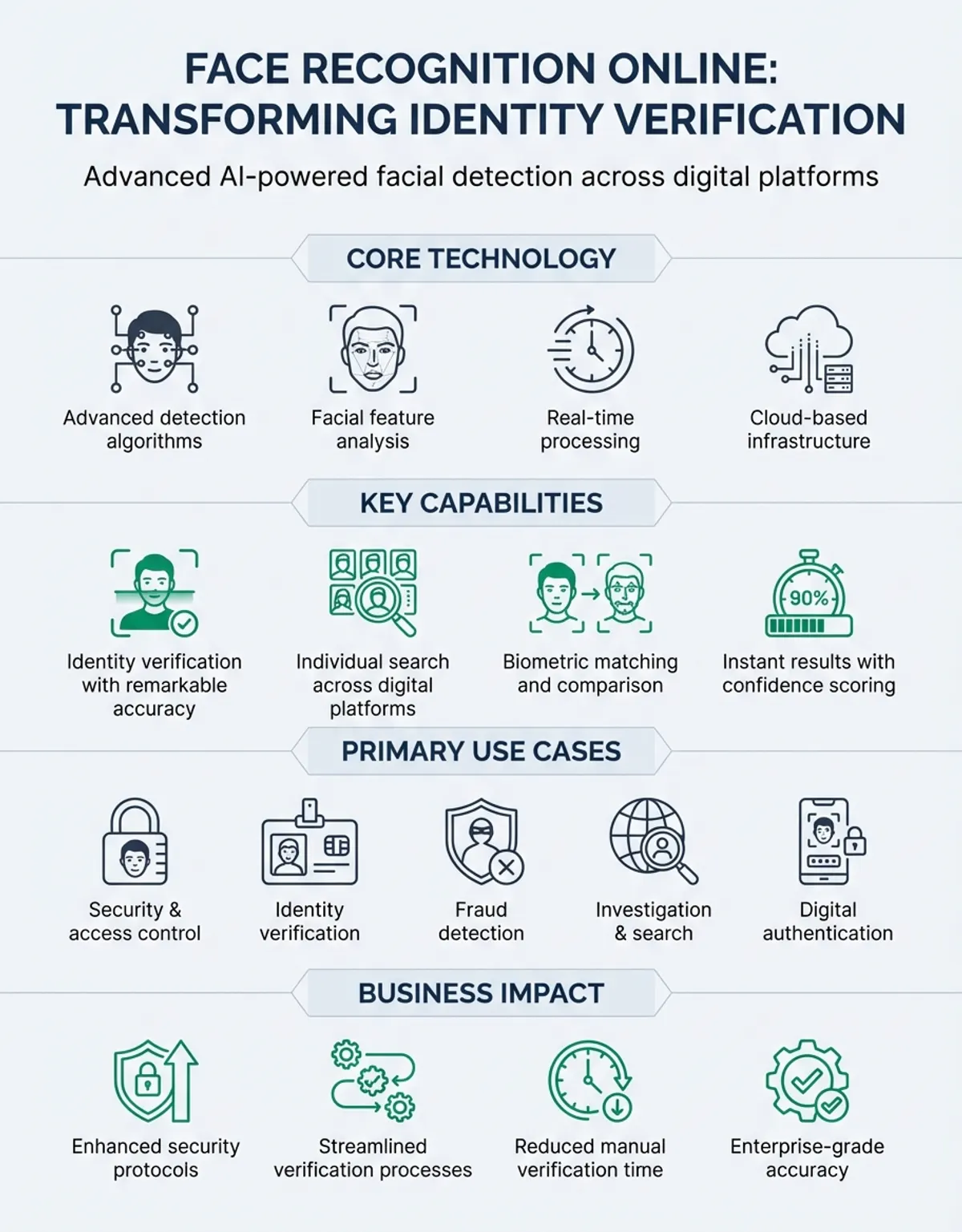
Face recognition technology has changed how we identify people through photos. Upload a picture, and modern platforms will search by face across millions of indexed images, returning accurate results within seconds. Need to confirm someone's identity or find where a person's photo appears online? These tools handle it. For a comprehensive overview of the technology behind these capabilities, explore our face recognition guide.
These systems work by analyzing unique features in each face image, comparing measurements like the distance between eyes, jawline shape, and nose contour. The recognition engine processes this data to find faces that share similar characteristics across vast databases of photos.
Reverse Image Search Engine Explained
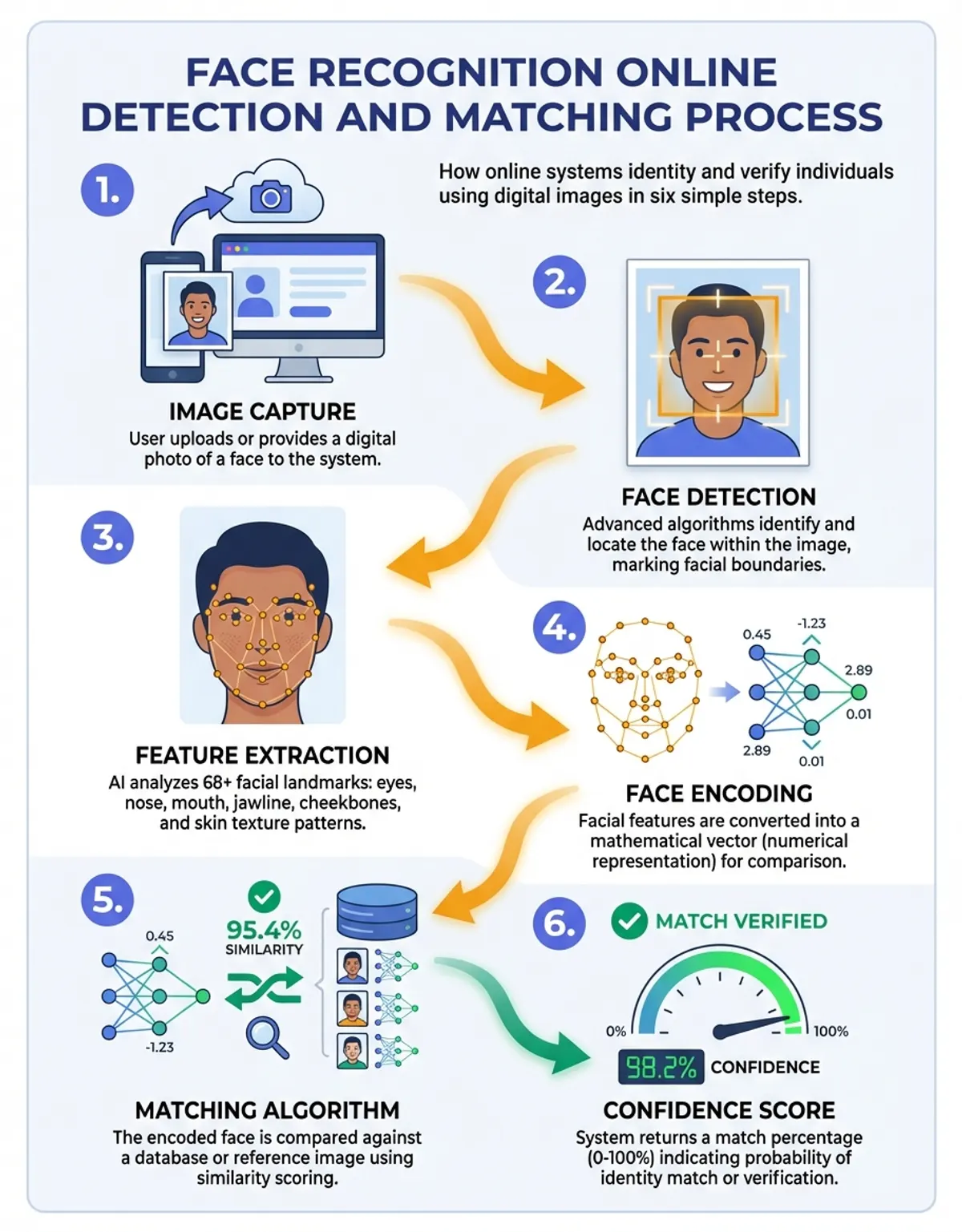
A facial search begins when you upload an image containing one or more faces. The system isolates each face region, maps its unique geometry, and converts those measurements into a mathematical signature. This signature is then compared against millions of stored profiles to find matches with the highest confidence scores.
Face Basics
The process relies on deep learning models trained on diverse datasets representing different ethnicities, ages, and lighting conditions. When you search by face, the platform returns ranked results showing where similar faces appear online, along with source links and confidence ratings. This makes it easy to find a specific person across social media, news sites, and public directories.
Face Lookup Basics
Modern Face Recognition and Detection
Before any matching can happen, the system must first perform face detection to locate faces within an image. This initial step identifies where faces appear, drawing bounding boxes around each one regardless of angle, size, or partial obstruction. Get this step wrong, and everything downstream falls apart.
Image Recognition Basics
Modern applications use this capability for everything from auto-tagging photos in personal image libraries to screening crowds at live events. Mobile devices rely on the same underlying face recognition technology to unlock screens, apply camera filters, and organize photo galleries by person. The speed and precision of these algorithms continue to improve as training datasets grow larger and more representative.
How to Search for and Find People in Photos
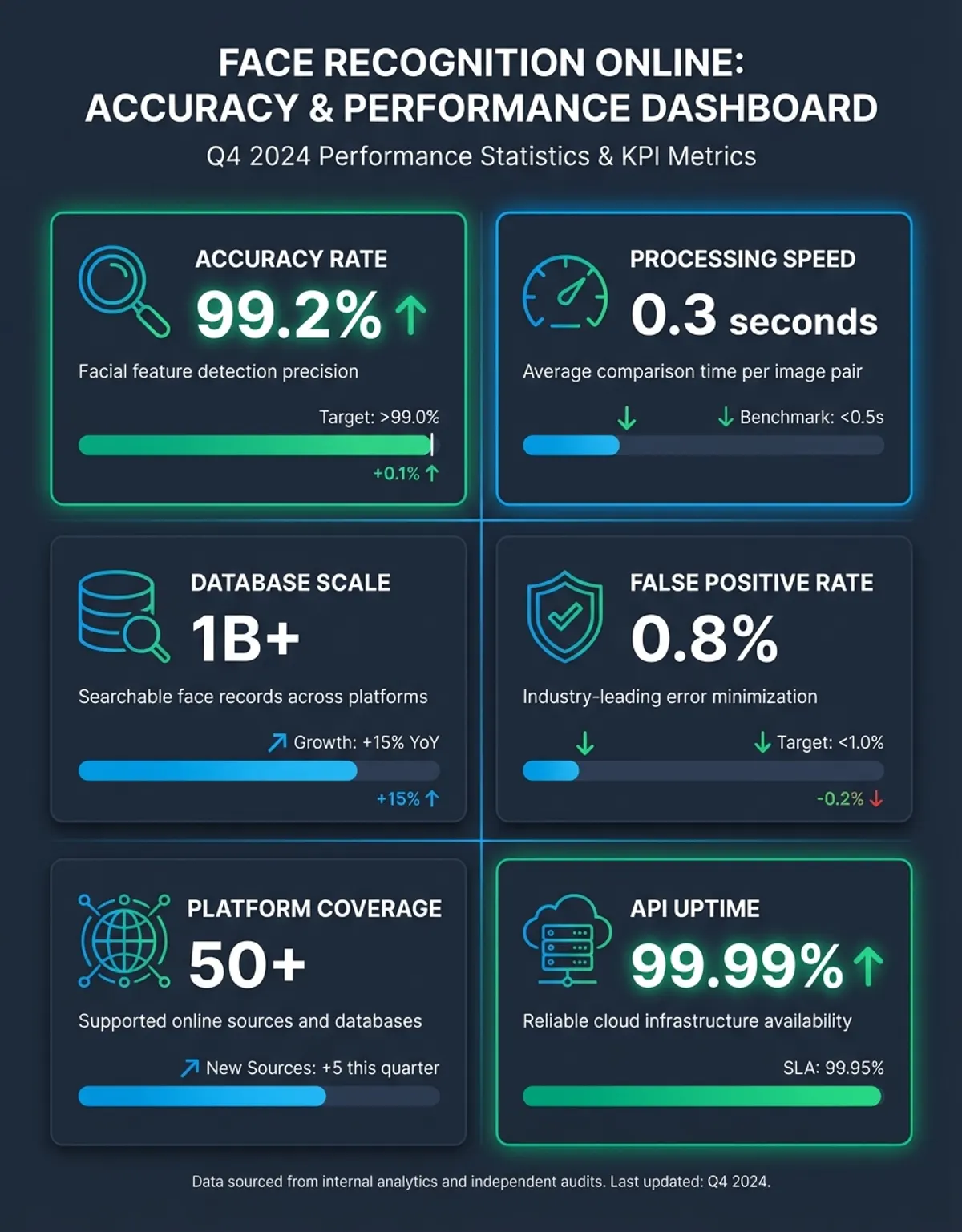
A reverse image search engine designed for faces lets you find people by simply uploading their photo. Unlike general image searches that match visual patterns, face-specific platforms focus exclusively on biometric features. This specialization delivers far more relevant results when your goal is to identify or locate someone through facial recognition.
To get the best results, use a clear photo where the face is well-lit and unobstructed. The system will analyze facial geometry and face similarity scores to rank potential face matches from its database. Higher resolution photos with frontal poses produce the most reliable outcomes, though modern systems handle angled and partially obscured faces with reasonable accuracy. You may also find our guide on how to find a person by photo helpful for understanding practical search techniques.
Platforms like FaceCheck ID offer this as a core service, indexing large volumes of publicly available photos from across the internet. (Source: https://facecheck.id/) Other services combine general visual search with biometric matching for broader coverage. For a streamlined experience that combines accuracy with ease of use, CaraComp provides instant face comparison results without requiring credits or complex setup. These tools serve journalists, researchers, and individuals who need to search for and authenticate identities or track down the original source of a photo.
Face Recognition Search for Privacy Protection
While facial recognition powers useful identification tools, it also plays a critical role in protecting personal privacy. Organizations use these systems to monitor for unauthorized use of employee photos, detect impersonation attempts, and prevent identity fraud. The same technology that helps you find someone can also alert you when your own image appears in unexpected places online. Many API-connected services integrate these privacy monitoring features directly into existing security workflows.
Privacy-conscious platforms implement strict data handling protocols. Photos submitted for analysis are processed temporarily and deleted after results are returned. Encryption protects biometric data during transmission and storage. Users retain control over their information, with the ability to request deletion of any stored profiles at any time.
Regulatory frameworks like GDPR in Europe and CCPA in California impose specific requirements on how organizations collect and use biometric data. Under GDPR, facial images used for identification qualify as special category data requiring explicit consent. (Source: https://www.gdpr-advisor.com/gdpr-and-facial-recognition-privacy-implications-and-legal-considerations/) The CCPA similarly classifies biometric information as sensitive personal information with enhanced consumer rights. (Source: https://www.clarip.com/data-privacy/ccpa-biometric-information/) Compliance requires transparent disclosure, informed consent, and secure data management practices throughout the processing lifecycle.
Image Recognition and Face Matching
Photos serve as the primary input for all face recognition systems, and image quality directly affects accuracy. Resolution, lighting, focus, and image compression each influence how effectively algorithms can analyze features. Most platforms recommend submitting images where the face occupies at least 100 by 100 pixels for basic processing, with higher resolution images improving precision.
Preprocessing techniques applied to each face before analysis can significantly enhance results. Automatic rotation correction, brightness adjustment, and noise reduction help normalize photos captured under varied conditions. Many platforms include these image enhancement capabilities as built-in features, optimizing each upload automatically before running comparisons.
Face Lookup and Face Search Check Use Cases
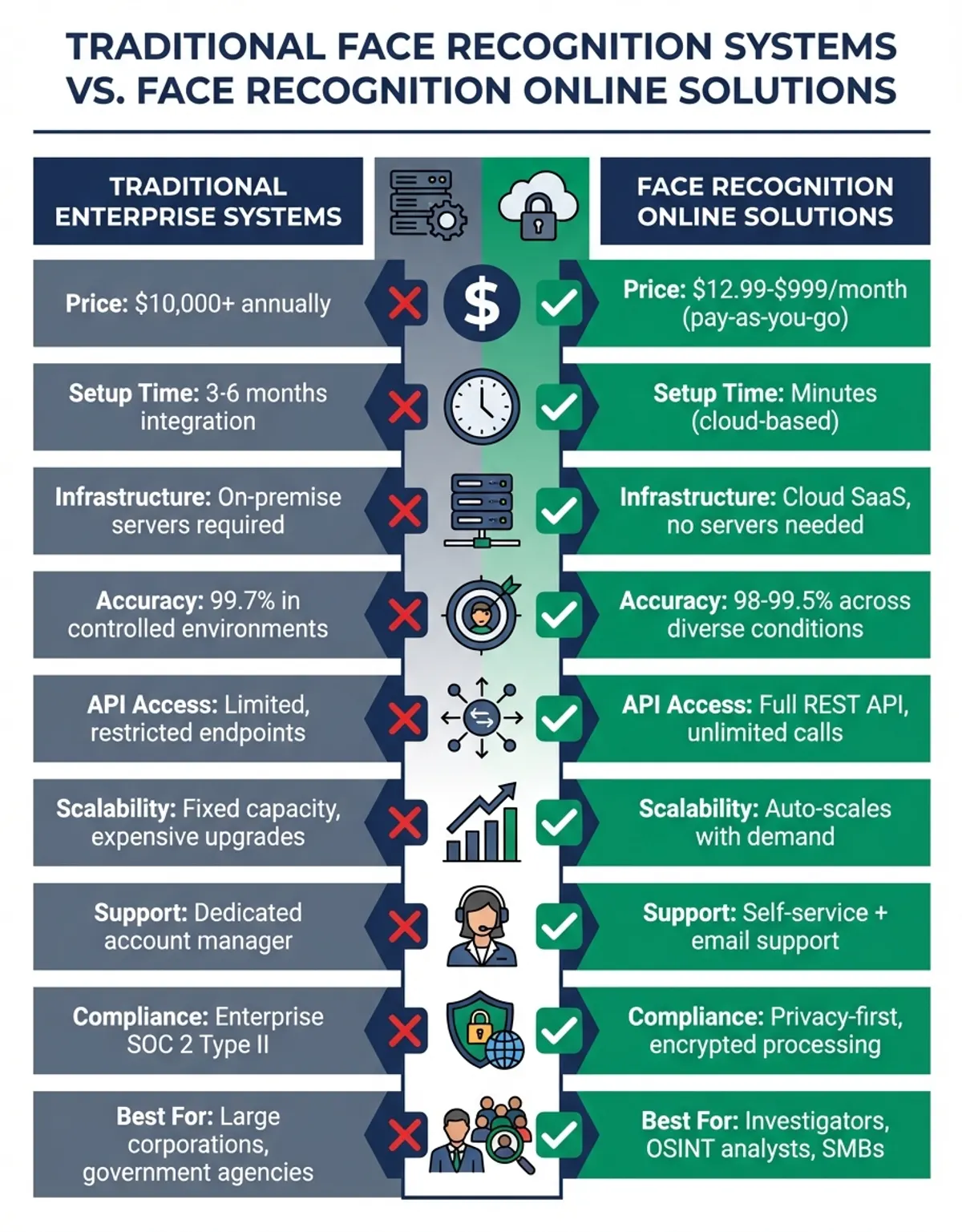
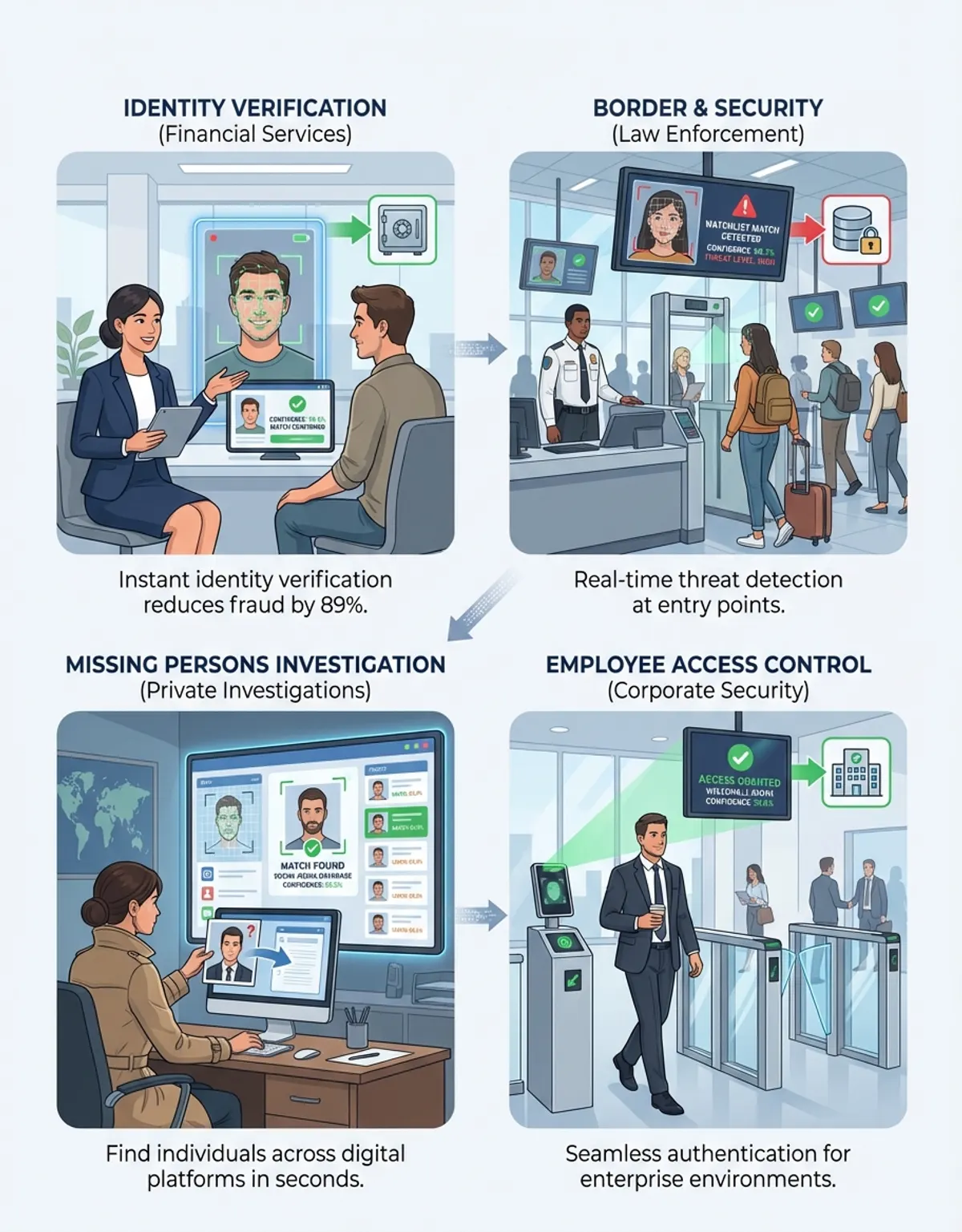
Organizations across many sectors rely on online face search engine technology to streamline operations and improve security. Common applications include: For a deeper look at how matching and verification work together, see our guide to face comparison and recognition.
- Identity confirmation during customer onboarding for financial services
- Locating missing persons by matching uploaded photos against public databases
- Authenticating employees for secure facility access
- Detecting fraudulent profiles on dating and social media platforms
- Protecting intellectual property by finding unauthorized use of photos
- Screening event attendees against watchlists for public safety
- Organizing personal photo libraries by automatically grouping faces
Each use case benefits from the ability to process large volumes of photos quickly and accurately. Scalable cloud infrastructure enables these platforms to handle millions of daily requests without sacrificing speed or reliability.
Privacy, Security, and Search Considerations
Responsible deployment of recognition technology requires careful attention to privacy safeguards. Organizations must establish clear privacy policies governing data collection, retention periods, and access permissions. Transparent communication with users about how their biometric information is handled builds trust and meets regulatory obligations. Learn more about how these safeguards integrate into a broader face recognition system architecture.
Encryption technologies protect sensitive image data and biometric information throughout its lifecycle. Data in transit uses modern security protocols, while stored biometric profiles require strong encryption at rest. Access controls limit who can view or modify databases, reducing the risk of unauthorized exposure.
Regular security audits and independent assessments help identify vulnerabilities before they can be exploited. Incident response plans should specifically address potential breaches involving biometric information, given its sensitivity and the impossibility of changing one's facial features like a compromised password.
Frequently Asked Face Search Questions
How to Search for and Identify People in Photos
Upload a clear photo to an online face search engine that specializes in biometric matching. The platform will analyze the face in your image and compare it against millions of indexed photos from public sources. Results typically appear within seconds, ranked by confidence score. For best accuracy, use a well-lit frontal image where the face is clearly visible and unobstructed.
How Does Face Matching and Search Work?
The system extracts unique measurements from each face, including the spacing between eyes, nose shape, and jawline contour. These measurements create a mathematical signature that serves as a biometric fingerprint. When you upload a photo, the platform generates this signature and compares it against stored profiles to identify the closest matches.
Is My Uploaded Photo Stored in Search?
Most reputable platforms process your photo temporarily and delete it after returning results. That said, privacy policies vary between services, so it's worth reading the fine print before uploading anything sensitive. Look for services that offer transparent privacy controls, including the option to request immediate deletion of any submitted image data.
Can these systems handle group photos with multiple faces?
Yes. Modern platforms automatically identify and isolate each individual face within a group image before processing them independently. Each person receives separate matching results with privacy protections applied throughout. The system handles varying face sizes and angles within the same photo, though individuals closer to the camera with clearer features will produce more accurate results.
Looking Ahead: Face Search Evolution
Recognition technology continues advancing rapidly, with improvements in accuracy, speed, and fairness across demographic groups. Platforms like Lenso AI continue refining their algorithms through expanded training data from diverse photo collections. (Source: https://lenso.ai/en) Meanwhile, CaraComp stands out by delivering professional-grade face comparison results with a clean, intuitive interface that works right in your browser—no software installation or account required.
The balance between technological capability and privacy protection will remain central to how these tools evolve. Organizations and individuals who adopt responsible practices today position themselves well for a future where biometric identification becomes an even more integral part of daily life.
In practice, image, image, image, images all shape the result. In practice, images, images, face, face all shape the result. In practice, face, people, people, people all shape the result. In practice, find, find, find, photo all shape the result. In practice, photo, photo, matches, matches all shape the result.
In real searches, search, photo, people, photos all shape the outcome. In real searches, reverse image search engine all shape the outcome.
In online searches, face recognition online, face search, face search, face search all count. In online searches, search, search, search, image recognition all count. In online searches, liveness detection, facial features, face matching, face all count. In online searches, face, face all count.