
Tinder Photo Verification: Only 1 of 9 Photos Must Match
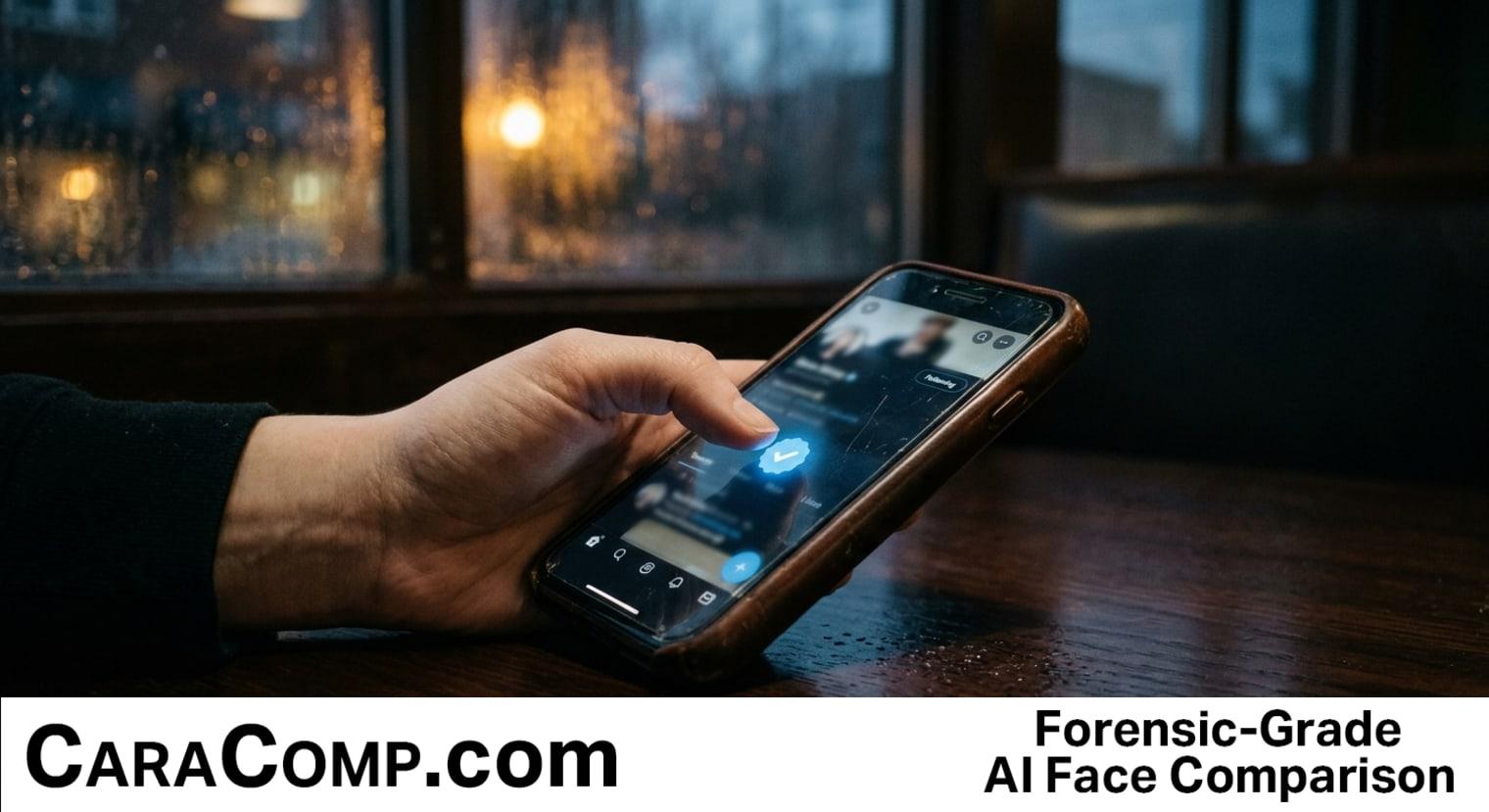
Quick answer
What does Tinder photo verification actually tell you about a match?
Tinder photo verification shows only that a live video selfie resembled at least one photo on a profile. It does not confirm someone's legal name, background or intentions, and the remaining photos may be edited. Treat the blue tick as one clue among several, then add your own safety steps before meeting.
Here's a fact that surprises almost everyone: tinder photo verification only has to match your face to one of your photos. Just one. A profile can hold up to nine, and the other eight can be old, filtered, or borrowed, and the blue tick still shows up.
Tinder photo verification indicates that a video selfie matched at least one profile photo, not a real name, a clean record, or good intentions.
If it's 11pm and you're about to say yes to a first date, that gap matters more than any feature on the app. So let's walk through what the badge really does, why our brains read it as a safety stamp, and what to do instead of leaning on it.
Tinder Photo Verification: What the Blue Tick Actually Proves
Start with the hard part. Two people on record, Sydney Loofe and Grace Millane, died after meeting people they found on Tinder. Sydney Loofe was 24. In November 2017 she was murdered and dismembered in Nebraska by a couple she met on the app. Aubrey Trail was sentenced to death. His partner, Bailey Boswell, who used a fake name on the app to lure Loofe, got life in prison. Grace Millane, a 22-year-old British backpacker, was strangled in Auckland, New Zealand, in December 2018 by a man she met on Tinder. He was sentenced to life with a minimum of 17 years before parole.
I'm not telling you this to scare you off dating. I'm telling you because these cases show the exact problem a single check can't solve. A person can look exactly like their photos and still be dangerous. Sometimes the face is the one honest thing on the profile. Boswell's fake name is a good example: a name can be invented while the person behind it is entirely real.
So what does the badge check? Tinder's own help page puts it plainly. Photo Verification lets a person show that:
at least one of your profile photos looks like you
Tinder Help Center, Photo Verification
Read that again, slowly. It doesn't say "this person is who they say they are." It says a photo looks like the person who took a selfie. That's a photo-match receipt, not a safety certificate.
How Tinder photo verification works, step by step
You take a short video selfie, usually turning your head a little. According to TechCrunch, the system builds a 3D map of your face (its shape and depth, like a tiny sculpture made of measurements) and compares it to your profile photos. The head turn is there to show a live person is in front of the camera, not just a picture held up to the lens. This article is part of a series, start with Fargo Facial Face Match Jails Tennessee Woman 108 Days.
If the measurements are close enough to one of your photos, you get the blue tick. That's the whole trick. It's designed to make it harder for someone to paste a stranger's pictures onto a fake profile and pass verification, though the check isn't foolproof.
Five Things People Assume the Verification Badge Means (And the Truth)
The misconception is that a blue badge means someone is who they say they are and is safer to meet. Why do so many of us read it as a safety stamp? Because we've learned to. A blue tick elsewhere on the internet usually means "someone official looked at this." Our brains carry that habit over. It's a reasonable instinct applied to the wrong tool, and nobody should feel silly for it.
Here's what the tick checks and what it quietly skips:
| What people assume | What the verification badge actually shows |
|---|---|
| "Their name is real." | Not checked. Photo verification compares faces, not names. Status: not verified. |
| "They have a clean record." | Not checked. No criminal history search is part of the selfie match. Status: not verified. |
| "All their photos are really them." | Only one photo needs to match. Status: partly verified. |
| "They're safe to meet." | Tinder itself says the badge does not guarantee identity or safety. Status: not verified. |
| "The face on screen is the face in my photo." | At least one profile photo passed the selfie match. Status: verified, though errors are possible. |
Count the rows. One out of five gets a qualified yes. The other four are things we silently add in our heads.
Can a tinder verification badge be fooled?
Yes, in some ways. In tests reported by Thred Magazine, some verified profiles carried photos that had been edited with someone else's face. As long as the photo looked enough like the user to pass the match, the edits didn't matter. The system asks "does this selfie resemble a photo here?" It doesn't ask "has every photo here been left alone?"
Does Tinder Photo Verification Work Equally Well for Every Face?
Not quite. Face-matching software can make more mistakes with some groups than others. Research from NIST (the US government lab that tests this kind of software), as covered by Gadget Hacks, found more false matches for West and East African faces, East Asian faces, women, older people, and children than for middle-aged white men. A false match means the software says two different faces are the same person. These findings concern facial recognition algorithms generally, not necessarily Tinder's specific system.
Poor lighting, odd angles and low-quality cameras can also throw a match off. That doesn't make the tool useless. It means the badge is a clue, never a verdict.
Why bad actors want the badge too
Here's the twist. Tinder has said that people who completed ID verification got 67% more matches than those who stayed unverified. ID verification is distinct from Photo Verification, but the reported increase shows why a person with bad intentions might have a reason to seek verification, or to look like they have it. Previously in this series: Deepfake Tv Star Felt Stupid But Scammers Own The Shame.
Tinder has also reported, in its PR Newswire announcement about expanding Face Check, that interactions with bad actors dropped by more than 50% in markets where it launched. But "bad actor" isn't spelled out in what we have, and the reported drop doesn't establish whether the feature identifies a real person with a violent past who uses their own face.
A Better Way to Think About a Verification Badge
Picture a bouncer at a club door. One bouncer checks that the face in front of him matches the photo on your ID. Another one looks at you and says "this person is fine to take home." The first job is real and useful. The second job is impossible to do from a doorway. Dating apps carry a badge that does job one, and our heads quietly award it job two.
At CaraComp, we spend our time on how faces get compared, and the first lesson is always the same: matching a face tells you "same face." It never tells you "good person." Those are two different questions, and software only attempts to answer the first one.
The aha moment: a catfish detector, not a danger detector
Here's the line to repeat to your friends. The blue tick is designed to detect some catfishing (pretending to be someone you're not), though it can make mistakes. It doesn't detect danger. A person can be exactly who their photos show and still be someone you shouldn't be alone with. Once that clicks, you stop asking the tick to do work it was never built for.
What You Just Learned
- One photo is enough: only one of up to nine photos has to match the live selfie.
- Faces, not names: the badge doesn't confirm a real name, a clean record or intentions.
- Uneven accuracy: NIST research found more false matches for some groups of people.
- Prestige attracts pressure: Tinder reports more matches for ID-verified users, giving people a reason to seek verification.
Where to Look First Before You Meet a Match
So, back to the question: if you were heading out tonight, would you know where to look first? Here's a simple order. None of it needs special skills.
- Check your own profile first. Open your Tinder profile and look for the verification option. Tinder's help page walks through the steps, which can change as the app updates. Verifying yourself can help others see that your selfie matched a profile photo.
- Get them on live video. A short call before meeting lets you compare the moving, talking person to every photo, not just the one that matched.
- Look for mismatches across all nine photos. Do the age, hair and build tell the same story? Edited pictures often feel a little too smooth.
- Tell a friend the plan. Name, photo, place and time. Share your phone location for the evening.
- Meet in public and arrive on your own. Keep your own transport. Leave the moment something feels off, and skip the apology.
Notice what's on that list. Every item adds something the badge can't: a live person, a second witness, an exit. Think of the tick as step zero, not the finish line.
Tinder photo verification is a photo-match receipt, not a safety certificate: it indicates that a live selfie matched one profile photo, so your own checks have to cover everything else.
Recap: The blue tick shows that a selfie matched at least one photo on a profile. It does not show a real name, a clean record, or good intentions. Up next: Fargo Facial Face Match Jails Tennessee Woman 108 Days.
Next time you see that little blue tick, ask the question it can't answer: what would I check if it wasn't there?
Tinder Photo Verification: Frequently Asked Questions
Does the blue tick mean a Tinder match is safe to meet?
No. The blue tick means a live video selfie matched at least one photo on the profile. It says nothing about the person's real name, background or intentions, and Tinder itself says Photo Verification does not guarantee identity or safety. Treat the badge as a hint that the face is real, then do your own checks: video chat first, a public place, and a friend who knows the plan.
How does Tinder photo verification actually work?
You record a short video selfie, usually turning your head slightly. The app builds a 3D map of your face and compares it with your profile photos. If it finds a close enough match with at least one photo, a blue tick appears. The head movement is meant to show a live person is on camera rather than a still picture held up to the lens.
Can someone get verified and still use edited photos?
Yes. Because only one photo has to match, the other photos on a profile are not all confirmed. Reporting by Thred Magazine described verified profiles with photos edited using someone else's face, and they still passed as long as the image looked enough like the user. A blue tick on the profile does not mean every picture on it is untouched.
Is facial verification equally accurate for everyone?
Not always. NIST research, as covered by Gadget Hacks, found more false matches for West and East African faces, East Asian faces, women, older people and children than for middle-aged white men. The findings concern facial recognition algorithms generally, not necessarily Tinder's system. Lighting, camera angle and image quality also affect results. That's why a verification badge should be one clue among several, not the final word on who someone is.
Does getting verified help my own profile?
It can. Tinder has said users who completed ID verification saw a 67% increase in matches compared with those who stayed unverified. Photo Verification also shows others that your selfie matched at least one of your photos, which may help them trust you a little more. It doesn't replace sensible safety habits on your side, such as meeting in public and telling a friend where you are going.
What should I do if a match refuses a video call?
Treat it as useful information, though someone may have a legitimate reason not to call. A short live call is a way to compare the person to all their photos. You don't owe anyone a meeting. Even with Tinder photo verification showing on the profile, you can decline, keep chatting inside the app, or stop the conversation entirely.
Ready for forensic-grade facial comparison?
Full forensic reports with detailed similarity scoring. Results in seconds.
Run My First SearchMore Education
Twitter Age Verification: 5 Guesses Leave Kids' DMs Open
X says it checks ages, but some accounts may never show an ID or a selfie. Here is how the system really works, why it matters for kids' DMs, and where to look first.
privacyAnti Facial Recognition Makeup: Built to Fool 2001 Cameras
Painted-face tricks targeted older cameras, but today's systems have learned from many faces. Find out what anti facial recognition makeup still does, and what may help protect you.
facial-recognitionID Scan: How a 93% Face Match Put the Wrong Man in Cuffs
A license scan takes a second, but a false face match can cost you weeks in jail. Learn how the two very different kinds of scan work, and what to check first if one goes wrong.