
ID Scan Identity Check: ID Scanning vs a 93% Face Match That Jailed the Wrong Man
Quick answer
What does an ID scan actually do when you hand over your license?
An ID scan reads the data on your license, usually from the barcode or printed text, and may check that the two agree and that the card is in date. Some systems also compare the card photo with the holder. It does not show the card was truly issued to that person, and businesses may keep a copy.
Picture a bar, a gym, or an apartment lobby. Someone hands you a scanner, you slide in your license, and a green light blinks. That quick id scan feels like nothing. But the scan takes a second, and the copy can last for years. A very different kind of "scan," run by police, has put innocent people in jail. This article shows how both work, so the difference finally clicks.
An id scan reads your card, but a face search compares a photo against a huge pile of strangers and can return look-alikes, so a high "match" number is a lead to check, never proof of identity.
ID Scan Basics: What Really Happens in That First Second
Let's start with the friendly version. When a business runs an id scan, a machine reads your card and may check a few things. Is it readable? Does the information printed on the front match the data hiding in the barcode on the back? Is the birth date old enough? Is the card expired? It's a bouncer with a very fast eye.
Id parsing: how a barcode becomes readable information
The back of most US drivers' licenses carries a pattern of tiny bars. It holds your name, address, birth date, and license number in a coded format. Id parsing (the software step that chops that code into labeled pieces, like "last name" and "date of birth") turns the pattern into a tidy form. No magic. Just a decoder ring, run thousands of times a day.
Parsing the front of the card with camera scanning
Some systems skip the barcode. A camera snaps the front of the card, and parsing software reads the printed words, like a very fast, slightly picky typist. Cameras struggle with glare, worn cards, and cracked laminate. That's why you sometimes watch a clerk wave a license around like a magic wand.
ID scanners at the door: what an id scanner can and cannot check
Dedicated id scanners sit at bars, dispensaries, hotels, and clinics. A basic scanner checks whether the data is well formed. A better one also compares what is printed with what is coded, which can catch inconsistencies in fake ids. It does not know whether the card was ever really issued to the person holding it. Hold that thought.
SDK: the borrowed brain inside other companies' tools
Here's a detail most people never see. Many businesses do not build their own id scanning tools. They plug in an SDK (a software building kit, basically a ready-made scanning brain that one company supplies to another). So the company that handles age verification at a gym may be using a tool made by a third party you have never heard of. That matters later, when we talk about copies.
App: digital ids and the iPhone in the clerk's hand
Plenty of shops now run the whole thing from an app on a phone or tablet. Point the camera, capture the card, tap, done. It's convenient. It's also one more place a copy of your card can end up.
Access management: the door that opens for a license
Some buildings tie an id scan to access management (the system that decides who may enter which door and when). Scan once, and a log may record that your card opened that lock. Again, useful. Again, a record.
Verification: catching fake ids with a one-to-one question
A card scan alone reads information; it does not necessarily verify the card or its holder. Verification can go further, asking: "Is this card real, and does this person look like the photo on it?" That face comparison is a one-to-one check. One face against one face. Keep that picture in your head, because the second kind of scan asks something wildly different.
What Does an ID Scan Have to Do With a Wrongful Arrest?
The word "scan" hides two jobs. At the door, a card scan may be paired with a check of the holder against the card photo. In a police search, identification means comparing one blurry photo against a large database of photos, then returning possible look-alikes. Same word, different jobs. Neither check is proof by itself. This article is part of a series, start with Fake Age Verification Steam Users Face Credit Card Scams.
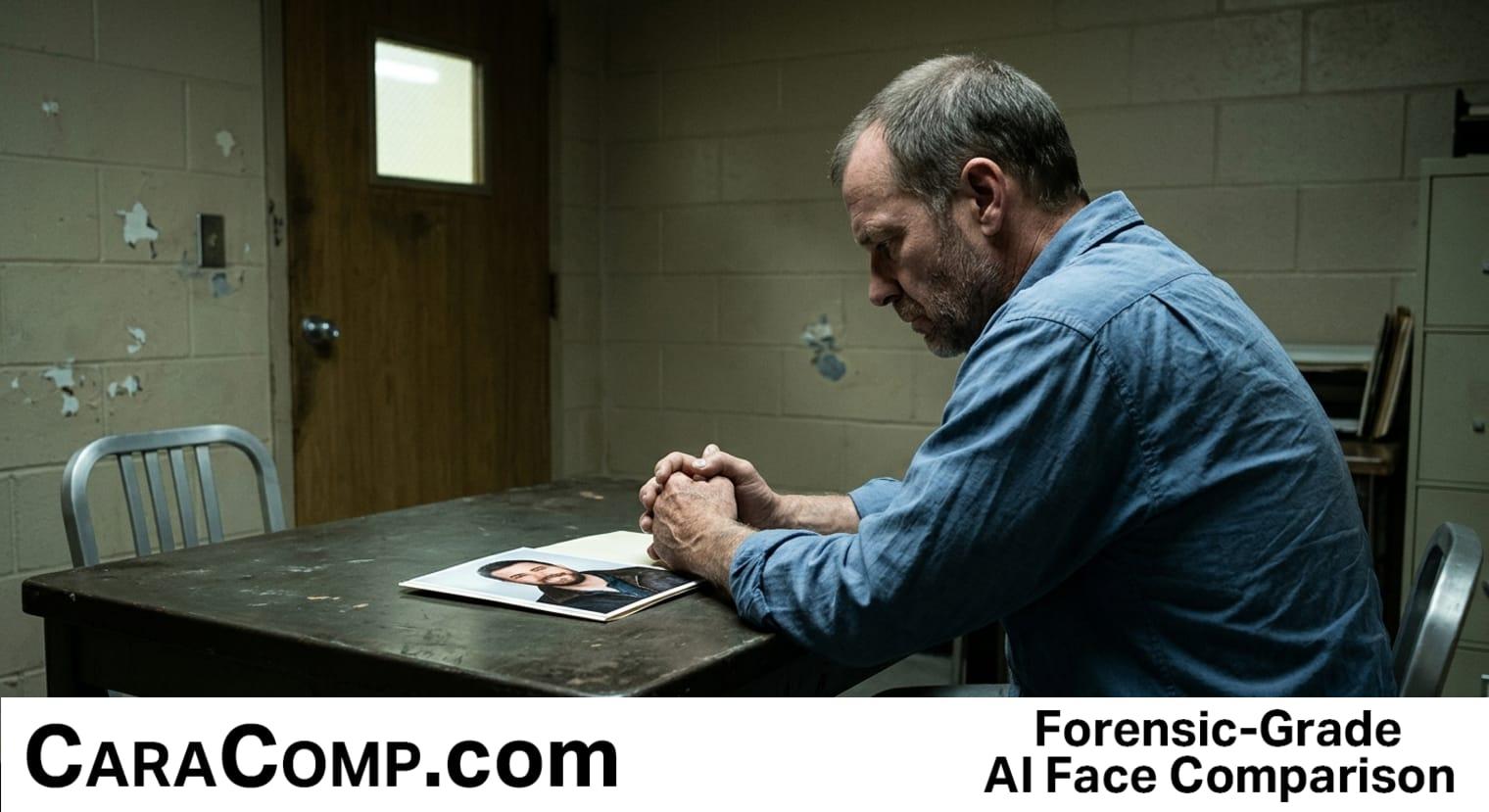
Now the real cases. In November 2022, Randal Reid of Georgia spent six days in jail for a theft in Louisiana, a state he had never visited. The match came from a face search tied to driver's license photos. In 2019, Nijeer Parks spent ten days in jail and fought the charges for nearly a year after a bad face hit from a fake ID left at a scene in Woodbridge, New Jersey. In February 2023, Porcha Woodruff, eight months pregnant, was arrested at her Detroit home, in front of her children, for a carjacking she did not commit.
More recently, Robert Dillon of Fort Myers, Florida, was arrested after police used facial recognition to tie him to a suspect in Jacksonville Beach, roughly 300 miles away. The match score was 93%. According to the ACLU, he is now suing over the arrest. Biometric Update counts him as at least the fifteenth person wrongly arrested after a face match, and reports that most of those cases involved Black people.
93%
the similarity score on a face match that pointed police at a man 300 miles from the crime
Source: ACLU, as reported in the Robert Dillon case
Id scanning versus a face search: why the same word fools everyone
Most of us hear "id scanning" and picture the bar. So when a news story says "police scanned the face and got a match," it sounds like the bar's green light. It isn't. At a bar, you present a card with a claimed identity; a clerk may check the photo against your face. A police search starts with a stranger's face and a giant pile of candidates.
The ID Scan Score Problem: Why a High Number Is Not Proof of Identity
Here is the part that surprised me most. A face search system can return its best-ranked candidates whether or not the real person is in the pile at all. If the true suspect was never in the database, a search can still hand back the closest-looking people. Someone is "most similar," even if a threshold keeps that person off the returned list. That someone might be you.
Think of a sketch artist. A sketch says, "this person resembles the suspect." A fingerprint can provide a more distinctive comparison, though it too requires careful examination. Face search is much closer to the sketch. Lighting, camera angle, hats, glasses, beards, and shadows all nudge the result. The system is a "close enough" filter, not a "confirmed" stamp.
Facial recognition is designed to generate a list of faces that are similar to the suspect's image, not confirm an actual match.
Research summary compiled for this article from NIST and ACLU material
Why 99% accurate can still mean millions of wrong faces
Time for quick math, and it's an illustration, not a statistic from a case. Say a system wrongly flags 1 percent of faces it compares. Search a pile of 300 million faces with no true match, and 1 percent is 3 million false candidates. The percentage sounds tiny. The pile is enormous. The number of false candidates depends on both the false-match rate and the size of the pile. Previously in this series: Biometric Age Verification 90 000 Tills Ask One Question.
A common misconception is that a 93% match means there is a 93% chance the person committed the crime. It's easy to see why: the number looks like a test grade or a probability. But a similarity score describes how alike the system finds two images; it is not the probability of guilt, or necessarily the probability of a correct identity.
NIST, the US government's testing lab, has found much bigger demographic differences in false matches (the wrong person is accepted) than in missed matches. Rates of false matches can be higher for people of color, women, older people, and young people, depending on the system and test, as explained by the Federation of American Scientists. So the people most likely to be wrongly picked are not spread evenly.
The threshold: the dial that decides who gets flagged
A system can use a cutoff, called the threshold (the minimum similarity score that counts as a hit). Raise it, and fewer wrong people get flagged, but real suspects can slip through. Lower it, and you may catch more suspects but flag more innocent people. Choosing the dial is a decision about which mistake you can live with.
At a door, a wrong "no" can mean an awkward chat with the clerk. In a criminal case, investigators may want a broad list so they don't miss a suspect. That list needs to be treated as a lead. The trouble starts when it isn't.
How a look-alike becomes a warrant: the confirmation bias trap
This is where the real damage happens, and it's more human than technical. In several cases, police showed a witness a photo lineup built around the face-search candidate plus five filler photos. The candidate may be the person in the lineup who most resembles the suspect, even if the candidate is innocent. A second ACLU analysis explains how guilt-suggesting hints, like a system recommendation, can lead people to misidentify someone. Two related signals can stack up and feel like independent evidence.
Jalil Richardson spent over 50 days in jail after an 85% match. A number like 85 sounds like a grade on a test. It is a similarity score, not a probability of guilt. Judges and investigators can mix those up, and that mix-up is the whole story.
| Question | ID scan at a door | Police face search |
|---|---|---|
| What is being asked | What data is on this card? A separate one-to-one check may compare the holder with its photo. | Who in a huge database looks like this photo? One against millions. |
| What a "hit" means | The scanner could read the data; some systems also check for inconsistencies. | A list of look-alikes, which can include people who did nothing. |
| Cost of a wrong answer | A rejected customer, or a fake ID slipping through. | Days or weeks in jail, as in the Reid and Parks cases. |
| What should come next | A human check of the card and holder. | Real evidence gathered independently, before any arrest. |
Where Your Scan Goes Next: Privacy, Identity Theft, and Fraud Prevention
Now back to the copy. Some shops keep what they scan: your name, address, birth date, license number, sometimes a photo of the card. In September 2026, at least nine class-action lawsuits were filed against an ID verification provider after a dark web marketplace claimed to be selling more than 153 million driver's license scans collected through the company's tools. These are claims and legal filings, not findings, but the lesson stands. A scan you handed over for a one-second age check may outlive the bar by years.
Those details can fuel id fraud (someone using your details to pretend to be you), and stolen details can help make fake ids. The honest fraud prevention advice is dull but real. Ask what a business keeps and for how long. Hand over the card only when it is truly required. Treat your license number like a spare house key.
Id scan fraud prevention: what to check first if something goes wrong
Let's go back to the question that matters. If this were happening to you tonight, would you know where to look first? Here is a calm order of operations.
- Ask what the evidence is. Politely ask whether facial recognition was used, and whether anything beyond a face match ties you to the crime.
- Ask for a lawyer. Say it plainly, then stop talking about the facts.
- Collect proof of where you were. Phone location history, receipts, timestamped photos, work badge logs. Reid said he had never been to Louisiana.
- Request the lineup details. Your lawyer can ask how the photos were chosen and whether the witness saw the face-search candidate.
- If your card data leaks, watch your credit and report id fraud to the Federal Trade Commission.
What You Just Learned
- Two jobs, one word. A door scan reads a card; a separate check may compare its photo with the holder. A police search ranks look-alikes from a large database.
- The list can have names. A system can return its closest faces even when the real person is not in the database.
- A score is not a probability of guilt. It reflects how alike the system finds two photos, not how likely a person is guilty.
- The copy is the long-term risk. Saved scans can be exposed years later.
At CaraComp, we spend our days on how faces get compared and why a similarity score is never a verdict. That's why we keep repeating one idea: a face match should start an investigation, and not finish one. Once you see the pile, the threshold, and the lineup trap, news stories about "a match" read very differently. Up next: Id Scan How A 93 Face Match Put The Wrong Man In Cuffs.
An id scan at a door reads a card and may be followed by a one-to-one face check, while a face search compares one photo with a large database. The score reflects how similar two photos look to the system, not how likely a person is guilty.
Recap: Reading a card is quick, but searching a giant pile of faces can return innocent look-alikes. A high score is a lead to check, not proof of identity.
So here's the punchline. The scan that read your card checked its data. The face search that pointed police at an innocent man compared photos and returned a look-alike. The 93% was a similarity score, not a verdict.
ID Scan: Frequently Asked Questions
Is an ID scanning app the same as the facial recognition police use?
What matters is the job being done. An ID scanning app may read a card and sometimes compare its photo with the holder. A police search compares one photo with a huge database. Before trusting any tool's claim, ask which of those jobs it does, and what a human does after it answers.
Can an iPhone camera do an id scan?
Yes, many apps use an iPhone or other phone camera to scan ids such as a license. The camera can capture the card, then parsing software pulls out the readable text or the barcode data. Some also compare the card photo to a selfie. Results vary with glare, lighting, and a worn card. The convenience is real, but so is the question of where the saved information goes afterward.
What is id scanning software, and how is it different from other scanning software?
Id scanning software reads a card and may check that its data is consistent. It supports fraud prevention by catching some inconsistencies in badly made cards. Other scanning software, like a face search, compares photos against a large database and returns possible look-alikes. Reading a document does not by itself confirm it is genuine. They can sit in the same app, which is part of why people confuse them.
Does a passport work with id scanners the same way a driver's license does?
Not exactly. A passport has a printed strip of machine-readable lines and, in many cases, a chip with information inside. A driver's license usually relies on a barcode. Both can be read by an id scanner, though not every scanner handles both. In either case, the scan reads the document's data. It does not prove the identity of the person holding it, or that the document was issued to them.
How do fake ids and id fraud get caught by a scan?
Some scanners check whether the barcode data matches the printed words, and whether the card format looks right. That can catch inconsistencies in fake ids. It can miss a card built from real, stolen details. Id fraud also happens after a leak, when copies of real scans get misused. So fraud prevention needs both a careful scan and careful limits on what businesses keep.
Is my id scan data safe after a business scans my license?
There is no guarantee. Safety depends on what the business or its software vendor keeps, how it protects that information, and for how long. In September 2026, at least nine class-action lawsuits were filed against an ID verification provider after a dark web marketplace claimed to sell scans. Those are allegations, not findings. Ask what is stored: a scan that takes a second can leave a copy behind long after the check is over.
Document authentication: checking the card itself, not just the data
Document authentication means testing whether the card is genuine, not just whether its data can be read. A reader can pull a name from a barcode without ever asking if the card was made by the real issuer. Document authentication adds that second question, and it is a different job from reading.
Document authentication versus identity verification
Document authentication asks if the card is real. Identity verification asks if the person holding it is the person it was issued to. A card can pass the first test and still be carried by someone else, which is why the two checks are often used together. Neither one is the same as a police face search.
Identity verification: matching the person to the id document
Identity verification usually starts with an id document, such as a driver license or passport. The system reads the document, then asks whether the person in front of it fits the photo. That is a one-to-one question, and it is much narrower than searching a huge database. Identity verification is only as strong as the weakest step in that chain.
Identity verification steps after the scan finishes
After the scan, identity verification can include a few more steps. The software may compare a face to the card photo, check that the data is consistent, and log the result. A human can then review anything that looks odd. Identity verification works best when a person can overrule the machine.
Document authentication limits on a worn id document
A cracked, faded, or scratched id document can confuse document authentication tools. A card that fails may be perfectly real, just old. That is why a failed scan should lead to a human look at the documents, not an automatic accusation. A false alarm is still a mistake, even at a door.
Scanner placement and image capture quality
Where a scanner sits changes how well it works. Bright windows, shiny laminate, and shaky hands all hurt capture. A clean image of the card gives the software a fair chance, and a blurry one invites errors. Good capture habits are boring, but they matter.
Image capture: glare, angle, and a clean image
Image capture is the moment a camera records the card or a face. Glare, a tilted angle, or poor light can distort the image and change what the software reads. The same applies to any face image used later for comparison. A poor image can mean a poor result.
Selfie capture in identity verification
Many apps ask for a selfie as part of identity verification. The selfie capture step takes a fresh photo and compares it with the picture on the card. Hats, glasses, and dim light can affect the result. A selfie check is one face against one face, which is a smaller question than a police search.
Selfie check versus a police face search
A selfie compared with your own id document is a different task from a search of millions of photos. In a selfie check, you chose to take part and you gave the claimed identity. In a police search, the person never chose anything. Keep that gap in mind whenever you read about a "match."
Verification scanners and driver licenses at the door
Verification scanners at bars and shops read driver licenses and check that the data looks well formed. Some verification scanners also compare printed text with the barcode. These tools help with age checks, but they cannot say whether a person is guilty of anything. Their job is narrow, and that is a good thing.
Passport scanner versus a driver license scanner
A passport scanner reads the machine-readable lines on the photo page, and some can also read the chip. A driver license scanner usually reads the barcode on the back. Either way, the passport scanner and its cousins read documents, not people. Neither can prove who is holding the card.
Id scanner questions to ask a business
If a business uses an id scanner, a few polite questions are fair. Does the id scanner keep digital scans or only check the age and delete? Who supplies the software, and how long are license scans stored? You may not always get a full answer, but asking tells the staff that people care.
Id document storage, digital scans, and license scans
Digital scans of an id document can be stored long after the check is over. Saved license scans may include your name, address, birth date, and license number. The fewer digital scans a business keeps, the less there is to leak. Deleting after the check is the safest habit for any driver license data.
Pulling it together: reading a card, document authentication, identity verification, and a police face search are four different jobs. Each answers a different question, and each can be wrong in its own way. Knowing which job a tool does is the best defense against confusing a quick id scan with proof of anything.
When you see a story about a scanner or a match, ask three things. What was the image, what was it compared with, and what did a human check afterward? Those questions work whether the tool is a door scanner, a selfie app, or a database search. Verification is a process, not a single green light.
Finally, remember that verification scanners and face search tools are built for different purposes. One checks documents at a counter; the other ranks look-alikes for investigators. Treat each result as a lead for a person to check, and the worst mistakes become much easier to avoid.
Ready for forensic-grade facial comparison?
Full forensic reports with detailed similarity scoring. Results in seconds.
Run My First SearchMore Education
Is Identity Theft Protection Worth It: $0 Lock Beats Alerts
Paid identity theft protection watches for fraud after it starts. A free credit freeze blocks many fraudulent new accounts, and the numbers explain why that gap matters.
digital-forensicsPhoto Forensics: 4 Hidden Tests That Expose a Fake Picture
A fake photo can fool your eyes, but the file may retain traces of an edit. Learn the layered tests experts use to investigate a picture, and where you would look first.
biometricsSelfie ID Verification: 34% of Rejections Aren't the Face
Your selfie can be rejected because of three different checks, and the app may not say which one failed. Learn what each gate wants and how to fix the right one.