
Biometrics Appointment Notice: 15 Minutes, 75 Years on File
Quick answer
What happens at a biometrics appointment for immigration?
At a biometrics appointment, staff at a USCIS application support center scan your fingerprints and take your photograph and signature, usually in about fifteen minutes. USCIS sends the prints to the FBI for background checks. The FBI may keep them afterward, so the record can last far longer than the visit.
A biometrics appointment is one of the shortest errands in the whole immigration process. You show up, press your fingers on a scanner, and you are out the door in about fifteen minutes. The record it creates is built to last a whole lot longer than that.
Biometrics appointment visits are short, but the fingerprints they collect can be shared with law enforcement and checked again for years, so the real mistake is thinking the process ends when you walk out.
Many people may assume the biometrics appointment is a box to tick. This guide walks through what actually happens, the mistakes that come from the "one and done" assumption, and what you can do about it tonight.
Biometrics Appointment: What Happens to Fingerprints USCIS Collects After You Leave
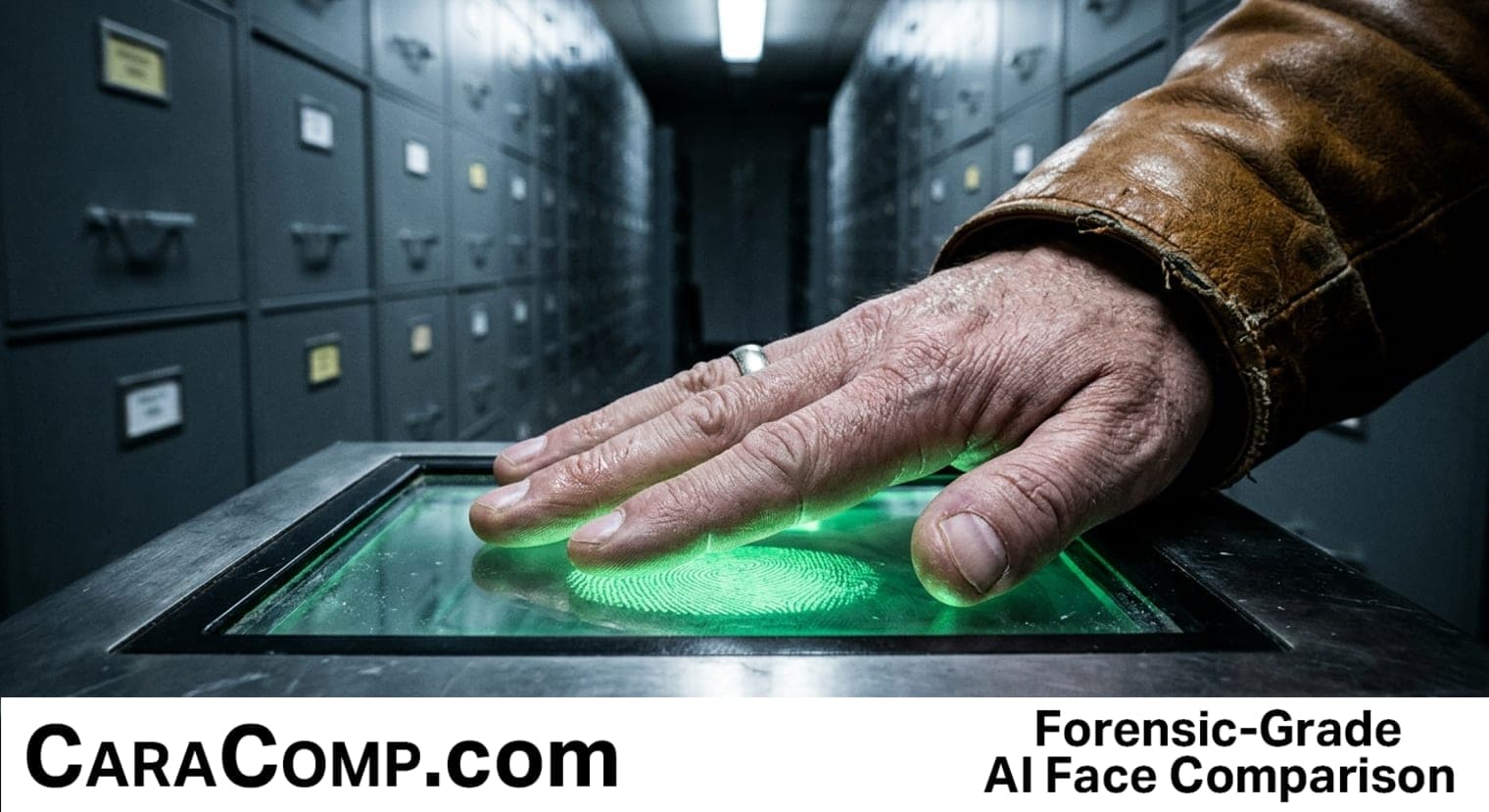
Let's start with the moment itself. Your biometrics appointment happens at an application support center (ASC), which is the local USCIS site that handles the fingerprint scanning. Staff capture fingerprints, a photograph and a signature in one sitting. According to the research behind this piece, the photograph, signature and right index fingerprint are stored in a USCIS system called the Customer Profile Management System, which is basically a filing cabinet for your body data.
Your fingerprints do not stay in that cabinet. USCIS sends them to the FBI and runs your information against Department of Homeland Security (DHS) and other law enforcement databases. That is the default path. You are not asked to approve each handoff separately.
The biometrics appointment notice and the fine print on the back
Here is a detail most people miss. The appointment notice for your biometrics appointment (Form I-797C) has a Privacy Act Statement printed on the back. It is one place where the FBI explains what may happen to your prints. Read it slowly, and watch the verb.
The FBI may retain your fingerprints and associated information/biometrics in NGI.
FBI Privacy Act Statement printed on the back of USCIS Form I-797C
"NGI" is the FBI's Next Generation Identification system (a huge searchable collection of fingerprints). Notice the word "may." It sounds optional. In practice it describes a system built to keep records, and nothing in that sentence says the prints get deleted when your paperwork is approved.
Up to 75 years
how long DHS plans to keep biometric records, according to reporting
Source: Wall Street Journal reporting This article is part of a series, start with Uk Shop Face Recognition Innocent Shoppers Named As Thieves.
Fifteen minutes in a chair. Up to seventy-five years on file. That gap is the whole story. To be fair, this retention plan appears in a rule DHS proposed, so check the current status of any final rule before you quote the number to a relative. The direction of travel is still clear.
Why a Biometrics Appointment Is Not a One-Time Immigration Check
Here is the idea that makes the rest click. Since 2017, USCIS has been moving from one-time background checks to something called continuous immigration vetting. "Vetting" just means checking someone out. "Continuous" means checks can continue beyond the initial screening.
The old way worked like an airport metal detector. You walked through once, it beeped or it did not, and you were done. The new way works like a smoke detector. It sits on the ceiling for years, and it only speaks up when something changes. Your biometrics can stay enrolled with the FBI, so USCIS does not have to start from scratch each time. New criminal history information can reach USCIS without you filing a thing.
Green card applicants and the check that keeps running
This affects many kinds of filings. A green card applicant, someone who filed a petition for a relative, a person seeking asylum: all of them may be asked to attend a biometrics appointment for biometric services. The prints you give for one filing can be reused across your immigration history. A check from 2024 can keep working against new data in 2026, 2030 and beyond.
Many applicants learned more about this when a letter arrived, sometimes months after their biometrics appointment, titled "FBI Privacy Requirements for Biometrics Collection by USCIS." The letter explained how continuous vetting works.
Where those fingerprints are allowed to go
You might picture the data sitting quietly inside one agency. It does not. Records in the DHS system called IDENT may be shared with federal, state, local, tribal, foreign and international agencies. The listed purposes include national security, law enforcement, criminal justice, border management and intelligence. That is a long guest list for a record you gave up in a waiting room.
It helps to picture a rental car counter. You hand over your keys for a quick check, and the clerk quietly cuts a copy. The copy can be passed to other agencies. If new criminal history information becomes available, it can reach USCIS. The original biometrics appointment ended. The copy did not.
Common Mistakes at a Biometrics Appointment (and the Misconception Behind Them)
Many mistakes trace back to one misconception: "Once my case is decided, USCIS is finished with my fingerprints." It is a reasonable belief. The biometrics appointment feels like a single event, and there may be no follow-up appointment or reminder that checks can continue. Our brains treat events with no sequel as over.
There is also a quieter pressure at work, and it is called authority bias. When a government office hands you a form, you may assume everything on it is standard and settled, so you do not question it. The officer at the desk processes fingerprints and may not explain the system behind them.
| What people assume | What the record shows |
|---|---|
| The biometrics appointment is a one-time event | Your biometrics can stay enrolled with the FBI, and the check can keep running |
| Prints disappear when the case closes | The FBI may retain fingerprints after an immigration case ends |
| Only USCIS sees the information | Federal, state and local agencies may receive it |
| Your status only matters at filing time | New records can reach USCIS months or years later |
| A missed biometrics appointment is harmless | A missed biometrics appointment can stall your case, so send USCIS a reschedule request |
When a case closes, the prints can stay
Mistake number one is assuming deletion. Fingerprints can remain in law enforcement databases even when charges are dropped; removal or expungement rules depend on the record and jurisdiction. There is no automatic erase button when an immigration case ends, and the Privacy Act Statement says nothing about one. Previously in this series: Age Verification Pornhub Returns But Only For Apple Users.
Status updates that arrive without any request
Mistake number two is thinking nothing can happen without you. Under continuous vetting, new criminal history information can reach USCIS even if you never made a request or filed anything. Your immigration status can be affected by a record you did not know was moving. This is exactly why an old arrest, even one that went nowhere, is worth discussing with a professional before you file.
Skipping the notice and the details on it
Mistake number three is ignoring paper. Treat the notice for your biometrics appointment like a document worth keeping. Check the appointment date, the address of the office, and what you need to bring. If you must reschedule, make the request with USCIS and keep a record of it, because a missed biometrics appointment can stall your case. Also keep the privacy letter if one arrives. It explains how your biometrics may be used.
Mistake number four is arriving unprepared. Bring your appointment notice and the identification it names, because staff use them to confirm your identity before they scan anything. Bring nothing extra you do not need. Allow extra time too. Fifteen minutes is the scanning, not the line.
How Long Is a Biometrics Appointment, and What Should Applicants Bring?
A typical biometrics appointment takes about fifteen minutes, though waiting can stretch the day. Applicants should bring the appointment notice and the photo identification named on it. Staff use those to confirm your identity before they capture fingerprints. Check the notice itself for anything extra it asks you to carry.
That answers the logistics. The bigger question is what the visit starts. Think of your biometrics appointment as the front door to a long-running file, and the sections below explain what sits behind it.
Why the check keeps asking questions: background and security checks
USCIS says it uses your prints to run required background and security checks before it decides a case. That purpose makes sense. Fingerprints can help connect a person to records under different names. The surprise is the timeline. A check that once happened in a single moment can now be refreshed when new data arrives.
DNA is where this keeps growing. A proposed rule would allow USCIS to collect and reuse biometrics across a person's immigration history. USCIS has said raw DNA would be destroyed after testing. The partial DNA profile and test results, though, would be stored in the person's immigration file and could be shared with other DHS offices or law enforcement if the law permits. The raw sample goes away, but the profile built from it is kept.
What You Just Learned
- It is short, the record is not: about fifteen minutes in the room, with a retention plan of up to 75 years.
- Continuous vetting: your prints can stay enrolled so new records can reach USCIS later.
- Wide sharing: federal, state, local, tribal and foreign agencies may receive the data.
- The notice matters: the back of your appointment notice is where the FBI says it "may" keep your prints.
A Matching Mistake Lives Downstream: Why Errors Hurt
Here is where my own corner of the world comes in. At CaraComp we study how face and fingerprint matching works, and one fact surprises people: a match is a score, not a verdict. A computer says "these two look similar enough." A human then has to decide what that means. When people treat the score as proof, innocent people pay for it.
The cases on record involve facial recognition used by police, not USCIS. They still show what happens when a database hit is trusted too much. In February 2023, Porcha Woodruff, eight months pregnant, was arrested at her Detroit home in front of her children after a misidentification. She was held for 11 hours, according to CBS News. In January 2020, Detroit police arrested Robert Williams in his driveway on a faulty match and held him for 30 hours, according to the ACLU. In 2019, Nijeer Parks was jailed for ten days in Woodbridge, New Jersey, and spent nearly a year fighting the charges, also per the ACLU.
Why does this belong in a piece about USCIS? Because the photograph taken at the visit is one more face record in a system that shares widely. USCIS has said it intends to use collected biometrics for continuous vetting, as reported by Nextgov/FCW. The more places a record travels, the more places an error can follow it. Official sources worth reading for yourself include the Federal Register notice of the proposed biometrics rule, and the FBI's own NGI retention and searching documentation. A plain-language explainer on the letter many applicants received is available from Reddy Neumann Brown PC. Up next: Biometrics Appointment 15 Minutes Up To 75 Years On File.
What to do tonight if this feels uncomfortably close to home
Start with paper. Find the notice for your biometrics appointment and read the back. Look for any letter about FBI privacy requirements. If you have an old arrest or a name mix-up in your history, talk to an immigration lawyer before your next filing, because a lawyer can review what is likely on file. Do not guess about legal issues. If a record looks wrong, ask for help correcting it early, not after a decision.
A biometrics appointment is not a box to check but the start of a check that can keep running, because your prints can stay enrolled and your biometrics can be shared with law enforcement for years.
Recap: Your biometrics appointment takes about fifteen minutes, yet your fingerprints may be kept and re-checked for decades. Read the notice, keep your paperwork, and ask a lawyer about anything in your history.
So here is the question to carry out the door: if a record about you changed tonight, would you know where to look first? Your biometrics appointment notice and any FBI privacy letter are a place to start.
Biometrics Appointment: Frequently Asked Questions
Can I reschedule my biometrics appointment if the appointment date does not work?
Yes, you can submit a request to reschedule your scheduled biometrics appointment. Send the request to USCIS using the instructions on your notice, and keep a copy or confirmation. Do not simply skip your biometrics appointment, because a missed appointment can slow your case or lead to a denial. If the appointment date is close, act quickly. Ask your lawyer if the delay could affect any deadline tied to your filing.
Do asylum cases and a petition use the same biometrics notice?
Many kinds of filings, including an asylum application or a petition, can lead to a biometrics notice. The notice lists your appointment details, so read the one you received instead of relying on a friend's. Each case has its own rules. If your notice and your filing do not seem to match, contact USCIS or ask an immigration lawyer to review it for you before you attend.
Why does USCIS run required background and security checks with my fingerprints?
USCIS uses fingerprints to run required background and security checks before deciding many immigration requests. Your prints go to the FBI and are compared against law enforcement records. Under continuous vetting, the check can also keep running afterward, so new information about you can reach USCIS later. That is why the back of the notice matters. It explains that the FBI may retain your prints.
How do staff confirm your identity at a biometrics appointment?
Staff compare you against the documents named on your notice. Bring the appointment notice and the photo identification it lists so they can confirm your identity. They then take your fingerprints, photograph and signature. Check the notice for any extra items before you go. Arriving without the right documents is a common mistake that can mean wasted travel and a delayed case.
Does biometrics collection include DNA, and what happens to it?
Standard biometrics collection covers fingerprints, a photograph and a signature. A proposed rule would allow USCIS to collect DNA in some cases. USCIS says raw DNA would be destroyed after testing, but the partial profile and results would stay in the immigration file and could be shared with other DHS offices or law enforcement where the law permits. Check the current status of the rule on the Federal Register.
Should I talk to a lawyer about legal issues before my green card biometrics appointment?
If anything in your past could appear in a background check, such as an arrest, a charge that was dropped or a name mix-up, speaking with a lawyer is smart. A lawyer can review what may be on file and explain how it could affect your green card or immigration status. This is general information, not legal advice, and the law changes, so ask for guidance on your own case.
Ready for forensic-grade facial comparison?
Full forensic reports with detailed similarity scoring. Results in seconds.
Run My First SearchMore Education
Steam UK Age Verification: Credit Card Only, No Selfie Scan
Valve relies on a bank's earlier age check rather than checking your age directly. Learn how the card check works and how to protect yourself.
biometricsFace Recognition iPhone: Beats Masks, Still Opens for Twins
Face ID can reject photos and masks. An identical twin is another story. Learn why, and the one setting worth checking before bed.
privacyDigital Identity Protection: Software Jails Grandma 5 Months
Most digital identity protection advice is theatre. Learn the three moves that matter, and the first questions to ask if your name ends up on a charge you never earned.