
The Face Shop vs UK Shop Face Recognition: Innocent Shoppers Named Thieves
Quick answer
Can a shop accuse you of theft because of a face recognition match?
A face match alone should not be treated as grounds for accusing anyone. It only shows that two faces look alike to software, which can be fooled by lookalikes, poor lighting or cheap cameras. A trained person should check the facts first, and the shopper should be able to ask why and appeal.
If you typed "the face shop" into a search bar at 11pm, you may have wanted skin care or beauty products. This is a different story: the shop that scans your face the moment you walk in, and what happens when it gets you wrong. Picture an ordinary errand that ends with a staff member blocking your way, and a shopper who then feels too scared to come back.
The face shop in this story is a UK store using face matching, and the core lesson is that a face match is a clue, not proof, so innocent shoppers need a real way to challenge mistakes.
The Face Shop Problem: A Shop Camera Decides You Look Like a Thief
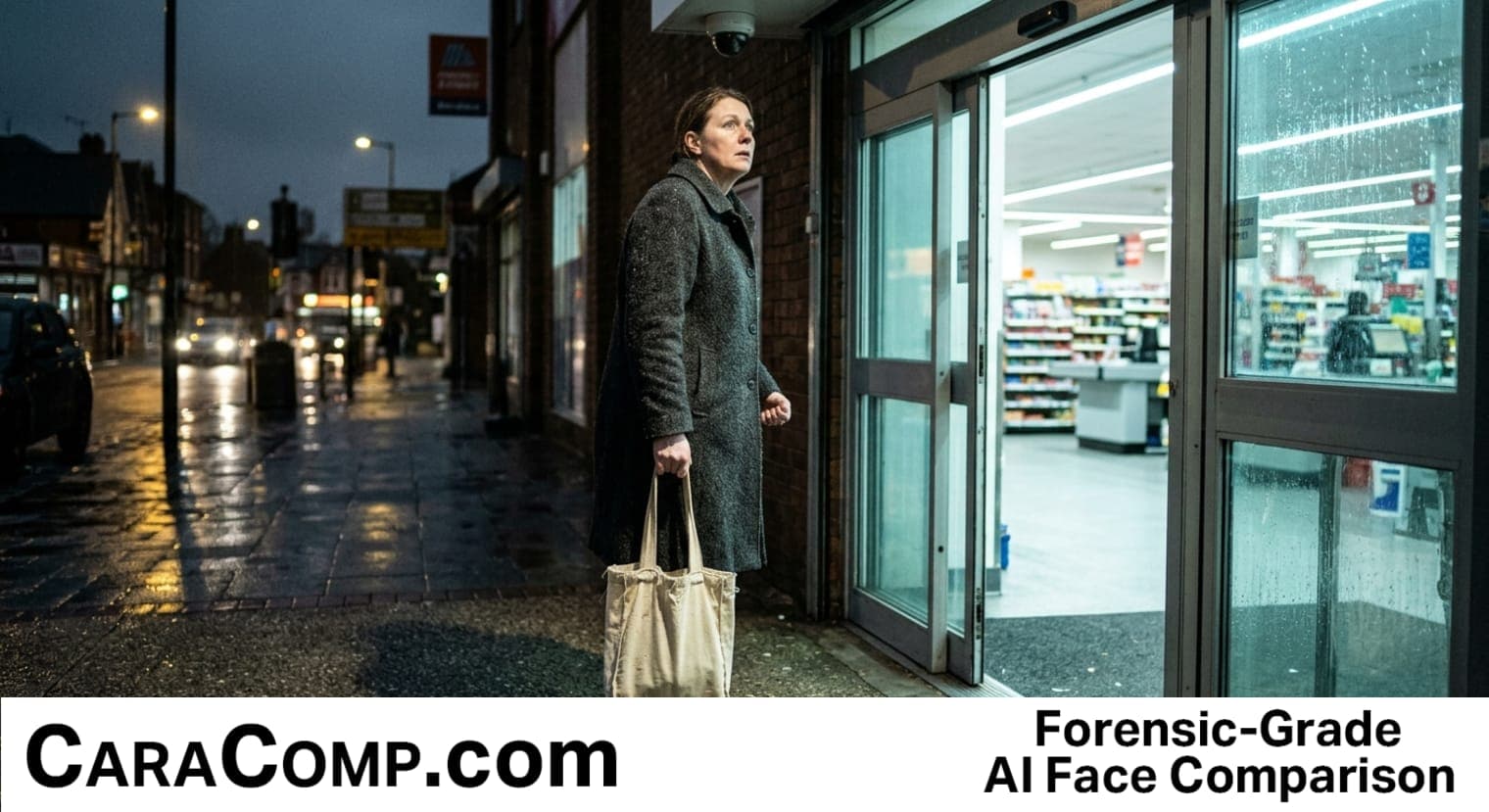
Here is the scene reported by TechRadar. People who were wrongly accused of shoplifting by face-matching cameras gathered in Parliament to tell their stories. They had done nothing wrong. They were still stopped, questioned, and in some cases made to hand over personal identification to prove who they were.
Their word for the process was "Orwellian." Think about that for a second. These are people who went out for groceries.
That is why this story hits harder than a typical tech glitch. The damage does not end at the checkout. It follows you home. Your brain files the memory under "this can happen to me," and the next time you pass that shop you hesitate. Psychologists call this the availability heuristic (your mind treats whatever it can picture most vividly as the most likely thing). One public, embarrassing stop and the doorway feels dangerous for months.
Shop Face Recognition, Explained: A Clue Is Not Proof
Face matching in a shop works like this. A camera captures your face. Software compares it to a list of people the shop wants to watch. If the two faces look alike enough, it sends an alert. That alert is supposed to be a nudge: "a person should take a look."
The trouble comes when staff treat the nudge like a verdict. Done responsibly, a human checks the match, compares the actual person to the photo, and only then decides anything. In the cases described, some shoppers were stopped almost as they walked through the door. That suggests nobody was checking at all.
The company behind the British retail systems describes wrongful flags as "extremely rare cases" and blames human error in the store, not its software. For a comprehensive overview, explore our comprehensive reverse image search resource.
Company behind UK retail systems, as reported by TechRadar
Maybe that is true. But "rare" is a statistic, and the person standing at the door is not a statistic. If the error is the staff's fault, then the shop owns that fault. If it is the software's fault, the shop chose the software. Either way, the shopper is the one left holding the bag.
UK Shop Face Recognition: What the Numbers Do and Don't Tell Us
99.98%
accuracy claimed by the company behind British retail systems, across more than 500,000 alerts a year
Source: company claim, as reported by TechRadar
That number sounds comforting. Run the math, though. A small error rate applied to more than 500,000 alerts a year still means real people. And the vendor's number is the vendor's own claim, not a neutral test. I am not saying it is false. I am saying you should not let it end the conversation.
There is also independent evidence of harm. According to NIST (the US government's standards lab), false matches vary a lot between systems, and they appear to fall harder on minority communities. Separately, the FTC forced a major US pharmacy chain to stop using face matching after it produced thousands of false alerts, more often in neighborhoods with many Black and Asian residents. NBC News documented how employees followed, searched, and publicly accused innocent customers based on those alerts.
Match Score and Rating: Why a Number Is Not a Verdict
Most of these systems produce a match score (a number for how alike two faces are). Think of it as a rating, like stars on a product page. A four-star rating tells you something. It does not tell you the person in front of you is the one in the photo. Lookalikes exist, bad lighting exists, and cheap cameras exist.
| What a face match gives a shop | What a shop actually needs before accusing someone |
|---|---|
| A match score, a rating of how alike two faces are | A person who compares the face to the photo and the facts |
| A hint that a shopper might be on a list | Evidence tied to a real incident in that shop |
| An alert in seconds, often at the door | A calm check before anyone is stopped in public |
| No explanation sent to the shopper | A clear reason and a way to appeal |
Is a Face Match Proof That Someone Stole From the Shop?
No. A face match only says two faces look alike to a computer. It cannot tell you what a person did. It cannot tell you whether the match is a lookalike, a bad photo, or a clerical slip. Treating it as proof is how innocent shoppers end up accused.
Why the Appeals Gap Is the Real Story
Here is the part that should bother everyone. Reporting says that once a name goes on a watchlist, it can stay there for a year. There is essentially no clear way to find out why you were flagged or how to challenge it. Shoppers described being asked to send personal identification to a third party just to clear their name. In effect, people are put on a list without due process and then asked to prove they do not belong there.
A case at a South London Sainsbury's, covered by Dig.Watch, shows the pattern. There was no practical way to opt out, and security staff knew little about how the system worked. Who do you argue with when the person in front of you cannot explain the machine?
Why the Face Shop Debate Matters to Ordinary Shoppers
- Fear outlasts the stop. One public accusation can make a normal errand feel risky for months.
- No owner for the error. The vendor blames staff, staff blame the alert, and the shopper gets nobody.
- Proof flows backward. Innocent people are asked to hand over more data to undo a mistake they did not make.
What's Coming Next for the Face Shop Near You
My bet is that these cameras spread, not shrink. They are cheap, shops are under pressure, and the vendors can point to a big accuracy number. So the fight will be over process, not whether the cameras exist. A facial recognition provider publishes a sample procedure for handling a false match, and it includes a human review, an escalation path, and an appeals step. None of that is exotic. It is the bare minimum.
If you have ever wondered whether a photo or a face is really who it claims to be, that is exactly the question this kind of technology exists to answer, and it is why a second look from a person matters. Here is one thing you can do. If you are ever flagged, ask for the reason in writing, and ask the shop for the data it holds on you. Big Brother Watch explains how a Subject Access Request (a formal ask for the information a company holds about you) works for wrongly flagged shoppers.
At the face shop, a mistaken face match is only a clue, and every UK shop face recognition system needs a clear appeals route so a wrong flag does not become a sentence.
Recap: A shop's face scan can be wrong, and a wrong scan should never count as proof. Innocent shoppers need a simple way to challenge it.
So here is the question to leave you with. If a camera at the face shop got you wrong tomorrow, who exactly would you walk up to and say, "that was a mistake, fix it"? Continue reading: Uk Shop Face Recognition Innocent Shoppers Named As Thieves.
The Face Shop: Frequently Asked Questions
Is thefaceshop the beauty brand the same as the face shop in this story?
No. This article does not cover thefaceshop, the Korean beauty brand, and the reporting never mentions it. Here, the face shop means a UK store that scans faces at the door. If you came looking for beauty products such as skin makeup, hair care, a cleanser, or skin care for dry skin or sensitive skin, you are on the wrong page, and this piece is about cameras, watchlists, and shoppers wrongly stopped.
Does this story involve Ulta Beauty, rice water, or water bright products?
No. None of the reporting mentions Ulta Beauty, rice water, or any water bright product line. If you wanted to shop rice water cleanser, check a product rating, or find wipes for your skin type, those are different searches. This story is about a face match in a shop going wrong and the shopper left without a way to appeal.
Can a shop accuse me just because a face match flagged me?
A shop can act on an alert, but a face match is only a clue. Responsible use means a trained person checks the match against the real situation before anyone is stopped. The people who told their stories in Parliament say that check was missing for them. If you are flagged, stay calm, ask for the reason, and ask who can review the decision.
How long can a name stay on a shop's watchlist?
Reporting says that once someone is added, their name can remain on the list for a year. That matters because a mistaken entry keeps causing trouble each time the person walks in. Shoppers also said they received little explanation and no clear appeals process. If you suspect you are on a list, make a written request for your data and ask how to challenge the entry.
What does a match score or rating really tell a shop?
A match score is a number for how alike two faces are, much like a rating on a product page. It shows resemblance, not guilt. Lookalikes, poor lighting, and low-quality images can all push the number up. A careful shop treats a high score as a reason to look closer, never as the end of the conversation, and always gives the person a chance to explain.
What should I do about uk shop face recognition if I was wrongly flagged?
Write down the date, time, and shop, and note what staff said. Ask the shop for the reason and request your data in writing. Big Brother Watch publishes guidance on Subject Access Requests for wrongly flagged shoppers. Keep your own record of every reply, because a clear paper trail is the best way to challenge an error and feel comfortable going back.
Skin Care and Hair Shoppers: Looking for a Beauty Brand?
Many people who search for the face shop want skin care, not camera news. If that is you, here is a plain guide to the words. Skin care means products for your skin, such as a cleanser, a moisturizer, or sunscreen, and your skin type matters more than any brand name.
Good skin care starts with knowing whether your skin is dry, oily, or sensitive. Hair care works the same way, because hair that is dry or oily needs different products. A shop that sells beauty products should let you read labels, ask questions, and walk out without being stopped by a camera.
Searches for beauty tools, a jeju aloe gel, or a skincare body lotion are all normal shop trips. None of them has anything to do with the story above. The point is that an ordinary beauty errand should never end with a staff member blocking your way over a wrong face match.
Body Care Aisle Cameras: Where Shoppers Get Stopped
Picture a shopper in the body care aisle comparing two lotions. Nothing about that is suspicious, yet a camera at the door has already scanned that face. If the alert was wrong, the shopper with a basket of body care and hair care items is now the one explaining themselves.
This is why the aisle matters as much as the doorway. A shop that sells skin care, hair, and body care products has many shoppers who browse slowly, pick things up, and put them back. Browsing is normal behavior, and a face match should never turn it into a reason for an accusation.
Whether a customer is buying beauty tools, skin care, or a simple hair brush, the same rule applies. A shop needs real evidence tied to a real incident, not a score from a camera. Skin, hair, and body care shoppers deserve the same fair treatment as anyone else in the shop.
How to Care for Your Rights After a Wrong Flag
Looking after your rights is a bit like a skin care routine: small, steady steps work best. Keep notes, ask for the reason, and ask for your data in writing. Each step builds a record that a shop has to answer.
If you are a regular at a shop that sells beauty, hair care, or body care items, tell the manager calmly that you were flagged by mistake. Ask who reviews the decision and how to appeal. A shop that cares about its customers should have an answer ready, and a shop without one has a process problem.
Take care of the paper trail as well. Save receipts, emails, and the names of staff you spoke with. For skin care and beauty shoppers and everyone else, a clear record is the best protection against a mistake that could otherwise follow you from shop to shop.