
What Is Biometric Data? Understanding Biometric Security and Privacy
Understanding the unique physical and behavioral characteristics that power modern identity verification, and the critical privacy protections they require.
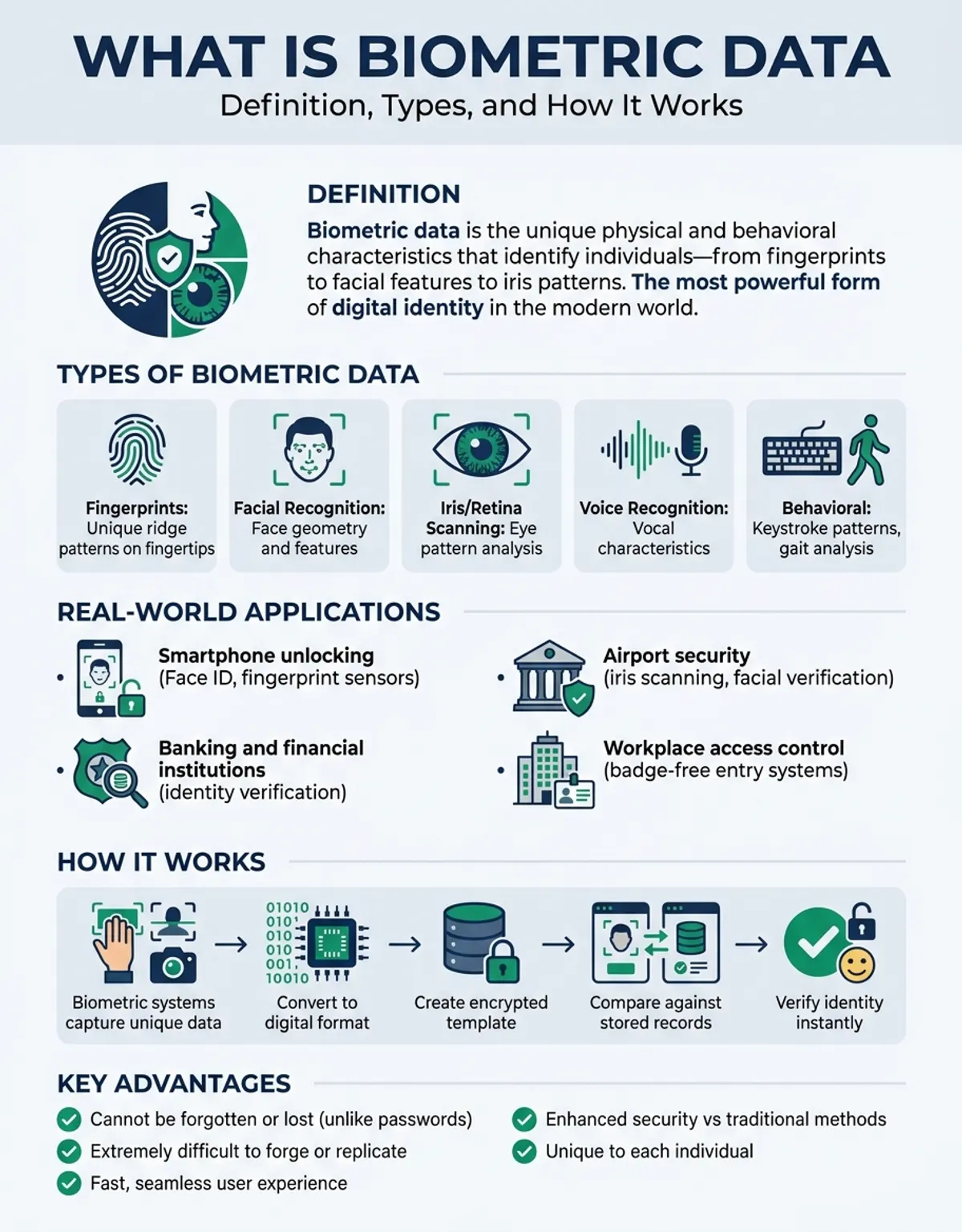
Biometric data represents one of the most powerful and personal forms of digital identity in the modern world. From unlocking your smartphone with your face to clearing airport security with an iris scan, biometric recognition systems have become deeply embedded in everyday life. Understanding what is biometric data has become crucial. But what exactly is biometric data, and why does it matter so much for security, privacy, and personal identity? For comprehensive verification tools beyond biometric data, explore our reverse image search guide.
This comprehensive guide explains what biometric data is, how biometric systems work, the different types of biometric authentication methods, and the critical security and privacy considerations that organisations must address when collecting and processing this special category of personal information.
What Is Biometric Data? A Complete Definition
Biometric data collection and processing have become integral to modern security systems. Organizations deploy biometric authentication to protect sensitive data and control access to facilities and systems. Biometric recognition technology analyzes biometric characteristics with high accuracy, comparing captured biometric samples against stored biometric templates. The authentication process verifies identity through biometric matching, ensuring that only authorized individuals access protected resources. This biometric verification method offers stronger security than traditional authentication approaches relying on passwords or PINs.
Biometric data is information that describes the unique physical or behavioral traits of an individual. Unlike traditional forms of recognition such as passwords or ID cards, this data is inherently linked to your body and behavior, making it extremely difficult to replicate, share, or steal in the same way conventional credentials can be compromised.
Modern biometric systems integrate multiple biometric modalities to enhance authentication accuracy and security. These systems capture biometric data through specialized sensors, process the biometric information using advanced algorithms, and store biometric templates securely. Biometric authentication systems can verify identity in milliseconds, providing seamless user experience while maintaining robust security. Organizations implement biometrics for device access, facility security, identity management, and authentication across various applications. The reliability of biometric recognition depends on quality biometric data capture, accurate feature extraction, and secure template storage within biometric systems.
The term "biometric" comes from the Greek words "bio" (life) and "metric" (measurement). In practical terms, biometric data classifies measurable human characteristics distinctive enough to uniquely recognize someone with high accuracy. These fall into two broad categories: physical traits (like fingerprints or iris patterns) and behavioral traits (such as the way you walk, type, or speak).
What makes biometric data particularly valuable for identity confirmation is its permanence and uniqueness. Your fingerprint patterns, for instance, remain consistent throughout your lifetime and are statistically unique among billions of people. This combination of stability and distinctiveness makes biometric data an exceptionally reliable way to confirm someone's identity in security-critical applications.
However, the very qualities that make this data useful also create significant privacy concerns. Because you cannot change your biometric characteristics the way you can change a password, any breach or misuse carries permanent consequences for individuals affected.
Types of Biometric Data and Their Applications
Biometric characteristics fall into two categories: physiological biometrics measuring physical traits like fingerprints, facial features, and iris patterns, and behavioral biometrics analyzing actions like typing rhythms and voice patterns. Each type of biometric data offers different security properties and use cases. Physiological biometric authentication provides stable, long-term identity verification because physical biometric characteristics rarely change. Behavioral biometrics add continuous authentication capabilities, monitoring ongoing identity verification during device or system use. Combining multiple biometric modalities creates multi-factor biometric authentication systems with enhanced security and reduced error rates.
However, the very qualities that make this data useful also create significant privacy concerns. Because you cannot change your biometric characteristics the way you can change a password, any breach or misuse carries permanent consequences for individuals affected.
Biometric data encompasses a wide range of measurable characteristics, categorized into two primary types: physiological biometrics and behavioral biometrics. Understanding these different approaches helps clarify how various technologies operate and which applications are best suited to each.
Physiological biometrics measure the physical structure of the human body. These include:
- Fingerprints: The unique ridge details on fingertips, one of the oldest and most widely deployed techniques
- Facial geometry: The distinctive spatial relationships between facial features like eyes, nose, cheekbones, and jaw
- Iris and retina scans: The complex details in the colored part of the eye (iris) or blood vessel arrangements at the back of the eye (retina)
- Hand geometry: The shape, size, and proportions of hands and fingers
- DNA: Genetic markers that provide the most definitive form of identification
- Vein arrangements: The unique configuration of blood vessels beneath the skin, typically scanned in fingers or palms
Behavioral biometrics analyze how people perform certain actions. These dynamic characteristics include: You may also find our guide on Face ID helpful for understanding biometric authentication systems.
- Voice: The distinctive acoustic properties of an individual's speech
- Gait analysis: The unique way a person walks, including stride length, pace, and body movement
- Keystroke dynamics: Typing rhythm, speed, and pressure
- Signature dynamics: Not just the appearance of a signature, but the speed, pressure, and pen movements used to create it
The following table compares different biometric types across key performance factors:
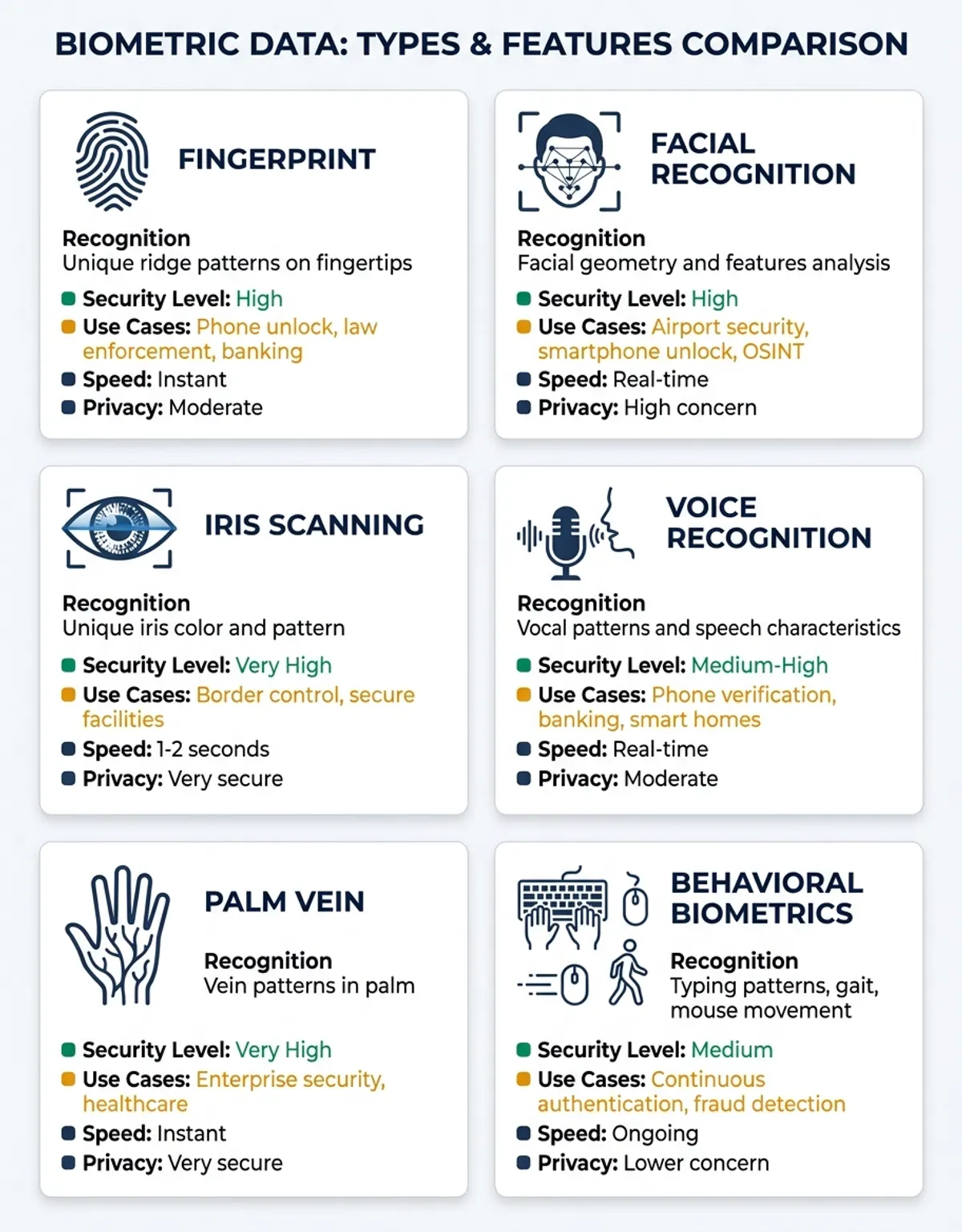
| Biometric Type | Modality | Accuracy | Spoofability | Common Use Case |
|---|---|---|---|---|
| Fingerprint | Physical | High | Medium | Device unlock, banking |
| Face matching | Physical | Very High | Medium | Smartphones, airports, law enforcement |
| Iris scan | Physical | Very High | Low | Border control, high-security facilities |
| Voice | Behavioral | Medium | Medium | Phone banking, smart speakers |
| Gait analysis | Behavioral | Medium | Low | Surveillance, healthcare monitoring |
Each biometric modality offers different tradeoffs between accuracy, user convenience, cost, and resistance to spoofing. The choice of which approach to deploy depends on the specific requirements, user population, and operational environment of each application.
How Biometric Systems and Recognition Technology Work
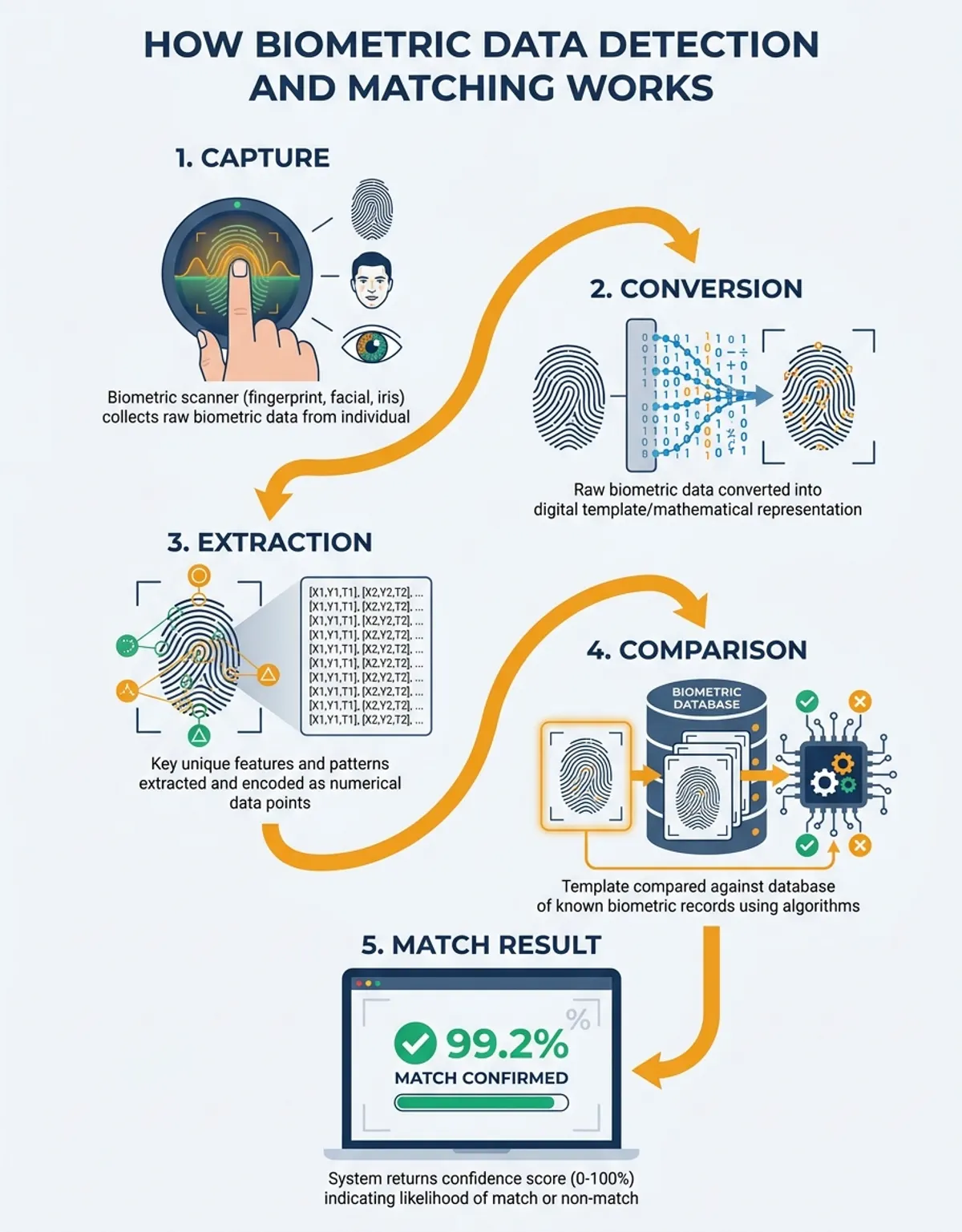
Biometric recognition systems operate through a standardized multi-stage process that converts physical or behavioral characteristics into digital templates that can be securely stored and compared. Understanding this workflow is essential for grasping both the capabilities and limitations of biometric recognition technology.
The typical biometric system operates in four distinct phases during biometric processing:
1. Enrollment: During initial enrollment, specialized sensors gather raw data from the user. For fingerprints, this involves a capacitive or optical scanner that records ridge details. For facial recognition, it requires a camera with sufficient detail. The quality of this initial step is critical—poor enrollment images lead to higher error rates in subsequent matching attempts.
2. Feature extraction and template creation: The raw data is then analyzed by algorithms that extract distinctive features and convert them into a mathematical representation called a template. This template is not an image of the biometric trait itself, but rather a compact digital signature derived from key identifying characteristics. For instance, a fingerprint template might encode the location and orientation of ridge endings and bifurcations.
3. Template storage: The biometric template is securely stored in a database, on a smart card, or on the device itself. Modern biometric systems employ encryption and other security measures to prevent unauthorized access or theft. Unlike passwords, biometric templates cannot be directly "read" by humans, but they remain sensitive data requiring careful governance and security processing.
4. Comparison and matching: When a user attempts authentication, their biometric trait is gathered again and converted into a fresh template. The biometric recognition system then compares this new template against one or more stored templates, calculating a similarity score. If the score exceeds a predefined threshold, the system grants access; otherwise, it denies the attempt.
Biometric recognition systems can operate in two fundamental modes:
- One-to-one matching: The platform compares the presented biometric against a single stored template associated with the claimed identity. This is what happens when you unlock your phone with your fingerprint—the device only needs to check whether your print matches the one enrolled for your account.
- One-to-many matching: The platform compares the presented biometric against an entire database of templates to determine whose identity matches. Law enforcement uses this approach when searching for a match in a criminal database, or border control uses it to screen against watchlists.
The performance of biometric recognition systems is measured primarily through two error rates: false acceptance rate (FAR), which tracks how often the recognition system incorrectly accepts an unauthorized user, and false rejection rate (FRR), which tracks how often the recognition system incorrectly rejects an authorized user. System designers must balance these competing error types by adjusting matching thresholds to meet security requirements while maintaining acceptable user convenience.
Biometric Authentication vs. Biometric Verification
While the terms "authentication" and "verification" are often used interchangeably in casual conversation, they represent distinct processes in the context of biometric technology. Understanding this difference is important for grasping how various applications deploy these capabilities.
Biometric verification (also called biometric authentication in some contexts) answers the question: "Are you who you claim to be?" This is a one-to-one matching process where the user first presents an identity claim—such as entering a username or presenting an ID card—and then provides biometric data to prove that claim. The platform only needs to compare the presented biometric against the single template associated with the claimed identity.
Common scenarios include:
- Unlocking your smartphone with Face ID or fingerprint
- Accessing your bank account using voice
- Logging into a laptop with Windows Hello
- Confirming your identity at a hotel check-in kiosk
Biometric identification (what some call "true authentication") answers the more challenging question: "Who are you?" This is a one-to-many matching process where the user provides only their biometric data, and the technology must search through an entire database to find a matching template and determine their identity.
Identification is computationally more demanding and prone to higher error rates because it must perform many more comparisons. Applications include:
- Law enforcement searching fingerprints against criminal databases
- Airport security checking travelers against watchlists
- Finding missing persons or identifying disaster victims
- De-duplication in welfare programs to prevent fraud
From a privacy and security perspective, verification is generally considered less invasive because it requires the user to make an explicit identity claim before providing data. Identification approaches, particularly those deployed in public spaces for surveillance purposes, raise more significant civil liberties concerns because they can identify individuals without their knowledge or active participation.
Most consumer applications use verification rather than identification because it's faster, more accurate, and more privacy-respectful. Your smartphone, for example, doesn't scan your face and search a global database—it simply checks whether your face matches the template stored on your device.
Why Biometric Data Is a "Special Category" Under Privacy Law
Privacy regulators around the world recognize that biometric data presents unique risks distinguishing it from ordinary personal information. This has led to its classification as a special category of sensitive data requiring enhanced protection and stricter handling rules.
While the terms "authentication" and "verification" are often used interchangeably in casual conversation, they represent distinct processes in the context of biometric technology. Understanding this difference is important for grasping how various applications deploy these capabilities.
Under the European Union's General Data Protection Regulation (GDPR), Article 9 specifically designates biometric data used for uniquely identifying a person as "special category data" alongside other sensitive categories like health data, genetic data, and information about religious beliefs or sexual orientation. This status means that organisations generally cannot process biometric data unless one of several narrow legal exceptions applies, with explicit consent being the most common lawful basis.
What makes this designation so significant is that it imposes higher standards on organisations:
- Enhanced consent requirements: Handling typically requires explicit, informed, and freely given consent separate from general terms and conditions
- Heightened security obligations: Companies must implement stronger technical and organizational safeguards to protect from breaches
- Mandatory data protection impact assessments: Many activities trigger the requirement for formal privacy impact assessments
- Stricter purpose limitations: Data collected for one purpose (such as building access) generally cannot be repurposed for unrelated uses (like employee monitoring) without new legal justification
In the United States, while there is no comprehensive federal privacy law, several states have enacted specific regulations. Illinois's Biometric Information Privacy Act (BIPA), passed in 2008, has been particularly influential and has generated extensive litigation. BIPA requires private entities to obtain written consent before collection, to publish retention policies, and to meet specific requirements for data storage and destruction.
Other US states including Texas, Washington, California, New York, and Arkansas have also enacted biometric-specific legislation with varying requirements. The California Consumer Privacy Act (CCPA) and its successor the California Privacy Rights Act (CPRA) include biometric information in their definitions of sensitive personal information subject to enhanced protections.
The rationale for treating biometric data as a protected class centers on several unique characteristics:
- Permanence: Unlike passwords or ID numbers, you cannot change your fingerprints or iris details if they are compromised
- Uniqueness: This data is uniquely linked to your physical body, making breaches particularly intimate privacy violations
- Function creep potential: Information collected for one purpose can potentially be used for extensive surveillance or tracking without consent
- Discrimination risks: Some technologies have shown varying accuracy rates across demographic groups, raising fairness and civil rights concerns
For organisations deploying biometric systems, compliance with special category requirements demands careful governance, transparent privacy notices, robust safeguards, and regular assessments to ensure operations remain lawful and proportionate.
Biometric Data Security: Risks and Protection Measures
Biometric template security requires encryption and protective measures throughout the authentication lifecycle. When biometric systems capture biometric data, they must secure this sensitive information during transmission, processing, and storage. Organizations encrypt biometric templates to prevent unauthorized access to biometric data. Secure biometric systems implement access controls limiting who can view or modify biometric information. Device-based biometric authentication often processes biometric data locally, storing biometric templates only on the user's device for enhanced privacy. This approach protects biometric characteristics while enabling convenient authentication without transmitting sensitive biometric data across networks or storing it in centralized biometric databases that could become targets for data breaches.
While biometric implementations offer powerful benefits, they also face unique threats that differ from traditional methods. Understanding these risks and implementing appropriate protective controls is essential for any organisation deploying biometric systems.
Key threats include:
Presentation attacks (spoofing): Attackers may attempt to fool sensors using fake biometric traits—such as printed photographs for face matching, gelatin fingers for fingerprint scanners, or recordings for voice authentication. The sophistication of these attacks has increased significantly, with high-quality 3D printed models and deepfake technology making spoofing more accessible.
Template theft and compromise: If biometric templates are stolen from a database, the consequences are more severe than password breaches because users cannot simply "change" their biometric characteristics. Compromised templates could potentially be used to create spoofing attacks or to track individuals across multiple platforms that use the same biometric modality.
Replay attacks: In some implementations, attackers might intercept and replay previously gathered data to gain unauthorized access, particularly if the communication channel between the sensor and the matching engine lacks proper encryption.
Cross-matching and function creep: Biometric templates collected for one purpose might be used to track individuals across different contexts, enabling surveillance capabilities that users never consented to or anticipated.
Essential protective controls for biometric security:
Liveness detection: Modern implementations incorporate anti-spoofing technology that attempts to verify the presented biometric trait comes from a living person rather than a replica. For face matching, this might include requiring the user to blink, smile, or turn their head. For fingerprints, sensors can detect pulse, temperature, or conductivity to confirm a living finger.
Template protection and encryption: Biometric templates should be stored using strong encryption, both at rest in databases and in transit during transmission. Advanced approaches include cancelable biometrics (templates that can be revoked and replaced) and homomorphic encryption (which allows matching operations on encrypted templates without decryption).
Multi-factor authentication: Security is strongest when combined with other factors. Many high-security applications require both "something you are" (biometric) and "something you have" (phone, card) or "something you know" (PIN, password) to create layered defense.
Secure sensor and device design: Capture devices should be tamper-resistant and authenticate themselves to prevent malicious hardware substitution. Analysis should ideally occur on secure, isolated hardware components rather than general-purpose processors vulnerable to malware.
Privacy-by-design implementation: Best practices include collecting the minimum data necessary, implementing strict access controls to databases, establishing clear retention and deletion policies, and conducting regular audits and penetration testing.
Governance frameworks and standards: Organizations should implement comprehensive oversight aligned with international standards such as ISO/IEC 30107 (presentation attack detection) and follow guidelines from bodies like the National Institute of Standards and Technology (NIST) that provide technical performance benchmarks and recommendations.
The protection ultimately depends on implementing multiple layers that address threats at every stage—from initial gathering through template storage, transmission, and matching. No single control is sufficient; instead, organizations must adopt a defense-in-depth approach combining technical controls, procedural safeguards, and ongoing monitoring.
How Organizations Collect and Process Biometric Information
The collection and handling of biometric data by organisations involves complex technical, legal, and ethical considerations. Responsible deployment requires careful attention to privacy principles, regulatory compliance, and user trust.
Legal basis and consent mechanisms: Before collecting biometric data, organisations must establish a valid legal basis under applicable privacy laws. In jurisdictions governed by GDPR, this typically means obtaining explicit consent from individuals, though other legal bases such as legal obligation or legitimate interest may apply in specific contexts. The consent process must clearly explain what will be collected, how it will be used, how long it will be retained, and what rights individuals have regarding their data.
Data minimization principles: Privacy regulations require organisations to collect only the data strictly necessary for the stated purpose. For example, if fingerprint authentication is sufficient for access control, organisations should not also collect iris scans unless there is specific justification. This principle extends to the resolution and detail—platforms should not gather more granular data than required for reliable operation.
Purpose limitation and scope: Data collected for one purpose cannot be freely repurposed for different uses without additional consent or legal justification. A company that collects fingerprints for building access cannot later decide to use that same data for performance monitoring or attendance tracking without meeting new legal requirements. This purpose limitation is particularly important for preventing function creep and maintaining user trust.
Retention and deletion policies: Organisations must establish and communicate clear timelines for how long data will be retained. When an employee leaves a company or a customer closes their account, their templates should be deleted within a reasonable timeframe unless there is specific legal obligation to retain them. Some jurisdictions, like Illinois under BIPA, require organisations to publish written retention and destruction policies.
Vendor and third-party management: Many organisations rely on third-party vendors to provide biometric platforms or cloud services. These arrangements create additional complexity around data responsibility. Organisations remain accountable for ensuring their vendors meet the same privacy and protection standards, typically addressed through contractual agreements and regular audits.
Opt-out and alternative access provisions: Best practices suggest providing individuals with alternatives when possible. For example, building access that supports both fingerprint scanning and traditional keycards allows individuals who are uncomfortable with biometric collection to still access facilities. However, the practicality of opt-out mechanisms varies significantly depending on the application context.
Transparency and user communication: Organisations should provide clear, accessible privacy notices that explain their activities in plain language. This includes information about what sensors are deployed, where data is stored, who has access to it, and what protections exist. Effective communication helps build user confidence and enables informed decision-making about enrollment.
Governance frameworks and oversight: Mature deployments include formal structures such as privacy committees, regular data protection impact assessments, technical audits, and incident response plans. Oversight should address both initial deployment decisions and ongoing operational monitoring to ensure operations continue lawfully and ethically as technology and regulations evolve.
Organisations that collect and handle biometric data bear significant responsibility for protecting this uniquely sensitive information. Failure to implement appropriate controls and privacy safeguards can result in regulatory penalties, reputational damage, and erosion of user trust that may be difficult or impossible to recover.
Privacy regulators around the world recognize that biometric data presents unique risks distinguishing it from ordinary personal information. This has led to its classification as a special category of sensitive data requiring enhanced protection and stricter handling rules.
Facial Recognition: The Most Common Biometric System
Face matching has emerged as the most widely deployed biometric technology in both consumer and commercial applications. Its popularity stems from the technology's unique combination of user convenience, non-intrusive operation, and rapidly improving accuracy.
How it works: Modern face matching platforms use sophisticated computer vision algorithms to detect faces in images or video streams, then extract distinctive features to create a unique mathematical template. The process begins with face detection—locating and isolating faces within an image—followed by alignment to normalize for angle, distance, and lighting conditions.
The core involves identifying key landmarks such as the centers of the eyes, nose tip, mouth corners, and jawline. Advanced implementations may analyze dozens or even hundreds of such points. The spatial relationships between these landmarks—the distance between your eyes, the width of your nose, the shape of your cheekbones—form a unique geometry that serves as your biometric signature.
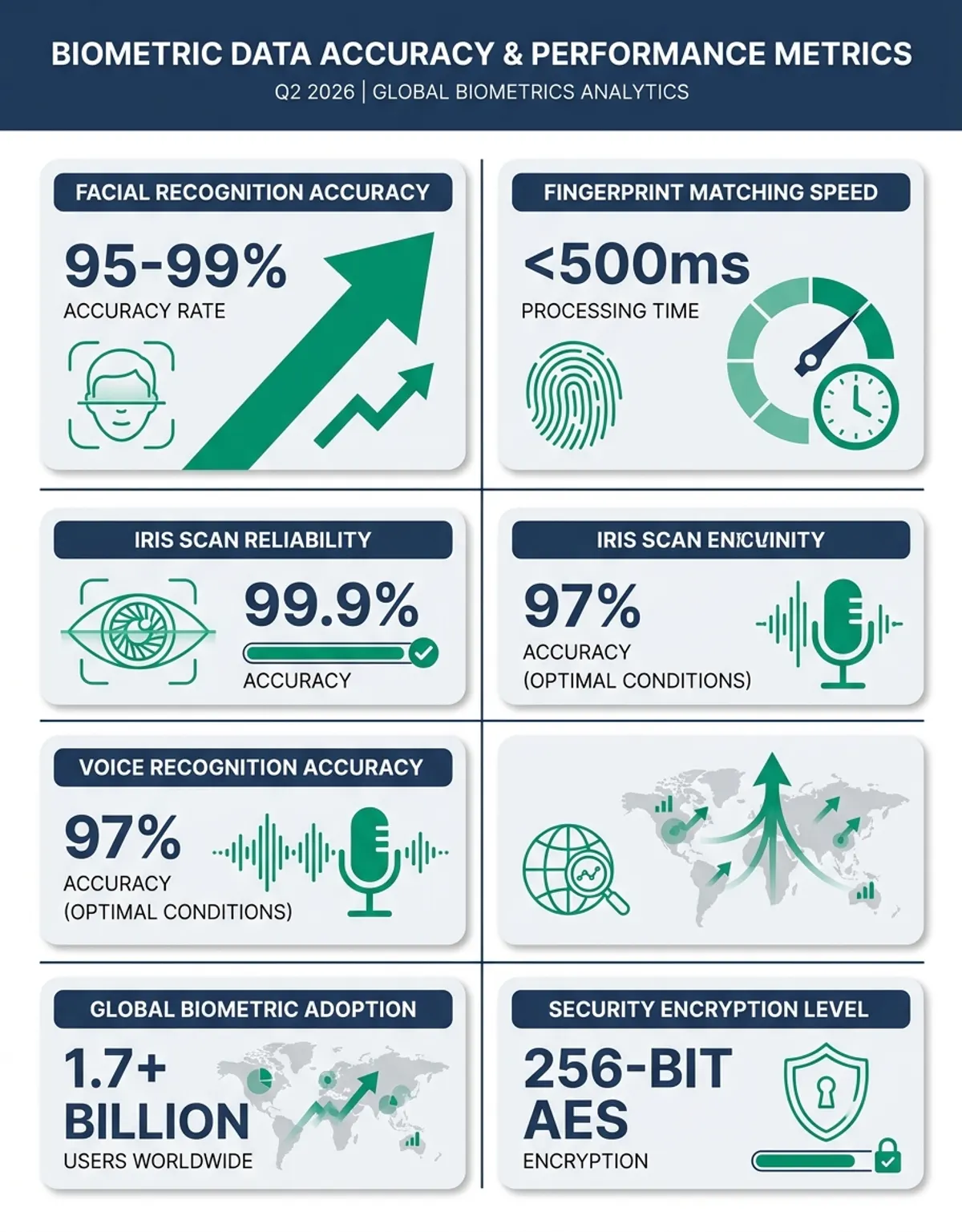
Technical approaches and accuracy: Modern face matching primarily relies on deep learning neural networks trained on millions of images. These have achieved remarkably high accuracy rates in controlled conditions, with leading algorithms achieving over 99% accuracy. However, performance varies significantly based on factors like image quality, lighting conditions, pose angle, age progression, and whether the subject is wearing glasses, masks, or other accessories.
Diverse deployment scenarios: This technology appears across a remarkably wide range of applications:
- Consumer devices: Apple's Face ID, Android face unlock, and Windows Hello enable access without passwords or PINs
- Travel and border control: E-gates at airports verify travelers against passport photos, accelerating processes
- Law enforcement: Police agencies search images from crime scenes or surveillance footage against databases to identify suspects or locate missing persons
- Banking and financial services: Some banks use this for customer confirmation during account opening or high-value transactions
- Retail and marketing: Stores may deploy for age validation, VIP customer awareness, or analyzing shopping behavior
- Workplace access and time tracking: Companies use for building access control and monitoring employee attendance
Privacy concerns and regulatory responses: The proliferation has sparked significant privacy debates and regulatory action. Unlike fingerprints or iris scans that require active participation, faces can be analyzed without a person's knowledge or consent, raising concerns about mass surveillance and erosion of anonymity in public spaces. Several jurisdictions have implemented restrictions on use, particularly by government agencies and law enforcement.
Accuracy disparities and bias: Research has documented that these technologies often perform less accurately on women, people of color, children, and elderly individuals compared to their performance on white men. These disparities have led to wrongful arrests and discrimination concerns, prompting calls for more diverse training data, third-party auditing of performance, and limitations on deployment in high-stakes decision-making contexts.
The future: Ongoing research focuses on improving accuracy across demographic groups, developing more robust anti-spoofing capabilities, enabling operation despite face masks or coverings, and creating privacy-preserving approaches that perform matching without storing identifiable templates. As the technology continues to evolve, the challenge for policymakers and organisations will be balancing its legitimate benefits against fundamental privacy rights and civil liberties.
For organisations considering deployment, tools like ComparaFaces provide practical capabilities for facial comparison in applications ranging from identity confirmation to duplicate account detection, implementing the technology with attention to accuracy and privacy considerations.
Biometric Data in Everyday Life: Devices, Apps, and More
Biometric authentication has transitioned from specialized applications to routine daily interactions, fundamentally changing how we prove our identity and access services across numerous contexts.
Smartphone and device access: Perhaps the most ubiquitous biometric application is smartphone unlocking. Apple's Touch ID fingerprint sensor, introduced in 2013, brought this technology to hundreds of millions of users. Face ID, launched in 2017, demonstrated that sophisticated face matching could work reliably for everyday access. Android devices now widely support both fingerprint and facial approaches, making these features standard expectations rather than premium capabilities.
The convenience advantages are substantial—users can unlock their device, authorize payments, and access secure applications with a simple touch or glance rather than typing complex passwords. These implementations typically handle and store templates locally on the equipment itself rather than uploading them to cloud servers, providing meaningful privacy protections compared to network-based approaches.
Financial services and payments: Banking applications increasingly rely on this technology for login and transaction authorization. Voice platforms authenticate callers to phone banking services without requiring them to remember account numbers or questions. Mobile payment platforms like Apple Pay and Google Pay use biometric confirmation to authorize purchases, combining protection with transaction speed.
The financial services sector has generally been cautious about deployment, often implementing it as part of multi-factor authentication rather than as a standalone measure. This approach recognizes both the strengths of biometric identity confirmation and the need for layered protection given the high value of financial fraud.
Travel and border control: Airports worldwide have deployed automated border control gates that verify travelers' faces against their passport photos, significantly reducing wait times during immigration. Some airports are piloting "biometric corridors" where travelers' faces serve as their boarding pass throughout the airport journey—from check-in through screening to boarding the aircraft.
These promise operational efficiency and enhanced protection, though they also raise questions about government surveillance capabilities, data retention practices, and travelers' ability to opt out of screening.
Healthcare applications: Healthcare organizations use this technology for patient identification to prevent medical record mix-ups and insurance fraud. Palm vein scanning and fingerprint help ensure that patients receive the correct treatments and medications. Some healthcare facilities are exploring biometric monitoring for continuous authentication of medical staff accessing sensitive patient records.
Workplace and building access: Modern office buildings increasingly replace key cards and PIN codes with biometric access control. Fingerprint scanners, face matching cameras, and palm readers grant entry to authorized personnel while creating audit trails of building access. Some organizations extend these to time and attendance tracking, though this raises privacy concerns about continuous employee monitoring.
Emerging applications and the future: New applications continue to emerge across diverse sectors:
- Education institutions using for exam identity confirmation and campus access
- Automotive manufacturers integrating face matching for driver identification and vehicle personalization
- Fitness devices tracking unique movement and physiological characteristics for health monitoring
- Gaming platforms using for player identification and emotion detection
- Social media platforms exploring biometric login and identity features
As biometric technology becomes more accurate, affordable, and miniaturized, its integration into everyday equipment and applications will likely accelerate. The challenge for society is ensuring this expansion occurs with appropriate safeguards that protect individual privacy, prevent discriminatory outcomes, and maintain meaningful user control over their most personal data.
The trajectory suggests a future where physical credentials like keys, cards, and passwords diminish in importance, replaced by the biometric characteristics you carry with you inherently. Whether this future enhances both convenience and protection while respecting privacy will depend on the frameworks, technical standards, and ethical principles that guide deployment in the years ahead.
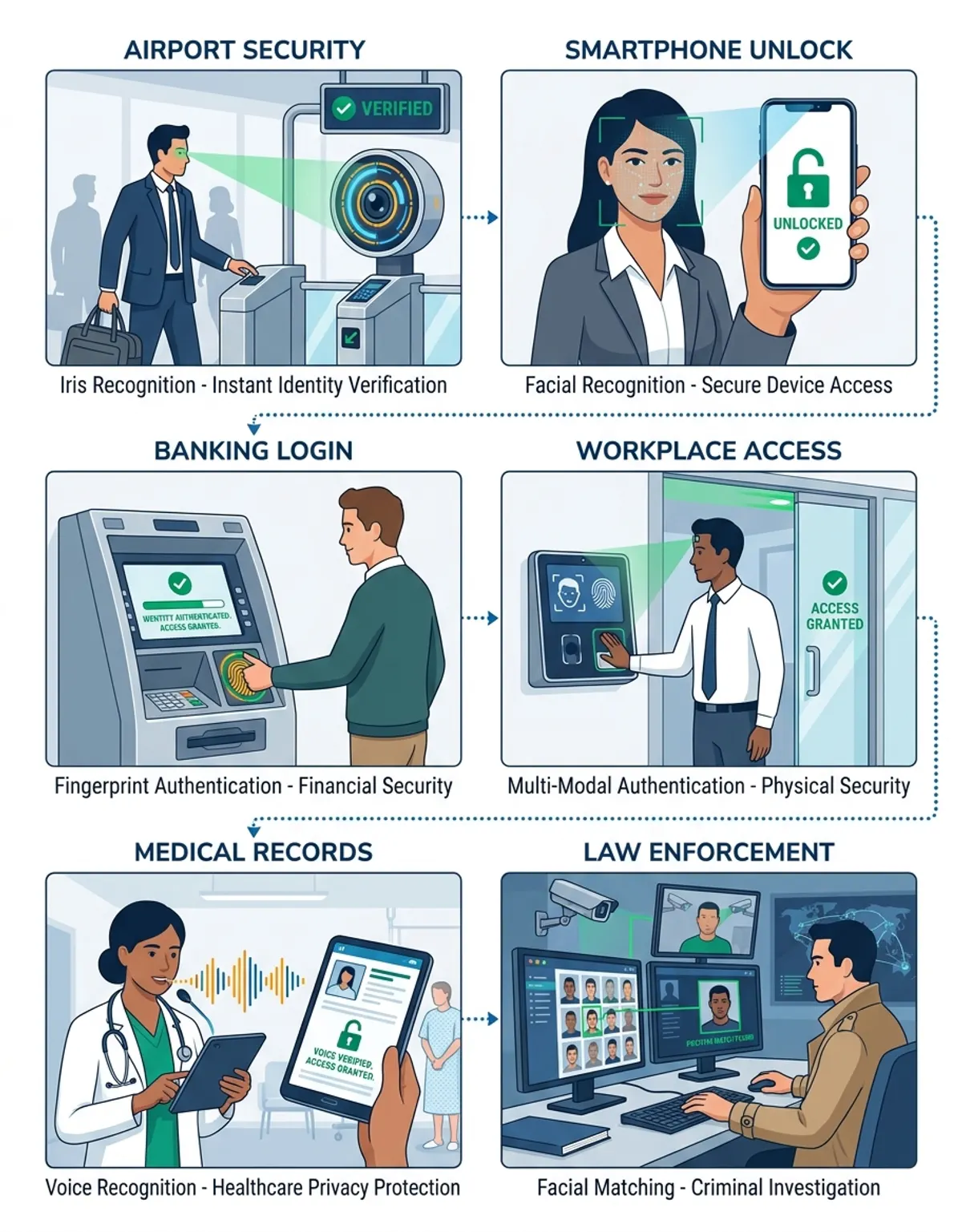
Biometric authentication applications span consumer devices, enterprise security, and identity verification systems. Smartphones use biometric sensors for device authentication, enabling users to unlock devices and authorize payments through biometric verification. Organizations deploy biometric systems for employee authentication, controlling access to facilities and sensitive data. Financial institutions implement biometric recognition for customer identity verification, reducing fraud through biometric authentication. Healthcare systems use biometric identification to match patients with medical records accurately. Border control agencies leverage biometric data for traveler identity verification, processing millions through automated biometric recognition systems. Each application requires careful consideration of biometric data privacy, security requirements, and regulatory compliance for collection and processing of sensitive biometric information.
Different applications require varying levels of accuracy and matching approaches. Consumer devices typically perform one-to-one verification where users first claim their identity, then provide a sample to confirm that claim. Law enforcement and border control may use one-to-many identification, searching samples against entire databases to determine identity without prior claims. Both methods rely on algorithms that balance false acceptance rates with false rejection rates, tuning sensitivity based on whether applications prioritize convenience or maximum protection. Multi-factor strategies often combine these techniques with additional credentials for layered defense.
The technology captures distinctive physical or behavioral traits through specialized sensors during an enrollment process. Sophisticated algorithms analyze these samples, extracting key features to create mathematical templates—compact digital representations of the individual's unique characteristics. These templates are stored securely, either in encrypted databases or on local devices. During each access attempt, fresh samples are captured and processed into new templates for comparison against stored records, with matching scores determining whether to grant or deny access based on predefined thresholds.
Organizations worldwide have adopted advanced methods to confirm identity and secure access to protected resources. Traditional approaches relied on things people know (passwords, PINs) or possess (keys, cards). Modern systems leverage something more personal: unique human characteristics that cannot be easily duplicated or transferred. This approach offers enhanced protection while simplifying the user experience, eliminating the need to remember complex credentials or carry physical tokens.
Biometric Data in Modern Security Systems
Frequently Asked Questions About Biometric Data
What is biometric data?
Biometric data is digital information that describes an individual's unique physical or behavioral characteristics. This includes distinctive, measurable physiological features like fingerprints, facial geometry, iris details, and hand shapes, as well as behavioral traits like voice, gait, and typing rhythms. This data is used to verify or identify individuals based on these inherent characteristics.
What are examples of biometric data?
Common examples include fingerprints (the most widely used), face matching templates derived from facial features, iris and retinal scans, voiceprints, palm vein arrangements, hand geometry, DNA profiles, and behavioral traits such as signature dynamics, keystroke rhythms, and walking gait. Each type offers different tradeoffs in terms of accuracy, cost, user acceptance, and resistance to spoofing.
Is biometric data the same as personally identifiable information (PII)?
Biometric data is a specific subset of personally identifiable information, but it has unique characteristics that make it more sensitive than general PII. While PII includes any data that can identify an individual (like names, addresses, or email addresses), biometric data is considered a protected class because it's permanently linked to your physical body and cannot be changed if compromised. Most privacy regulations treat it as requiring stronger protections than ordinary PII.
How is biometric data collected and stored?
This data is collected using specialized sensors—fingerprint scanners, cameras, microphones for voice, or iris scanners. The raw biometric information is then analyzed by algorithms that extract distinctive features and convert them into a mathematical template. This template, rather than the original image or recording, is what's typically stored in databases, on smart cards, or on individual devices. Modern implementations encrypt these templates and implement protections to prevent unauthorized access.
What privacy risks are associated with biometric data?
Key privacy risks include the permanence of compromise—you cannot change your fingerprints or iris details if they're stolen. There are concerns about surveillance and tracking when information collected for one purpose is used for unauthorized monitoring. Function creep occurs when organisations expand the use beyond its original purpose. Additionally, some technologies show accuracy disparities across demographic groups, raising fairness and discrimination concerns. Because biometric information is often recorded without explicit awareness, it creates risks of mass surveillance and erosion of anonymity in public spaces.
Why is biometric data considered a special category under GDPR?
Under GDPR Article 9, biometric data analyzed for uniquely identifying a person is classified as a protected class of sensitive personal data alongside health data, genetic information, and data about religious beliefs or sexual orientation. This designation recognizes that it presents unique risks due to its permanence, intimate connection to the human body, and potential for enabling extensive surveillance. The status means organisations must meet higher standards for lawful handling, typically requiring explicit consent and implementing enhanced safeguards and oversight. To learn more about online identity deception and protection, check out our catfish meaning article.
What is the difference between biometric authentication and biometric verification?
Biometric verification (sometimes called biometric authentication) is a one-to-one matching process where you claim an identity and then provide a biometric to prove that claim—like unlocking your phone with your fingerprint. Biometric identification (or "true authentication") is a one-to-many process where you provide only your data and the platform searches a database to determine who you are—like law enforcement searching a fingerprint against a criminal database. Verification is faster, more accurate, and more privacy-respectful because it requires an explicit identity claim rather than searching all possible identities.