
Voice Cloning Technology: $500 Buys Scammers a Kid's Voice
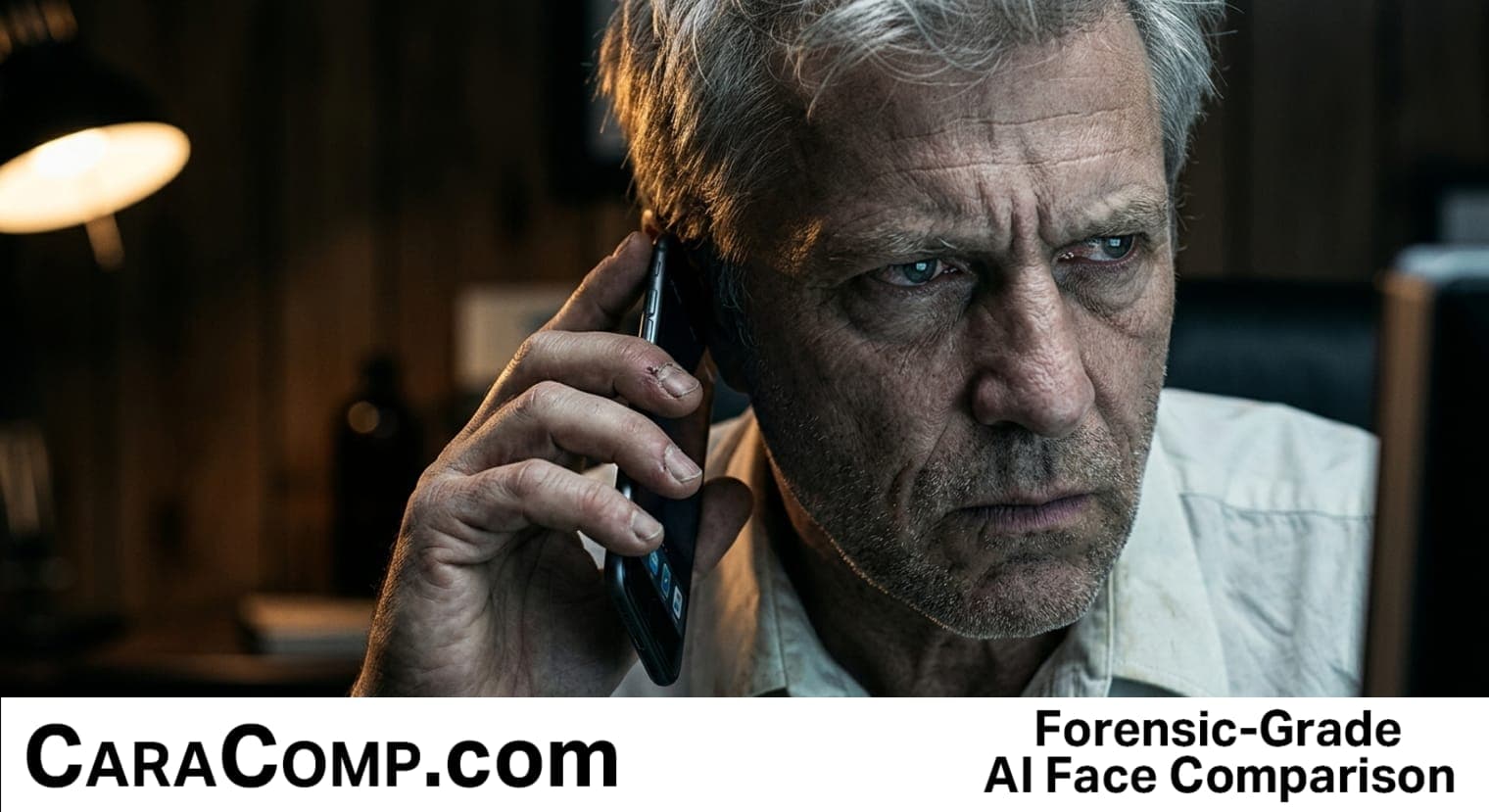
Picture this: your phone rings at 11:40pm. It's your daughter's number. Her voice, crying, saying she's been in an accident and needs money wired right now, don't tell anyone. Except it's not her. It's voice cloning technology, and according to reporting from MLive, criminals can now buy access to it for as little as $500. That's less than most people spend on groceries in a month.
Voice cloning technology has gotten so cheap and so easy to use that a stranger with $500 (sometimes way less) can fake your loved one's voice well enough to fool you on the phone, which means the old trick of "just listen for their voice" doesn't work as safety anymore.
Voice cloning technology is now cheap enough that any scammer can fake a family member's voice from a phone call, so hearing someone's voice is no longer proof it's really them.
Here's the part that should actually worry you, not the sci-fi part, the boring math part. Cybersecurity researchers say the underlying tool, the actual software that clones a voice, can cost less than $10 on its own. The $500 figure is likely what you'd pay for the whole scam kit: the voice cloning software, plus caller ID spoofing (making the call look like it's coming from a real number, even your kid's actual number), plus a script, plus a list of targets. In other words, criminals are buying a starter pack. And starter packs are, by design, for beginners.
What Voice Cloning Technology Actually Does to a Phone Call
Let's get concrete. Voice cloning technology takes a short clip of someone's real voice, sometimes as little as three seconds, and uses AI to learn how that person sounds: their pitch, their rhythm, their little verbal habits. Then it can generate brand new sentences in that same voice, sentences the real person never said. Feed it "Mom, I'm in trouble, I need $2,000 right now" and it'll say it back in a voice that sounds exactly like your kid, because in a technical sense, it now is your kid's voice, just wearing a mask made of math.
Where does the scammer get that three-second clip? A voicemail greeting. A TikTok video. A Instagram Story where your daughter says two sentences before the clip ends. That's it. That's the whole raw material requirement.
1,210%
Reported surge in AI voice scams in 2025 This article is part of a series, start with Facial Recognition Software 14 Wrongful Arrests So Far.
Source: Fox News
That number isn't a typo. AI voice scams surged 1,210% in 2025, according to Fox News, which also reported that the cloning tools themselves now cost less than a monthly Netflix subscription. Read that twice. The barrier to entry didn't shrink a little. It basically fell off a cliff.
Voice Cloning Scam Tactics Families Are Actually Seeing
Most of these calls follow the same script, because panic is the scam, not the technology. The voice cloning is just the delivery method. Someone claims to be your kid, grandkid, or spouse. They're crying, or their voice is shaky. There's an emergency (a car crash, an arrest, a kidnapping). And there's always a reason you can't verify it the normal way: "don't call my phone back, use this number," or "don't tell Dad, he'll freak out."
That urgency is not an accident. It's the entire mechanism. According to research cited by the National Council on Aging, a McAfee study found that 70% of people surveyed could not tell the difference between a cloned voice and the real thing. Seventy percent. That's not a "gullible people get scammed" statistic. That's a "this fools almost everyone" statistic.
The mechanism that fraudsters use is panic. They get people upset, get them worried about their loved ones, and then have them rush around to gather money.
cybersecurity researcher, as reported by InvestigateTV
Who's Actually Getting Hit by Voice Cloning Technology Scams
The people losing the most money are older adults, and the losses are not small. Cybercrime cost Americans over 60 a combined $4.9 billion in 2024, a 43% jump from the year before, according to FBI data referenced by InvestigateTV. Voice cloning is now considered a major driver of that spike, not a side note.
Individual cases give you the texture the statistics can't. A grandmother in Regina, Canada was defrauded of $7,000 after a call she believed was from her grandson, according to CBC News. In a separate case, a Canadian grandmother nearly wired $9,000 to a caller claiming to be her grandson under arrest, and the transfer was only stopped because a bank teller got suspicious. Notice the pattern there: it wasn't the grandmother's judgment that saved the money. It was a stranger at a bank counter who'd seen this scam before.
That's actually the encouraging part of an otherwise unsettling story. Families and institutions with a plan already in place, some kind of "if this happens, we do X" rule, catch these scams before the money moves. Families without a plan don't. This is the whole ballgame. Previously in this series: Facial Recognition Glasses 1 Glance Pulls A Home Address.
How Does a Voice Cloning Scam Usually Start?
It almost always starts with a phone call from an unknown number or, more unnervingly, a number that shows up looking exactly like a family member's real number. The caller sounds distressed, claims an emergency, and pressures the listener to act fast and stay quiet. According to the McAfee research on these scams, 77% of victims who lost money reported losses ranging from $500 to $15,000.
Why Voice Cloning Technology Matters for Your Family
- ⚡ Cost has collapsedwhat once required real technical skill now costs less than a used bike, putting it within reach of low-level scammers, not just organized crime
- 📊 Everyone's raw material is publica voicemail greeting or a public video is enough audio to clone a voice convincingly
- 📱 Caller ID can be faked toospoofing means the number on your screen isn't proof of anything anymore
- 🔮 Verification has to move offlinea callback to a number you already trust beats anything you can judge by ear
How to Tell if a Voice Cloning Call Is Fake (Before You Send Money)
Here's where I actually want to help, not just scare you. The single best move is boring and it works: hang up, and call the person back on a number you already have saved, not a number they just gave you. If your daughter is really in trouble, she'll answer, or you'll reach someone who knows where she is. If it was a scam, the fake "daughter" disappears the moment you take away the pressure to act instantly.
Some families set up a simple code word in advance, something only the real family member would know, that gets asked for on any emergency call. It sounds a little dramatic until you realize it costs nothing and takes five minutes to set up over dinner.
And here's the thing worth sitting with for a second: if you've ever wondered whether a photo, a voicemail, or a video call is really who it claims to be, that's the exact question this whole category of technology exists to answer. One useful thing to actually watch for on video calls specifically (since scammers are moving into video too): watch the mouth and the eyes closely during a live call. Cloned voices are now good, but live deepfake video still tends to glitch around fast head turns, and skin appears too smooth in a way real skin under normal lighting rarely does. It's not foolproof, but it's a real, free thing to notice before you act.
| Old assumption | Reality with voice cloning technology |
|---|---|
| Hearing their voice is proof it's them | Voice cloning scam calls can sound identical after just a few seconds of sample audio |
| Caller ID showing a family number is proof | Caller ID spoofing means the number displayed can be faked too |
| Only wealthy or high-profile people get targeted | Any public voicemail or video clip provides enough audio for an ai family scam |
| Verifying takes too long during an emergency | A callback on a trusted number takes under a minute and stops the scam cold |
What Is an AI Family Scam and How Is It Different from Older Scams
An ai family scam is the newer version of the classic "grandparent scam," where a caller pretends to be a relative in trouble. What changed is the voice. Older versions used a stranger's voice and hoped panic would cover the mismatch. Now, thanks to voice cloning technology, the voice itself matches, which removes the one clue that used to tip people off.
Voice cloning technology has gotten cheap enough that a voice cloning scam no longer requires skill or money, only a short audio clip, which means every family needs a callback rule and a code word before the next 11pm call, not after.
So what does this mean for you, specifically, tonight? It means the next time a loved one calls sounding panicked and asking for money fast, the smart move isn't to trust your ears. It's to hang up and call back on a number you already trust. That single habit, repeated every time, beats every AI on the market. Up next: Voice Cloning Technology 500 Buys Scammers A Kids Voice.
Scammers didn't build some brilliant new invention here. They just noticed that trust in a familiar voice was the last lock nobody thought to change, and for $500, they picked it.
voice cloning technology: Frequently Asked Questions
Can voice cloning technology really copy someone's voice from just a few seconds of audio?
Yes. Researchers and cybersecurity firms have documented cases where as little as three seconds of audio, pulled from a voicemail greeting or a public video, was enough for voice cloning technology to generate new, convincing sentences in that person's voice. This is part of why the scam has spread so fast: almost everyone has a few seconds of their voice sitting in public somewhere online.
How much does voice cloning technology actually cost criminals?
Reporting from MLive put a full scam setup at around $500, though the core cloning software alone has been reported to cost less than $10 by cybersecurity researchers. The $500 figure likely covers a bundled kit: the voice cloning tool, caller ID spoofing to fake the number on screen, and sometimes contact lists of potential targets, making it a low-cost, low-effort operation for scammers.
What should I do if I get a call from a "family member" asking for money urgently?
Hang up immediately and call that person back using a phone number you already have saved, never a new number they gave you during the call. Ask a question only the real person would know the answer to. If they resist verification or push you to act instantly and secretly, treat that as a major warning sign of a voice cloning scam rather than a real emergency.
Why do voice cloning scams target older adults so heavily?
Older adults are frequently targeted partly because grandparent-style scams already existed before AI, and partly because losses in this age group are severe: cybercrime cost Americans over 60 roughly $4.9 billion in 2024 alone, a jump of 43% from the previous year, according to FBI data. Scammers also bank on older relatives being less familiar with how convincing AI voice tools have become.
Are there warning signs during a video call that someone might be using deepfake technology instead of just voice cloning?
Yes. On live video calls, watch for unnatural blinking, odd lighting around the face, lag during fast head turns, and moments where skin appears too smooth compared to the rest of the frame. These glitches are more common in live deepfake video than in audio-only voice cloning scam calls, since faking a moving face in real time is still technically harder than faking a voice.
Can banks or phone companies stop a voice cloning scam before money is sent?
Sometimes, yes. In at least one documented case, a bank teller's suspicion stopped a grandmother from wiring $9,000 to a scammer posing as her grandson. But institutional catches are not guaranteed, which is why family-level verification habits, like a callback rule or shared code word, remain the most reliable protection against a voice cloning scam.
Ready for forensic-grade facial comparison?
Full forensic reports with detailed similarity scoring. Results in seconds.
Run My First SearchMore News
Social Media Age Verification Laws: 3 Checks, 3 Data Risks
Age checks aren't a future policy fight anymore. They're showing up in real logins tonight, and the method a platform picks says a lot about what happens to your family's data.
digital-forensicsDeepfake video call: police warn after $622,000 theft
A man in India lost real money to a face on a video call that wasn't real. Here's the one habit that would have stopped it cold.
digital-forensicsDeepfake lawsuit: Grok turned a clothed photo into abuse
An Arkansas family says an AI chatbot turned their daughter's ordinary photo into abuse material. The lesson for every parent: a photo doesn't have to be explicit to be dangerous.