
Voice Clone Scam: Voice Cloning Fakes a Child's Call
Quick answer
How does a voice clone scam work on a phone call?
Scammers copy a relative's voice from a few seconds of public audio, such as a social media video, then phone you with a made-up emergency and demand fast payment. The cloned voice sounds real, so urgency does the rest. Hanging up and calling the person back on a saved number breaks the trick.
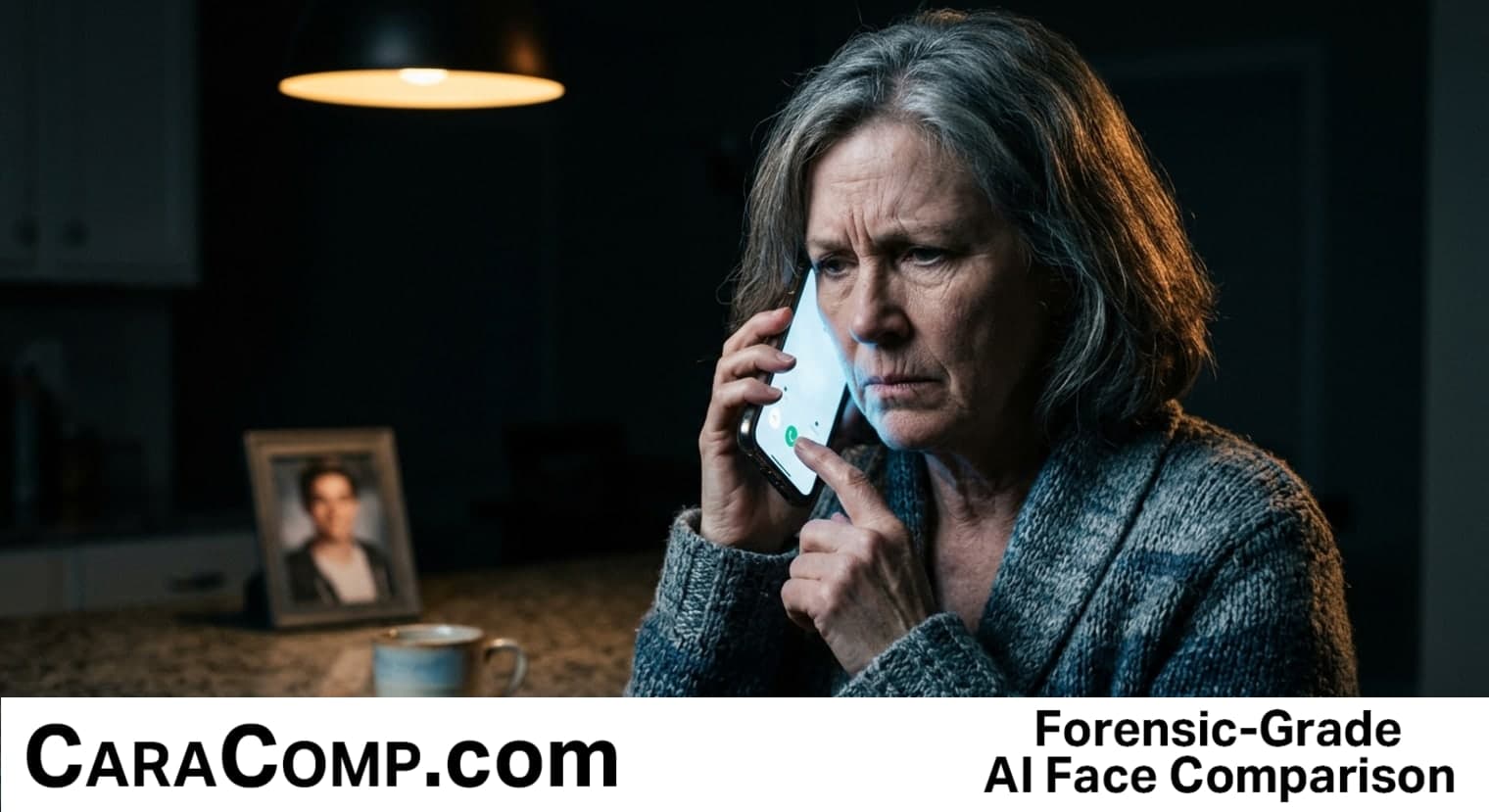
Picture your phone lighting up at 11pm. It's your daughter, crying, saying "please help me." That is the voice clone scam, and it works because the voice is real enough to beat your doubt. The voice is fake. Your panic is the target.
Voice clone scam calls copy a loved one's voice to rush you into sending money, so a voice is no longer proof, and the safe move is to hang up and call back on a number you already trust.
Voice Clone Scam: Why a Familiar Voice Is No Longer Proof
Here's the uncomfortable part. For your whole life, hearing someone you love was the proof. Your brain treats a mom's voice or a son's voice as an ID card. Scammers know that, and they have found a way to forge it.
According to local news outlet WFTV, voice-only family emergency scams cost victims more than $5 million in documented losses in 2025. That is only what got counted. Plenty of people never report it because they feel embarrassed.
How an AI voice clone scam call actually works
An AI voice clone is a computer-made copy of someone's voice. The scammer needs only a short sample, as little as 3 to 10 seconds of audio, for a replica that is more than 85% accurate. Where do they get it? A social media reel, a public video, even a voicemail greeting. Nobody has to hack anything for voice cloning to work.
Then comes the call. The story is always an emergency: a car accident, an arrest, a hospital bill. The caller wants money right now, often by wire or gift card. The rush is the whole trick. A scared person doesn't stop to check.
The Asianet Newsable report lays out this same pattern: a cloned voice, a fake crisis, and pressure to pay before you think. This article is part of a series, start with Biometric Login Uae Banks Drop Text Codes Scammers Pounce.
Why Deepfake Emergency Calls Are About to Feel Normal
Think about why this feels so scary. It's the availability effect: you can easily picture a stranger's story on the news, so the risk feels real. Now it's one call away from your own family. Experts expect family-emergency scam posts to triple from 2025 to 2026, and deepfake-enabled fraud attempts are up more than 1,300% year over year.
So deepfake emergency calls will likely become a routine household risk, like spam texts. Not scary every day. Just something every family has to plan for.
Can people tell a cloned voice from a real one?
Mostly, no. In lab studies, people spot deepfakes only about 73% of the time. And real clips are more likely to be wrongly rejected than fakes are to be accepted as human. In other words, your ear isn't a reliable tool. Don't blame yourself when it fails.
Phone-network security doesn't fully help either. Call-authentication systems known as STIR/SHAKEN (a way for carriers to confirm a call is not spoofed) cover only about 35% of U.S. calls in 2026. Many overseas calls get no check at all.
| What you hear | What is actually true |
|---|---|
| Your child's real voice, crying | A cloned voice built from a few seconds of public audio |
| A familiar number on the screen | Caller ID can be faked, and call checks cover only about 35% of calls |
| "Send money now or it gets worse" | Pressure is the scam's core tool, not proof of a real emergency |
| "I can tell it's really them" | People catch deepfake audio only about 73% of the time |
One in three people who engage with AI-powered scam calls end up losing money.
Finding reported in SQ Magazine's 2026 fraud statistics
That number is the real story. The defenses are simple, and they work. But under pressure, most people don't use them. Previously in this series: Roblox Age Verification Bypass Ceo Sued Only 51 Verified.
What to Do on a Fake Emergency Call: Verification Before Payment
The fix is boring, and that's good. Don't argue with the caller. Don't test them. Just stop the call.
- Hang up. A real emergency survives a 60-second pause.
- Call back on a number you already know. Use the contact saved in your phone, not the one that called you.
- Ask a question only they could answer. Or use a family code word you set up in advance.
- Reach someone else. Text a sibling, a spouse, or the friend they were with.
The code word idea is gaining traction. Fortune covered a voice cloning fake-kidnapping case and the safe-word defense. Pick the word at the dinner table, not during a crisis.
Why Voice Clone Scam Verification Matters
- Voice is not IDa familiar sound can be built from a short public clip.
- Speed is the weapona callback breaks the rush the scam depends on.
- Plans beat instinctsa code word works even when you are too scared to think.
If you've ever wondered whether a voice, photo, or profile is really who it claims to be, that is the exact question identity-checking technology exists to answer. For now, the most useful thing you can do costs nothing: agree on your family's check before you ever need it.
A voice clone scam wins by making you act before you verify, and identity theft of a loved one's voice is now cheap. Calling back on a trusted number takes the power away.
Recap: Cloned voices can now make a fake emergency call sound like your family. Hang up, call back on a number you know, and only then think about money.
Here's the question to leave you with: if your own voice is already online, who has a copy, and does your family know the word? Up next: Voice Clone Scam 3 Seconds Of Audio Fakes A Childs Call.
Voice Clone Scam: Frequently Asked Questions
What is a voice cloning scam?
A voice cloning scam is when criminals copy a person's voice with software, then use it on a phone call to trick family members. The caller usually claims an accident, arrest, or other emergency and asks for money fast. The clone, or cloned voice, can come from a short clip of public audio. The fake emergency, not the voice, is what makes people pay.
How do scammers get a voice to clone?
Scammers pull audio from places people already share: social media reels, public videos, and other recordings. A sample of only 3 to 10 seconds can be enough for voice cloning that is more than 85% accurate. That means no hacking is needed. It also means you can lower your risk, though not erase it, by limiting what you post publicly.
Is a deepfake video part of these emergency calls?
Most of the cases in this story are voice-only calls, so no deepfake video is involved. Audio is cheaper and faster for scammers to fake, and a phone call hides everything else. The same rule applies if a video call appears: do not trust the picture or sound alone. Verify through a separate, known channel before any payment.
What security tools can stop a cloned voice call?
Tools exist, but they are patchy. Call-authentication systems cover only about 35% of U.S. calls in 2026, and only 32% of organizations use AI-based voice fraud detection. For families, the best protection is a human habit: end the call, then call back on a known number. A shared code word adds another layer of security.
Does the real person's voice ever prove who is calling?
No. Lab studies show people identify deepfakes only about 73% of the time, and a cloned voice can sound real. A voice can still be a clue, but it is not proof. Real verification means a second check: a callback, a question only they can answer, or a word your family chose in advance.
Should I send money first and sort it out later?
No. A genuine emergency can wait one minute for a callback, and a scammer cannot. Wire transfers and gift cards are hard or impossible to get back. If you already sent a payment, contact your bank or card company right away to ask about a credit reversal, and report it. Fast action gives you the best chance, though nothing is guaranteed.
Ready for forensic-grade facial comparison?
Full forensic reports with detailed similarity scoring. Results in seconds.
Run My First SearchMore News
Roblox Age Verification Bypass: CEO Sued, Only 51% Verified
A shareholder is suing Roblox's CEO and directors over what they said about age checks. Here is why that matters to any parent whose kid plays online.
facial-recognitionFacial Recognition: Errors Hit Millions, No Clear Appeal
Face checks are spreading to venues, workplaces, airports and online accounts. The way to challenge a wrong result is not spreading with them.
facial-recognitionFacial Recognition Camera: All 8 Wrong IDs Hit Darker Skin
Nearly 900,000 faces were scanned in a Western Australia police trial, and most of those people never knew. Here is what happened, what the numbers hide, and what to watch for.