
Biometric Login: UAE Banks Drop SMS Codes, Scammers Pounce
Quick answer
What does biometric login mean for banking apps?
Biometric login means you unlock your bank account with your face or fingerprint instead of typing a password or reading out a text code. Your phone checks the scan and confirms it to the app. Scammers now exploit it with fake reset messages, so check any request inside your own app.
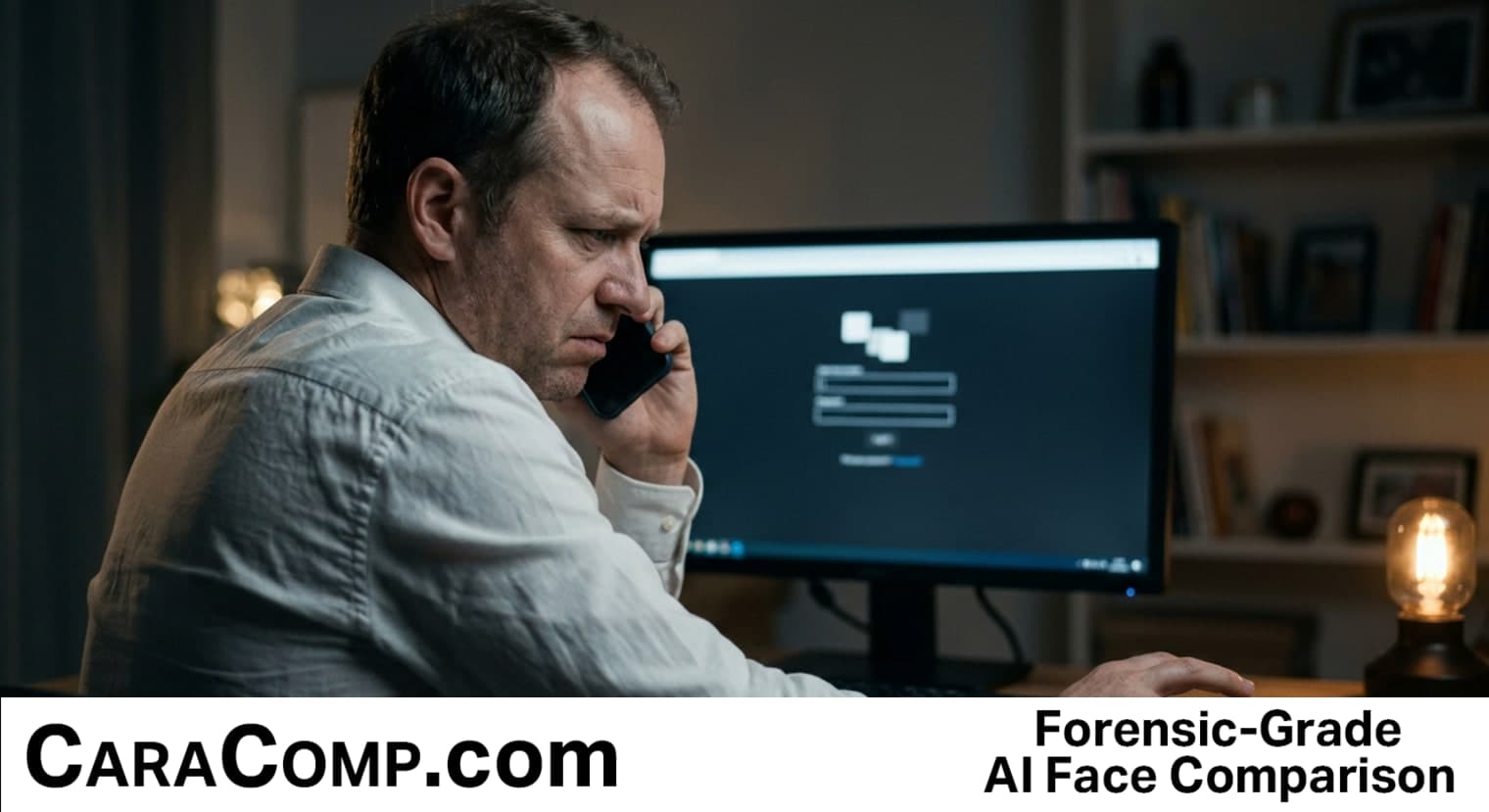
Picture a text landing on your phone tonight: "Your bank's biometric login needs to be reset. Tap here to re-verify your face." You would pause. Maybe you would even tap. That is exactly what scammers are counting on, because UAE banks really are changing how customers prove who they are.
Biometric login (using your face or fingerprint to get into your bank) is replacing text-message codes at UAE banks, and that makes fake "re-verify your face" messages sound believable, so treat any unexpected one as fake until you check inside your own banking app.
Biometric Login at UAE Banks: What Is Actually Changing
Here is the real news, kept simple. According to Sumsub, the UAE's Central Bank has told banks to stop sending one-time passwords (those six-digit codes that arrive by text or email) for online card payments. Banks are to move to biometric verification instead. That means face authentication or a fingerprint, approved inside the bank's own app.
The reported timeline has two dates. SMS codes for online transactions start going away on January 6, 2026. The Central Bank's wider deadline for banks to finish the switch is March 2026. The reporting describes the UAE as the first country to take this step. Emirates NBD, Mashreq, ADCB and First Abu Dhabi Bank have already begun rolling out app-based approval, according to IDN Financials.
Is this a bad idea? No. Text-message codes had real problems. Criminals could hijack a phone number in a SIM swap (tricking a phone company into moving your number to their SIM card). They could also trick you into reading a code out loud. Dropping that system to enhance security makes sense.
Why a Fingerprint Login Feels Safer (and Often Is)
Banks argue that an approval inside the app is tied to your specific mobile device and your specific profile. Even if a crook steals your phone number, they cannot approve a payment from their own device. On the technology itself, that argument holds up. The trouble is what happens around the technology.
What Is the Biometric Login Meaning, and Why Does It Change the Scam Script?
The biometric login meaning is simple: your body is your password. Your face or fingerprint unlocks the app instead of something you type or a code you read out. A biometric credential (the body stuff that is uniquely you) cannot be "forgotten" like a password. But that same shift hands scammers a fresh story to tell. For a comprehensive overview, explore our comprehensive photo comparison methods resource.
For years, everyone has been trained to expect odd texts about codes. Now the bank is telling millions of people to enable biometric logins. When a message arrives saying "your biometric login needs a reset," it fits the news perfectly. It sounds like the bank's own announcement.
Read that number twice. Extra locks on the door did not stop people from being robbed, because many were tricked into opening it. Real-time phishing (a fake page that grabs what you type and passes it to the crook instantly) captured both passwords and codes. Swapping a code for a face scan does not cure the "tricked into opening it" problem.
Can a Fingerprint or Face Scan Be Faked?
Sometimes, but that is not the main worry here. Scammers rarely beat the sensor. They go around it. Most biometric authentication systems keep backup paths, such as password resets, recovery questions and text codes, for people who get locked out. A crook who convinces you to start one of those backup paths has skipped the face scan entirely.
Social engineering turns the strongest gate into a prop that swings open on command.
From Hoop Security's write-up on defending biometric authentication against social engineering
Social engineering just means fooling a person instead of a machine. It works because a worried human wants to fix a problem fast. "Act now or lose access" is the oldest trick there is.
Old Codes vs. Biometric Login: Where the Risk Moved
| Question | SMS code era | Biometric login era |
|---|---|---|
| What proves it is you | A six-digit code sent by text | Your face or fingerprint, approved in the app |
| Main technical weak spot | SIM swap and code interception | Backup reset paths around the sensor |
| What scammers say | "Read me the code we just sent" | "Your biometric login needs a reset" |
| Where real bank messages live | Text message | Inside the banking app |
Notice the last row. It is the most useful line in this whole article. A real request to verify you should show up where you already bank, not in a message carrying its own link.
Why Biometric Login Changes Matter to Everyday Customers
- Believable timing: banks are urging customers to enable biometrics before the deadline, so urgent "verification" notes feel normal.
- New vocabulary: nobody has a gut feeling yet for what a fake "face re-verification" looks like.
- Fewer familiar warnings: people learned "never share your code." There is no equally famous rule for biometrics yet.
Why Scary Headlines Make Fake Messages Work Better
Psychologists call this the availability heuristic. In plain English, whatever you read about most recently feels most likely to be true. Bank security is in the news, so a "security update" text feels ordinary. It is a bit like a stranger saying "I'm from the gas company" the week your street is being dug up.
How Can Someone Tell a Real Biometric Login Request From a Fake?
Do not trust the message. Trust your own route. Close the text, open your bank's app the way you always do (from your home screen, not from any link), and look for a notice there. If your bank truly needs something, it will show up inside. If nothing is there, the message was bait.
Here is the short checklist I would text a friend:
- Unexpected means unverified. A text, call or email about resetting face or fingerprint access is fake until proven otherwise.
- Links are the tell. Never touch a link in a message to reach your bank, even if it looks perfect.
- Urgency is a red flag. "Within 24 hours or your account closes" is pressure, not policy.
- Calls count too. If someone phones claiming to be the bank, hang up and call the number on the back of your card.
One more thing, and this is where the CaraComp view comes in. If you have ever wondered whether a face, a photo or a profile is really who it claims to be, that is the exact question this kind of technology exists to answer. The practical habit that follows is simple: verify the source before you verify yourself. A scammer asking for your face is asking you to prove who you are, so first make them prove who they are.
What Should Someone Do If They Already Tapped a Link?
Do not panic, and do not wait. Open your bank's app yourself and check recent activity. Call the bank using the number on your card and tell them exactly what you tapped and when. Ask them to lock or review the account. Speed matters more than embarrassment, and banks hear this story daily.
A biometric login is a stronger lock, but a lock does not help if a stranger talks you into opening it. The safest move is to never act on an unexpected message and to check inside your own banking app instead.
Recap: UAE banks are swapping text codes for face and fingerprint checks, and fake reset messages will now sound real. Treat any surprise message as fake and look in your own app.
Here is the strange part. The old scam asked you to hand over a number. The new one asks you to hand over your face. A six-digit code expires in minutes, but you cannot change your face, so how much easier should it be to say "no" to anyone who asks for it first?
biometric login: Frequently Asked Questions
What is a biometric login?
A biometric login lets a user's unique characteristics, usually their face or fingerprint, open an account instead of typing a password or reading out a code. Your phone checks the scan and tells the app it is you. In the UAE story, banks are moving customers to biometric authentication for approving online payments, replacing text-message codes that criminals learned to steal or trick people into sharing.
What is the biometric login meaning in simple words?
The biometric login meaning is "your body is the key." Instead of something you know, like a password, or something you receive, like a text code, the system uses something you are. That is convenient because you cannot forget it. The downside is that scammers now build stories around it, such as fake messages saying your face or fingerprint access needs a reset.
Will my bank text me to re-verify my face or fingerprint?
Treat that kind of message as unverified. Based on the research behind this article, a genuine request should appear inside your banking app, not in a text or email with a link. Close the message, open the app yourself the way you normally do, and look there. If no notice is waiting, the message was not from your bank.
Are text-message codes really being dropped in the UAE?
Yes, according to the reporting. The UAE's Central Bank has told banks to stop using text and email one-time passwords for online card payments. The reported dates are January 6, 2026 for SMS codes on online transactions and a March 2026 deadline for the wider switch. Major banks including Emirates NBD, Mashreq, ADCB and First Abu Dhabi Bank have begun rolling out app approval.
Why do scammers like a security change like this?
Change creates confusion, and confusion creates openings. When millions of customers are told to switch on new security features, an urgent message about "updating" them seems natural. Scammers do not need to defeat the technology. They only need you to follow their link. That is why checking through your own app, never through a message, is the habit that protects you.
Ready for forensic-grade facial comparison?
Full forensic reports with detailed similarity scoring. Results in seconds.
Run My First SearchMore News
Age Verification: Pornhub Back in Australia for Apple Only
Pornhub is back in Australia, but only for Apple users who prove their age. Here is what that means for the rest of us when the next website asks for a face scan.
biometricsCustomer identity verification: Roblox will check every user
Malaysia is studying whether games like Roblox should check age with ID or a selfie. It is not a rule yet, but the "type any birthday" era looks numbered.
biometricsBank Biometric Verification: UAE Banking Kills SMS Codes
UAE banks are dropping text-message codes for face and fingerprint checks. Here is what that means for your money, in plain English.