
Customer identity verification: Roblox may check every user
Quick answer
What is customer identity verification and will online games use it?
Customer identity verification is the process of confirming that a person is real and their details are true, usually with an ID document and a selfie. Banks use it widely. Online games may follow, since Malaysia is studying it, though nothing is required there yet and platforms like Roblox have started on their own.
Customer identity verification, the process banks and other financial institutions use to confirm that someone is who they say they are, is heading toward your kid's game night. Malaysia's government is now studying whether platforms like Roblox should check age with more than a birthday box. Nothing is mandatory yet. But the "type any year and tap continue" era is starting to look shaky.
Customer identity verification may soon reach online games, because Malaysia is studying ID and selfie age checks for platforms like Roblox, and families should ask what is collected, how long it is kept, and whether a gentler option exists.
Customer identity verification comes to online games: what Malaysia is studying
Here is the plain version. Malaysia's Communications Minister, Fahmi, says the government will study the feasibility of eKYC for online gaming platforms, according to The Sun Malaysia. eKYC means "electronic know your customer." It is an all-digital verification process for proving a person is real and their details are true, with no bank branch visit.
Read that again, though. Study the feasibility. Right now there is no official obligation, no deadline and no fine. Anyone telling you otherwise is guessing.
Customer verification versus the birthday box
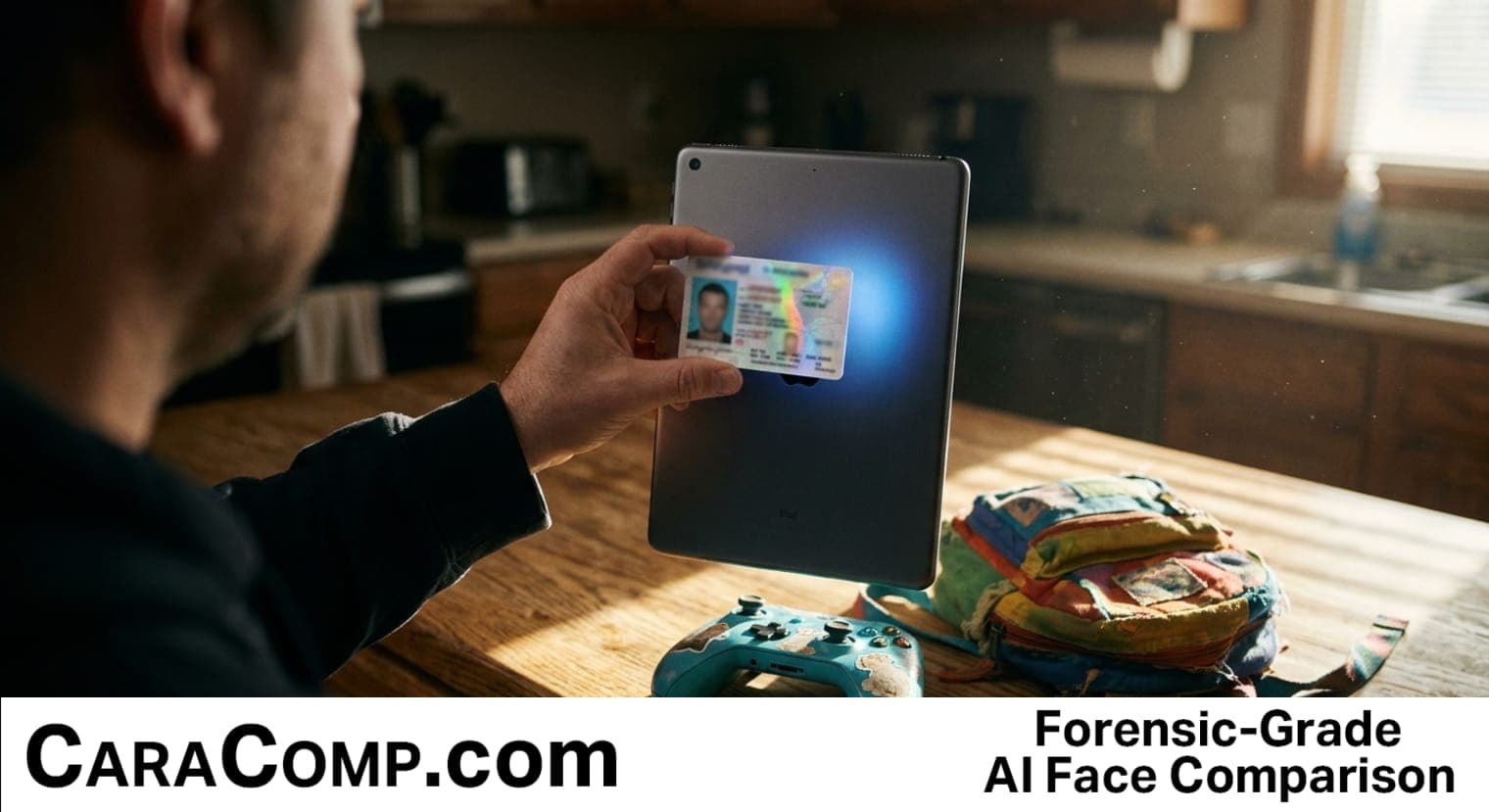
Today, most games run on the honor system. A child types a birth year, the game believes it, and everyone moves on. Real customer verification (proving the person is real and the age is true) asks for more. Think a photo of an ID document, plus a selfie to show the face matches.
That is also a shift in customer identification (knowing who someone actually is, not just what number they typed). A birthday box knows nothing about the user. An ID check knows quite a lot.
Malaysia gaming age verification: what is decided, and what is not
Why would a government care about a kids' game? The research points to two reasons. One is child safety. The other is the worry that gaming platforms could be misused by extremist and terrorist groups. That second reason matters, because it makes the case for stronger ID gates, not just rough age guesses.
Fahmi has also pushed back on the idea that technology can raise children alone. The Malay Mail headline on his remarks said it bluntly: This article is part of a series, start with Atlantic City Hotels Own Face Costs Star Hotel Guest 1 250.
Devices are not babysitters
Fahmi, as quoted in the headline of Malay Mail
Fair enough. Parents are still in the picture. But the platform is being asked to do more of the heavy lifting.
Customer identification and the six age brackets
Meanwhile, Roblox is not waiting for Malaysia. According to Gulf News, starting in early January 2026, every Roblox user must complete an age check to reach chat. The check uses a face-based age estimate or an ID check, done by selfie or video. A vendor processes it, and each user lands in one of six age brackets.
So the industry has already moved first. Policy is catching up to something families can see on their screens.
Sounds precise, right? It is not, quite. A three-year miss means a 15-year-old can look 18. So, per PPC Land, deployments use a "challenge age," a cushion well above the legal line. For an 18 limit, 25 has become standard. Anyone who looks younger than 25 gets pushed to a stronger check.
Customer identity verification methods: guessing from a face versus checking a document
Not all checks are the same. Two methods dominate this story, and they leave very different footprints. The iProov explainer draws the line well: estimation is probability, verification is document-backed.
| Question | Age estimation | Document eKYC |
|---|---|---|
| What it does | Guesses an age range from a face, without naming who the user is | Ties verified identity documents to a face, combining document verification with biometric verification of the person |
| How sure is it | Probability, with a 2 to 3 year error margin | Definitive proof of age when the document is real |
| What it leaves behind | Little, if the image is not kept | A persistent record that links face, customer identity and age in one database |
| Main weak spot | Teens can pass as adults, and adults as teens | Fake documents and weak liveness checks |
That third row is the one parents should circle. Estimation can pass and forget. A document check, by design, remembers.
Authentication, liveness and fraud: where the checks can break
Now the uncomfortable part. Authentication (proving the person at the screen is the person on the ID) is only as good as its liveness check (whether the camera sees a live person or a photo, a video, or a deepfake). The research warns that facial systems can be fooled by deepfakes and image tweaks. And those protections are not uniform from one platform or country to another. Previously in this series: Bank Biometric Verification Uae Banking Kills Sms Codes.
So a strict rule on paper can still be weak in practice. The risk is real: fraud rarely goes through the front door when a side window is unlocked. Malaysia's study will have to look at that variance, not just at who gets asked for ID.
What does online identity verification mean for a child who is a user?
In short, a child might one day be asked to prove their age with a selfie or an ID before playing or chatting. Online identity verification (proving who you are over the internet) would make that routine. That is protective if done carefully. It is also a lot of personal detail to hand over, so the details matter.
Compliance and security: what a client of any platform can fairly ask
Here is the one useful thing you can do before any rule arrives. When a game asks for age proof, pause and ask three things. First, what is being collected? Second, how long is it kept? Third, is there a less intrusive option? Those match what the brief behind this story urges families to demand. If the answers are vague, that tells you something about trust.
Good security means the platform keeps only what it needs. It means security measures you can actually read about, and a clear promise on deletion. Real compliance (following the rules a law sets) should be something a company can explain in a sentence, not hide behind. Ask plainly. A company that cannot answer is telling you its security story is thin.
And if you have ever wondered whether a photo or profile is really who it claims to be, you are asking the exact question this kind of technology exists to answer. Comparing a selfie to an ID photo is face comparison: are these two images the same person? It answers that and nothing broader. The question to press on is what happens to the data afterward.
Why customer identity verification matters for families
- It is a study, not a law: Malaysia has set no deadline and no fine, so nothing changes overnight.
- Platforms are moving first: Roblox's chat age check starts in early January 2026.
- Records are the real price: document checks can leave a lasting link between a face and an identity.
- Weak liveness undoes strong rules: deepfakes and fake IDs are the gap to watch.
Here is my take. Every consumer-facing app will be pushed to prove its users are real, and children will not be exempt. The real fight is not whether kids get checked. It is whether the check is the lightest one that does the job, and whether the data is wiped afterward. A selfie that is checked and deleted is a very different thing from a selfie that lives in a file forever.
Customer identity verification is moving from banks into children's games, and the smart move for families is to ask, before handing anything over, what a platform collects, how long it keeps it, and whether another option exists. Treat any request for identity verification as a deal you are entitled to read.
Recap: Online games may soon check age with ID or a selfie, because Malaysia is studying the idea. Nothing is required yet, so use the time to ask what is collected and how long it stays. Up next: Customer Identity Verification Roblox Will Check Every User.
One last thing to chew on. If a game can prove your child is 12 by keeping their face and ID on file, who exactly is being protected when that file leaks?
Customer identity verification: Frequently Asked Questions
What is eIDV, also known as electronic identity verification?
eIDV, also known as electronic identity verification, means checking who someone is online instead of in person. The identity verification process works by using technology to read identity documents, compare them with a selfie, and confirm that the details are real. Banks have done this for years. The same idea is now being studied for online games, which is why it keeps showing up in the news.
How do businesses use identity verification during customer onboarding?
Businesses use identity verification at sign-up, called customer onboarding, to make sure new customers are real before opening an account. Common steps include KYC data checks, where the details on an ID are matched against what the person entered, and document verification of the ID itself. Some firms conduct quick selfie checks as well. Exactly which steps apply depends on the company and the rules where it operates.
What do secure customer identity verification checks look like for a consumer?
Secure customer identity verification checks should feel short and clear. A consumer is usually asked to show identity documents and take a selfie, and the company should say upfront what it is collecting and why. Collecting personal information is not the problem by itself. The problem is vagueness. Ask for a plain list of what is stored, for how long, and who can see it.
Should families explore digital identity verification for kids' games?
Families can explore digital identity verification, but go in with questions. Ask whether a lighter option, like a face-based age estimate, can work instead of a full ID check. Ask whether the image is deleted afterward. Roblox, per Gulf News, already offers face-based estimation or ID checks for chat, so some choice exists today. Choose the least revealing route that still gets the job done.
How does verifying that a customer is exactly who they claim to be build trust?
Verifying that a customer is exactly who they claim to be cuts down on impostors, fake accounts and fraud. That can make a platform feel safer for everyone on it. But trust runs both ways. People also need to trust that the company will protect the data it collects, so security and deletion promises matter as much as the check.
Is Malaysia gaming age verification required right now?
No. Malaysia gaming age verification is at the study stage only. The government is looking at whether eKYC and age checks are workable for online gaming platforms, and it has set no obligation, deadline or fine. Roblox's own January 2026 chat check is a company decision, not a Malaysian law. For now, watch the news on customer identity verification and keep asking platforms what they collect.
Ready for forensic-grade facial comparison?
Full forensic reports with detailed similarity scoring. Results in seconds.
Run My First SearchMore News
Bank Biometric Verification: UAE Banking Kills SMS Codes
UAE banks are dropping text-message codes for face and fingerprint checks. Here is what that means for your money, in plain English.
digital-forensicsDeepfake: Schoolgirls 14 to 17 Shouldn't Have Faced Suspect
A deepfake case in Malaysia raises a question every parent should ask: when a child reports AI image abuse, does the process protect them or hurt them again? Here is what to expect and what to ask for.
digital-forensicsDeepfake: Scammers Clone Loved Ones' Faces and Voices
Sri Lanka Police say scammers are cloning familiar faces and voices to rush people into sending money. The fix is not better eyes. It is a second way to check.