
Utah age verification law: VPNs Out, ID Data In
Quick answer
Does the Utah age verification law apply if you use a VPN?
Yes, Utah's newer rules are meant to cover people physically in the state even when a VPN hides their location. Websites are expected to check age based on where the user actually is. Since location is hard to confirm, sites may ask for ID, a face scan or a card.
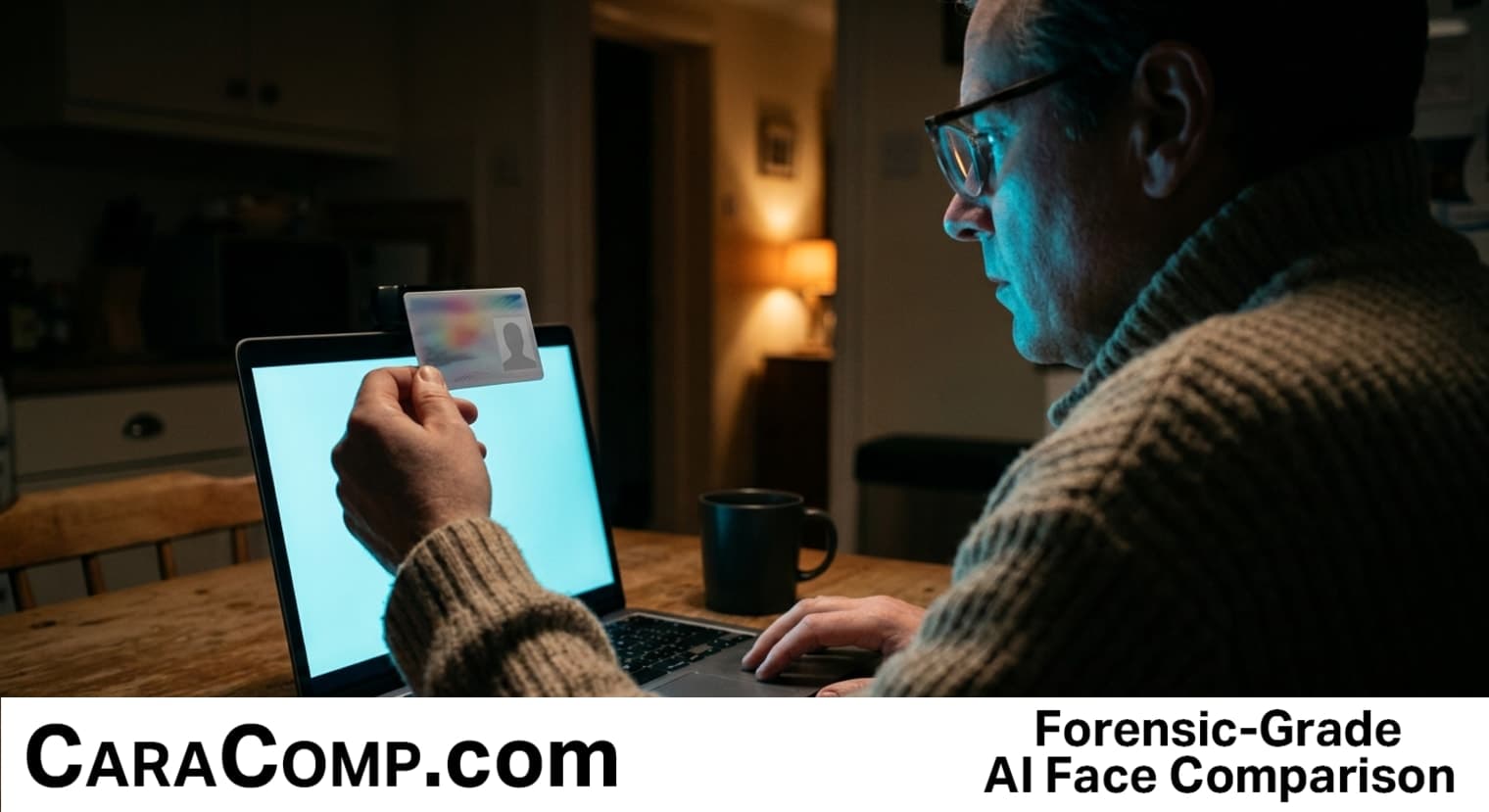
Here's a text you might send a friend at 11pm: "Wait, my VPN didn't work?" That's the exact reaction Utah wants websites to trigger right now. A VPN (a tool that makes it look like you're browsing from somewhere else) used to be the easy workaround for age gates. Utah just built a law that says: nice try.
The Utah age verification law now requires websites to check a user's age category (the label a site assigns you, like "adult" or "minor," based on age proof) even when that user is hiding behind a VPN, which means more sites may soon ask your family for ID, a face scan, or a credit card just to browse.
Utah's age verification law now assumes you might be using a VPN to dodge age checks, and it holds websites responsible for figuring out your real location anyway, which pushes more sites toward collecting your actual ID or face scan instead of just trusting your browser.
Let's back up. In 2023, Utah passed the country's first age verification law aimed at adult content sites. It worked exactly the way you'd expect a law with a giant loophole to work: people in Utah just turned on a VPN, told the website they were browsing from Wyoming or Nevada, and skipped the age check entirely. VPN sign-ups in the state reportedly spiked. Nobody was shocked. If you tell people "don't look over there," a lot of them look over there.
So lawmakers went back to the drawing board. The new mandate, which some outlets are calling Utah's most aggressive move yet, doesn't just ask websites to check where you say you are. It says that if you're physically sitting in Utah, the age verification law applies to you no matter what your VPN tells the website. Rep. Steve Eliason, a familiar name in Utah's push on kids' online safety bills, has been one of the lawmakers associated with this wave of legislation aimed at protecting minors online.
What Utah's Age Verification Law Actually Requires
Here's the part that should make you sit up: this age verification law requires app store providers, not just individual websites, to play a role in checking a user's age category before certain apps or content become available. That's a bigger ask than it sounds. App store providers sit above thousands of apps. If they're on the hook for verifying age, they need some system that follows you across your whole phone, not just one browser tab.
Starts at 01:01 — this story
Watch this story, in under a minute
A new briefing every weekday — three stories, three minutes.
Subscribe on YouTubeA VPN provider called this an "unresolvable compliance paradox" in comments reported by TechRadar. Think about what that means in practice. A website has no real way to know, with certainty, whether the person clicking "I'm 21" is actually sitting in a Utah living room or a Boise coffee shop. But under this law, the website can face liability either way. That's not a technical problem you fix with better code. That's a legal trap with no clean exit. This article is part of a series, start with Biometric Data Definition Why Basfs Apple Suit Isnt Privacy .
Utah's new law regulating VPNs goes into effect, and it puts service providers in the impossible position of having to determine a user's true physical location without violating their privacy.
Electronic Frontier Foundation, EFF Deeplinks
2023 → 2026
Time between Utah's first age verification law and its VPN-specific follow-up
Source: PBS NewsHour, Electronic Frontier Foundation
Why the utah age verification law targets VPN use specifically
The short answer: because the first version of this law didn't stop anyone. If you build an age check that a fifteen year old can beat with a free app in ten seconds, you haven't built child safety. You've built a speed bump. Utah's response was to make the law follow the person, not just the internet connection. Whether that's enforceable is a separate question, and a big one, but the intent is clear: close the door VPNs opened.
The Real Question Isn't VPN vs No VPN, It's Who Gets Your Data
Here's the thing nobody's saying out loud enough: this fight was never really about VPNs. It's about what happens once VPNs stop being a viable dodge. When a site can't rely on your location to guess your age, it has to verify some other way, and every other way involves handing over something personal. An ID scan. A face scan that estimates your age from your features. A credit card number, which proves you're an adult mostly because minors don't usually have one.
None of those methods are free of trade-offs. Age estimation tools guess your age from a photo, and they're probabilistic, meaning they're often right but sometimes wrong, especially at the edges (a 17-year-old who looks 22, or the reverse). If a site's estimate is wrong and a court or regulator later asks how the site made that call, "the algorithm thought so" isn't exactly a satisfying answer. That's the deeper problem sitting underneath the VPN headline: enforcement doesn't follow age. It follows identity. Once a system needs your identity to confirm your age, you've traded a browsing habit for a data trail. Previously in this series: Ai Identity Verification 8 065 Deepfakes Hit One Bank Podcas.
Why the Utah Age Verification Law Matters for Families
- ⚡ App store providers now share the burdenverification may happen at the phone level, not just per website, meaning one age check could apply across dozens of apps
- 📊 Data collection expandssites can no longer lean on IP location alone, so more ID, biometric, or payment data gets requested directly
- 🔮 Other states are watchingUtah tends to be a first mover on these bills, and other legislatures copy what sticks
- 👪 Parental consent tools may followexpect more sign-up flows asking a parent to approve before a minor can use social media platforms or apps
How the Utah Age Verification Law Compares to Other State Bills
Utah isn't operating in a vacuum here. States across the country have introduced their own bills on age verification, parental consent, and what social media companies owe to kids using their platforms. Some of these bills have already become law; others are still working through their state senate. The table below lays out where a few of these efforts stand, in plain terms.
| State approach | Status | What it actually requires |
|---|---|---|
| Utah age verification law (VPN provision) | Enacted | Age verification applies based on physical location, even if a VPN masks it; app store providers included |
| Wisconsin VPN provision | Removed | Lawmakers stripped the VPN-targeting language after pushback from digital rights groups and residents |
| General parental consent bills (various states) | Pending or enacted, varies | Require parental consent before minors can sign up for certain apps or social media platforms |
Notice that Wisconsin actually backed off the VPN piece entirely. That's a signal worth paying attention to. Even in states friendly to age verification bills, holding companies liable for a user's VPN use is politically shaky ground. It sounds tough on paper. In practice, it asks websites to solve a problem nobody has solved yet.
What This Means If You've Ever Wondered "Is This Really Me Being Verified?"
If you've ever paused before uploading your ID to a random site, or wondered whether that "quick face scan" really deletes your photo afterward, you're not being paranoid. That's the exact question this whole category of technology exists to answer, and honestly, most people have never gotten a straight answer. Here's one useful thing to actually watch for before you hand anything over: check whether the site's age check happens on your device (a quick estimate that never leaves your phone) or sends your ID and photo to a third party's server. That single detail tells you almost everything about your actual privacy risk in that moment. A local, on-device check is a very different animal from uploading your driver's license to a company you've never heard of.
The Utah age verification law shows that once companies can no longer trust a user's stated location, the next move is always more data, so families should expect sign up screens that ask for ID, parental consent, or a face scan rather than a simple checkbox.
Zoom out and this fits a bigger pattern. Social media companies and media companies of all kinds are under real pressure right now, from parents, from state legislatures, from courts. Kids online safety is popular with voters on both sides. But every bill that promises to protect kids also has to answer a quieter question: what happens to the data collected to prove someone is an adult, or isn't? Utah's law doesn't really answer that. It just moves the burden from the browser to the person.
Utah age verification and what happens to your session data
Once a site verifies your age category, it often keeps some record tied to that session (your single visit or login), sometimes longer. Utah's law doesn't fully spell out retention rules for every site it covers, which is exactly why reading a site's privacy policy before you verify, not after, actually matters here. Up next: Ai Voice Cloning Scam 1 2 Seconds Fakes A Childs Voice.
So here's where this actually lands. Utah didn't fix its age verification problem by making the internet safer for kids. It fixed it by making adults easier to identify. A law built to stop a fifteen year old from lying about her age is now the same law that might ask her mom for a driver's license photo just to read the news. That's not a loophole. That's the whole design, working exactly as written.
utah age verification law: Frequently Asked Questions
Does the utah age verification law apply if minors can use social media platforms through a VPN?
Yes, that's the whole point of the update. Utah's law now assumes minors can use social media platforms and other sites by masking their location with a VPN, so it holds the website responsible for verifying age based on where the user is actually located, not where their connection claims to be. This is why VPNs, which used to reliably dodge age gates, may no longer work the way people expect in Utah specifically.
What does the law mean when it requires app store providers to verify age?
It means the responsibility for checking a user's age category isn't limited to individual websites anymore. Under this age verification law, app store providers, the companies running the platforms where you download apps, may also need systems to confirm a user's age before certain content or apps become available. That's a much wider net than checking age on a single site, since one verification could theoretically apply across many apps on your phone.
Who is Rep. Steve Eliason and why does his name come up with this bill?
Rep. Steve Eliason is a Utah lawmaker who has been associated with the state's push on kids' online safety legislation, including bills tied to age verification. Utah's house has been active on this front for several years, with Eliason's name attached to multiple efforts aimed at protecting minors online. His involvement reflects a broader pattern of Utah lawmakers treating age verification as an ongoing project rather than a one-time law.
Do I need parental consent for my kid to use social media in Utah?
Parental consent requirements vary by which specific bill or law applies, and Utah has passed multiple bills touching kids online safety over the past few years. Broadly, the trend across many state bills, including Utah's, is toward requiring a parent to approve or sign off before a minor can create an account on certain social media platforms. Check the specific platform's current sign up process, since companies update these flows as laws change.
Is this age verification law considered legal to enforce against companies outside Utah?
That's genuinely unsettled. Because the law tries to apply based on a user's physical location rather than where a company is based, it raises real legal questions about how far a state's authority reaches, especially for websites and social media companies headquartered elsewhere. Courts have not fully resolved these legal challenges yet, and other states have reacted differently. Wisconsin, for example, removed a similar VPN targeting provision from its own bill after pushback.
Ready for forensic-grade facial comparison?
Full forensic reports with detailed similarity scoring. Results in seconds.
Run My First SearchMore News
Digital age check: 4.8M Danes can skip the selfie upload
Denmark's biggest payment app can now prove your age, showing only a photo, name and age. Convenient, yes. But is it one more piece of your identity getting tied together?
privacyAge Verification Roblox: Malaysia Weighs ID Checks for Kids
Malaysia is studying age checks for Roblox and other online games. Safety matters, but so does what your family hands over to prove a child's age.
privacyAge verification: 25+ states now demand ID and face scans
Age checks started with adult sites. Now they are creeping toward everyday websites, and the price may be your ID. Here is what to know before you tap "verify."