
TSA Facial Recognition Technology: No Proof Photos Were Deleted
Quick answer
Does TSA delete your photo after an airport face scan?
At the checkpoint, yes. A federal audit found routine passenger photos were deleted promptly under federal rules. The gap was in repairs, where a contractor could copy passport and license images and TSA could not confirm those copies were erased. Facial screening is also voluntary, so travelers can show an ID instead.
You step up to the airport scanner, look at the screen, and get waved through in seconds. Easy. But a federal watchdog now says the agency running that tsa facial recognition system did not properly protect the data behind it. Your face isn't a boarding pass. If it leaks, you can't print a new one.
TSA facial recognition works fine at the checkpoint itself, but a federal audit found a back door: a contractor could pull passport and license images without TSA knowing, and TSA couldn't prove they were deleted.
What Did the Watchdog Find About TSA Facial Recognition?
Short version: the daily routine held up. The trouble was in the repair shop.
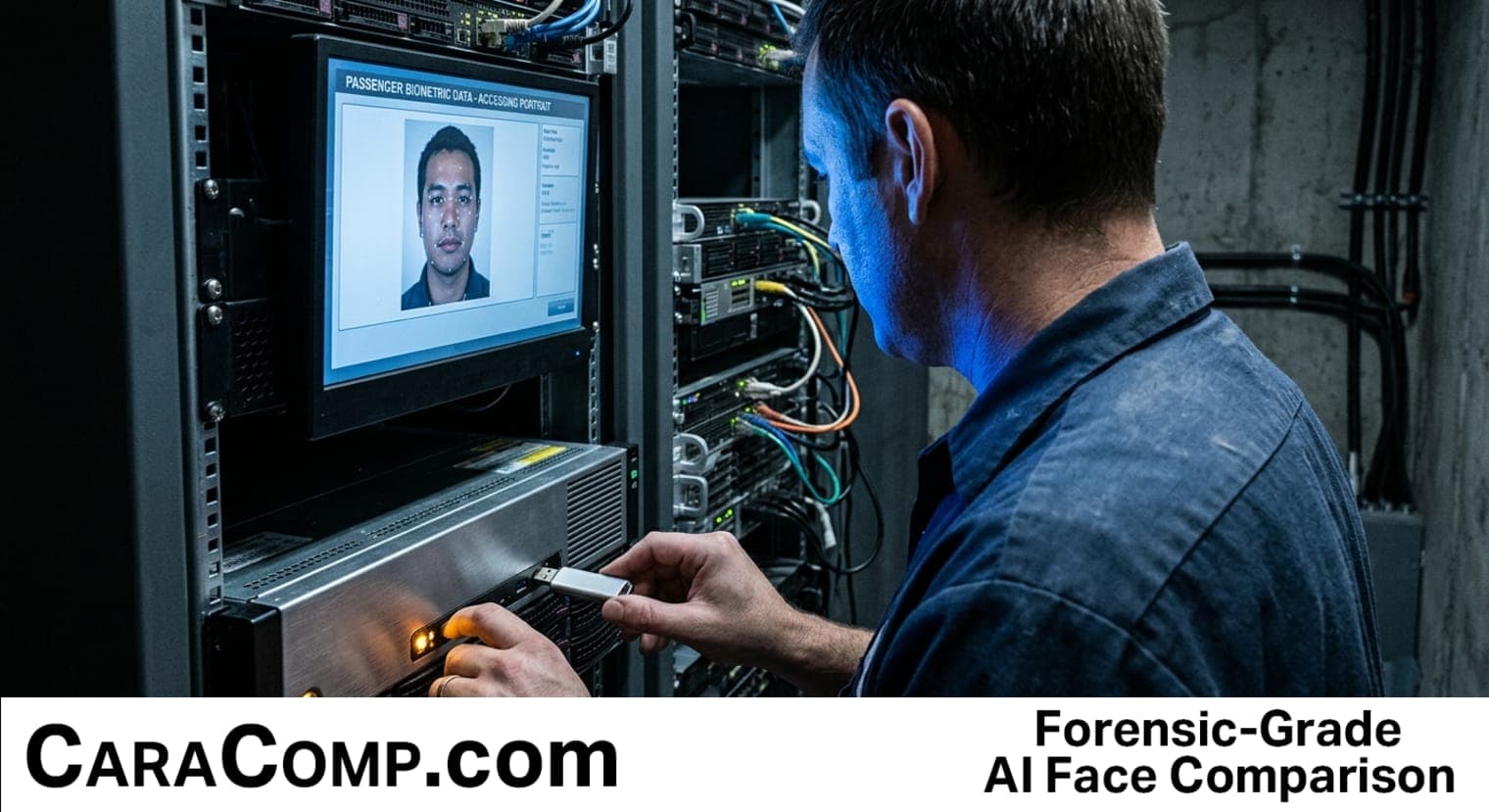
According to the Electronic Frontier Foundation, the Department of Homeland Security's Inspector General (the in-house watchdog that audits the department) found that a contractor could reach and pull out sensitive passenger information, including driver's license and passport images, while fixing problems in the system. TSA didn't know it was happening. It had no clear policy about it. It didn't track when data was pulled out. And it could not confirm the copies were ever deleted.
Think of a hotel that shreds every guest's ID at checkout, but lets the plumber photocopy the files and never asks where the copies went.
Is TSA facial recognition data deleted after my airport face scan?
At the checkpoint, yes. The audit found TSA staff and systems deleted passenger photos promptly and in line with federal rules. Travelers' photos are removed right after a match. The gap sits in maintenance, where copies pulled out by a third party were not tracked or verified as deleted.
That is a lot of cameras for a system that, per the audit, couldn't fully show where its own data went. This article is part of a series, start with Deepfake Laws By State 8 States Push Chatgpt Id Checks.
Why Airport Face Scan Safeguards Matter More Than Passwords
Here's the part that should bug you. A stolen password is an annoyance. You reset it by lunch. A stolen face is permanent.
That is why biometric data (your face, voice, fingerprints, the body stuff that's uniquely you) needs tougher protection than a credit card number. The watchdog also found that TSA mismanaged privileged accounts (the master keys that let people see and change a lot), created service accounts without required approvals, and didn't always shut off access for people who had left the agency. Reporting from Biometric Update covers those access control failures in detail.
The audit identified a "significant weakness" in the technology's ability to protect the privacy of passenger data.
DHS Inspector General audit, as reported by the Electronic Frontier Foundation
Not a hack. Not a movie villain. Just loose paperwork and loose keys. Most real-world data leaks look exactly like that.
How does an airport face scan compare to a passport check?
| Question | What the audit found |
|---|---|
| Routine checkpoint deletion | Worked: photos deleted promptly, in line with federal rules |
| Contractor access during repairs | Weak: passport and license images could be pulled without TSA knowing |
| Audit trail (the record of who took what, and when) | Missing: TSA did not track when data was extracted |
| Proof of deletion | Not verifiable for extracted copies |
| Recommendations | Three; TSA agreed with all three; two open and resolved, one open and unresolved |
Is Opting Out of TSA Facial Recognition Really Protection?
Yes, you can opt out. Using facial recognition at the checkpoint is voluntary, and signs tell travelers so. That matters. But it only covers the lane in front of you. It says nothing about copies that someone else might have pulled out behind the scenes, which is exactly what the audit could not rule out.
The fair counterpoint: TSA says screeners don't automatically store data, and the watchdog agreed the everyday controls generally worked. Credit where due. The agency also agreed with every recommendation. That is how oversight is supposed to go. Previously in this series: Deepfake Apple Bans Nudify Apps But Grok Still Stays Put.
Still, the match against passport and license photos relies on a government photo database. Back in 2019, CBP (Customs and Border Protection, which supplies the database behind TSA's facial recognition technology) had a breach that exposed traveler photos. Nobody got a new face afterward.
Why TSA Facial Recognition Oversight Matters
- Faces can't be reseta leaked photo stays leaked for life.
- Vendors are the soft spota system is only as safe as its least-watched contractor.
- Deletion needs proof"we delete it" means little without a record showing it happened.
What You Can Actually Do Before Your Next Flight
If you've ever wondered whether a photo or profile is really who it claims to be, that is the exact question this kind of tech exists to answer. The flip side is just as fair: who is looking at your face, and can they show their work?
Here's one thing to watch for. When any service asks for your face, look for a plain statement of two things: how long they keep it, and who can touch it. If the answer is vague, treat that as the answer. At the airport, you can decline the scan and show your ID to an officer instead.
For anyone who handles face comparisons for a living, like investigators, the lesson is the same. The algorithm isn't the whole story. The chain of custody (the record of who handled the data and when) is.
TSA facial recognition may delete your photo at the lane, but the audit shows a face scan is only as safe as the access controls and records behind it.
So here's the question the watchdog left hanging: if an agency can't show where a copy of your passport photo went, what exactly were you consenting to when you looked at the camera? Up next: Tsa Facial Recognition No Proof Passport Photos Got Deleted.
TSA Facial Recognition: Frequently Asked Questions
Is TSA facial recognition mandatory?
No. Facial recognition at TSA checkpoints is voluntary, and signs at airports tell travelers they can opt out. If you decline, you show your ID to an officer instead. The audit did not change that. What it raised is whether data created by the scan, including passport and license images, is handled and deleted with enough proof behind it.
What did the DHS Inspector General say about TSA?
The Inspector General found a significant weakness in protecting passenger privacy. A contractor could extract passport and license images while troubleshooting, and TSA lacked clear policies and did not track extractions. It could not verify the copies were deleted. TSA agreed with all three recommendations, according to the Electronic Frontier Foundation's summary of the audit.
Does TSA keep my photo after the airport face scan?
According to the audit, routine checkpoint photos were deleted promptly and in line with federal requirements. TSA says screeners do not automatically store data. The open concern is narrower: images that a contractor pulled out during system repairs, which TSA could not confirm were deleted. That is a gap in records, not proof of misuse.
How many airports use TSA facial recognition machines?
As of April 2025, TSA had deployed more than 2,100 facial recognition-enabled machines at more than 250 airports, according to the audit coverage. That fast growth is part of why watchdogs want stronger logging (a written record of every access), independent audits, and better ways to spot unauthorized access before something goes wrong.
Why is leaked face data worse than a leaked password?
You can change a password in a minute. You cannot change your face. Biometric data, meaning the body details that are uniquely you, stays tied to you for life, so any leak is permanent. That is why watchdogs push for strict limits on who can access it, how long it is kept, and proof that it was deleted.
Ready for forensic-grade facial comparison?
Full forensic reports with detailed similarity scoring. Results in seconds.
Run My First SearchMore News
Deepfake: Apple Bans Nudify Apps, but Grok Still Stays Put
Apple banned "nudify" apps after the Grok scandal, but a ban only works after the harm reaches people's phones. Here's what a normal person can actually do about it.
privacyUK Online Safety Act: Ofcom's 3 Age Checks Every Adult Faces
The UK Online Safety Act is meant to protect children, but adults now face face scans, ID uploads and card checks. Here is what to ask before you hand anything over.
privacyMissouri Age Verification: App Scans IDs to Shield Children
Missouri's new age-check app promises to keep your ID data on the device. Before you cheer or panic, here are the three questions every family should ask.