
TSA Facial Recognition Airports: Travel Screening for Airlines at 84 Sites
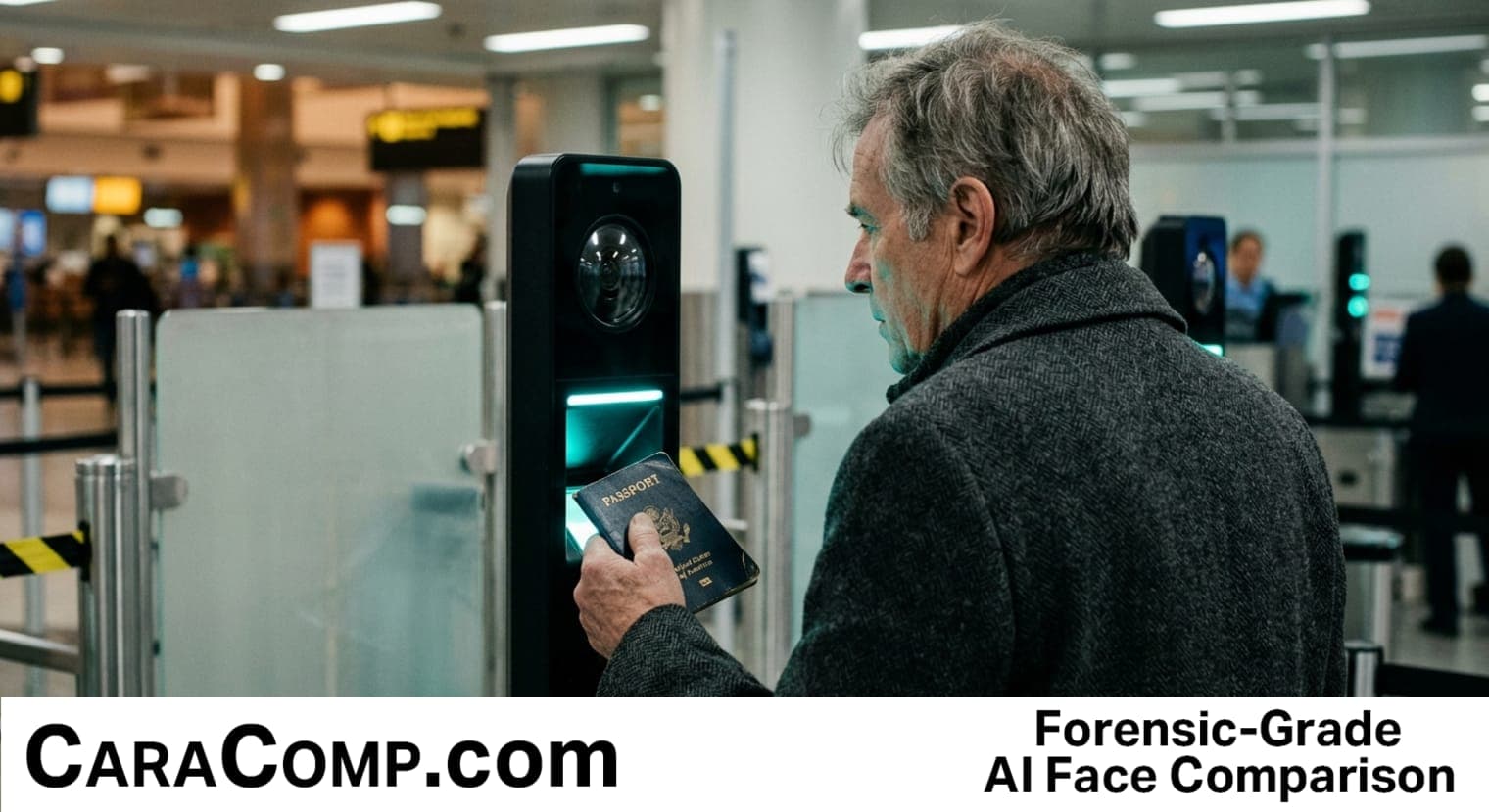
Picture this: you're half-asleep at 5:40 a.m., dragging a rolling suitcase toward the TSA line, and instead of handing your ID to a bored-looking officer, you look at a small camera and it just... knows you. That's not a sci-fi movie. That's tsa facial recognition airports tech, and it's already running in dozens of terminals across the country right now.
TSA facial recognition airports are expanding fast, but this week's other identity news, 170 million leaked ID documents and a $112,000 AI voice cloning lawsuit, is the real reminder that your face is only one piece of the puzzle worth protecting.
TSA facial recognition airports are becoming the new normal for domestic travel, but your face check at security is not the same thing as protecting your identity, your voice, and your documents, and this week's news proves why that distinction matters for every traveler and every airline itinerary.
Here's the thing nobody tells you at 5:40 a.m.: tsa is using facial identification at 84 airports across the country as of early 2026, according to reporting compiled by researchers at Ban the Bots. That's not a pilot program tucked into a corner of one terminal anymore. That's infrastructure, and it's real id friendly, since most of these lanes now accept the credential travelers already carry. And it's growing. By April 2026, according to Nomad Lawyer, more than 250 security lanes nationwide were already accepting mobile driver's licenses and running digital face scans through new biometric readers, with more airports getting added through the rest of the year. This kind of tsa security screening now touches nearly every major hub travelers pass through, and airport security teams are treating it as standard infrastructure rather than an experiment.
Why TSA Facial Recognition Airports Speed Up Travel Screening for Every Airline
The pitch is simple, and honestly, kind of appealing: instead of an officer squinting at your driver's license photo and then squinting at your actual face, a camera compares the two in seconds using recognition technology built to spot a match instantly. If it's a match, you walk through. If it's not, a real TSA officer steps in for a manual check, part of the broader identity verification process airports rely on. Airlines love it because it moves the line faster, and airlines have pushed for this kind of screening for years to cut wait times industry wide. Airports love it because faster lines mean happier travelers who spend more time (and money) at the gift shop instead of standing around. And for a lot of travelers, it genuinely feels like magic, no more digging through your wallet with a tray of shoes balanced on your suitcase. For any traveler juggling a flight, a stroller, and a boarding pass, that extra thirty seconds saved at the identification checkpoint actually matters, and it's part of why so much travel information now points people toward enrolling in trusted traveler programs before their next trip. Frequent travelers who fly multiple airlines in a given month say the time savings add up fast across a full travel calendar.
But here's where I have to be the annoying friend who ruins the fun a little. The Government Accountability Office found back in August 2023 that TSA had expanded this program without finishing a legally required privacy check called a privacy impact assessment (basically, a report that's supposed to happen before the government starts scanning your face, to make sure they've thought through what could go wrong). That's not a small paperwork miss. That's the agency moving faster than its own rulebook required, and it's a fair question for anyone who cares about tsa security and how much oversight actually keeps pace with the technology.
84
U.S. airports where TSA is using facial identification as of early 2026 This article is part of a series, start with Uk Age Verification 1 400 Vpn Privacy Signup Surge Podcast.
Source: Ban the Bots research on TSA CAT-2 deployment
Is TSA facial recognition airports technology tested for accuracy across race, gender, and every traveler group?
This is the part that should make you pause, not panic. Research from the National Institute of Standards and Technology, or NIST (the federal lab that tests how good facial recognition actually is), has repeatedly found that many facial recognition systems misidentify people with darker skin, women, and older adults at higher rates than others, though the best-performing systems now show much smaller gaps. TSA had not published its own demographic accuracy testing for the specific system it rolled out nationwide, according to the research compiled for this piece. Translation: the government bet on a technology at scale before showing its homework on whether it works equally well for every traveler.
What Facial Comparison Technology Actually Protects, And What Airport Security Doesn't Cover
Let's be clear about what this technology is actually for. It's a face check, meaning it checks whether the person standing in front of the camera matches the ID they're holding. That's it. It is not a shield against someone stealing your identity elsewhere. It's not going to stop your identity documents from leaking onto some sketchy marketplace, and it's definitely not going to stop someone from cloning your voice and calling your mom pretending to be you in trouble. This is the core limit of airport security built around facial biometrics: it verifies a moment, not a lifetime of exposure.
Case in point: this same week, Biometric Update reported that IDScan confirmed a breach after 170 million identity documents were allegedly put up for sale. Think about that number for a second. That's not 170 people. That's roughly half the population of the United States, worth of driver's licenses, passports, and other documents, all sitting somewhere they were never supposed to be, potentially available to anyone willing to pay.
And in a completely separate but connected story, the makers of the video game Genshin Impact won a $112,000 legal case over AI voice cloning, according to The Express Tribune. Someone used artificial intelligence to clone a voice without permission, and a court decided that was worth six figures in damages. That's not a hypothetical "someday this could be a problem" story. That's a real dollar amount, awarded this week, because someone's voice got stolen and used without them.
"I would like to opt out of the facial photograph and use manual ID verification, please."
Recommended opt-out language for travelers, as reported by VisaVerge
That's a real, usable sentence. Say it out loud at the checkpoint and, per current guidance, declining the face check should not cost you your place in line or get you flagged for extra hassle. TSA PreCheck Touchless ID is available at a growing list of airports too, letting enrolled travelers skip even more of the manual steps, but "available" and "mandatory" are two very different words, and it's worth knowing the difference before you get to the front of the line. Any traveler who prefers the manual line can still choose it without penalty, whether flying domestic airlines or connecting through an international airport. Previously in this series: Deepfake Scams Singapore Tags Real Government Calls Podcast.
Facial Comparison and Comparison Technology Across the Global Aviation Identity Picture
Here's where it gets bigger than just the TSA line. Facial comparison technology (the broad category of tech that checks whether two faces belong to the same person) is showing up everywhere in travel right now, not just at TSA checkpoints. Global Entry uses similar recognition tech for returning international travelers. Digital ID pass systems and mobile driver's licenses are getting accepted at more checkpoints. Some international airport systems overseas are pushing biometric entry gates even harder than the U.S. is, and aviation regulators abroad are watching how American airlines and international airport operators handle the rollout. This is a global shift in how identity gets checked at borders and gates, not a one-agency experiment, and it touches nearly every corner of aviation, from domestic terminals to international airport transfer hubs.
Which is exactly why the distinction matters so much. A face check at security answers one narrow question: are you who your ID says you are, right now, standing at this counter. It says nothing about whether your data, your identity documents, or your voice recordings are safe from getting scraped, leaked, or cloned somewhere else entirely. Those are different battles, fought with different tools, against different threats, and every traveler and every passenger deserves to understand which battle they're actually protected in before they assume too much.
Why TSA Facial Recognition Airports Expansion Matters to Regular Travelers and Every Airline Passenger
- ⚡ Faster lines, less scrutinythe system is built for speed, which means fewer human eyeballs double checking your identity at the moment it matters most
- 📊 Accuracy gaps go unpublishedNIST research shows recognition tech historically performs worse for darker skin, women, and older travelers, and TSA hasn't published its own numbers
- 🔮 Your face isn't your whole identitya face check does nothing to stop a leaked ID document or a cloned voice from being used against you elsewhere
- 🌍 This is a global patternGlobal Entry, international airport biometric gates, and mobile driver's license systems are all moving the same direction at once across every major airline network
Facial Recognition at TSA Airports vs. the Rest of Your Identity: What Travel Security Actually Protects
I want to lay this out plainly, because it's easy to hear "facial recognition at the airport" and assume that covers your whole identity umbrella. It does not. Below is the honest breakdown of what a face check at security does versus what it leaves completely untouched, with an added look at how status has shifted since these systems went live.
| What's checked | What TSA facial recognition covers | What it does NOT cover | Status since rollout |
|---|---|---|---|
| Identity at the checkpoint | Matches your live face to your ID photo using facial comparison technology | Whether your ID itself was stolen or forged | Expanded nationwide, 2023 to present |
| Speed of screening | Cuts manual ID checks, speeds up the security line for every traveler and airline | Whether your personal data was exposed in a breach elsewhere | Active at 84 airports, early 2026 |
| Voice-based scams | Not applicable, no voice component | AI voice cloning used to impersonate you on a phone call | Unaddressed by TSA security systems |
| Document leaks | Not applicable, checks live identity only | 170 million leaked identity documents being sold, as reported by Biometric Update | Ongoing breach investigation |
| Opt-out rights | Manual ID verification available on request, using tsa confirmid style checks at some lanes | No opt-out exists for a data breach that already happened | Consistent since program launch |
If you've ever wondered whether a photo, a call, or a profile claiming to be someone is actually that person, that's the exact question this whole category of technology exists to answer, and it's worth understanding the difference between checks that happen in the moment (like an airport security scan) and protections that have to exist beforehand (like keeping your ID documents and voice recordings out of the wrong hands in the first place). One useful thing you can actually do right now: check whether your driver's license or passport number has ever shown up in a known breach before you travel, the same way you'd check a password against a leak. It won't stop TSA from scanning your face, but it tells you whether the rest of your identity paperwork needs extra attention, like a fraud alert or a credit freeze, before someone else tries to use it. This kind of identity verification, done on your own before you even reach the airport, is one of the few travel information habits that actually closes the gap the camera can't, whether you fly one airline exclusively or hop between several.
TSA facial recognition airports technology speeds up the security line, but tsa is using facial identification for one narrow purpose only, confirming you're the person on your ID, and it does nothing to protect the identity documents and voice recordings that scammers are actively targeting right now.
Look, nobody's saying facial recognition at the airport is some sinister plot. For most travelers, it's genuinely just a faster version of a thing that already happened anyway, an officer checking your ID. But the mistake would be walking away thinking that because your face got checked at security, your identity is somehow locked down everywhere else. It isn't. The same week TSA news broke, 170 million ID documents were allegedly for sale and a company had to pay $112,000 because someone cloned a voice. Those three stories aren't random. They're the same underlying shift: your face, your voice, and your paperwork are all becoming separate keys to separate locks, and each one needs its own protection plan, whether you travel once a year or every single week.
Does TSA PreCheck Touchless ID replace the need to protect your other identity documents and travel information?
No. TSA PreCheck Touchless ID is available at a growing number of airports and speeds up the checkpoint experience for enrolled travelers, but it only verifies your identity at that single moment in the security line, similar to how tsa confirmid style checks work at other checkpoints. It does nothing to protect your passport number, driver's license, or Social Security details if they're exposed in a breach elsewhere, and it has no connection to voice cloning protections. Treat it as a convenience tool, not a security net for your entire identity. Up next: Credit Card Age Verification Steam Skips Age Estimation.
So here's my actual question for you, the one worth sitting with next time you're in that line: if the camera can tell it's your face in two seconds flat, why does it still take companies weeks, sometimes months, to even notice 170 million ID documents got stolen? The technology to check identity fast clearly exists. We just haven't built the same urgency around protecting it.
tsa facial recognition airports: Frequently Asked Questions
Can I opt out of TSA facial recognition at the airport?
Yes. Current guidance says travelers can request manual ID verification instead of the facial identification camera by simply telling the officer, and declining should not cost you your place in line or result in extra scrutiny. This applies at airports where TSA is using facial identification as part of standard tsa security screening, not just at Global Entry kiosks for international travelers. Every traveler retains this option regardless of airline or terminal, and this same screening approach applies to travelers connecting through any international airport as well.
Is TSA PreCheck Touchless ID available at my airport, and how does tsa confirmid fit in?
TSA PreCheck Touchless ID is available at a growing list of airports, with reporting showing expansion to more than 50 locations by spring 2026 and continued rollout since. Some airports are also piloting tsa confirmid style identity verification alongside it. Check directly with your airport or airline before you travel, since availability varies by location and terminal, and not every domestic or international airport has adopted it yet.
Does facial recognition at airports store my face data?
According to reporting on TSA's process, images captured during standard identity verification are deleted shortly after the check is completed for most travelers, addressing some privacy concerns about long term storage. However, testing for accuracy across different skin tones, ages, and genders had not been publicly published as of the research behind this article, which is a separate concern from data retention and one aviation watchdogs continue to raise, including for screening performed at an international airport.
How is facial recognition different from a credential like a mobile driver's license?
A credential, like a mobile driver's license or digital ID pass, is a document you hold and present. Facial recognition is the camera based comparison that checks whether your live face matches that credential's photo using facial biometrics rather than a manual glance. Airports are increasingly accepting both mobile IDs and facial comparison technology together, meaning your phone and your face are becoming two connected pieces of the same identity check at security for every passenger and every traveler who moves through these lanes on any airline.
Why did NIST say facial recognition has accuracy problems for some travelers?
NIST, the federal lab that independently tests facial recognition systems, found in past research that many algorithms misidentify people with darker skin, women, and elderly individuals more often than other groups, though newer, top-performing systems show much smaller gaps. TSA had not published its own demographic accuracy results for its current airport security system, so travelers do not have public data confirming how the specific tool used at checkpoints performs across different groups or airline routes.
What should I do if my identity documents were part of a data breach like the IDScan case?
If you suspect your identity documents were exposed, consider placing a fraud alert or credit freeze with the major credit bureaus, monitor your accounts for unfamiliar activity, and watch for phishing attempts that reference real details from your documents. This is separate from airport security and facial recognition entirely. A face check at security does not undo or prevent damage from a document leak that already happened, so travelers flying any airline need a separate plan for that risk.
Ready for forensic-grade facial comparison?
Full forensic reports with detailed similarity scoring. Results in seconds.
Run My First SearchMore News
Deepfake scams: Singapore tags real government calls
Singapore is testing a simple fix for a scary problem: a prefix on government calls so you can tell a real official from an AI-cloned voice trying to rob you.
privacyCredit card age verification: Steam skips age estimation
Steam now wants Australian gamers to hand over a credit card before they can play mature-rated games they already own. We break down why, and whether there was a gentler way to do it.
privacyUK Age Verification: 1,400% VPN Privacy Signup Surge
The UK wants your phone, not just individual websites, to prove how old you are. That sounds efficient. It also means one privacy mistake follows you everywhere.