
ID Verification: Verify Your Identity Before 170 Million Stolen IDs Surface
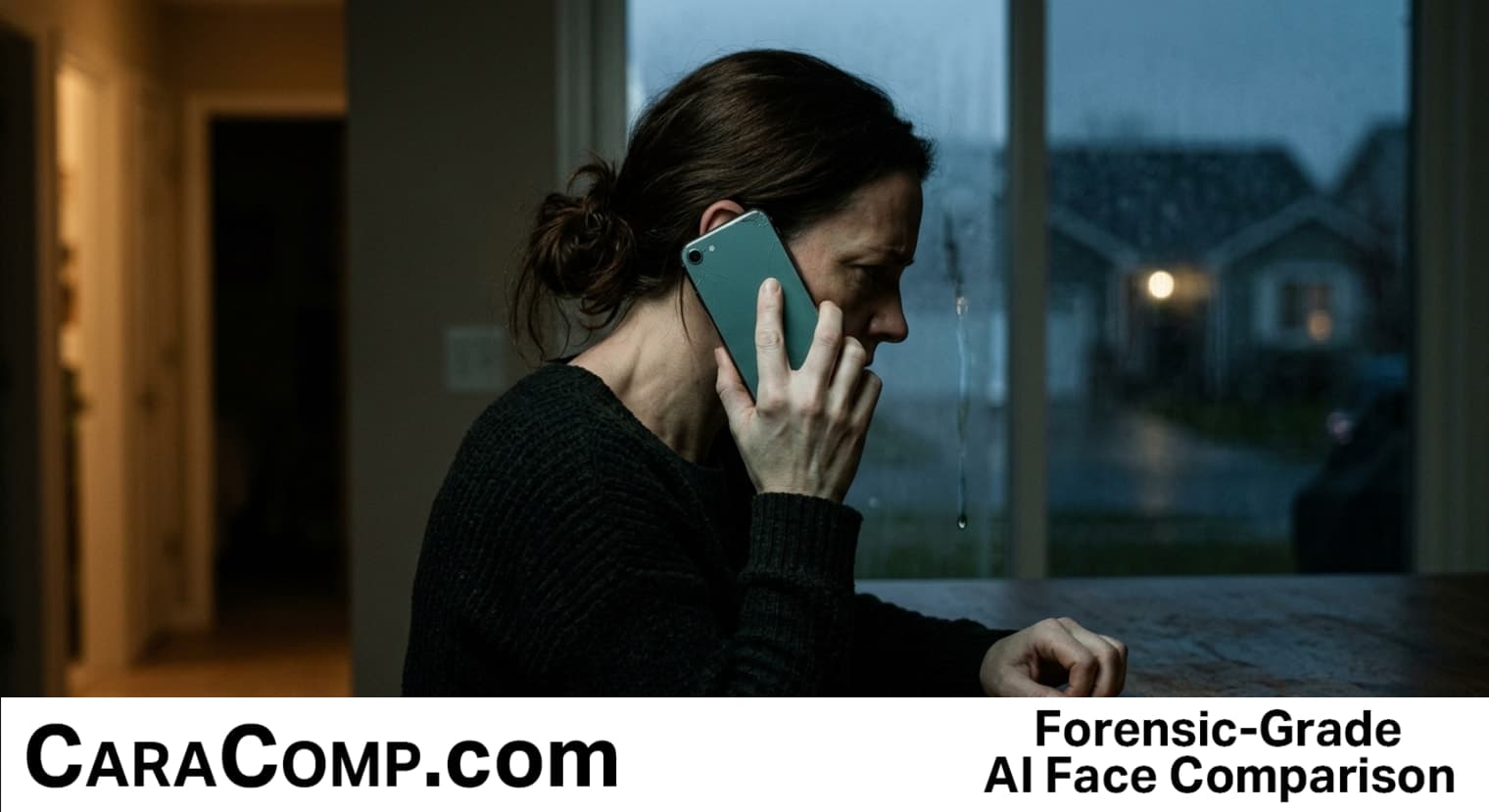
Here's the part that should stop you mid-scroll: one leaked database reportedly held more than 153 million driver's licenses, 10 million ID cards, 3 million travel documents, and 579,000 medical cards. That's not a password list. That's a warehouse of the exact paperwork you'd need to become someone else, or to make them become you.
TL;DR: ID verification is supposed to protect you when a website checks that your driver's license is real, but a newly confirmed breach of 170 million identity documents shows what happens when the company holding onto that "proof" gets robbed instead.
ID verification (the process a website uses to check your driver's license or passport is real and belongs to you) is only as safe as the company storing the copy of your document, and this breach proves some of them are not storing it safely.
According to Biometric Update, the company IDScan confirmed the breach after the stolen documents showed up for sale. The seller claimed the data had been "continuously exfiltrating for over a year," which is a fancy way of saying: someone had a quiet, working pipe into this database for months, and nobody noticed. The record count for driver's licenses reportedly grew by nearly 400,000 in a single 24-hour window while researchers were watching it. Let that sink in. This wasn't a smash-and-grab. It was a slow leak that turned into a flood, and it exposes exactly why identity verification and document verification depend on the same fragile trust: a company promises to protect what it collects, and this time that promise failed.
Why id verification and identity authentication break down when the documents themselves get stolen
Id verification exists to answer one question: is the person on the other end of this screen really who they say they are? The whole system depends on a trade. You hand over a scan of your license or passport, and in return, a company promises to check it, use it once, and protect it as part of a broader verification process. This breach is what happens when that second half of the deal falls apart. Once your ID scan is sitting in a criminal's folder, id verification stops protecting you and starts working against you, because the "proof" a scammer needs to pass as you is the very thing that got stolen. This is the gap between identity authentication in theory, where a government-issued document proves you are a real person, and identity authentication in practice, where that same document can be copied, sold, and reused by someone who is not you at all.
Identity document breach vs. a password leak: not even close
People hear "data breach" so often it starts to sound like weather. But an identity document breach is a different animal from a password leak, and the difference is permanence. You can change a password in ninety seconds. You cannot change your face, your birth date, or your document history. That's not a metaphor, that's the actual math of why this one story stands out from the pile of breach headlines you've scrolled past this year. Some newer verification services now lean on a selfie verify step, matching a live photo against your document photo, but even that biometric verification layer only helps if the underlying document was never stolen in the first place. This article is part of a series, start with Uk Age Verification 1 400 Vpn Privacy Signup Surge Podcast.
170M+
identity documents reportedly exposed, including driver's licenses, ID cards, travel documents, and medical cards
Source: Biometric Update reporting on the IDScan breach
Think about what's actually inside a driver's license scan. Your full legal name. Your home address. Your date of birth. Your signature. Your photo. Your license number. That's not "some data" and it's more than a password ever holds. That's the starter kit for opening a credit card in your name, renting an apartment as you, or making a fraud call sound frighteningly convincing because the scammer already has your real address memorized. A stolen password gets you locked out of one account. A stolen identity document gets you locked into a mess that can follow you around for years, and it can undermine any government login gov account that leans on that same document as proof of who you are.
What every person should watch for after an identity document breach like this one
So what does this mean for you, tonight, on your phone, not working in tech? It means the next unexpected "verify your identity" text, the next surprise credit application notice, the next call claiming to be your bank asking you to "confirm your license number" deserves more suspicion than it used to. Not because you did anything wrong. Because somewhere out there, a copy of a real license that looks exactly like yours might be sitting in a folder next to 153 million others, waiting for the next person willing to verify a fake account with someone else's information.
The seller claimed the data had been "continuously exfiltrating for over a year." Previously in this series: Digital Identity Bangladesh Bets 748 Million On Trust Podcas.
as reported by Biometric Update
Here's where the psychology gets interesting, and where I want to be honest with you instead of just alarmist. Most of us judge risk by what we can picture. A stranger going through our mail feels scary and real. A database somewhere with our license in it feels abstract, so we underrate it, right up until the moment a fraud alert lands in our inbox and we can't figure out why a bank in another state has our name. That gap between how scary something feels and how scary it actually is is exactly why breaches like this one get undersold in the news cycle. This is also why government agencies now push so hard for stronger identity verify standards before anyone can complete an application online. 170 million documents should be leading every local news broadcast tonight. It probably isn't.
Why id verification matters more than you think, and what information is really at stake
- ⚡ Permanent versus temporarya password reset takes minutes; recovering from a stolen identity document can take months, according to consumer advocates at AARP, who note that new-account fraud can take far longer to untangle than a stolen credit card number.
- 📊 New account fraud lingersExperian has reported that new account fraud and medical identity theft can drag on for months or years, unlike credit card fraud, which usually clears up in days or weeks.
- 🔮 One document, many usesa single leaked license can be reused to pass id verification checks across totally unrelated companies, since so many businesses accept the same type of scan as "proof" of both identity and access to sensitive information.
- 🕵️ Federal attentionthe FBI has reportedly opened an inquiry into the breach, according to TIME, which is not the kind of thing that happens over a routine leak.
How does identity document breach recovery actually compare to completing a password reset?
A password reset is instant and free. An identity document breach recovery can involve credit freezes, fraud affidavits, phone calls to the DMV, and months of waiting to see if your name shows up somewhere it shouldn't. AARP has noted that untangling new-account fraud tied to a stolen identity can stretch on far longer than fixing a stolen card number, because you're not just canceling a number, you're proving, over and over, that the "you" applying for things isn't actually you. Every government agency and private company that relies on verification biometric matching or a simple document scan to grant access is, in effect, trusting that the document in front of them hasn't already been stolen once before.
| What happens | Password leak | Identity document breach |
|---|---|---|
| Can you reset it | Yes, in minutes | No, your face and birth date don't change |
| Typical recovery time | Same day | Months, sometimes years, per AARP and Experian reporting |
| What it enables for a criminal | Access to one account | New account fraud, medical identity theft, convincing impersonation |
| Id verification impact | Minimal, one login affected | Undermines every service that relied on that document as proof |
| Status as of this report | Resolved within hours | Ongoing, FBI inquiry reported |
The real question about id verification and verification services you should be asking before you upload anything
If you've ever paused before uploading your license to some app you'd never heard of last week, that instinct was right. That's the exact question id verification is supposed to answer for a business, but it's also a fair question for you to ask right back at them: how long will you keep this, and who else gets to see it? Here's one concrete thing you can actually do tonight, before you upload an ID anywhere again: look for the company's data retention policy, meaning how long they promise to hold your document, and if you can't find a straight answer in under two minutes of searching, treat that as your answer. A company that can't tell you when it deletes your ID probably isn't deleting it, and that should worry any person who trusts that company with something this personal.
The counterargument, and it's a fair one, is that we can't just stop verifying identities online. Fraud is real, minors need age gates, banks are required by law to check who they're doing business with. The fix experts point to isn't scrapping id verification, it's changing how the documents get stored once the check is done, shifting toward encrypted vaults and tokenized records (basically, swapping your actual license photo for a scrambled code that's useless if stolen) instead of just parking a raw image of your ID on a server indefinitely. Many verification services already offer this kind of protection, and some government login gov systems are moving in that direction too. Whether that would have stopped this specific breach is still an open question. Whether it should be the new normal isn't.
Id verification only works if the company on the other end protects your document as carefully as you protected it before you hit upload, and this breach is proof that you can't change your identity overnight the way you can change a password.
So here's the uncomfortable math to sit with tonight. A password takes thirty seconds to change. A stolen license takes months to clean up and never fully goes away, because the version of you sitting in that leaked file, your face, your address, your birthday, is the only version you've got. The next time a website asks you to upload a photo of your ID "just to verify," ask yourself the question that actually matters: not "is this site legit," but "do I know what happens to this photo after today." Right now, for 170 million people, the honest answer turned out to be nothing good. Up next: Credit Card Age Verification Steam Skips Age Estimation.
id verification: Frequently Asked Questions
Can a stolen identity document really be used to open accounts in my name?
Yes. According to reporting on identity theft recovery from AARP, new account fraud, where a criminal uses your stolen details to open a fresh account, can take months or even years to fully resolve, unlike a stolen credit card, which is usually replaced within days. A leaked driver's license gives a criminal your name, address, birth date, and signature, which is often enough to pass basic id verification and identity verify your identity checks elsewhere, letting a stranger sign into or complete an application as if they were you, using your account information as their own.
What is document verification fraud and how is it different from regular identity theft?
Document verification fraud specifically means someone has an actual copy of your license, passport, or ID card, not just your name or social security number. That's more dangerous than typical identity theft because the document itself can pass visual id verification checks at banks, rental companies, or online services that simply compare a photo to a face, without ever confirming the document wasn't stolen from a breach, or that the account behind it is real.
How long can identity document breach effects actually last for a regular person?
Experian has reported that the effects of identity theft tied to new accounts or medical records can last far longer than a typical credit card breach, sometimes stretching into months or years of disputes, credit freezes, and paperwork. Unlike a password, you can't change your date of birth or face, so an identity document breach creates a risk that doesn't fully expire the way a canceled card number does, no matter how careful the person tries to be afterward when they sign up for new accounts.
If a company already has my ID on file, what should I ask them to do?
Ask how long they retain the scan and whether it's stored as a raw image or in an encrypted, tokenized format, meaning your document is scrambled into a code rather than kept as a plain photo. A company that can't clearly answer how long it keeps your identity document, or who has access to it or your account information, is a red flag worth taking seriously before you sign away access or upload anything else to them, whether or not they use login.gov or id.me style verification.
Is the FBI actually investigating this identity document breach?
According to TIME, the FBI has been looking into the reported dark web sale of driver's license data tied to this breach. Federal investigators getting involved signals the scale here is well beyond a routine leak, and it lines up with experts warning that mass ID scan retention by verification companies and government offices creates a single point of failure for millions of people and their accounts, tax return filings, and benefit sign-ins at once.
What does "verify your identity" actually mean when a company asks for it?
When a company asks you to verify your identity, it usually means uploading a photo of your driver's license, passport, or ID card so a system can confirm the document looks real and matches your face. Some services also ask you to sign into an existing government account, like login.gov or id.me, instead of uploading a fresh document each time. The idea behind id verification is to reduce fraud, but as this breach shows, the company on the receiving end has to actually protect what you hand over, not just collect it.
Why do login.gov and id.me exist instead of every company checking IDs itself
Login.gov and id.me were built so that instead of dozens of separate websites each collecting and storing your driver's license, one trusted verification process handles it, and other services simply confirm your identity through that account. In theory, this means fewer companies are holding a raw copy of your ID at once. In practice, it only helps if the underlying verification process itself is protected as carefully as the documents it was designed to safeguard.
Should you still upload your ID to verify your identity for tax return or benefit sites
Many government portals now require you to verify your identity before you can view a tax return, file a claim, or check a benefit account, and skipping that step usually isn't optional. That doesn't mean you should never do it, but it does mean you should confirm the site is the official government portal, not a lookalike, before you sign in or upload anything. A quick way to check is looking for a login.gov or id.me partnership listed directly on the agency's own site.
How can you tell if a verification process is asking for more than it should
A trustworthy verification process should only ask for what it needs to confirm your identity, usually one government-issued document and sometimes a selfie to verify a match. If a service asks you to enter your social security number, upload multiple documents, and sign up for unrelated products all at once, that's a signal to slow down. Legitimate identity verification rarely bundles unrelated account sign-ups into a single verify step, so treat that combination as a warning sign rather than routine friction.
None of this means you should refuse every request to verify your identity online. Plenty of legitimate services, including tax return portals and benefit programs, genuinely need id verification to stop fraud before it starts. The goal is to get comfortable telling the difference between a normal verification process and one that's collecting more than it needs, then acting on that instinct the same way you did when this breach first made headlines.
Ready for forensic-grade facial comparison?
Full forensic reports with detailed similarity scoring. Results in seconds.
Run My First SearchMore News
What Is Voice Cloning: One Minute of Audio, $112,000 Fine
A Shanghai court just made AI voice cloning legally expensive. Here's what that $112,000 ruling means for the rest of us when a "familiar" voice calls asking for money.
facial-recognitionTSA Facial Recognition Airports: 84 Now Scan Faces at Security
TSA is rolling out facial recognition at more airports while, in the same week, 170 million ID documents allegedly leaked and a voice-cloning scam cost someone $112,000. Here's what actually keeps you safe.
ai-regulationDeepfake scams: Singapore tags real government calls
Singapore is testing a simple fix for a scary problem: a prefix on government calls so you can tell a real official from an AI-cloned voice trying to rob you.