
Facial recognition in stores: retail security and privacy risks
Quick answer
Can a store accuse you of shoplifting based on a face match?
A store can act on a face match, since nothing in the software stops it, but a match only shows two faces look alike. It is a lead for a trained person to check against the full video, not evidence of theft. Accusing someone on the score alone risks wrongly blaming them.
You are at the checkout with your kid. A worker walks up, says a computer flagged your face, and asks you to leave. People are watching. You did nothing wrong. That is facial recognition in stores going wrong, and it has already happened to real people.
Facial recognition in stores can mistake you for someone else, so a face match is a tip and never proof; ask for a human to review the video before anyone accuses you.
Short version for the worried: you are not paranoid, and you are not powerless. Here is what is going on, why it keeps happening, and what to say if a store points a finger at you.
Facial recognition in stores and the crime of being mistaken for someone else
The story comes from Futurism, which reports that shoppers in UK stores are being wrongly accused of shoplifting after video surveillance software flags their face. The people who get flagged by mistake then face a maze. They are often asked to hand over even more private information to a private company just to clear their name.
Think about what that means. A guess made by software about a grainy video frame becomes a public accusation. Employees who acted on those false alarms followed shoppers, searched them, ordered them out and called police, often in front of friends or family. The shame lands first. The facts, if anyone checks them, come later.
Store facial recognition starts with a video still, not a verdict
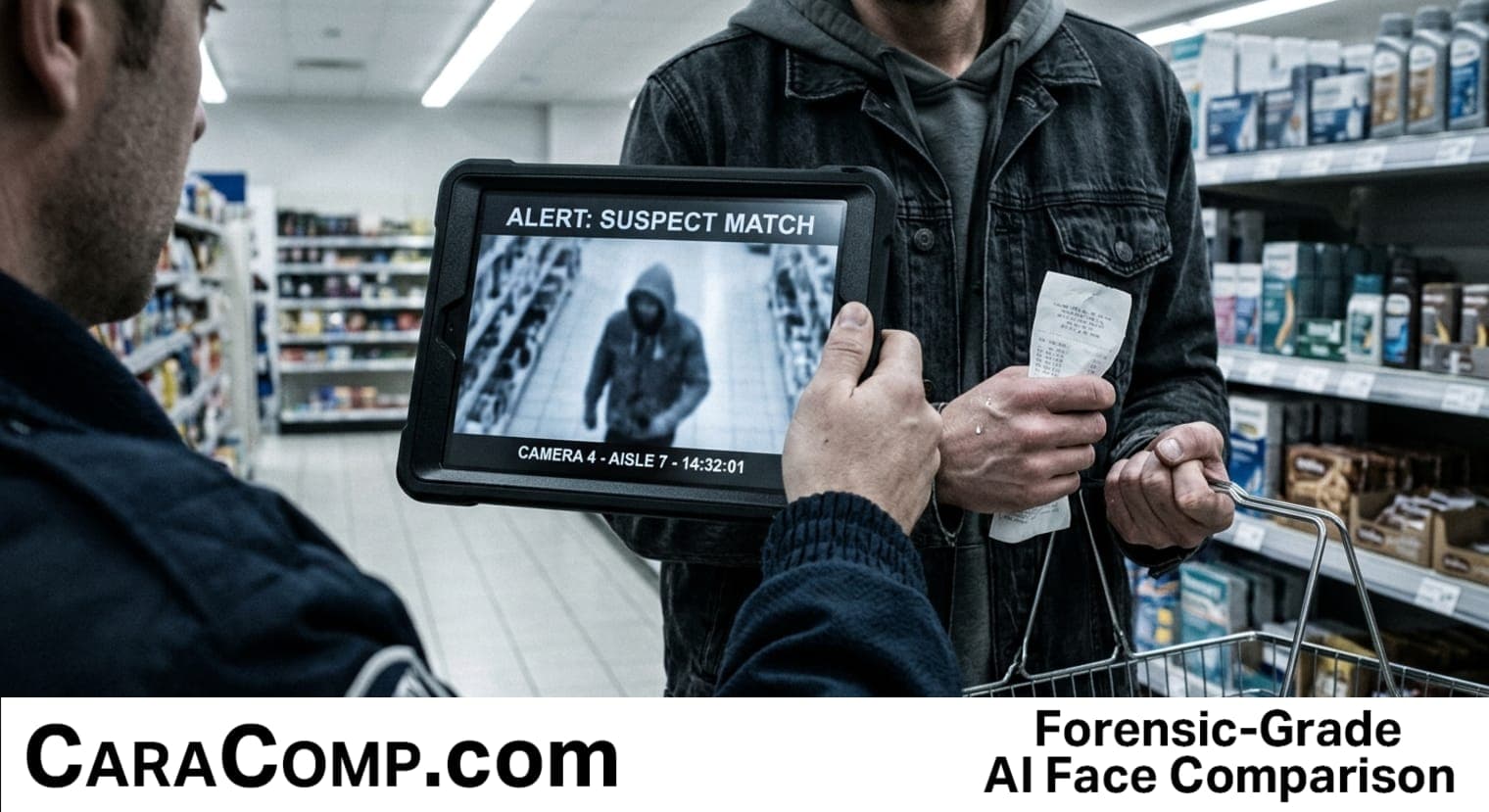
Here is how it works, in plain terms. Security cameras record video of people walking in. Face recognition software pulls a still image from that video and compares it with a list of faces the store has flagged. If the two look alike enough, an alarm goes to a worker's phone or screen. That is the whole trick.
Notice what is missing. Nobody has confirmed the person on the video did anything. The software only said two faces look similar. Similar is not the same as identical, and a blurry video makes similar a lot easier to hit by accident. This article is part of a series, start with Biometric Face Scan Brazil Ties 280m Phones To Verification.
What research confirmed about facial recognition in stores, from Rite Aid to a Tennessee jail
This is not a one-off glitch. The Federal Trade Commission said Rite Aid, a US pharmacy and retail chain, secretly used facial recognition technology on customers for nearly a decade. The system produced thousands of false positives (times it said "match" and was wrong). Those errors showed up more often in retail stores in neighborhoods with large Black and Asian populations, as NBC News reported.
The harm does not stop at the store door. Jalil Richardson of North Carolina is counted as the 14th known victim of a wrongful arrest tied to facial recognition. In 2025, a 50-year-old woman in Tennessee spent six months in jail after software wrongly tied her to a bank fraud case in North Dakota. That was a police case, not a store case, but it shows the same mistake: a match treated as proof.
Affected individuals describe a system that presumes guilt, offers scant support for challenges, and provides no clear path to resolution.
Summary of the reporting in Futurism
Biometric research: why the same software fails some faces more
Biometric technology (software that identifies you by your body, like your face) does not make mistakes evenly. According to the Federation of American Scientists, which summarized government testing, the top performing system as of March 2025 produced 358 times as many false positives for West African women over 65 as for Eastern European men aged 35 to 50. That research is one reason a store's "it is accurate" line should make you pause.
The counterpoint deserves a fair hearing. Retail stores say they face a real theft problem, and loss prevention is the reason they give for these tools. One UK vendor of retail technology claims 99.98% accuracy and says it sent more than 50,000 alerts to retailers in a single month. But run the math the other way. At that volume, even a tiny error rate means real people get wrongly flagged, and a headline accuracy number says nothing about what happens to the person on the wrong end.
Can a store accuse someone of shoplifting based on a face match alone?
It can, because nothing in the technology stops it. But it should not. The people who build facial recognition systems have warned against using a match as the only basis for an arrest or accusation. A match is a lead for a human to check against the video, not a finding. A store that skips that step is gambling with your name.
Privacy and data: what the store may be holding about you
Your face is biometric data (information that is uniquely you). When a store flags you, it may be keeping your image and a note about why. Customers have described being blacklisted without ever being told. The ACLU has documented retailers quietly running these systems. So the privacy question is not abstract. Who has your face, how long do they keep it, and what access control limits who can see it? Previously in this series: Biometric Face Scan Tsa Lets Fliers Say No At 250 Lanes.
| What the system shows | What is confirmed |
|---|---|
| Alarms: a flag that two faces look alike | Nothing yet; a person still has to check the video |
| Video still: one blurry frame from security cameras | Not proof of who was there or what happened |
| Digital match score (a number for how alike two faces are) | Not a crime; it is a guess with a number on it |
| Security staff acting on the alert | Only a trained human review of the full video counts |
Retail security technology is a lead, not an answer
Security teams like fast answers. A computer gives one in a second. The trouble is that speed pushes workers to act before anyone looks. Good practice is simple: the alert starts a check, and the check ends with a person comparing the full video to the facts. No match, no accusation. Unsure, no accusation.
Store facial recognition: what to do the moment it happens
Stay calm if you can. Raising your voice gives them a story. Instead, try these steps, in this order:
Why store facial recognition needs a human check
- Ask for a human review of the surveillance video, by a manager or someone trained, before any accusation stands.
- Write it down: the date, the store, the name of who spoke to you, and what they said the system flagged.
- Ask for information in writing: what data they hold on you, what their privacy policy says, and how you can get access to it.
- Ask about the policy: how can a shopper challenge a match, and who decides?
Here is the one useful trick. Ask whether a person compared the flagged video frame with your actual face, side by side. If you have ever wondered whether a photo or profile is really who it claims to be, that is the exact question this kind of technology exists to answer. Done properly, a trained person looks at the two faces and records the result. Done badly, the machine's guess walks you out of the store.
And if the store will not give you a straight answer on how to dispute it, that tells you something about the system. Write that down too.
Facial recognition in stores is only as fair as the human check behind it, and a face match is not proof that you stole anything.
Recap: A computer can confuse two shoppers, so a store should never accuse anyone on a match alone. If it happens to you, ask a person to review the video and write down what you hear.
So here is what I keep coming back to. The computer was never the one standing in front of that family at the door. A person was. When facial recognition in stores points at the wrong face, who signs their name under the match? Up next: Facial Recognition In Stores Shoppers Wrongly Tied To Crime.
Facial recognition in stores: Frequently Asked Questions
Does Walmart or any grocery chain use facial recognition in stores?
The reporting behind this story names Rite Aid and UK retailers, not Walmart, so I cannot say what any grocery chain or other brands do. The ACLU has documented retailers using the technology secretly, and the FTC said Rite Aid did exactly that. Read the posted privacy policy at the entrance, and ask a manager directly whether cameras run face matching.
Can a shopper opt out of store facial recognition?
Privacy rules vary, and I cannot promise a right to opt out where you live. What you can do is ask the store, through its customer services desk, in writing whether it uses face matching, what data it keeps about you, and how you can get access to that information. Keep the reply. If a store refuses to answer, note the date and who you spoke with.
What do live cameras and alarms do when they flag a shopper?
Live surveillance cameras feed images to software, and software sends an alarm to a worker when it thinks a face matches a flagged list. In the reported cases, employees then followed shoppers, searched them, told them to leave and called police. The security alert is only a guess until a trained person checks the video.
Is facial recognition accurate enough to trust with a crime accusation?
Not by itself. One vendor claims 99.98% accuracy, yet research summarized by the Federation of American Scientists found the top system produced 358 times as many false positives for one group as another. Biometric technology also struggles with grainy surveillance video. Accuracy claims describe averages, not what happens to the person wrongly flagged.
Does a wrong face match make me a criminal suspect?
A face match is not a conviction, and it is not a criminal record. But the harm can be real. Customers have described being blacklisted without being told, and some were wrongly accused in front of family. Anyone can become the target of a bad match, so ask for a human review, and keep your notes.
What should a store do after it wrongly accuses a shopper?
It should put a trained person in control of the decision, review the full video, and explain in plain words what happened. It should also tell the shopper what information it holds and how to dispute it. The FTC said companies using facial recognition and other biometric tools have to use them fairly and reduce harm, and they cannot make false promises about accuracy.
Ready for forensic-grade facial comparison?
Full forensic reports with detailed similarity scoring. Results in seconds.
Run My First SearchMore News
Biometric Face Scan: TSA Lets Fliers Say No at 250+ Lanes
Airports are racing toward face-based travel, but your face isn't always your passport. Here's what to check before you agree to a scan.
privacyIdentity Verification Process: 4 Head Turns, Zero Proof
Apple's new selfie age check for iPhones sounds privacy-friendly. But the question families should ask is who can prove the photo is really deleted.
privacyDeepfake: Sydney Classmates' School Photos Turned Explicit
A Sydney school is under investigation over explicit fake images, while age checks and face scans spread everywhere. Here is what to do, and what never to do, if a fake touches someone you love.