
Facial Recognition False Arrest: 9 Wrong Alerts and Nobody Arrested
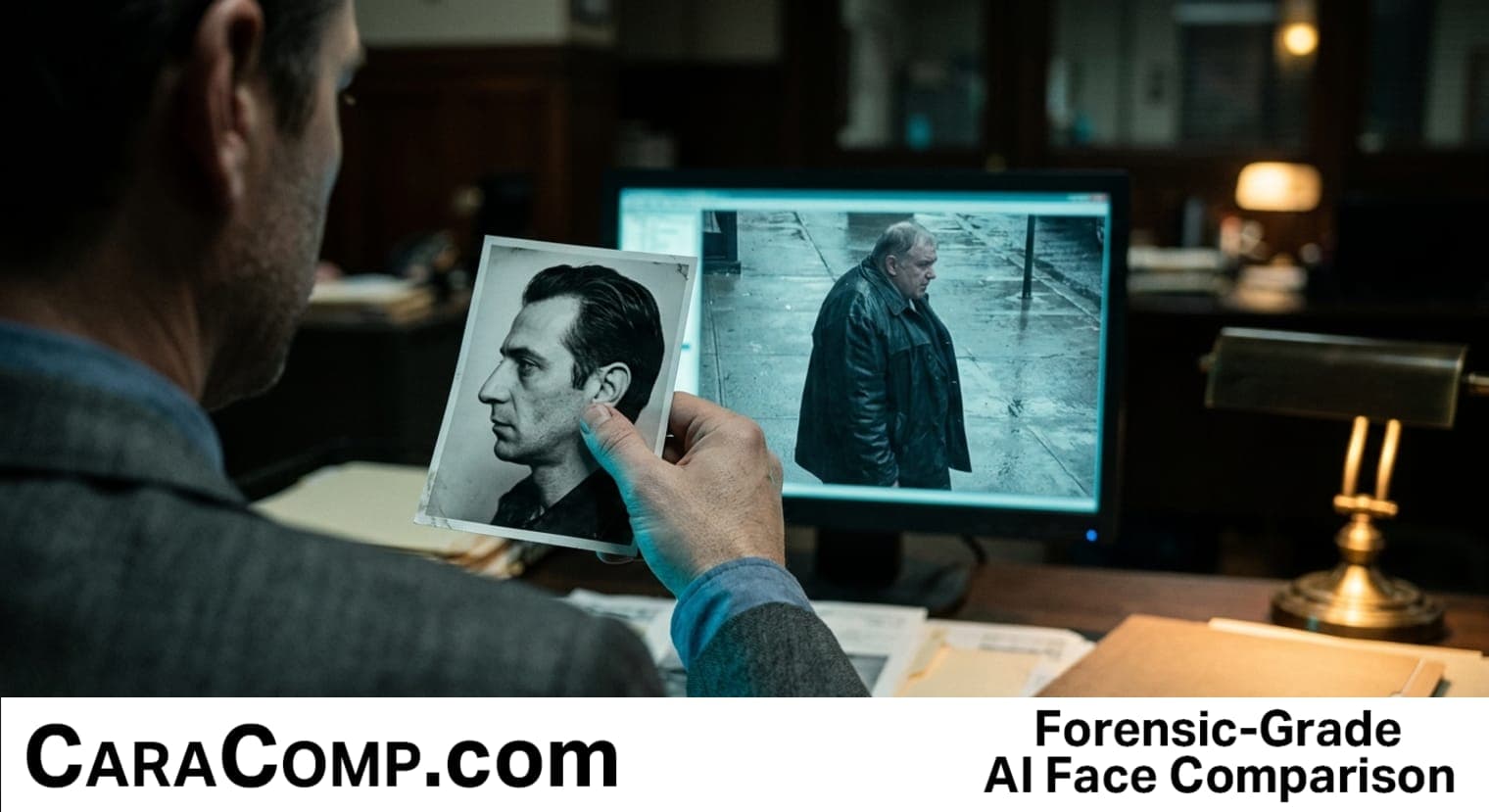
Quick answer
Can facial recognition cause a wrongful arrest?
Yes, it can, because a face match is only a computer's guess about how alike two faces look. A wrong alert becomes a wrongful arrest when someone treats it as certain and skips checking. In the Western Australia trial, a person reviewed each alert, and police say none of the nine mistaken people were arrested.
Picture a train platform in Perth on an ordinary evening. You're tired, you're scrolling, and a camera above you is quietly checking your face against a list of wanted people. You never agreed to it. You don't know it's happening. The question that keeps people up at night is simple: what if it picks you? That is the heart of the facial recognition false arrest worry, and a new Western Australia trial just gave it real numbers.
Facial recognition false arrest is a real risk even when a trial goes well: Western Australia police scanned about 1.38 million faces, made 122 arrests, and still logged nine incorrect alerts, so a face match should only ever be a lead, never proof.
Facial recognition false arrest: what the Western Australia numbers actually say
Here is the short version. According to Biometric Update, police ran live cameras from June 22 to October 31, 2026. They covered 43 locations in Perth and regional Western Australia. The system checked roughly 1.38 million faces. Police arrested 122 people. Nine alerts turned out to be wrong.
Let's be fair. Those 122 arrests are people law enforcement was looking for. Nothing here says any of those arrests was a wrongful arrest. That's the part of the story that police will, understandably, want you to remember.
But the other number matters to the rest of us. Nine times, the system pointed at a person who was not the person police wanted. That's a recognition error, called a false match (the computer said two faces were the same, and they weren't). Nine is small next to 1.38 million. It is not small if you are one of the nine.
1.38 million
faces scanned across 43 locations, with 122 arrests and nine incorrect alerts
Source: reported results of the Western Australia police trial This article is part of a series, start with Uk Shop Face Recognition Innocent Shoppers Named As Thieves.
Wrongful arrest from facial recognition: did anyone actually get arrested by mistake?
Not in this trial, according to police. The Police Commissioner, Col Blanch, said officers spoke with each of the nine people flagged by mistake, but none were arrested. That is the good news, and it is worth saying plainly. A human stepped in before a wrong match could leave someone falsely arrested.
No one was arrested. No one made a complaint.
Col Blanch, Western Australia Police Commissioner, as reported by Your Life Choices
Notice what that quote does not say. It does not say the nine people had a nice time. Being stopped by an officer because a camera thought you looked like someone else is stressful. You might be late. You might be embarrassed in front of strangers. You might not know why you were stopped at all.
Western Australia facial recognition technology and the math that makes it sound safer than it feels
Police put the error rate at 0.00065%. That number comes from dividing nine wrong alerts by about 1.38 million faces. The math checks out. It also hides something.
Most of those 1.38 million people were not on the watchlist. The cameras counted them anyway, and counting them makes the error rate look tiny. Critics say a better question is different: when the system raised its hand, how often was it right? And of the arrests, how many moved through the criminal justice system to a conviction? The trial figures do not answer that second question.
Here's the part that should make you sit up. Independent research from the University of Essex, which looked at a different set of police deployments, found that 14 of 22 matches that led to stops were inaccurate. That's 63.64% of those cases. I'm not saying Western Australia looks like that. I'm saying the same facial recognition technology can look wonderful or worrying depending on which number you pick. (Statistics are like cameras that way. Where you point them decides what you see.)
| The headline number | What it leaves out |
|---|---|
| 0.00065% error rate, nine wrong alerts out of 1.38 million faces scanned | Most scanned people were not on the watchlist, so the rate looks small when measured against all scans |
| 122 arrests in the trial | How many became criminal convictions has not been reported |
| Nobody was arrested after a false match | Nine people were still stopped and spoken to by officers |
| Strong accuracy in lab testing of recognition software | Real streets, bad lighting and moving crowds behave differently |
Why one face can be riskier than another
There is another wrinkle. Research cited by the Federation of American Scientists shows that false match rates can differ between demographic groups by ten times, and sometimes a hundred times. That means one overall accuracy figure can hide who is actually taking the risk. The same recognition software might be very reliable for one person and far less reliable for the next. Nobody should have to guess which group they fall into.
Why does a facial recognition false arrest matter if the trial says nobody was wrongly arrested?
It matters because a trial is a rehearsal. The Western Australia cameras ran for five months with a lot of attention on them. Once recognition technology becomes routine law enforcement work, the attention fades. The safeguard that worked here, a human checking before an arrest, only works if the human keeps checking. People trust computers. A confident screen can quietly talk an officer into believing a match is more certain than it is. Previously in this series: Biometrics Appointment 15 Minutes Up To 75 Years On File.
That's the real risk behind any facial recognition false arrest: not a robot taking you away, but a tired person at the end of a shift believing a score on a screen. A match score (a number for how alike two faces look) is a hint. It is not a fact about you.
The Office of the Information Commissioner had already warned about collective harm to privacy, the idea that everyone is affected when everyone is scanned. That's the thing I'd chew on. You don't need to be stopped to be part of the 1.38 million.
Why Facial Recognition False Arrest Matters
- Scale hides individuals because nine wrong alerts disappear inside 1.38 million scans, but each one was a real person who got stopped.
- A possible match is not proof since two people can share similar facial features without being the same person.
- Human checking is the safety net and it only works if officers treat each alert as a question, not an answer.
What should someone do if police stop them after a face check?
Stay calm and ask what prompted the stop. Ask plainly: "Was I flagged by a camera?" You are allowed to want to know. Your rights depend on where you live, and the law on police stops differs by place. If it becomes more serious than a conversation, talk to a criminal defense lawyer, and ask the police department involved for its complaint process. Write down the time, the place and what was said as soon as you can, while you still remember it clearly, so you have your own records. Nobody can promise this will happen to you, and it probably won't. But a two-minute plan is cheaper than a bad night.
Western Australia facial recognition: why a possible match still needs a human second look
Think about how your own brain works. You've probably seen a news story about a plane crash or a scam, and suddenly it feels like it's everywhere. That's the availability heuristic (your mind treats whatever comes to mind easily as more common than it is). It cuts both ways here. A story about 122 arrests makes the cameras feel like a clear win. A story about one wrongly stopped person would make them feel like a menace. Neither feeling is the math.
The math says this: the tool found people police wanted, and it also made nine mistakes, and the mistakes were caught by people. Both statements are true at once. Good judgment means holding both.
If you have ever wondered whether a photo or profile is really who it claims to be, that is the exact question this kind of recognition technology exists to answer. The useful thing to take from Western Australia is how careful law enforcement use looks. A facial recognition match is treated as a lead. Someone then checks the faces side by side, rules out lookalikes, and looks for other evidence before anyone is accused. That is also a fair test for any story you read about a match: ask what else, besides the face, backs it up.
Groups like Big Brother Watch, a civil liberties campaign group, publish a plain-language guide to how live facial recognition statistics get calculated. It's worth five minutes before you trust any single accuracy number about this technology, from police or from critics.
The risk of a facial recognition false arrest is not that cameras exist, it is that a wrong match gets treated as proof, so every face match should be checked by a person before anyone is accused. Up next: Uk Shop Face Recognition Innocent Shoppers Named As Thieves.
Recap: A Western Australia trial scanned about 1.38 million faces, led to 122 arrests and produced nine wrong alerts. A match is only a lead, and a human check is what keeps it from becoming a mistake.
So, would you want to know if cameras were checking faces where you live? Nine people in Western Australia were stopped by a computer's guess and sent on their way. Others who were scanned may not have known the cameras were there. Which group would you rather be in, and who gets to decide? That is the real facial recognition false arrest question.
facial recognition false arrest: Frequently Asked Questions
Can facial recognition cause a wrongful arrest?
Yes, a wrongful arrest can happen in theory, and that is why police describe a match as a lead rather than proof. In the Western Australia trial, nine alerts were incorrect, but police say none of those people were arrested. In all nine cases a person checked the alert first. The danger comes in cases where an officer trusts the screen too much and skips that check, so the human step matters as much as the camera.
What is a false match in facial recognition?
A false match happens when facial recognition technology says two faces are the same person and they are not. It is a computer's guess based on how alike two faces look, shown as a match score. Lookalikes, poor lighting and angles can all cause it. In the Western Australia trial, nine alerts were wrong out of about 1.38 million faces scanned.
Is live facial recognition the same as a photo search?
No. Live facial recognition checks faces of people walking past a camera in real time, usually against a watchlist kept by law enforcement. A photo search compares one still image someone already has. Live scanning touches everyone who passes by, including people who have done nothing wrong, which is why privacy and civil liberties groups raise concerns about collective harm.
Does facial recognition work equally well for everyone?
Not necessarily. Research cited by the Federation of American Scientists found that facial recognition technology can have false match rates that differ between demographic groups by ten times or even a hundred times. A single overall accuracy number can hide that gap. So when you read one accuracy figure for a whole system, it is fair to ask how the results look for different groups of people.
What did the Western Australia facial recognition trial find?
The trial ran from June 22 to October 31, 2026, across 43 locations in Perth and regional Western Australia. Police scanned about 1.38 million faces, made 122 arrests and recorded nine incorrect alerts. Police put the error rate at 0.00065%. Critics say the more useful measure is how many arrests end in criminal convictions, which has not been reported.
The 122 arrests facial recognition helped police make are only one side of the ledger. The other side is the set of people who were flagged and then cleared. When police use recognition technology, both groups matter, because a fair system is judged by how it treats the people it gets wrong as well as the people it gets right.
It helps to know what a wrongful arrest looks like when it does happen elsewhere. In Detroit, people have been wrongfully arrested after police relied on a facial recognition match, and the ACLU has written about those cases. The lesson is not that the technology always fails. The lesson is that police relied on a computer result too heavily, and a person paid for it.
When police relied on a match alone, the process broke down. A safer routine asks for other evidence before any arrest, such as where the person was, what they were wearing, or whether anyone else saw them. Recognition systems are built to narrow a search, not to end it. Treating a score as a finish line is how a lead becomes a mistake.
Consider how recognition searches work. A camera or an officer feeds a face into recognition systems, and the software returns a list of faces that look alike, ranked by a match score. Recognition searches can be run on a photo from a security camera or on a live feed. Either way, the list is a set of possibilities that a trained person still has to sort through.
Many people think wrongful arrests only happen when a computer is badly broken. In fact, wrongful arrests can follow a system that works as designed, because even a good tool will sometimes point at the wrong person. That is why the technology needs rules around it. Police should have to say when they used it, and the public should be able to ask how often it was wrong.
If you were wrongfully arrested after a bad match, you would want to know your rights. In general, you can ask why you are being held, you can ask to speak to a lawyer, and you can ask whether a face match was part of the reason. Rights differ from place to place, so check the rules where you live. Keeping calm and writing down details afterward gives a lawyer something real to work with.
Technology is only one part of the story. Police training, written policies and honest reporting of mistakes matter just as much as the software. A police force that publishes its wrong alerts, as Western Australia did with its nine, makes it easier for the public to judge whether the technology is being used well. A force that hides them makes that judgment impossible.
Recognition technology will keep improving, and police will keep wanting to use it. The practical question for ordinary people is not whether the technology is good or bad. It is whether the rules around it protect a person who gets flagged by mistake. Until those rules are clear, a facial recognition match should stay a clue, and an arrest should rest on more than a face.
If you want to follow this topic, watch for three things. First, whether police report how many alerts were wrong, not just how many arrests were made. Second, whether people who were wrongfully arrested or stopped can complain and get an answer. Third, whether the technology is tested on many kinds of faces, because the same recognition technology can behave very differently from one person to the next.
Ready for forensic-grade facial comparison?
Full forensic reports with detailed similarity scoring. Results in seconds.
Run My First SearchMore News
Age verification: Pornhub returns, but only for Apple users
One adult site is back in Australia after walking away over age checks. A return isn't proof your data is safe, so here is what to look for before you prove your age.
facial-recognitionFacial Recognition: India's Top Court Weighs Wrong Matches
India's Supreme Court will look at police facial recognition at a protest. The real question is simple: what happens to you if the match is wrong?
privacyAge Verification: UK Kids' Faces and IDs, No Delete Date
The UK is heading toward a social media ban for under-16s, and proving your age may mean handing over your face or your ID. Here is what families should ask first.