
Deepfake Election Tools Threaten Kids in Schools: Elections, Voting, and School Information Gaps
Quick answer
What is a deepfake election and how does it relate to school deepfakes?
A deepfake election problem means fake video, audio or images of a candidate are used to mislead voters. The same generative tools are used against students, where one fake photo of a real child can cause lasting harm. The technology is identical, but schools have far fewer labels, detection tools or response systems.
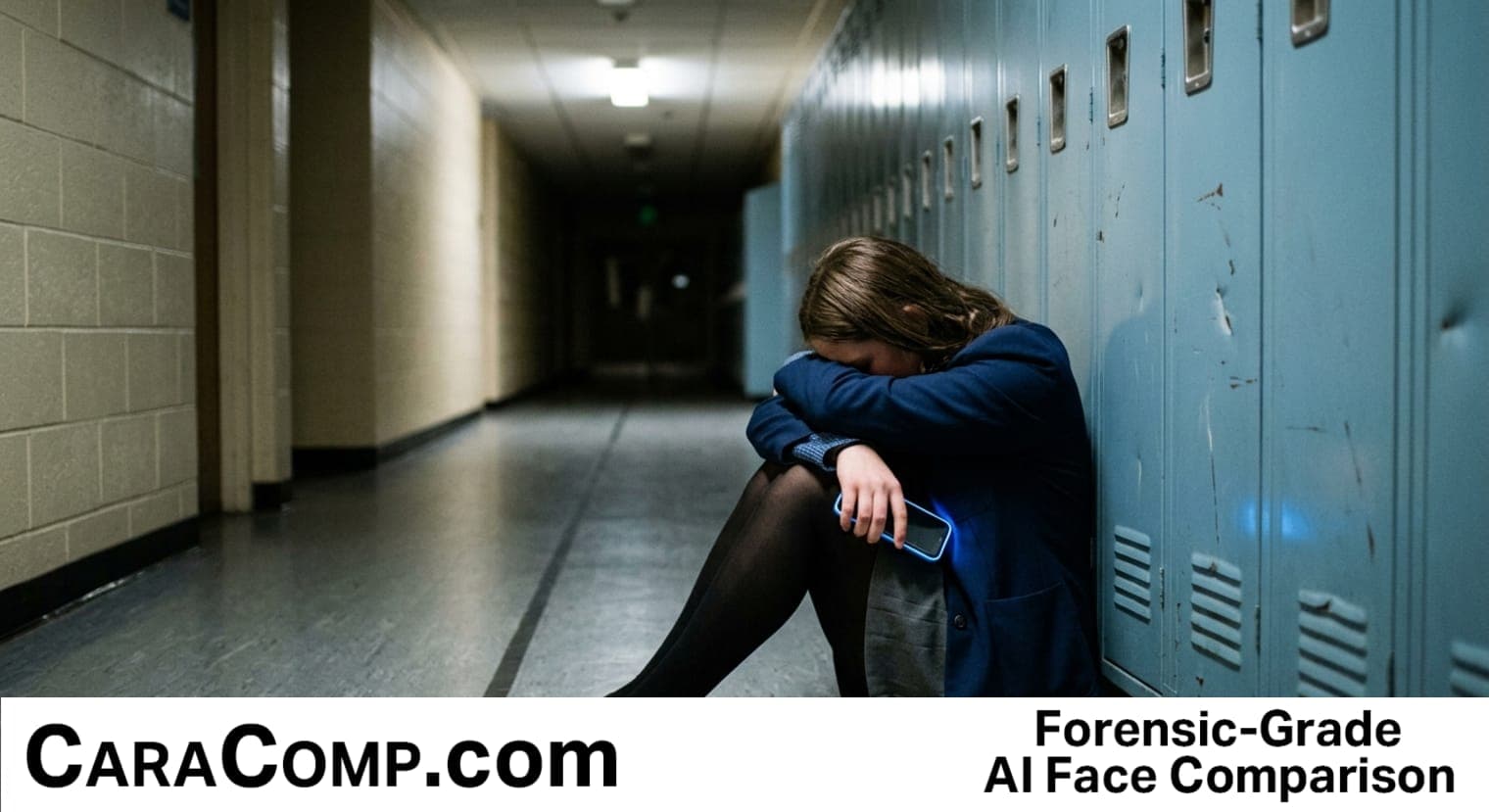
A teenager in Queensland turned a normal school photo into sexual abuse material. One photo. That's all it took to blow up a kid's sense of safety at school, at home, and basically everywhere they used to feel okay. And here's the part that should scare every parent reading this at 11pm: the same fake-media tools driving deepfake election scams and fake political ads worldwide are the exact tools showing up in group chats between 14-year-olds.
One faked image is enough to trigger the same kind of harm we now expect from a deepfake election disinformation campaign, except the target isn't a candidate, it's a kid, and the "campaign" is a group chat.
Deepfake election coverage gets the headlines, but the same fake-image technology is already inside Australian schools, and one manipulated photo of a real student can cause lasting psychological harm before any adult even knows it exists.
Here's what actually happened, according to court reporting from The Standard in Warrnambool, Victoria (and syndicated through The Leader): a person named Rotondo took ordinary photos of Queensland students and used AI tools to turn them into sexually explicit fake images. Victims described the toll in their own words. One said it "frightens me", present tense, not past. That's not drama. That's someone telling a courtroom their nervous system hasn't caught up to the fact the abuse is technically over.
Why the deepfake election playbook and political deepfakes against school kids are the same story
Everyone's been trained to think about deepfakes through the lens of electionsa fake video of a candidate saying something they never said, a synthetic voice clone pushing disinformation two days before a vote. That's the version that gets Congressional hearings and cable news segments. But the underlying artificial intelligence doing the work doesn't care whether the target is a head of state or a ninth grader. It's the same generative tech, the same easy apps, the same one-click process for building an ai-generated election ad or an ai-generated disinformation clip. A deepfake election ad and a fake, generated photo passed around a school hallway come from the identical toolbox, the only difference is who's holding the phone and who ends up hurt.
And the school version is scaling faster than most parents realize. According to research cited by UNICEF, ECPAT, and INTERPOL across 11 countries, at least 1.2 million children reported having their images turned into sexually explicit deepfakes in a single year, in some countries, that's 1 in 25 kids. In Australia specifically, the eSafety Commissioner received more than 100 reports between January and March 2026 involving anonymous accounts targeting schools. That's not a fringe problem. That's a caseload, and it's exactly the kind of information parents rarely see reported alongside election deepfake coverage. Good information about how elections deepfakes actually spread, and equally solid information about how school deepfakes spread, both matter, and both are in short supply for the families who need them most. This article is part of a series, start with Texas Age Verification Law 25 States Now Demand Id Checks Po.
Deepfake election scandals and deepfake disinformation get labels, school deepfake victims don't
Here's the uncomfortable contrast. When a deepfake shows up in political content, there's at least a disclosure conversation happening, platforms are being pushed to add a label flagging synthetic media, regulators are drafting deepfake laws about fraudulent speech near a candidate or party, and there's research being funded on how foreign actors might spread misinformation to sway voting. None of that scaffolding exists for a 15-year-old whose face gets pasted onto explicit content and shared before lunch. No label. No disclosure. No office responsible for catching it in real time, and no election security office equivalent watching over classrooms. Just a kid, a screenshot, and a school that finds out from a parent's furious phone call.
Political and media deepfake laws still leave school gaps
Most election security frameworks, and most media coverage of them, were written with a candidate or a vote in mind, not a classroom. That's not a criticism of the people who wrote those deepfake laws, it's just a reminder that elections deepfakes and school deepfakes evolved on separate tracks, funded by separate budgets, watched by separate regulators, with almost no shared reporting pipeline between them. News coverage of elections deepfakes rarely mentions schools at all, and news coverage of school deepfakes almost never mentions the parallel election infrastructure, two beats, same underlying technology, barely any crossover.
The psychology behind why one school deepfake feels like a thousand
Your brain has a shortcut called the availability heuristic, basically, if something is vivid and easy to picture, your brain treats it as more common and more dangerous than it statistically is. Normally that's a bias worth correcting. Not here. When it comes to a fake image of your own child, one case is enough. You don't need a spreadsheet of probabilities to feel the floor drop out. One frightening story about a school deepfake victim is doing exactly what it should: making you picture your kid, and making you ask what your kid's school would actually do about it.
"Frightens me", a victim describing, in their own words, how a school deepfake image continues to affect them. Victim impact statement, as reported by The Leader
That single quote tells you everything the sentencing document can't. A criminal case ends. A conviction gets logged. A fine or a jail term gets served. None of that turns off the fear. Experts who study this, including the eSafety Commissioner's own reporting, describe deepfake incidents as different from ordinary bullying precisely because the image or video can resurface. It gets saved. It gets re-shared months later by someone who wasn't even part of the original group chat. Victims describe not being able to prove, over and over, that the content isn't real, which is a genuinely strange kind of trauma. Imagine having to keep defending your own body against a fake, generated image that never technically goes away.
Why school deepfake victims face a harder recovery than adults realize
- ⚡ It resurfacesunlike a rumor that fades, a saved image or video can be reposted by strangers years later
- 📊 Schools lack detection toolsmost staff have no fast way to confirm content is AI-generated versus real, and no clear information channel to check with authorities
- 🔮 Trust breaks firstvictims report anxiety not just about the image, but about who in their circle made or shared it
- 🧠 Recovery outlasts removalsupport needs continue long after the image is taken down, per eSafety's own guidance
Frequently confused question: is a school deepfake the same as an election deepfake scam?
No, but they share a parent. Both are built from the same generative AI process, the same synthetic media pipeline, and both exploit the fact that most people (and most institutions) still can't reliably tell real from fake on sight. The difference is scale and intent: a deepfake election operation usually targets democracy and public trust at large across many elections and many voting cycles; a school deepfake targets one specific, identifiable child.
What a deepfake election response gets right that school policy still doesn't
Governments have spent real money building response infrastructure for political deepfakes, using deepfake technology detection funded through national election security budgets. Meta has rolled out stricter AI labeling rules aimed at combating the spread of fake avatar content. Regulators in places like Ghana have publicly warned citizens about scam videos using a deepfaked president to push fraudulent crypto schemes, a fast, coordinated, public response within days of the fake surfacing. That's the model: detect fast, label clearly, warn the public loudly. Schools have none of that. There's no equivalent of a national security bulletin when a 13-year-old's photo gets manipulated. There's a principal's office, a confused IT staffer, and a family googling what to do at midnight.
| Deepfake election response | School deepfake victim response | Status |
|---|---|---|
| Regulator issues public disclosure within days, backed by official election information | Family often finds out through a group chat, not the school | Election rule: Enacted in several countries |
| Platforms apply a synthetic media label | No labeling system exists for peer-shared images | Election rule: Enacted by major platforms |
| National security and foreign interference framing drives urgency around elections | Treated as "just a joke" or ordinary bullying until court involvement | Election framing: Active during campaigns |
| Formal disinformation research and analysis funds detection tools | Detection tools rarely exist inside individual schools | Election research: Ongoing, funded |
| News desks maintain standing beats covering elections and voting security | News coverage of school deepfakes is sporadic, usually only after a court case | Media coverage: Uneven across the two topics |
Look at that gap. It's not that deepfake election policy is perfect, it isn't, and researchers still argue about whether current disclosure rules actually stop fraudulent political speech before it spreads across elections. But there's at least a public conversation, a group of officials assigned to watch for it, and analysis happening in real time during a campaign. A school has none of that structure, and the "campaign" against a single kid can run for months before anyone with authority notices. Previously in this series: What Is Biometric Id Kenya Now Fingerprints 7 Year Olds Podc.
Not every school deepfake starts as an attack, but it ends like one
Fairness matters here, so let's say the quiet part: not every teenager who makes a fake, generated image understands they've committed what can be a serious criminal offence. Some are experimenting with an app, genuinely thinking of it as a prank, the way a previous generation photoshopped a friend's head onto a body as a joke. Prosecuting a 15-year-old with the same weight as an adult predator risks over-punishing curiosity instead of addressing the real gap: schools aren't teaching kids what this technology actually does, and platforms aren't building in enough friction to stop a 30-second edit from becoming permanent harm. Criminal law is a blunt tool for what is, underneath it all, an education and design failure.
That said, intent doesn't change the victim's experience. A fake made "as a joke" still shows up in a courtroom victim statement describing fear that hasn't gone away. Both things are true at once: we need less punitive panic toward confused teenagers, and dramatically more urgency about the actual damage being done to the kids on the receiving end.
What actually helps if a fake photo of your child appears
Here's the one useful thing worth knowing before you ever need it: if you've ever wondered whether a photo or account claiming to show your kid is real, that exact question is what reverse image searching and identity-verification tools exist to answer. The practical move, in advance, is knowing where your child's real photos already live online, school websites, sports team pages, old social posts, because that's the raw material a deepfake gets built from. Fewer public, high-resolution photos of your kid floating around means less material for someone to feed into an AI generator in the first place. It's not a fix. It's a smaller target, and the same principle that protects a kid's photos also underpins most serious election deepfake defenses: limit the raw material available to be generated and manipulated in the first place.
The world built fast response systems for a deepfake election crisis, but school deepfake victims are stuck relying on court cases after the harm is already done, and that gap won't close itself.
Ask your kid's school this week, directly: if a fake, generated image of a student started circulating tonight, what's the actual plan? Who gets called first, how fast, and does anyone on staff know the difference between a real photo and one built by an AI tool with skin that appears too smooth, lighting slightly off, and the kind of tells that a trained eye catches in seconds? If the honest answer is "we'd figure it out as it happens," that's not a policy. That's a hope. And hope isn't what stopped Rotondo, a court case did, months after the damage was already circulating. Up next: Digital Identity Security Stolen Faces Crack Open By 2035.
deepfake election: Frequently Asked Questions
How is a deepfake election scandal different from deepfakes used against school kids?
Both use the same artificial intelligence tools to generate fake images or video of a real person without consent. A deepfake election scandal usually targets a candidate or public figure to spread disinformation and undermine democracy or trust in a vote, often across multiple elections and voting periods. A school deepfake instead targets one identifiable student, usually shared privately among peers before spreading, smaller audience, but far more personal and lasting psychological harm to that individual. Reliable information on both fronts is still catching up to how fast the technology moves.
Can you tell if a photo is a deepfake just by looking at it?
Sometimes, but it's getting harder. Common tells include skin that appears too smooth in patches, odd lighting that doesn't match the background, blurred edges around hair or ears, and eyes that don't quite track naturally. Newer generated media tools are closing these gaps fast, which is exactly why relying on the naked eye alone is becoming less reliable every year, especially for parents trying to judge a photo at a glance. Good information from a school's IT staff can help, but it's rarely available fast enough.
What should a school do when a deepfake image of a student appears?
Fast containment matters most: identify who has seen it, remove it from platforms immediately, document everything for law enforcement, and get the victim support right away rather than waiting for a full investigation. eSafety Commissioner guidance in Australia stresses that recovery support needs to continue well after the image itself is taken down, since the emotional toll from deepfakes and school deepfake harassment often outlasts the content's removal. Clear, upfront information for parents about the reporting process also reduces how long a fake image stays in circulation.
Are deepfakes involving elections illegal everywhere, and what do election deepfake laws actually cover?
No, deepfake laws vary widely by country and even by state. Some places require a disclosure label on synthetic media used in political content near a candidate or election; others have no specific rule at all, treating it under general fraud or defamation law instead. This patchwork is part of why disinformation tied to elections spreads faster than regulation can catch up, and it mirrors the same regulatory gap seen around school-targeted deepfakes. Voting security researchers track these law changes, but school policy rarely gets the same attention.
Why do people create deepfakes of classmates if it's a crime?
Often it starts as what the person making it considers a joke or a way to embarrass someone, without grasping that manipulating a real child's generated image into sexual content is a serious criminal offence in most jurisdictions. The tools are now free, fast, and require no technical skill. That combination, low awareness of consequences plus zero-friction access to generation apps, is exactly why school deepfake victims are increasing while adult understanding lags behind, even as media coverage of elections gets most of the attention.
Ready for forensic-grade facial comparison?
Full forensic reports with detailed similarity scoring. Results in seconds.
Run My First SearchMore News
Deepfake Financial Fraud: $40B Problem, 1 Habit to Stop It
A new report puts deepfake-linked fraud at $40 billion, and a New Jersey robbery case suggests even your phone's face unlock can be turned against you. Here is the one habit that protects your family.
facial-recognitionTSA Facial Recognition: No Proof Passport Photos Got Deleted
A federal watchdog says TSA couldn't prove that passport and license images pulled by a contractor were ever deleted. Here's what that means for anyone who flies.
ai-regulationDeepfake: Apple Bans Nudify Apps, but Grok Still Stays Put
Apple banned "nudify" apps after the Grok scandal, but a ban only works after the harm reaches people's phones. Here's what a normal person can actually do about it.