
Deepfake Detection Companies: 1,200 Traded Faces Exposed (Updated)
Quick answer
How do deepfake detection companies identify fake images and video?
Deepfake detection companies analyze finished media for small flaws that manipulation leaves behind, such as mismatched lighting, odd blinking, blending seams around the jaw, or unnaturally smooth skin. They work after a fake exists. They cannot stop personal photos or details from being gathered and shared beforehand.
A Telegram room with 1,200 members wasn't just trading fake photos. It was trading addresses, student IDs, and workplace details, the raw ingredients that turn a blurry AI fake into something that could actually fool your mom, your boss, or your ex. That's the part nobody warns you about. This is why deepfake detection companies exist at all: not because AI got scary, but because people got careless with each other's information first.
TL;DR: Deepfake detection companies are getting more attention because Telegram "exposure rooms" show that ordinary people's photos, names, and personal details, shared casually by other people, are what makes AI fakes convincing in the first place.
Deepfake detection companies matter here because the SBS News report on a Telegram "Yeogongbang" room shows fakes get their power from personal details other people share about you, not just from AI.
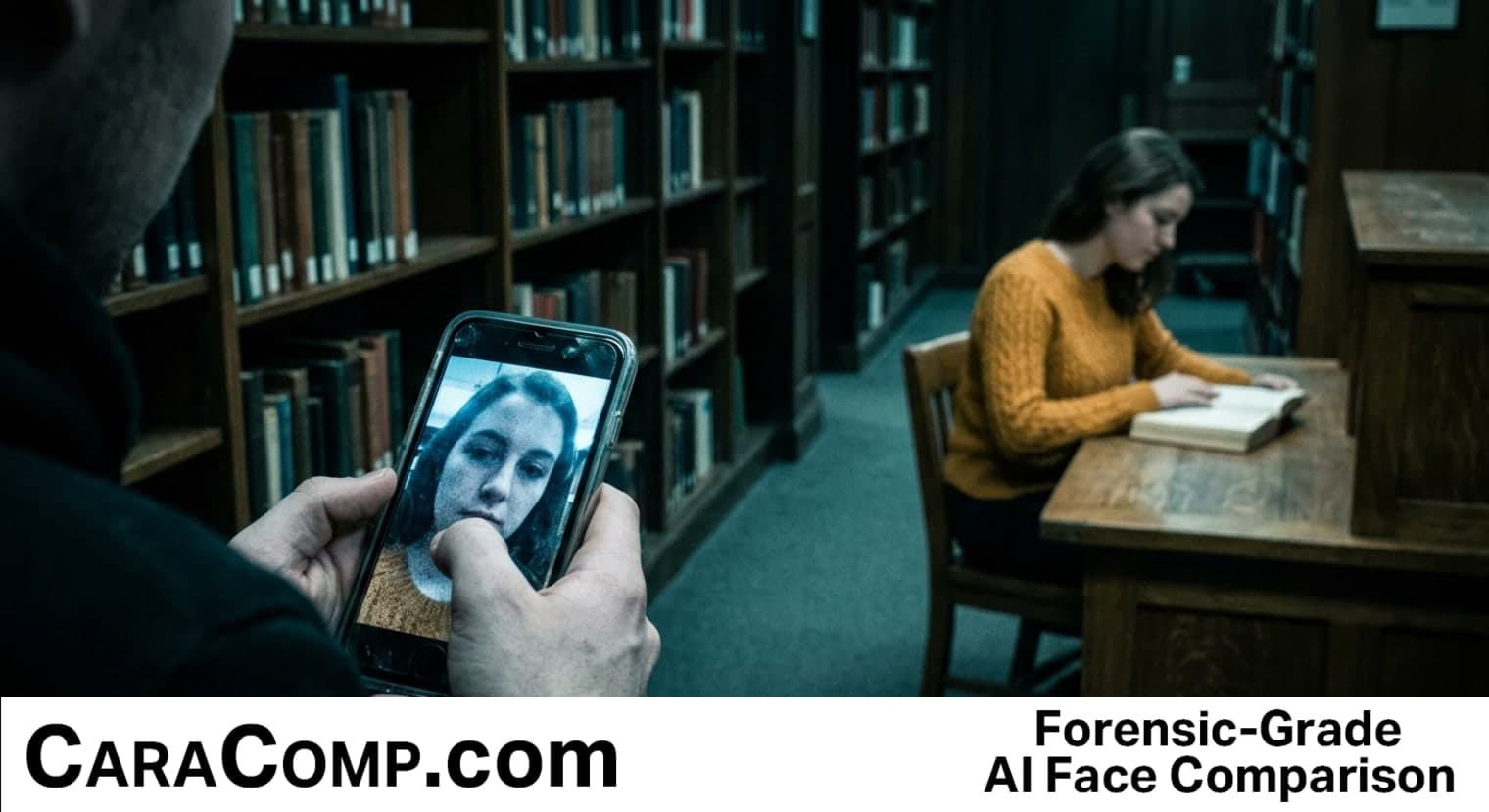
Here's the thing that should keep you up tonight: it's not your face that's the problem. It's your context. Someone mentions where you work. Someone else drops your relationship status. A third person shares a photo you never posted publicly. None of that is a crime by itself, it's just talk. But feed it into a Telegram room built for this exact purpose, and you've got a targeting kit. The report describes teenagers running "exposure rooms" that operated for seven months, collecting personal information at the request of other members before the fabrication even started. Two-step process: gather first, fake second.
Why deepfake detection companies can't fix a problem that starts with gossip
Deepfake detection companies build tools to spot manipulated video, images, and voice after the fact, checking whether a match score (a number showing how alike two faces are) lines up, or whether skin appears too smooth in a way real skin never does. That's genuinely useful. A good deepfake detector can flag a manipulated clip in seconds, and newer detection technology keeps getting better at catching subtle blending errors. But detection is defense, not prevention. It kicks in after your face is already stitched into something fake. The actual vulnerability, the thing nobody's selling a fix for, is the moment before that, when someone who knows you decides your job title, your school, or your relationship status is fair game to share in a group chat full of strangers.
Starts at 00:12 — this story
Watch this story, in under a minute
A new briefing every weekday — three stories, three minutes.
Subscribe on YouTubeAccording to reporting compiled by Fortune, South Korean police found a Telegram group with 1,200 members sharing fabricated images alongside home addresses and student ID numbers. Read that again. It wasn't a fake-photo swap meet. It was a targeting database with pictures attached. And according to NBC News, the public outrage that followed pushed South Korea toward a genuine crackdown on Telegram-based deepfake pornography, not a small policy footnote, but a national reckoning over how normal it had become to treat women's personal media as shared property. Protecting media authenticity at scale is exactly what a serious detection company is supposed to help with, even if it can't touch the gossip that starts the chain. Detection vendors also use media samples to train their systems, since every additional clip of manipulated media helps a deepfake detection model learn what tampering actually looks like.
Teenagers arrested for running Telegram exposure rooms had posted personal information of victims at the request of other participants over a seven-month period. This article is part of a series, start with Illinois Bipa Court Says A Recorded Voice Is Now A Face Scan.
Reporting summarized by Asiae
952,000
explicit AI files removed from Telegram in 2025 alone, across at least 150 known channels
Source: The Decoder / AI Forensics research
How does deepfake detection actually work on stolen photos?
Most deepfake detection tools detect tiny mismatches a fake leaves behind, lighting that doesn't quite match, blinking patterns that look off, or blending seams around the jaw. Some check "liveness" (whether a camera is looking at an actual live person, not a photo or a screen). But if the starting photo was already stolen and shared privately before any AI touched it, detection tools can only detect the fake after it exists, they can't undo the fact that your photo was circulating in a room you never knew existed. Every deepfake detector on the market shares this same blind spot, no matter how well it can detect pixel-level tampering.
Where deepfake detection software fits in the bigger picture
Good detection software and browser-level scanning tools are part of a wider push toward content integritythe idea that a piece of media should carry some proof of where it came from and whether it was altered. A browser extension that flags manipulated video is genuinely helpful for everyday users, but it still can't see the private group chat where your photo was first collected.
The Telegram deepfake room problem is bigger than one platform, but Telegram made it easy
Let's not pretend this is unique to one app. But Telegram's structure, big anonymous groups, weak enforcement, bots that do the fabrication work automatically, made it the obvious home base. Investigations reviewed by The Decoder describe a monetized system: bots that strip clothing from photos on command, archives that store and resell the results, and channels that treat this like a business with customers. That's not a rogue teenager with a laptop. That's an economy built on trading deepfake images the same way stolen data gets traded elsewhere.
And it's not slowing down. A January 2026 investigation from Creati.ai found millions of people using AI tools on Telegram to generate non-consensual deepfake nudes, a scale that makes "one bad room" language feel almost quaint. According to NPR, South Korean investigators opened a formal probe into Telegram itself over alleged sexual deepfakes targeting women and minors, a sign regulators finally see the platform, not just the individual poster, as part of the problem.
Why deepfake detection matters even when the source photo wasn't public
- ⚡ Two-stage attacksinformation gathering happens quietly, often days or months before any fake image appears
- 📊 Scale, not one-offs150+ channels and near a million removed files in a single year is an industry, not an anomaly
- 🔮 Victims aren't chosen for oversharingstudents, teachers, soldiers, journalists have all been targeted regardless of how private they kept their accounts
- 🧩 Detection is downstreamthe strongest tools still can't stop the personal detail from being shared in the first place
What deepfake detection companies can and can't catch, and where the market is going
There's real momentum behind building better detection. Independent research groups have started ranking tools on how well they catch fabricated video and voice under pressure, and yes, deepfake detection with gartner style evaluation frameworks are starting to show up as companies compete for a spot as the market leader in a crowded field. The pitch from companies in this space is straightforward: run a piece of media through the software, get a security read via an api call on whether it's real, and some vendors now offer a second api tier for bulk media scanning. Some position themselves around enterprise-scale threat response and security operations, while others market tools for identity verification pipelines, and still others, like tools built to identify deepfakes in call centers, focus on voice-based fraud and scam attempts rather than images. Previously in this series: Synthetic Identity Fraud Fake Mahama Video Sold Crypto Scam.
None of that helps the person whose home address just got dropped into a Telegram room, though. That's the gap. Some companies' reliable deepfake detection claims focus on catching manipulated video and images after upload, useful for platforms and governments trying to moderate content at scale, less useful for an individual who has no idea a fake even exists yet. Reality Defender is one name that keeps coming up in these conversations, and reality defender is often cited alongside other detection systems built for enterprise and government security teams rather than individual victims.
| What deepfake detection tools do | What Telegram-room targeting does first | Status |
|---|---|---|
| Scan uploaded video or photos for signs of AI manipulation using a deepfake detector | Collects your name, workplace, school, or relationship details from people who know you | Ongoing, 2025-2026 |
| Flag mismatched lighting, blending, or blink patterns in a piece of media | Shares real photos of you without your knowledge, often taken secretly | Ongoing, 2025-2026 |
| Give platforms a match score via an api to act on for takedowns | Builds a targeting profile before any fake image is created | Ongoing, 2025-2026 |
| Works after the fabrication already exists, detect flaws in deepfake media after the fact | Works quietly, weeks or months before the fabrication appears | Ongoing, 2025-2026 |
Does verification stop a stolen photo from becoming a deepfake?
Not on its own. Verification (confirming a photo or account really belongs to the person it claims to) helps platforms catch impersonation accounts and fake profiles. But it doesn't stop someone from screenshotting your real, verified profile photo and feeding it into an AI tool in a private room. Verification protects the front door. It does nothing about the side conversation happening about you two rooms over.
Deepfake detection companies won't warn you about a coworker asking for "one more photo"
Here's the thing I actually want you to do something about. If you've ever wondered whether a photo or profile is really who it claims to be, that's the exact question this kind of tech exists to answer, deepfake detection tools and identity verification systems are built for that moment of doubt. But the moment that actually matters happens earlier, and it's not technical at all. It's when someone, a coworker, an ex, a "friend of a friend", asks for a few extra photos, or casually confirms your workplace, your school, or who you're dating, under the excuse of "just double-checking" or "quick verification." That request is not small talk. Treat it like a flare going up. The people running these Telegram rooms didn't need hackers. They needed chatty acquaintances.
Deepfake detection companies fight the fake after it's built, but the Telegram "exposure room" pattern shows the real front line is what your friends, coworkers, and acquaintances casually share about you, treat any unexpected request for extra photos or personal details as a warning sign, not small talk.
Think about how this plays out with the availability heuristic, the mental shortcut where we judge risk by what's easy to picture, not by what's actually likely. Most people can picture a hacker breaking into a database. Almost nobody pictures their coworker's off-hand comment in a group chat becoming step one of a targeting operation. That gap in imagination is exactly why this keeps working.
So here's the question worth sitting with tonight: if someone used your public photos and a few personal details to build an AI fake of you, would the people closest to you actually know how to tell it was false, or would they just believe it, the way 1,200 people in one Telegram room apparently believed whatever showed up in their feed? Up next: Illinois Bipa Court Says A Recorded Voice Is Now A Face Scan.
deepfake detection companies: Frequently Asked Questions
What is a Telegram deepfake room?
A Telegram deepfake room is a private or semi-private group chat where members request, share, and sometimes sell AI-fabricated images or video of real people. Investigations have found groups with over 1,200 members trading fake images alongside stolen personal details like addresses and student IDs, turning the chat into both a fabrication hub and a targeting database for victims. No detection software can see inside these rooms before the fact, and even the best deepfake detector on the market only sees the finished deepfake media, never the private chat that produced it.
How do stolen photos become deepfake media?
Someone pulls a photo from social media, a group chat, or even a secretly taken picture, then runs it through AI tools that swap or generate new content around your face. The scarier part is that the photo often didn't need to be public, a friend, coworker, or acquaintance sharing it privately is enough to give a Telegram room what it needs to threaten media authenticity long before any detection tool sees the result. That finished deepfake media then circulates far beyond the original room.
Can deepfake detection companies identify deepfakes before they spread?
Rarely before, usually after. Companies that identify deepfakes typically scan already-created video, images, or voice for tell-tale flaws, mismatched lighting, unnatural blending, or moments where skin appears too smooth compared to real skin texture. Some consumer deepfake detectors run this kind of check on media you already have in hand, not on information floating around in a private chat you'll never see. Deepfake detection, in that sense, is always a step behind the room where the deepfake was actually made.
What do content-scanning tools do in deepfake detection?
Scanning content is the core function of several companies competing to be seen as a market leader in deepfake detection. Like most tools in this space, they analyze uploaded video or images for manipulation signs, sometimes through an api built into a browser or app, rather than tracking how a victim's personal information was gathered before the fake was ever made, which is exactly the gap Telegram exposure rooms exploit.
Are there real-time deepfake detection tools for video calls?
Yes. Some vendors offer real-time deepfake detection solutions built specifically to flag manipulated video during live calls, useful for businesses worried about fraud in video verification and general security. These tools focus on the moment of the call itself, though, not on preventing the personal details that make a fake convincing from being shared in the first place. Deepfake detection at this stage catches the deepfake, not the setup behind it.
What should I do if I think my photos were shared without my permission?
Save screenshots and links as evidence, report the content to the platform (Telegram does remove flagged material, having taken down 952,000 files in 2025), and contact local police, since many countries including South Korea have increased criminal penalties for this kind of fabrication. Also tell close friends and family directly, since a quick warning can stop a convincing fake from spreading before people believe it.
Ready for forensic-grade facial comparison?
Full forensic reports with detailed similarity scoring. Results in seconds.
Run My First SearchMore News
Deepfake voice scam news today: 77% of targets lost money
INTERPOL just warned the public that AI can fake the voice of someone you love. Here is the simple habit that beats it.
digital-forensicsJenna Ortega deepfake: 67.6M views make fake face big news
A fake Jenna Ortega pulled 67.6 million views on TikTok. Views are not proof, and the same trick can be pointed at anyone's face.
digital-forensicsDeepfake Financial Fraud: $40B Problem, 1 Habit to Stop It
A new report puts deepfake-linked fraud at $40 billion, and a New Jersey robbery case suggests even your phone's face unlock can be turned against you. Here is the one habit that protects your family.