
Deepfake voice scam news today: 77% lost money to voice scams
Quick answer
How can I tell if a voice on the phone is a deepfake scam?
You often cannot tell by listening, because AI can copy a voice from a small amount of online content. Treat any urgent request for money or codes as unverified. Hang up, then reach the person on a number or channel you already know is theirs before you act.
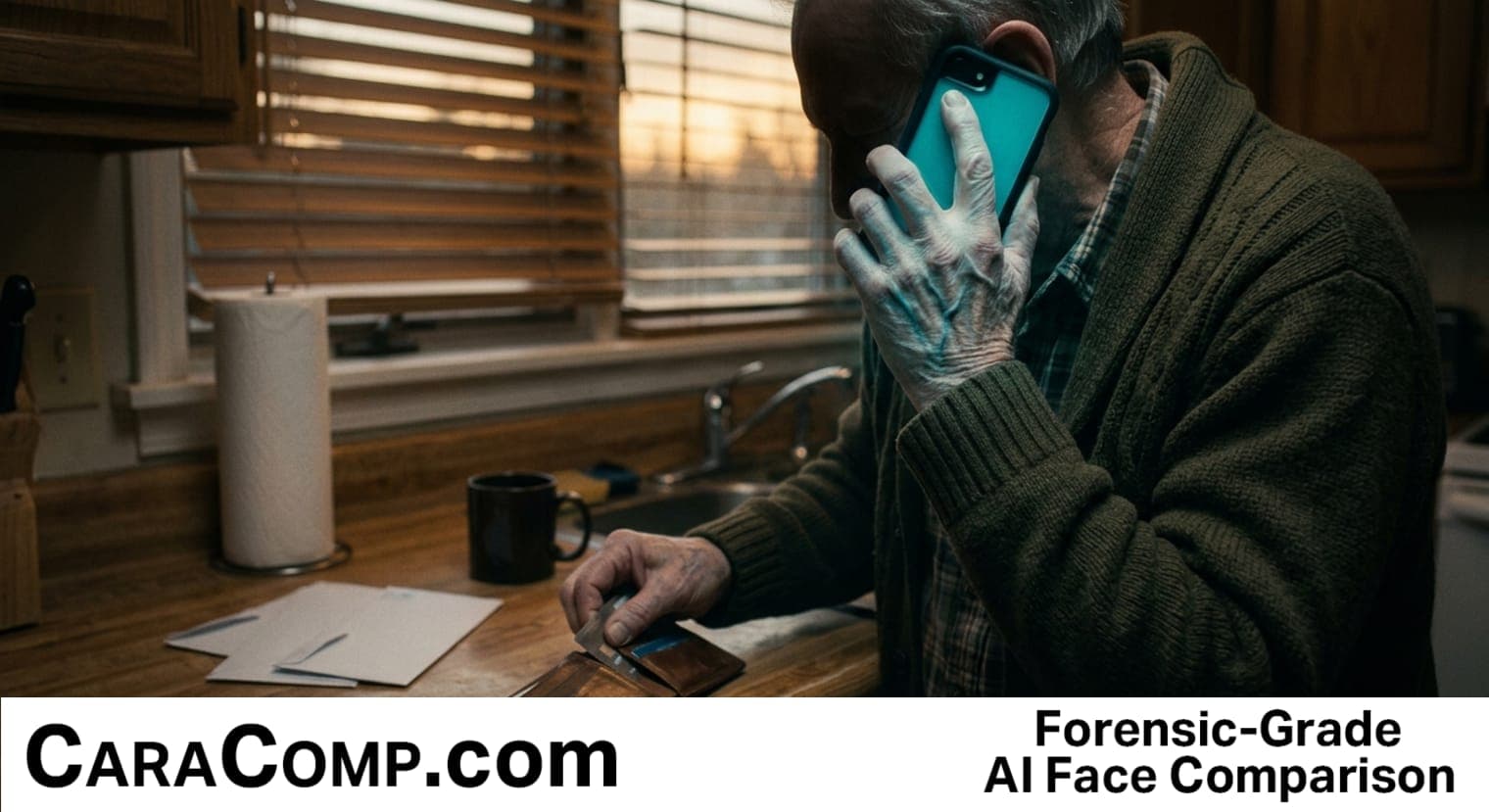
Your phone rings. It's your daughter, and she's crying. She needs money right now. That is the deepfake voice scam news today, and it's why INTERPOL just launched a public campaign: the voice on the line can be a fake, and "it sounded real" is no longer a safe reason to trust it.
Deepfake voice scam news today boils down to this: a familiar voice or face is no longer proof of who is calling, so verify any urgent request for money through a number you already know.
Deepfake voice scam news today: what INTERPOL is actually telling you
Here's the short version, because you're probably tired. You are not being paranoid. INTERPOL's campaign, covered by INTERPOL itself, shows how scammers use AI to pose as people you trust. They push you to send money or hand over private information before you can think.
The slogan is blunt: "Wait. Validate. Don't take the bait." Three steps. Pause, check, then act. My take? Follow it like a fire drill. Nobody practices a fire drill because they expect a fire.
Interpol deepfake scams: how the trick works in plain English
A deepfake (a fake voice, photo or video made by AI) needs surprisingly little to get started. Per the research behind this story, scammers can copy a person's voice or face from a small amount of content posted online. That is voice cloning: a short clip becomes a voice clone, and the cloned voice can say whatever the scammers type. No tech skills needed. No big budget.
Then comes the pressure. The fake "relative" sounds scared. The fake "boss" says it's confidential. You feel the clock ticking, and that is by design.
77% For a comprehensive overview, explore our comprehensive face comparison technology resource.
of people who received a cloned voice message lost money (about 1 in 10 people got one)
Source: deepfake statistics compiled by Bright Defense
Why does a deepfake voice scam feel so real? The availability trick in your head
A deepfake voice scam works because of a quirk in how your brain judges risk. Whatever comes to mind fastest feels most likely. When you hear your child's voice, your brain does not think "AI." It thinks "my child." Fear shuts the door on doubt.
That's why the old advice, "listen for something off," is failing. AI is also wiping out the classic red flags, like spelling mistakes and sloppy formatting. Your ears were never built for this fight, and cloned voices rarely give you a clumsy clue to catch.
Deepfake voice scam examples: the $25 million video call
Think this only hits grandparents? The engineering firm Arup lost $25 million after a finance employee approved a transfer following a video call with a fake version of the company's CFO (chief financial officer, the person in charge of the money). A smart professional, on a video call, saw a face he trusted. Same trick, bigger number.
Wait. Validate. Don't take the bait.
INTERPOL campaign slogan, as covered by Cyprus Mail
Is the deepfake voice scam risk overblown?
Fair question. Skeptics say the campaign could cause panic. Over 10% of companies have faced an attempted or successful deepfake fraud, which also means most haven't. The risk is real but uneven.
I'd still side with INTERPOL. Deepfake fraud attempts reportedly surged 2,137% over three years. And you don't need to be hit often. You only need to be hit once, on the wrong night.
Security teams have a name for the phone version: vishing, short for voice phishing. AI-enabled vishing swaps the scripted stranger for a cloned voice, and vishing attacks can reach a business by phone as easily as a family. Voice spoofing, deepfake voices and voice deepfake audio all describe the same problem: calls where the voice alone proves nothing.
| What you used to trust | What to trust now |
|---|---|
| A voice that sounds like your family member | A call back to the number already saved in your phone |
| A face on a video call | A second channel you already know belongs to that person |
| A message that looks polished and urgent | A pause, because urgency is the warning sign |
| Your own gut feeling | A record of how you checked |
| A voice message from your boss asking for a payment | A security check through a business channel you already know |
Why a deepfake voice scam is hard to spot
- Cheap to makea small voice sample from online posts can be enough.
- Emotional by designfear and rush push you past your doubts.
- No more clumsy cluesthe typos and odd phrasing that once gave scams away are fading.
Interpol deepfake scams: the one habit that actually protects you
Here's the habit. If anyone asks for money, login codes or private information in a hurry, treat it as unverified. Hang up. Then contact that person through a number or channel you already know is theirs. Not the number that just called. Not a link they sent. Continue reading: Deepfake Voice Scam News Today 77 Of Targets Lost Money.
Many families also pick a private code word, something no stranger could guess. It's a smart extra. Honestly, it takes thirty seconds to set up at dinner.
If you've ever wondered whether a photo or profile is really who it claims to be, that's the exact question facial comparison tech exists to answer. Investigators also need proof of how they checked. Digital Forensics Magazine advises saving the original messages and payment trails and comparing recordings against identities confirmed another way. Normal people can borrow the idea: save the call log, write down what you did, and confirm independently.
The deepfake voice scam news today means a familiar voice is no longer proof, so any urgent request stays unverified until you confirm it another way.
Recap: A voice or face on the line can now be faked, so do not trust it alone. Hang up and call back on a number you already know.
So here's the question to sit with tonight. If your mother called, terrified, asking for money this minute, would you check, or would her voice be all the proof you needed? The scammers are betting on the second answer.
deepfake voice scam news today: Frequently Asked Questions
What should I do first if a relative calls asking for money?
Stay calm and hang up. Then call that person back on a number you already have saved, or message them somewhere you know they use. Do not use any number or link the caller gave you. If you cannot reach them, ask another family member. Real emergencies survive a two-minute check. Voice scams usually do not, because scammers depend on you acting before you think.
Can a deepfake really copy my voice from social media?
Yes, that is the warning. The research behind INTERPOL's campaign says AI tools can copy a voice or face from a small amount of online content, with no special skills. Public videos, voice notes and clips can all be raw material for an AI voice. You do not have to stop posting, but you should assume voice alone proves nothing.
What is INTERPOL's advice on deepfake scams?
Its campaign slogan is "Wait. Validate. Don't take the bait." That means pausing when a message pushes you to hurry, checking who is really behind it, and refusing to send money or share private information until you have. The campaign includes three demonstration videos showing how these scams look in practice.
Are interpol deepfake scams only a problem for big companies?
No. The research says deepfake crime has moved from public figures toward private citizens, through investment scams, impersonation, romance scams and sextortion (threats to share private images unless you pay). Companies like Arup lost millions, but families are targeted too, often with smaller, faster requests for money.
Is a video call proof that the person is real?
No. In the Arup case, an employee approved a transfer after a video call with a fake version of the company's CFO. A face on a screen can be generated. If a call involves money, codes or private details, confirm through a second channel you already trust before you act.
Ready for forensic-grade facial comparison?
Full forensic reports with detailed similarity scoring. Results in seconds.
Run My First SearchMore News
Jenna Ortega deepfake: 67.6M views make fake face big news
A fake Jenna Ortega pulled 67.6 million views on TikTok. Views are not proof, and the same trick can be pointed at anyone's face.
digital-forensicsDeepfake Financial Fraud: $40B Problem, 1 Habit to Stop It
A new report puts deepfake-linked fraud at $40 billion, and a New Jersey robbery case suggests even your phone's face unlock can be turned against you. Here is the one habit that protects your family.
facial-recognitionTSA Facial Recognition: No Proof Passport Photos Got Deleted
A federal watchdog says TSA couldn't prove that passport and license images pulled by a contractor were ever deleted. Here's what that means for anyone who flies.