
AI Voice Cloning Fraud: Voice Clone Scam Cost $129 Million
Quick answer
How do I tell if a call from a family member is AI voice cloning?
You often can't tell by listening, because cloned voices can sound just like someone you know. Hang up and call that person back on a number you already have saved, not the one that called. A family code word that was never posted online adds a second check. Urgency and secrecy are warning signs.
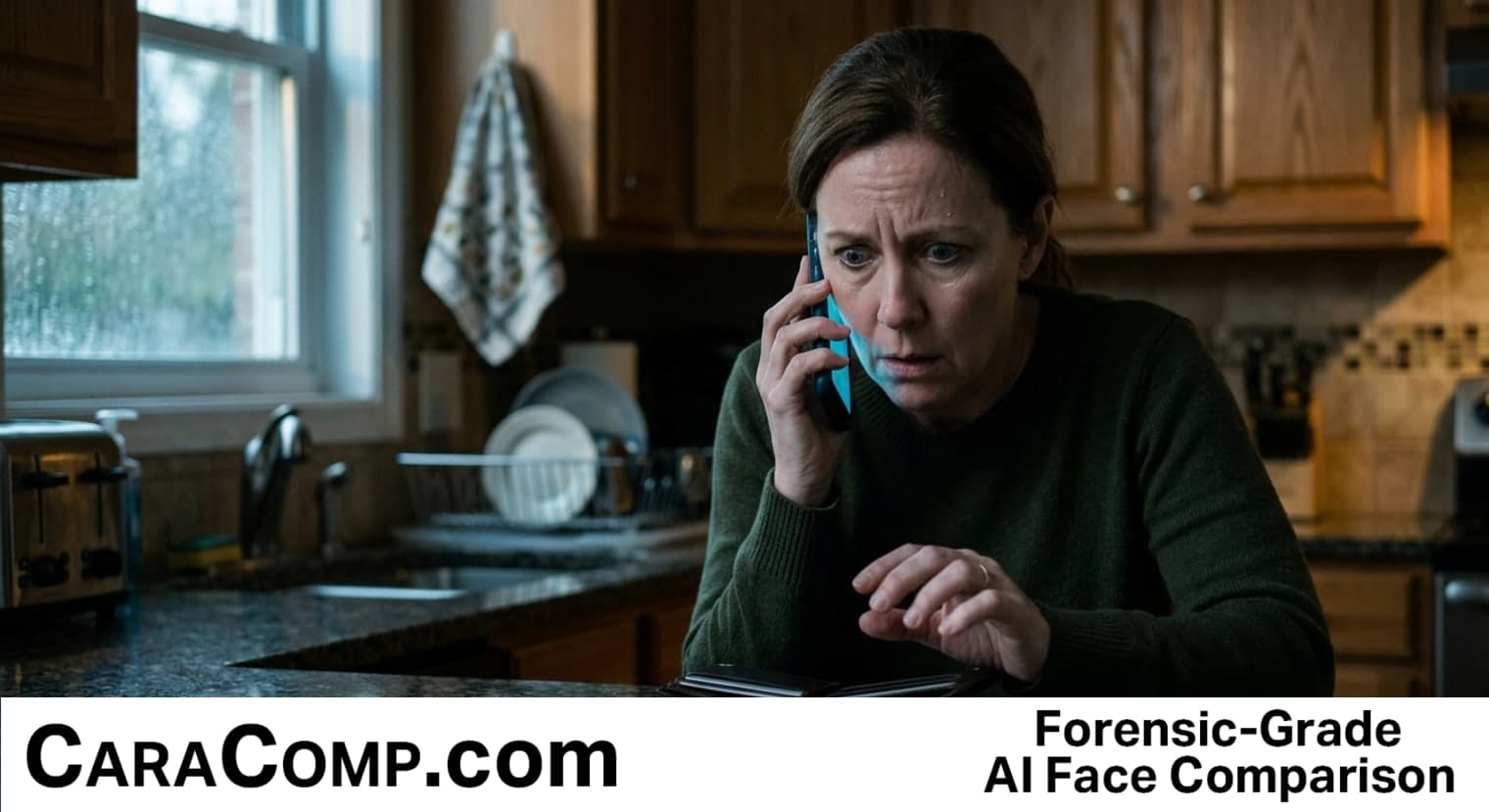
Picture your phone lighting up. It's your sister, or your boss, and she sounds scared. She needs money, right now. That is the moment ai voice cloning is built for, and federal prosecutors say three men used it to move $129 million.
AI voice cloning let three men allegedly impersonate real executives and pull in $129 million, which proves a familiar voice on the phone is no longer proof of who is calling, so hang up and call back on a number you already know.
Short version, because it's late and you're worried: yes, this can reach regular people. This case targeted companies. But the trick is the same one that hits grandparents and parents. Someone who sounds like a person you trust asks for money fast. The fix is also the same, and it's free and quick. We'll get to it. First, what happened.
What AI voice cloning did in this $129 million case
According to Startup Fortune, federal prosecutors indicted three men for running a scheme that copied the voices and faces of real company leaders. They used those fakes to trick finance teams into sending wire transfers (money sent straight from one bank to another, very hard to pull back). AI Weekly puts the timeline at July 2024 through February 2026. That's roughly 18 months of calls that worked.
Two victims stand out. One was a UK fintech firm (a company that does money services through apps), which lost $11.6 million. The other was a Missouri hospital system, which lost $4.8 million. A hospital. Not a bank, not a crypto startup. Anyone who handles money can be a target.
How a voice clone phone scam played out, step by step
The indictment, as described by AI Weekly, says the group would "use AI technology to mimic the company CEO's voice." Then a second person posed as an attorney. That person told victims to "wire large amounts of money to bank accounts set up worldwide." After that, the money was allegedly moved to "convert the cash into cryptocurrency," which makes it much harder to trace.
use AI technology to mimic the company CEO's voice This article is part of a series, start with Facial Recognition False Arrest 9 Wrong Alerts 1 38m Faces.
Language from the indictment, as reported by AI Weekly
Notice the two-step design. The "boss" gives the order. The "lawyer" follows up. Each call makes the other feel real. It's a con artist's version of a second opinion.
Why does AI voice cloning fraud work from one short voice sample?
It works because your brain trusts what it recognizes. A voice you've heard a thousand times feels like proof. Fraud experts say cloned voices have crossed a line where ordinary listeners can't reliably tell them from the real thing, as Fortune has reported. Your ears are no longer a security tool.
The research behind this story says about three seconds of audio can produce a voice match of around 85%. Three seconds. That's a voicemail greeting, a clip from a video, or a quick "hey, it's me" on a social post.
Voice cloning is not exotic technology. Many voice generators need only a few short voice samples, often lifted from public videos, podcasts or other content, to train a voice model. Once trained, these voice models create speech from typed text, so a script becomes a fake phone call or a fake narration, and some tools handle several languages. Vendors advertise that they can clone any voice with enough audio, and the clone only has to sound right for a minute.
The availability heuristic: why scary stories you've heard shape what you trust
Psychologists call it the availability heuristic. We judge how likely something is by how easily examples come to mind. For decades, "I know that voice" was a fine rule, so it comes to mind instantly. A scam story is harder to recall in the heat of a panicked call. The scammers know that. They count on the rule firing before the doubt does.
Why AI Voice Cloning Matters Beyond Big Companies
- Same trick, smaller target: a fake boss asking for a wire is the same play as a fake grandchild asking for bail money.
- Older adults are in the crosshairs: Fox reported $352 million in AI scam losses among adults 60 and older.
- Sounding right is not proof: a familiar voice should now make you slow down, not speed up.
How is AI voice cloning fraud different from old phone scams?
Phone scams aren't new. Scammers have always pretended to be the bank, the IRS, or a relative in trouble. What changed is the one weak spot victims used to rely on: the voice that sounded wrong. A stranger's accent, an odd pause, a bad line. Those were the tells. With ai voice cloning, the tells are mostly gone.
| Question | Old phone scam | Cloned voice scam |
|---|---|---|
| What you hear | A stranger doing a bad impression | A voice that sounds like someone you know |
| Your gut check | Often caught the fake | Often fooled by the fake |
| Best defense | Spot the odd voice | Hang up and call back on a known number |
| Where it hits | Mostly families and individuals | Families, hospitals, banks and big companies alike |
Look, nobody's saying we should stop answering the phone. The point is that the voice has been demoted. It used to be the proof. Now it's just a claim, and claims get checked. Previously in this series: China Facial Recognition Hong Kong Cameras Now Match Faces.
Do companies have a fix for scammers who clone voices?
Some do, but slowly. The research behind this story cites SQ Magazine, which puts the average loss per attack at $680,000. It also says only 32% of organizations use tools that detect AI voice fraud. Backup checks, like a second approver or a confirmed callback, are said to cut voice fraud risk by more than 70%. The cheapest backup is the oldest one: call back.
What can you do if AI voice cloning tries to clone your voice?
Here is the one move that works when the voice sounds perfect. Hang up. Then call the person back on a number you already have. Not the number that just called. Not a number they text you. The one saved in your phone, or one you've used for years. A scammer can fake a voice and even a caller ID. They can't answer a call you place to your real contact.
A few small habits make it easier:
- Pick a family code word that is never posted online. If "your grandson" can't say it, you have your answer.
- Treat urgency as a warning light. Scammers create it on purpose, and "Don't tell Mom" and "it has to be right now" are exactly what a script would say.
- Ask something only the real person would know, and not something a quick social media search could answer.
If you've ever wondered whether a photo, a profile, or a face on a video call is really who it claims to be, that is the exact question facial comparison technology exists to answer. The same instinct applies to voices. Verify through a second channel before you act. It's a small step, and it completes the story: the fake only wins if you never check.
AI voice cloning means a familiar voice asking for money is a reason to verify, not a reason to trust, and the callback is your best protection.
Recap: Three men allegedly used cloned executive voices to take $129 million, so a voice alone no longer proves who is calling. Hang up and call back on a number you already know. Up next: Ai Voice Cloning 3 Men Charged In 129 Million Boss Scam.
So here's the question to sit with tonight. The scammers in this case needed 18 months, fake lawyers, and a pipeline of crypto wallets. You need one thing to beat them: the habit of hanging up. Which of your people would you trust enough to skip it?
ai voice cloning: Frequently Asked Questions
Can ai voice cloning really copy someone from a short voice sample?
The research behind this story says about three seconds of audio can produce a voice clone that matches around 85%. That's not a perfect copy, but it can be good enough to fool someone on a rushed, stressful call. Short clips from social media, voicemail greetings, and videos or other content you have posted can be enough raw material. This is why a familiar voice should never be your only proof when money is involved.
What is ai voice cloning fraud?
It's a scam where criminals use voice cloning software to create a copy of a real person's voice, then call someone who trusts that person and ask for money or sensitive information. In the case covered here, prosecutors say the voice was a company CEO's. The same method can be used to imitate a relative. The giveaway is usually urgency and secrecy, not the sound of the voice.
How do I check a cloned voice phone scam call is fake?
Hang up and call the person back using a number you already have saved, not the number that called you. If the call was real, they will pick up and explain. If it was a scam, the real person will likely be confused. You can also use a family code word that was never shared online. Either check takes under a minute.
Who was targeted in the $129 million case?
According to the reporting, victims included a UK fintech firm that lost $11.6 million and a Missouri hospital system that lost $4.8 million. The scheme ran from July 2024 to February 2026. Prosecutors say the group pretended to be a CEO and then an attorney to push finance teams into sending wires. These are allegations. The three men have been charged, not convicted.
Are older adults more at risk from voice scams?
Fox reported $352 million in AI scam losses among adults 60 and older, so the danger is real. Scammers lean on emotion and speed, and that can work on anyone, at any age. A good habit for any family is agreeing on a verification step in advance, like a code word or a callback rule, so nobody has to decide under pressure.
Ready for forensic-grade facial comparison?
Full forensic reports with detailed similarity scoring. Results in seconds.
Run My First SearchMore News
AI Voice Cloning: Fake Call Takes Rs 1.2 Lakh From Florist
A Kolkata shop owner heard a voice she'd known for years and sent money fast. It wasn't that person. Here's the simple pause that beats AI voice cloning.
privacyTikTok's Response: Nearly 50 Nude Deepfake Apps, 'Not Ads'
A report says nearly 50 apps that make sexual deepfakes were pushed through TikTok ads. TikTok says the examples weren't ads. Either way, a familiar feed is not a safety guarantee.
facial-recognitionFacial Recognition in Stores: False Match Ejects UK Shopper
A shopper was thrown out of a UK store after a face-match alert said she'd stolen meat. She says she hadn't been there in months. Here's why an alert isn't proof, and what to say if it happens to you.