
Age verification device: Windows is now the machine
Quick answer
What is an age verification device and how does it work?
An age verification device is a phone, laptop or other machine that stores an age signal and shares it with apps, so each app does not collect your birthday. With Windows, the device passes along a broad bracket, such as 13 to 15 or 18 and up, and apps decide whether to let you in.
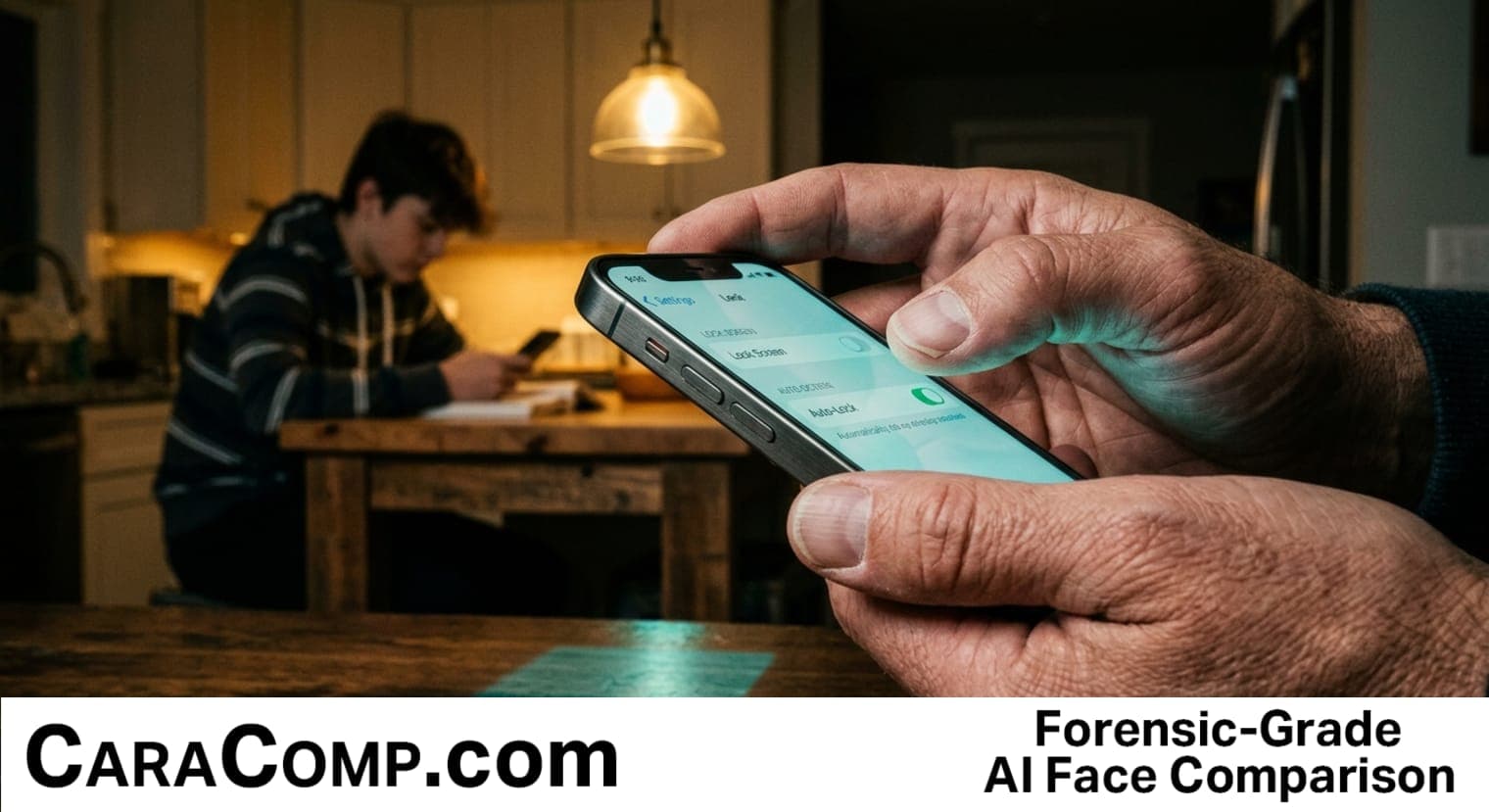
Your kid's laptop might soon know their age better than the apps do. Microsoft just rolled out something called an Age API, a tool that lets Windows itself tell apps whether a person is a kid, a teen, or an adult, without ever handing over a birthday. That's a big deal, and it's the start of a much bigger shift: an age verification device built right into the operating system, not bolted onto a single app.
TL;DR: Microsoft's new Age API turns Windows 11 into an age verification device that hands apps a broad age bracket instead of your exact birthday, following the same playbook Apple and Google already started, and it's happening because states like California, Colorado, and New York now legally require it.
What an age verification device actually is, and why your phone is becoming one
Here's the plain version. An age verification device is any piece of tech, your phone, your laptop, a kiosk at a store, that checks how old you are before letting you do something. Up until now, that job mostly lived inside individual apps. You'd sign up for a social app, type in your birthday, maybe upload an ID. Every app did its own thing, badly, separately.
Starts at 01:50 — this story
Watch this story, in under a minute
A new briefing every weekday — three stories, three minutes.
Subscribe on YouTubeMicrosoft's new setup changes that. Windows 11 now has an Age API (an API is basically a messenger that lets one piece of software ask another piece of software a question and get an answer back) that apps can use to ask your device, "How old is this person, roughly?" The device answers with a bracket, not a birthdate: under 10, 10 to 12, 13 to 15, 16 to 17, or 18 and up. That's it. No exact age, no ID scan, no stored document. Just a range.
5
age brackets in Microsoft's new Windows Age API: under 10, 10-12, 13-15, 16-17, and 18+
Source: Biometric Update
This isn't happening because Microsoft woke up one day feeling generous about your privacy. It's happening because the law now demands it. California's AB-1043, Colorado's SB26-051, and New York's S8102A all require operating system makers to collect age information when you first set up a device, then pass a signal (not your full identity, just a category) to apps through an API when they ask. In other words: this age verification device model isn't optional anymore in some places. It's homework Microsoft, Apple, and Google all have to turn in. This article is part of a series, start with Biometric Data Definition Why Basfs Apple Suit Isnt Privacy .
Microsoft age API vs. the old app-by-app system: what actually changes for your family
Let's get specific, because "age assurance" (the umbrella term for any method used to figure out how old someone is) can sound abstract until you picture your own kid's device doing it. Right now, if your teenager wants to use five different apps, five different apps ask for their birthday, and five different companies now hold that data, with five different levels of security about it. That's not privacy. That's just risk, copied five times.
Under the new model, Windows handles the question once, at setup, and apps borrow the answer instead of collecting it themselves. Microsoft's system even splits the concept in two: there's a declared age range (what the account owner said, or what a parent set up), and there's a separate verification status that tells an app whether that age was actually confirmed or just self-reported. That distinction matters a lot. A number labeled "Verified" carries legal weight. A number labeled "Unverified" is closer to an honest guess. As the technical breakdown from Bleeping Computer put it in covering the rollout, the system uses functions like GetUserAgeRangeAsync and GetAgeVerificationStatusAsync, meaning apps get two separate signals: how old you probably are, and how sure the system is about it.
The industry group representing age-check companies has argued the declared age range approach should be treated legally as a parental control tool, not a true age assurance system, a distinction with real consequences for who's accountable when it gets something wrong.
Summary of Age Verification Providers Association position, as reported by Biometric Update
That unresolved fight is worth sitting with. If a declared age range counts as real verification, apps get to relax. If it doesn't, this whole setup might just be moving the paperwork around without actually solving the problem regulators are chasing.
Age verification process: what happens when an app asks your device "how old"
Picture the actual moment. You open an app that has an age restriction. The app quickly reads a signal from your device instead of showing you a form. The age verification process now looks less like a customer filling out paperwork and more like two machines shaking hands. The device already stored an age bracket from setup, the app calculates whether you clear the threshold it cares about, and it lets you in or blocks you. No new data collected. No new records created by that app. The catch is that the device itself now holds something valuable, a running account of age status for everyone who uses it, and someone has to be trusted to keep that accurate and safe.
Why age verification matters more once it lives inside a machine you already own
People treat "age verification" like it's just about keeping kids off adult content. It's bigger than that. Once age checks move from apps to devices, three companies effectively become the referees for a huge slice of the internet. Apple already does this with its Declared Age Range system. Google does it through Play's age signals. Now Microsoft's Windows machines join in. That's not a small club, and it's not one you get to vote on.
Why the age verification device shift matters
- ⚡ Fewer birthdays scattered everywhereapps no longer need to store your exact date of birth just to gate content
- 📊 Bigger single point of trustone device now carries the age signal that dozens of apps rely on, so if it's wrong, it's wrong everywhere at once
- 🔮 Legal weight without legal clarityregulators require this, but nobody's fully agreed whether a "declared" age counts the same as a "verified" one
- 🧭 Parents get one settings menu, not tentheoretically simpler, but only if that one menu is actually easy to find and correct
There's a real upside here that deserves credit. Fewer apps holding your kid's exact birthday means fewer places a hacked database can leak it. That's genuinely good. But "good for privacy inside the app" and "good for privacy overall" aren't the same sentence. The information didn't disappear, it just moved one layer up, into the operating system itself, where you have less visibility and, frankly, less control than you think. Previously in this series: Utah Age Verification Law Vpns Out Id Data In Podcast.
Age verification software vendors and the parent-control gray zone
Age verification software built by outside vendors used to be the thing apps bolted on to check IDs or scan a face for an age estimate. Now that job is partly getting absorbed into the OS itself, which raises an odd question nobody's fully answered: if the device says you're an adult and it's wrong, who's responsible, the device maker, the app, or the parent who set up the account? Right now, the honest answer is "it depends," and that's not a comfortable place for a family to be standing.
| Old app-by-app age check | New OS-level age verification device model |
|---|---|
| Each app collects your exact birthday separately | Device holds a declared age range, apps just ask for it |
| Data stored in dozens of separate app databases | Age signal centralized in one operating system account |
| No standard for verified vs. self-reported age | Separate verification status flag: Verified or Unverified |
| Enforcement handled app by app, inconsistently | Enforcement pushed to device makers under state law, enacted in California, Colorado, and New York |
| Parents configure controls inside every single app | Parents theoretically set it once at device setup |
If you've ever squinted at a login screen wondering whether the age gate in front of you is even real, or just theater, that's the exact question this whole shift exists to answer. Here's the one thing worth actually doing tonight: open your kid's device settings and look for the age or family setup section, the one tied to their Microsoft, Apple, or Google account. Check what age range is on file. If it's wrong, fix it now, because that single number may soon be quietly answering "how old are you" to every app on that device without anyone asking your kid directly again.
Key Takeaway
The age verification device model trades one privacy problem for another: apps stop collecting your exact age verification data, but Microsoft, Apple, and Google become the gatekeepers deciding what age your device says you are, and the age verification process now runs quietly in the background instead of asking you directly.
Age verification: will vending machines and stores start reading your device too?
Here's where this gets a little strange, and a little future-facing. The same logic that lets a social app ask your phone "how old is this person" could, in theory, extend to physical machines. Think about a vending machine that sells something age-restricted, or a self-checkout scanner in a shop that flags an item requiring an ID check. Right now those systems mostly rely on a barcode scan and a cashier eyeballing you, or a standalone scanner reading a physical ID. But the underlying trend, an operating system holding a trusted age signal that any machine can quickly read, points toward vending machines and retail machines eventually skipping the ID card entirely and just asking your device instead. Nothing in the source reporting says this is deployed yet for retail vending or shop scanners specifically, but the architecture Microsoft just built, an age signal any properly authorized machine can query, is exactly the plumbing that kind of combo of device and machine trust would need.
Some privacy researchers point to zero-knowledge proofs (a way for one system to prove a fact, like "this person is over 18," without revealing the actual underlying data, like the exact birthday) as the ideal version of this. A verification vending machine, or an age verification vending machine at a store selling restricted items, could theoretically confirm "yes, adult" without learning anything else about the customer at all. That's the dream version. What Microsoft shipped is closer to a cousin of that idea: not full zero-knowledge cryptography, but the same spirit of "share the category, not the identity."
Is a declared age range the same as real age verification?
No, and that gap is the whole controversy. A declared age range is closer to a parental setting, something typed in once and trusted going forward. Real age verification, the kind regulators actually mean when they write these laws, usually implies some proof behind the number, an ID scan, a credit check, a facial estimate. Industry groups have specifically pushed back on lumping the two together, arguing declared ranges should be governed as parental controls, not treated as equivalent to verified age. Up next: Ai Voice Cloning Scam 1 2 Seconds Fakes A Childs Voice.
So here's the part nobody's saying out loud yet. We spent a decade training people to distrust every app that asked for their birthday. Now we're about to train an entire generation to trust one silent checkbox buried in device setup instead, and just hope it was filled in correctly the first time. That's not less trust. That's just fewer places to notice when the trust was wrong.
age verification device: Frequently Asked Questions
What is an age verification device and how is it different from an app asking my age?
An age verification device is a phone, laptop, or machine that stores and shares an age signal on your behalf, instead of each app collecting your birthday separately. With Microsoft's new system, the device holds a declared age range and answers apps directly through an API, so the age verification process happens quietly in the background rather than through a form you fill out every time.
Does Microsoft's Age API store my child's exact birthday?
No. The Age API is built to avoid collecting a full date of birth. It sorts users into one of five brackets, under 10, 10 to 12, 13 to 15, 16 to 17, or 18 and older, and shares only that bracket with apps that ask. This is meant to satisfy age verification laws while limiting exactly what personal data gets passed around.
Can I see or correct the age verification data stored on my device?
You should be able to, through the family or account settings tied to your Microsoft, Apple, or Google login, though how easy that is to find varies by device. Since this age signal now gets shared automatically with apps, it's worth checking that setting directly rather than assuming it was set correctly the first time, especially on a shared family device.
Do zero-knowledge proofs play a role in device-level age checks?
Not yet, at least not in what Microsoft shipped. Zero-knowledge proofs are a technique that lets a system prove a fact, like being over 18, without revealing any other underlying data. Privacy researchers see this as the eventual gold standard for age verification, but Microsoft's current Age API works more simply, sharing a declared age bracket rather than a cryptographic proof.
Could vending machines or retail scanners eventually check age through my phone instead of my ID?
It's plausible as an extension of this technology, though nothing confirmed in current reporting shows vending machines or shop scanners using this exact system yet. The same idea, a machine quickly reading a trusted age signal from your device instead of scanning a barcode or physical ID, is the same architecture Microsoft just built for apps, so it's a reasonable direction the trend could head next.
Is a declared age range legally the same as verified age?
No. A declared age range is closer to a self-reported or parent-set value, while verified age usually implies actual proof behind the number. Industry groups have specifically argued that declared age ranges should be treated as parental controls rather than full age verification, and that legal distinction is still unsettled even as states require operating systems to provide these signals.
Ready for forensic-grade facial comparison?
Full forensic reports with detailed similarity scoring. Results in seconds.
Run My First SearchMore News
Deepfake: Scammers Clone Loved Ones' Faces and Voices
Sri Lanka Police say scammers are cloning familiar faces and voices to rush people into sending money. The fix is not better eyes. It is a second way to check.
privacyDigital age check: 4.8M Danes can skip the selfie upload
Denmark's biggest payment app can now prove your age, showing only a photo, name and age. Convenient, yes. But is it one more piece of your identity getting tied together?
privacyAge Verification Roblox: Malaysia Weighs ID Checks for Kids
Malaysia is studying age checks for Roblox and other online games. Safety matters, but so does what your family hands over to prove a child's age.