
What Is Voice Cloning? 3 Seconds of Audio Can Fake a Family Call
Quick answer
What is voice cloning and how do scammers use it?
Voice cloning is AI software that learns how a person sounds and then generates new speech in that voice. Scammers use it to imitate relatives, recruiters or insurance staff, and a few seconds of audio from a public video can be enough. Hanging up and calling back on a saved number is the safest response.
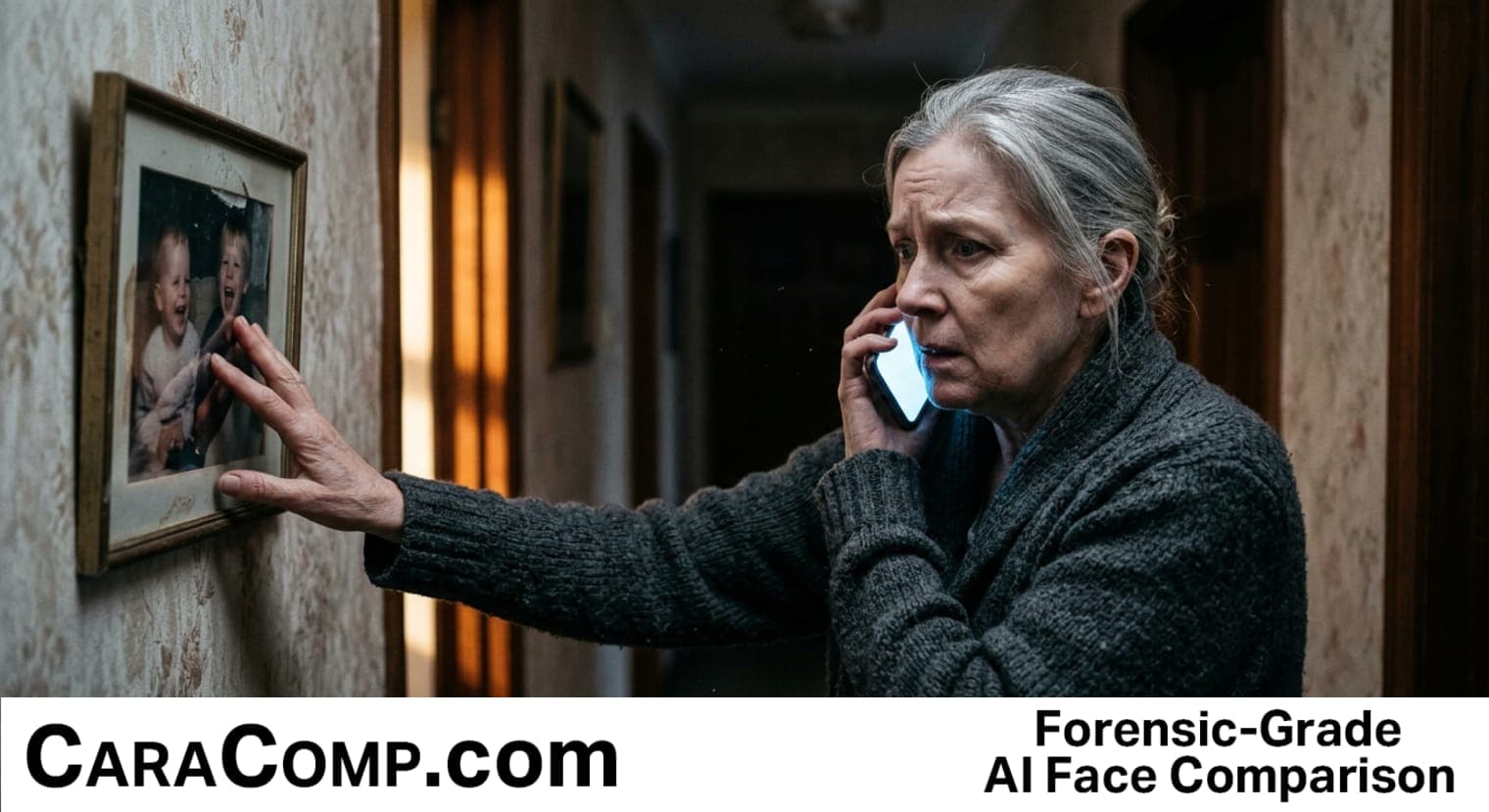
A grandmother in Maryland gets a call. It's her grandson's voice, shaky, scared, saying he's in jail and needs bail money wired right now. Except it isn't her grandson. It's three seconds of his voice, lifted from a birthday video he posted online, run through free software, and turned into a weapon. That's what voice cloning technology is doing to ordinary people right now, and WUSA9's latest Scam Report just put it in the same basket as fake job recruiters and storm-repair con artists, because criminals figured out these three scams all work the exact same way: they hit you when you're rushed, worried, or hoping for good news.
TL;DR: What is voice cloning technology? It's AI software that copies a real person's voice from just a few seconds of audio, and it's now cheap enough and good enough that scammers are folding it into everyday fraud, from fake job offers to family emergency calls to storm-repair pitches.
What is voice cloning technology? It's software that recreates a real person's voice from a short audio clip, and scammers are now weaving it into fake job offers, storm-repair pitches, and panicked "it's me, I need money" calls.
Here's the part that should genuinely worry you: this isn't some far-off, sci-fi threat anymore. The FBI has tracked a 300% jump in voice cloning fraud cases since 2024, and global losses from deepfake audio scams (that means fake, AI-made audio built to sound like a real person) have already topped $2.5 billion. Some retailers report fielding more than 1,000 AI scam calls a day. That's not a trickle. That's a flood, and it's aimed squarely at people who just answer the phone like a normal human being.
Voice Cloning Technology Explained: Why It Suddenly Works So Well
So what is voice cloning technology, mechanically? It's software that studies a recording of someone talking (their pitch, their rhythm, their little verbal habits) and then generates brand new sentences in that same voice, saying things that person never actually said. Under the hood, this technology relies on generative audio models trained on ordinary speech, not on some rare studio setup. The unsettling detail here: modern cloning software only needs about three seconds of clean audio to build a convincing voice clone. Three seconds. That's shorter than most people's voicemail greeting. A TikTok clip, a "hey, it's me, call me back" voicemail, even answering a wrong-number call with a full sentence, that's enough raw material for a scammer to work with.
Voice Cloning as a Volume Business
What used to require studio time and a skilled impressionist now takes an app and a free afternoon. That's the part experts keep hammering: this technology has "zero cost, zero skill, zero accountability," and that combination is exactly why fraud built on it is growing faster than almost any other category of scam. You don't need to be a hacker anymore. You need a Wi-Fi connection, a voice cloner app, and someone's Instagram Story.
Fake Job Recruiters and the Voice Cloner Playbook
Here's where WUSA9's Scam Report gets interesting, because it doesn't treat this technology as its own isolated problem. It groups it with fake job recruiters and storm-repair fraud, and once you see why, you can't unsee it. All three prey on the exact moment your guard is down: when you're job hunting and desperate for a "yes," when your roof just got torn up and you need a contractor today, or when someone you love says they're in trouble. A fake job recruiter doesn't even need cloning software half the time, a friendly email and a too-good-to-be-true offer does the trick, but pair that with a "confirmation call" using a cloned voice of a real hiring manager, and suddenly the scam feels airtight. This article is part of a series, start with Biometric Data Definition Why Basfs Apple Suit Isnt Privacy .
Scammers aren't lazy about this, either. They take their time. They build a little rapport with a target before ever asking for money, which is exactly the kind of patience that makes the eventual ask feel earned instead of suspicious. The goal isn't to convince your brain. It's to bypass it entirely by cranking up urgency, fear, or excitement until careful thinking just... doesn't happen.
Only 15% of victims report these crimes to authorities, primarily due to shame and embarrassment, meaning official statistics significantly underestimate actual losses.
cited in EyeSift, drawing on FBI IC3 data
Read that number again. Fifteen percent. That means for every scam you hear about on the news, roughly six more happened to someone who never told a soul. Your neighbor might have lost money to a cloned voice last month and you'd never know, because embarrassment is doing the scammer's cleanup work for them.
Storm Repair Fraud and the Same Emotional Trigger
Storm-repair scams don't need AI at all to work, honestly, they've existed since the first hailstorm. But bolt a cloned voice onto one (a "claims adjuster" calling to confirm your policy details, sounding exactly like the guy from the insurance company you spoke to yesterday) and it becomes something new and much scarier. This is the pattern across all three scam types the report flags: real urgency, real emotion, and now, a voice that sounds completely real too.
Why This Technology Breaks Old Ways of Trusting a Caller
Because your brain was never built for this. For basically all of human history, hearing your mom's voice on the phone WAS proof it was your mom. That shortcut is baked deep into how we process trust, and it's called the availability heuristic, which is a fancy way of saying: your brain grabs the easiest, most familiar explanation instead of the most accurate one. A voice that sounds like your daughter registers as "my daughter," full stop, before your rational brain even gets a vote.
Caller ID doesn't save you here either. It's already routinely faked. Voice-matching security systems, the kind banks use, are effectively blind to a good clone. And your email spam filter has nothing to flag, because there's no email involved, just a phone ringing and a voice you recognize. Traditional defenses simply weren't built for a world where the sound of someone's voice can be manufactured on demand by voice models available to anyone. Previously in this series: Ai Deepfake Images Gangs Blackmail 49 Of Schools Podcast.
Why This Technology and Ethical Considerations Matter for Your Family
- ⚡ Three seconds is all it takesa single voicemail or video clip is enough source audio to clone anyone's voice convincingly
- 📊 Underreporting hides the scaleonly 15% of victims come forward, so the real damage is far bigger than headlines suggest
- 🔮 Urgency is the actual weaponjob offers, storm damage, and family emergencies all exploit the same rushed, emotional decision-making
- 🎯 Caller ID and voice checks no longer prove identityboth can be faked well enough to fool the untrained ear
Detecting Cloned Voices: What Actually Works Right Now
Detection tools are getting good, some claim 99% accuracy and can flag a cloned voice in about two seconds. That sounds reassuring, and it is progress. But don't let that lull you. Gartner has predicted that by 2026, 30% of enterprises may no longer trust their own identity verification (that means the process of confirming someone is really who they claim to be) systems in isolation, precisely because deepfakes have gotten that convincing. If big companies with security budgets are worried about this technology, a family answering a landline should be too.
What Detection Technology and Data Are Missing
The honest answer: detection tech is a backstop, not a shield. It catches voice clones after the fact or inside a company's phone system. It does nothing for your mom picking up her cell at 9pm. The real fix experts point to isn't a single tool, it's a habit: verify through a separate channel every single time money or personal information is on the line. Hang up. Call the person back on the number you already have saved. That one habit beats every detection algorithm currently on the market, no matter how advanced the underlying technology gets.
| Old way of trusting a caller | What this technology changed |
|---|---|
| Recognizing a familiar voice was proof enough | A cloned voice can be indistinguishable from the real thing to a human ear |
| Caller ID showing a known number meant it was safe | Caller ID is routinely spoofed alongside the cloned voice |
| A confident, detailed story felt trustworthy | Scammers now build rapport first, then deploy urgency to block critical thinking |
| Reporting felt unnecessary if you caught the scam yourself | Only 15% of victims report incidents, hiding the true scale of losses |
If you've ever gotten a call that felt slightly off, maybe the "urgency" felt manufactured, maybe your gut just said "wait", that instinct is worth trusting more than the voice itself these days. One useful thing to do tonight, not tomorrow: agree on a family password or a specific personal question (something never posted online) that only a real family member would know. Not a security question a bank would ask. Something weird and specific, like the name of a childhood pet that never made it onto social media. It costs nothing, takes five minutes, and it's the single best defense against a scam that a synthetic voice cannot fake its way past, no matter how much data went into training it.
What is voice cloning technology, in plain terms? It's the reason a familiar voice is no longer proof of anything, and the only real defense left is a second channel of verification your family agrees on before the phone ever rings.
What Comes Next for This Technology and These Scams
Look, nobody's saying this problem gets solved next year. The software that clones a voice is free, getting better monthly, and requires zero technical skill, meanwhile the tools that detect voice clones live mostly inside corporate security systems, not on your kitchen counter. The gap between "scammers can do this easily" and "regular families can catch it easily" is wide open right now, and WUSA9 grouping this technology with job scams and storm fraud is a signal that reporters are noticing this isn't three separate problems. It's one criminal playbook wearing three different disguises.
The next scam that reaches your phone probably won't sound desperate or robotic or foreign. It'll sound like Tuesday. It'll sound like your kid asking for a favor. And the only thing standing between you and a wire transfer you can't undo will be whether you paused long enough to call back on a number you already trust. Up next: Ai Voice Cloning Scam 1 2 Seconds Fakes A Childs Voice.
voice cloning technology: Frequently Asked Questions
What is voice cloning technology and how is it different from a regular recording?
A regular recording just plays back words someone actually said. Voice cloning technology studies how a person sounds, their pitch, tone, and speech patterns, and then generates entirely new sentences in that voice, including things they never said. All it typically needs is a few seconds of clean audio pulled from a video, voicemail, or social media post to build a convincing voice clone, and the underlying data used to train it never has to include ethical consent from the person being copied.
Can voice cloning technology make someone's skin appear too smooth in a video too?
Voice cloning technology itself only fakes audio, it doesn't touch video. But scammers increasingly pair cloned voices with deepfake video, and one common giveaway in those fakes is that a person's skin appears too smooth, almost airbrushed, along with odd blinking or lighting that doesn't quite match. If a video call combines a familiar voice with a face that looks slightly waxy or unnaturally smooth, treat it as a red flag.
How much audio does someone need to clone your voice?
As little as three seconds of clear speech, according to current research on this technology. That means a voicemail greeting, a short video posted publicly, or even a few sentences spoken during a scam "wrong number" call can supply enough material. This is part of why experts recommend being cautious about posting voice or video clips publicly in any languages, and why answering unknown calls with more than a quick "hello" carries some risk.
Why do fake job recruiters sometimes use cloned voices too?
Fake job recruiters want their offer to feel legitimate fast, and a phone call in a real-sounding voice does that better than an email alone. By cloning the voice of a supposed hiring manager or company representative, scammers add a layer of credibility to job scams that pressure any customer or applicant into paying "training fees" or handing over personal information before any real job exists.
What should I do if I get a call that sounds like a family member asking for money urgently?
Hang up and call that person back using a number you already have saved, not one given to you during the call. Ask a private question only they would know, ideally something never shared online. Resist the urge to act immediately, since this technology is convincing enough that scammers rely on rushing you into a decision before you have time to verify, so slowing down is genuinely the most effective defense available right now.
Families often ask how much data this technology actually needs before a scammer can use it against them. The truthful answer is not much: a few seconds of clean audio is enough for the technology to build a working copy of someone's voice. That is why security researchers keep repeating the same warning about short clips posted online.
There are also real ethical considerations tied up in how this technology works, since a voice can be copied without the speaker ever agreeing to it. Most of the data used to train these systems comes from public recordings, and the person being cloned rarely gets a say in how their voice is reused. That is an ethical gap the law has not fully caught up with yet.
Some companies now market an ai voice product for customer service lines, reading scripts in a friendly tone instead of a recorded menu. That same ai voice approach, built for something helpful, is exactly what a scammer repurposes for something harmful. The technology underneath is identical either way.
Cloning voice patterns from a short clip used to take real audio engineering skill. Now the process is closer to uploading a file and waiting a few seconds for the software to finish. That shift from skilled craft to simple upload is the whole reason this scam category grew so fast.
Researchers who study this problem sometimes keep a small library of voice clones pulled from public posts just to test how well detection tools catch them. Those voice clones are not shared or used for anything other than research, but the exercise shows how easy the underlying data is to gather. If a lab can build a small library of voices this quickly, a scammer with bad intentions can too.
Every family's plan against this kind of fraud should assume the technology will keep getting better, not worse, over the next few years. That means the password habit and the callback habit matter more each year, not less. Voice cloning technology is not going to get harder to access, so your defense has to stay simple enough that everyone in the family actually uses it.
Banks and call centers are investing heavily in technology meant to catch a cloned voice before it does damage, and some of that technology is starting to reach ordinary phone carriers too. Even so, the data those systems rely on is never perfect, and a well-made clone can still slip through. That is exactly why a personal verification habit still beats any automated system.
None of this means every phone call is dangerous. Most calls are still just people you know, talking in their own voice, about ordinary things. The goal is not fear, it is a habit that costs five minutes and protects the people you love from a technology built to imitate them.
It also helps to talk with older relatives about how this technology actually works, in plain language, before they ever get a suspicious call. Explaining that a voice on the phone can now be manufactured from a few seconds of data takes away some of the shock if it ever happens to them. Knowledge does not stop the scam, but it does buy a few extra seconds of doubt, and those seconds are often enough.
Ready for forensic-grade facial comparison?
Full forensic reports with detailed similarity scoring. Results in seconds.
Run My First SearchMore News
Age Verification Roblox: Malaysia Weighs ID Checks for Kids
Malaysia is studying age checks for Roblox and other online games. Safety matters, but so does what your family hands over to prove a child's age.
privacyAge verification: 25+ states now demand ID and face scans
Age checks started with adult sites. Now they are creeping toward everyday websites, and the price may be your ID. Here is what to know before you tap "verify."
facial-recognitionAtlantic City Hotels: Own Face Costs Star Hotel Guest $1,250
Police say a man was robbed in an Atlantic City casino hotel room and his own face was used to open his phone. Here is the warning sign that matters before any meet-up.