
Is This Image AI Generated? How to Verify AI-Generated Images
Master the art of distinguishing authentic photographs from AI-generated synthetic media with expert techniques and detection tools.
Every day, millions of AI generated images and synthetic image content flood social media, news feeds, and online marketplaces. With generative AI models producing image outputs becoming more sophisticated, distinguishing between authentic photographs and synthetic creations has become a critical skill for content creators, journalists, and everyday internet users. The question "is this image AI generated" now appears in searches over 100,000 times monthly as people seek ways to verify what they see online.
Each ai-generated image has evolved beyond obvious tells like distorted fingers or impossible reflections. Modern AI image models produce photorealistic results that can fool even trained eyes. Whether you're verifying content for your business, checking social media authenticity, or simply curious about a suspicious photo, understanding how to detect AI generation is essential in today's digital landscape.
Modern AI image models produce photorealistic results that can fool even trained eyes.
This comprehensive guide walks through practical methods to identify AI-generated images, introduces powerful image detection tools, and explains the technology behind both image generation and verification. You'll learn what professionals look for, which automated tools deliver accurate results, and how to use an AI image checker effectively.
How to Tell If This Image Is AI Generated or Fake
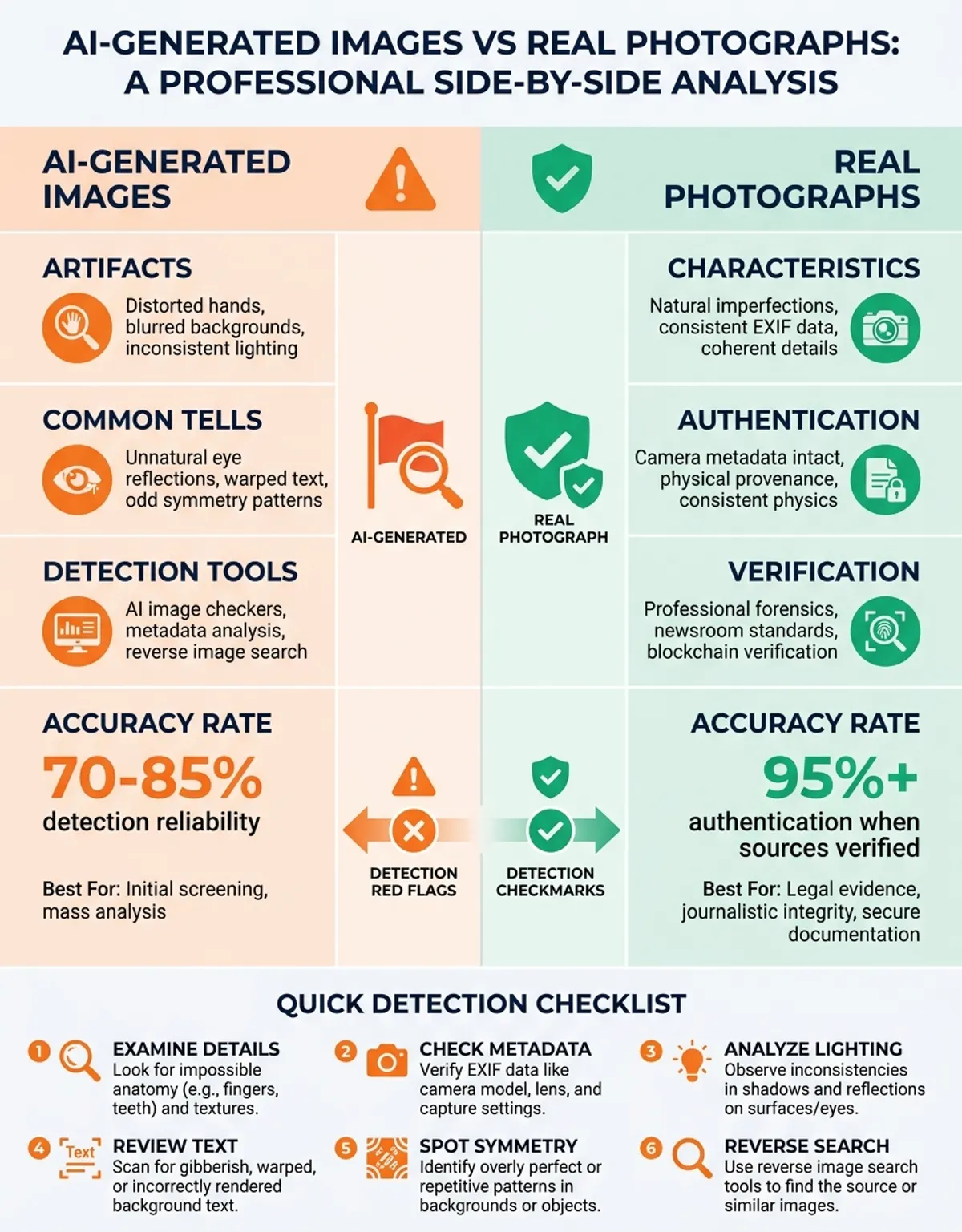
Identifying fake image content created by artificial intelligence requires examining specific visual patterns that even advanced AI models struggle to replicate correctly. While detection has become more challenging as models improve, several telltale signs remain consistent across most AI-generated content.
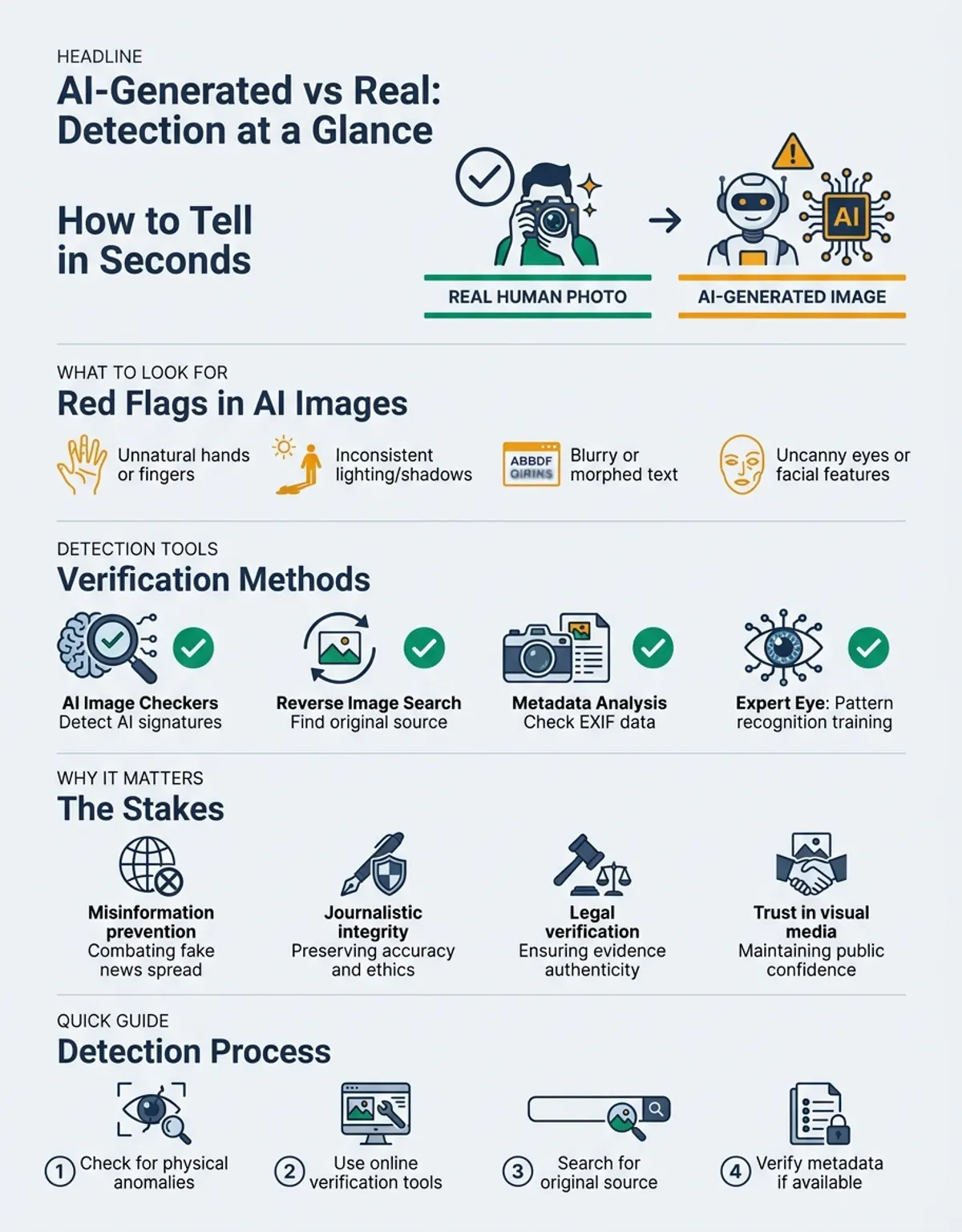
Start by examining human features closely. AI AI tools frequently produce unnatural skin textures that appear too smooth or waxy, lacking the subtle imperfections of real human skin. Hands remain one of the most reliable indicators — fake AI images often show fingers with incorrect joint placement, extra digits, or anatomically impossible positions. Eyes deserve particular attention; AI-generated faces may have asymmetrical irises, inconsistent reflections between eyes, or unnatural gaze directions.
Background elements provide another layer of detection. Fake images commonly feature text that appears garbled or nonsensical, architectural elements with impossible geometry, or objects that fade into ambiguous shapes at the edges of the frame. Lighting inconsistencies also reveal AI generation — shadows may fall in contradictory directions, or reflective surfaces might show reflections that don't match the supposed light source.
Examine repeating patterns carefully. AI neural networks sometimes create backgrounds with unnaturally uniform textures or patterns that repeat in ways organic environments never would. This is particularly noticeable in foliage, crowds of people, or fabric textures where natural variation should exist.
Metadata analysis offers technical confirmation beyond visual inspection. Real photographs contain EXIF data that an exif checker can analyze, showing camera model, settings, location, and timestamp. Fake AI-generated images typically lack this metadata or contain inconsistent information. However, sophisticated actors can add fake EXIF data, so this should be one of multiple verification methods rather than your sole criterion.
What Are Deepfakes and How Do They Differ from AI-Generated Images?
Understanding the distinction between deepfake technology and fully synthetic AI-generated images helps you choose the right image detection approach. While both involve artificial intelligence, they employ fundamentally different techniques and serve different purposes. Understanding what is a deepfake helps contextualize the broader landscape of synthetic media beyond static images.
A deepfake manipulates existing video or photo content by replacing one person's face with another's, or altering their expressions and speech to create convincing but fabricated media. altered footage technology uses deep learning algorithms to map facial features from source material onto target footage, maintaining the original video's background, lighting, and context while swapping the subject's identity or words. This makes deepfakes particularly dangerous for creating misleading political content or celebrity impersonations.
In contrast, fully synthetic AI-generated images create entirely new visual content from text prompts or random noise. These images don't start with existing photographs but generate pixels from scratch based on patterns learned from millions of training images. While a synthetic media might swap a CEO's face onto someone else's body in a real video, an AI-generated image could create a photorealistic but completely fictional CEO in a boardroom that never existed.
Detection strategies differ significantly between these categories. manipulated video detection focuses on temporal inconsistencies across video frames, unnatural facial movements, or mismatches between audio and visual elements. AI image detection examines pixel-level patterns, noise characteristics, and structural artifacts that result from the generation process rather than optical capture.
Both technologies pose serious challenges for media integrity and trust. News organizations now routinely screen content for both face-swapped manipulation and synthetic generation before publication. Understanding which type of AI manipulation you're dealing with determines whether you need video analysis tools, image verification systems, or both.
What Does an AI Image Checker Actually Do?
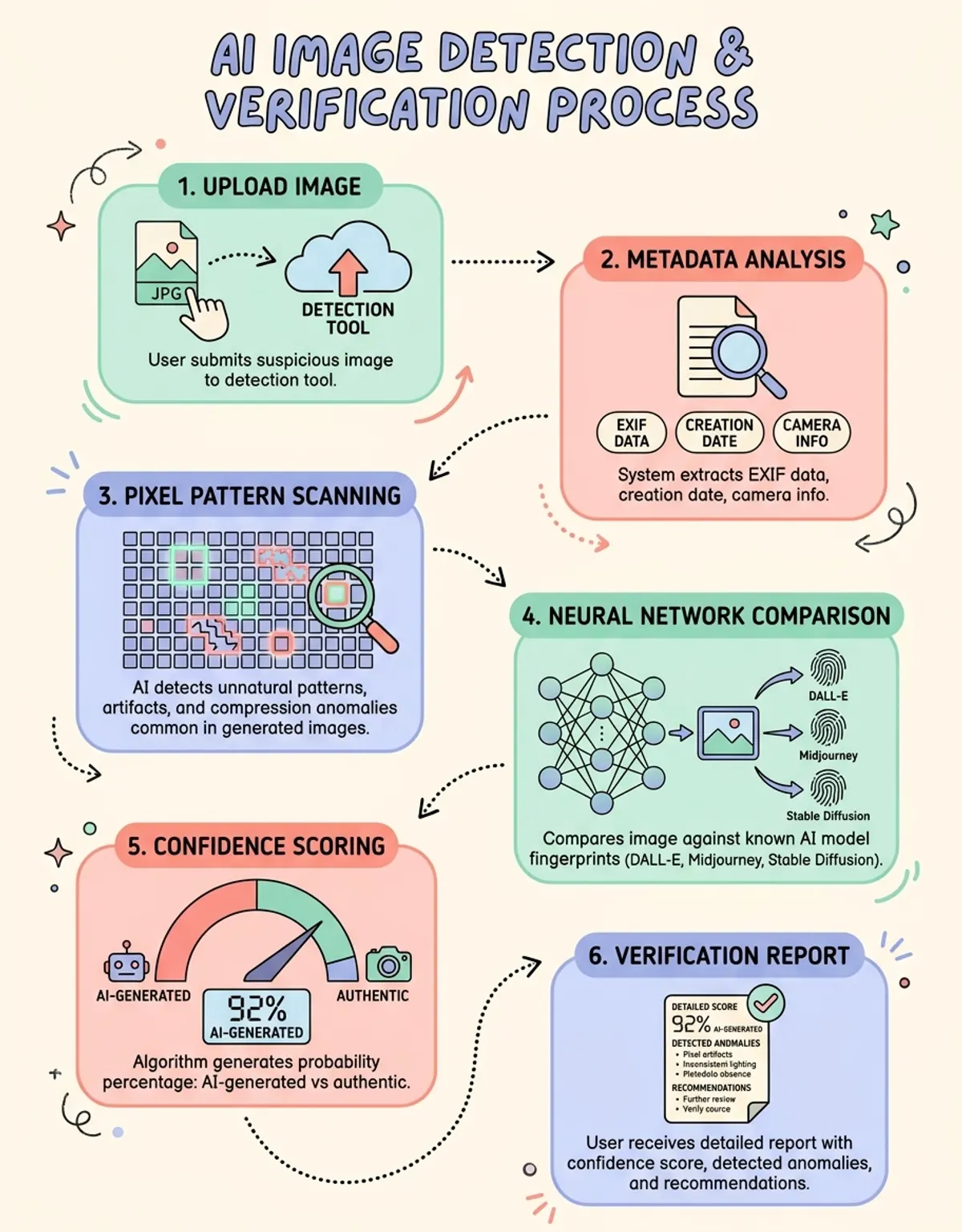
An AI image checker employs sophisticated machine learning systems trained to distinguish between photographs captured by cameras and images synthesized by generative AI. These detection systems analyze multiple aspects of image data that human observers cannot perceive directly.
At the pixel level, checker tools examine noise patterns that differ fundamentally between camera sensors and AI generation algorithms. Real photographs contain sensor noise with specific statistical properties based on ISO settings, exposure time, and sensor characteristics. AI-generated images display different noise patterns or unnaturally clean regions where generation algorithms smoothed away the subtle imperfections cameras introduce.
Frequency domain analysis represents another powerful detection method. When an image image checker and verification tool transforms pixel data into frequency components using mathematical techniques like Fourier transforms, AI-generated images reveal distinctive patterns in how high and low frequencies distribute across the image. These frequency signatures differ from those produced by optical imaging systems and lens characteristics.
Advanced image detector systems also examine compression artifacts detectable by ela scanner techniques. Real photographs processed through common formats like JPEG show specific artifact patterns consistent with standard compression algorithms. AI generation systems that generate images often produce different compression signatures or images with surprisingly minimal compression artifacts detectable by ela scanner techniques for their supposed origin. For dedicated tools focused on identifying AI-generated photos, our AI photo detector guide provides comprehensive testing and comparison of leading detection platforms.
Metadata verification forms a crucial component of thorough checking. A reliable scanner examines not just whether EXIF data exists, but whether the metadata values make logical sense together. Does the reported camera model support the specified ISO range? Do the GPS coordinates align with the apparent lighting conditions and landscape? These consistency checks catch many fake images with fabricated metadata.
The most sophisticated analysis system tools employ ensemble approaches, combining multiple detection methods and machine learning AI tools trained on different aspects of image authenticity. This multi-pronged strategy increases accuracy and reduces false positives that could flag legitimate images as AI-generated or miss synthetic content that evades single-method detection.
The Best AI Image Detector Tools in 2024
The market for AI image detector tools has expanded rapidly as demand for verification grows. While dozens of options exist, several platforms stand out for accuracy, ease of use, and specialized capabilities. Understanding the strengths and limitations of each ai image detector helps you select the right tool for your needs.
| Tool | Free Tier | Accuracy | API Access | Best For |
|---|---|---|---|---|
| Caracomp | No (first month 50% off) | High | Yes | Side-by-side image analysis and comparison |
| Hive Moderation | Limited | Very High | Yes | Enterprise content moderation at scale |
| Illuminarty | Yes | Medium-High | No | Quick spot checks for social media |
| AI or Not | Yes | High | Yes | Single image detection with detailed reports |
| ZeroGPT Image | Yes | Medium | No | Free casual use without registration |
Caracomp distinguishes itself by offering not just AI detection but comprehensive image comparison capabilities. When you need to verify whether two versions of an image exist or compare suspect images against known authentic sources, Caracomp's side-by-side analysis reveals subtle differences that indicate manipulation or generation. The platform's free tier provides generous usage limits suitable for individual creators and small businesses.
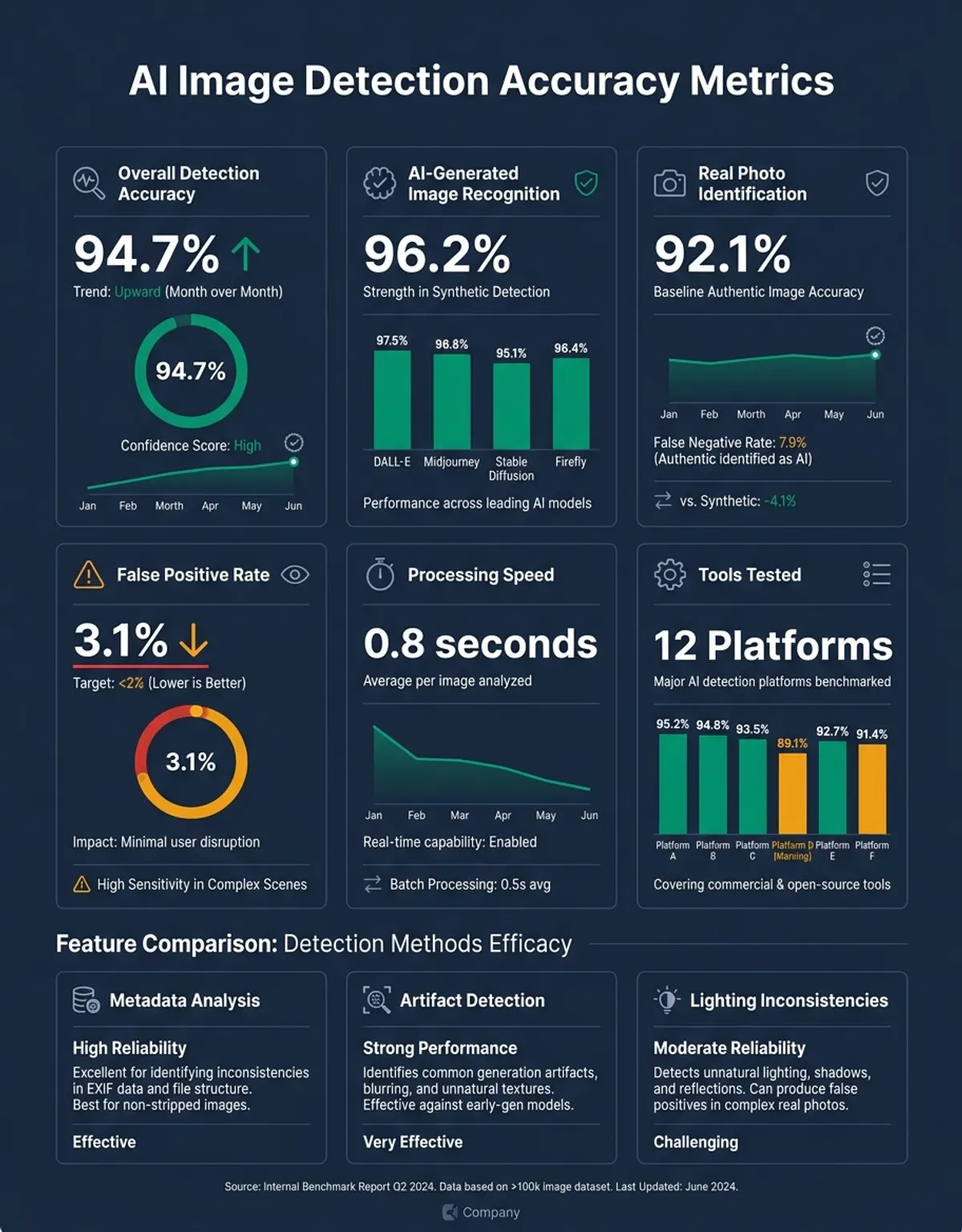
Hive Moderation serves enterprise clients requiring high-volume automated processing. Their AI image detector integrates into content pipelines to screen uploads in real-time, making it ideal for social platforms, marketplaces, and news organizations processing thousands of images daily. Accuracy rates exceed 95% on current AI neural networks, though pricing reflects the enterprise focus.
For quick, no-commitment checking, Illuminarty offers a straightforward web interface where you simply upload an image and receive an AI probability score within seconds. While not as comprehensive as paid solutions, it provides reliable results for casual verification needs without requiring account creation.
AI or Not provides detailed analysis reports breaking down confidence scores across different detection methods. This transparency helps users understand not just whether an image is AI-generated, but which specific characteristics triggered detection. The API access supports integration into custom workflows and applications.
AI Image Detection for Content Moderation
Content moderation at scale requires automated systems that can process millions of uploads daily while maintaining high accuracy. AI image detection has become a critical component of moderation pipelines across social publishers platforms, online marketplaces, and user-generated content sites.
Modern content filtering systems employ multi-stage verification workflows. When users upload images, the first stage runs fast, lightweight detection systems that flag obviously AI-generated content with high confidence. Flagged content either gets rejected immediately or queued for secondary verification using more computationally intensive algorithms. This tiered approach balances speed requirements with accuracy needs while managing infrastructure costs.
Platform policies vary regarding AI-generated content. Some social networks require disclosure when posting synthetic images, using platform management systems to detect undisclosed AI content and either add automatic labels or remove posts violating disclosure requirements. Marketplaces selling physical products take stricter approaches, blocking AI-generated product photos entirely to prevent fraud where sellers use synthetic images to misrepresent actual inventory.
False positives remain a significant challenge in automated oversight. Systems must avoid incorrectly flagging legitimate photographs as AI-generated, which could frustrate users and suppress authentic content. Leading platforms employ human review teams who verify edge cases and provide feedback that continuously improves detection generation systems through active learning cycles.
Privacy considerations shape review system architecture. Rather than sending user uploads to third-party detection services, major platforms typically run AI tools on their own infrastructure to maintain data control and comply with privacy regulations. This requires substantial investment in specialized hardware and engineering talent but provides better user protection and lower latency.
The screening landscape evolves constantly as new AI generation neural networks emerge. Platforms must update their detection systems regularly to recognize images from the latest generative systems. This creates an ongoing arms race where detection capabilities must match or exceed the sophistication of widely available generation tools.
How news outlets Organizations Verify Photos for AI Generation
Professional newsrooms worldwide have implemented rigorous verification protocols to prevent AI-generated images from entering legitimate reporting. These workflows combine automated detection, human expertise, and source verification to maintain editorial standards in an era where synthetic content can be created in seconds.
Major wire services like Reuters, Associated Press, and Agence France-Presse employ dedicated verification teams who examine user-submitted content before distribution to journalism clients globally. Their process begins with automated ai image detector tools that provide initial screening, but human journalists make final publishing decisions based on multiple factors beyond technical detection alone.
Source verification forms the foundation of newsroom authentication. When possible, journalists contact the original photographer to confirm the image's provenance and request RAW camera files that contain comprehensive metadata proving optical capture. RAW files from professional cameras include extensive technical data extremely difficult to fabricate convincingly. Comparing published images against original RAW files reveals any manipulation or generation.
Reverse image searching helps establish an image's history and origin. Newsroom fact-checkers use specialized search tools to find earlier instances of images across the web, determining whether suspect photos appeared elsewhere first or match patterns of known synthetic content. An image claimed to show a breaking news event but actually generated weeks earlier gets quickly identified through timeline analysis.
Context verification catches many manipulated images that might pass technical detection. Journalists examine whether environmental details match the claimed location and time — do shadows align with the reported geography and timestamp? Does vegetation match the climate? Are signs and text linguistically appropriate for the location? These contextual clues often expose AI-generated images that fail to maintain perfect logical consistency.
The challenge extends beyond initial publication to ongoing vigilance as synthetic press techniques advance. News organizations maintain relationships with AI safety researchers and tool developers to access cutting-edge detection methods before they become publicly available. This early access helps newsrooms stay ahead of malicious actors who might attempt to deceive verification systems with the latest generation techniques.
publishers credibility depends on this verification infrastructure. A single published fraudulent image can damage a news organization's reputation permanently, making investment in robust detection systems not just an editorial necessity but a business imperative for maintaining audience trust.
How AI Algorithms Generate Images Using Stable Diffusion
Understanding the technical foundations of how AI generation systems create synthetic images provides crucial insights into effective detection strategies. The generation process itself creates distinctive artifacts and patterns that verification systems exploit to identify artificial content.
Stable Diffusion and other diffusion AI tools represent the current state-of-the-art in AI image generation, powering popular tools like Midjourney, Stable Diffusion, and DALL-E. These neural networks start with pure random noise and gradually refine it through hundreds of steps, learning to remove noise in ways that create coherent images matching text descriptions. This iterative refinement process leaves subtle traces in the final image's noise structure that differ from camera sensor noise patterns.
The training process fundamentally shapes what detection systems look for. systems learn from millions of images scraped from the internet, developing statistical understanding of how real-world objects, people, and scenes appear. However, this training data contains biases and patterns that manifest in generated output. Images created by AI algorithms often share subtle stylistic artifacts and similarities — color grading tendencies, composition preferences, or rendering characteristics — that trained detection generation systems recognize as signatures of specific generation architectures.
Generative Adversarial Networks (GANs), while less dominant than diffusion AI tools today, pioneered AI image synthesis and remain in use for specific applications. GANs pit two neural networks against each other: one generates images while the other tries to detect fakes. This adversarial training creates extremely realistic results but introduces characteristic artifacts in how images compress and how frequencies distribute across the visual spectrum. For more on this topic, see our guide on reverse image search.
Variational Autoencoders (VAEs) compress images into compact representations and then reconstruct them with variations. VAE-generated images tend to appear slightly blurred or smoothed compared to sharp photographs, as the compression and reconstruction process averages away some fine details. Detection neural networks exploit these smoothing signatures.
Each diffusion models and generation model architecture produces distinct footprints that specialized detectors learn to recognize. As newer systems emerge, detection systems must train on examples from those specific architectures to maintain accuracy. This explains why detection tools periodically update their algorithms and why some checkers specify which AI generation tools they can identify reliably.
The technical arms race continues as generation generation systems improve specifically to evade detection. Some synthetic news outlets creators actively test their output against detection tools and adjust generation parameters to minimize detectable artifacts. This adversarial dynamic mirrors cybersecurity's ongoing evolution and ensures that detection systems must continuously advance alongside generation capabilities.
How to Use Caracomp to Check If an Image Is AI Generated
Caracomp offers an intuitive interface for verifying image authenticity and comparing suspected AI-generated images against known real photographs. This step-by-step walkthrough demonstrates the complete verification process from upload to interpretation of results.
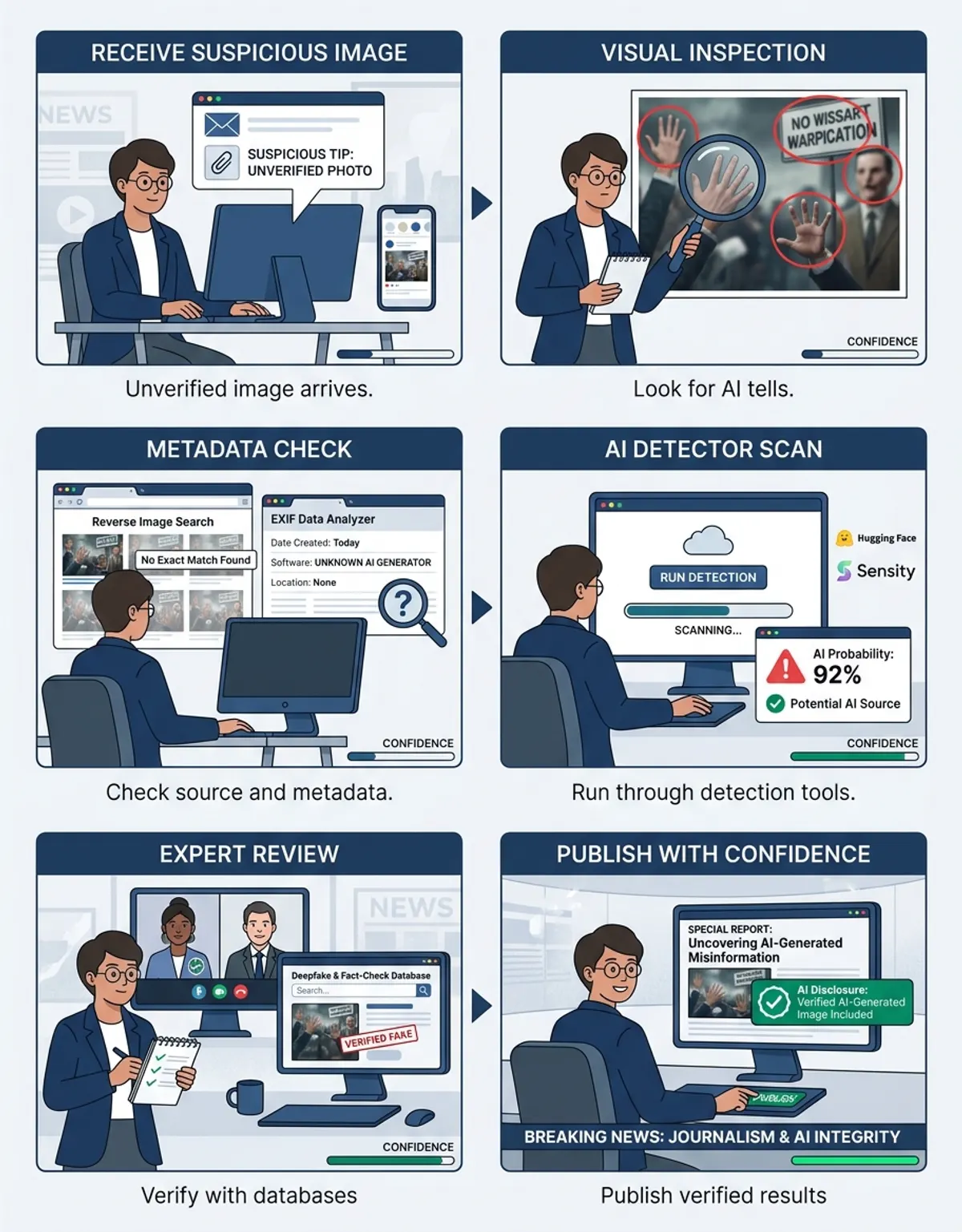
Begin by visiting Caracomp's homepage and selecting the AI detection tool from the main menu. You'll see an upload interface supporting common image formats including JPEG, PNG, and WebP. The system accepts images up to 25MB, sufficient for high-resolution photographs while preventing extremely large file uploads. You can either drag and drop images directly onto the upload area or click to browse your file system.
Once uploaded, Caracomp automatically begins analysis using multiple detection methods simultaneously. The processing typically completes within 3-5 seconds for standard resolution images. During analysis, the system examines noise patterns, frequency distributions, compression artifacts, and metadata consistency as described in earlier sections.
Results appear as both a probability score and detailed breakdown. The overall score ranges from 0-100%, indicating confidence that the image is AI-generated. Scores above 80% strongly suggest synthetic origin, while scores below 20% indicate likely authentic photography. The middle range represents images where detection AI tools found mixed signals requiring human judgment.
Expand the detailed breakdown to see individual detection method results. Caracomp shows separate scores for noise analysis, frequency examination, metadata verification, and visual artifact detection. When these scores diverge significantly — for example, noise patterns suggest AI generation but metadata appears authentic — this indicates sophisticated manipulation that warrants additional investigation.
The comparison feature provides powerful additional verification. Upload a suspect image alongside a confirmed authentic photograph from the same purported source or location. Caracomp's side-by-side analysis highlights specific regions where the images diverge, helping identify whether differences result from natural variation between photos or indicate one image's synthetic origin.
For images falling in uncertain ranges, Caracomp offers guidance on additional verification steps. The platform may suggest examining specific regions more closely, seeking original source files, or using complementary tools for enhanced confidence. This educational approach helps users develop their own expertise in image verification rather than relying solely on automated scores.
Premium accounts unlock batch processing capabilities, allowing verification of multiple images simultaneously — essential for content moderators, journalists, or anyone needing to screen large image libraries. API access enables integration into existing content management workflows, automating detection within your organization's tools rather than requiring manual uploads to a web interface.
Try Caracomp's free ai image detector today to experience the verification process firsthand. Whether you're protecting your brand from synthetic product images, verifying social content content authenticity, or investigating suspicious photographs, Caracomp provides the tools and transparency needed for confident image verification in the AI era.
Frequently Asked Questions
How do I verify if an image was made with AI?
To verify if an image was created by AI, start by using an automated ai image detector tool like Caracomp that analyzes noise patterns, frequency distributions, and metadata. Examine the image visually for telltale signs including unnatural skin textures, distorted hands, impossible reflections, or garbled text. Check EXIF metadata to confirm camera information exists and makes logical sense. For important verification, use multiple detection methods and consider consulting experts if the image has significant implications for your decision-making.
Can I use a free AI image detector online?
Yes, several free ai image detector tools operate online without requiring payment or registration. Caracomp has no free tier but the first month is 50% off, while platforms like AI or Not and Illuminarty provide basic detection capabilities at no cost. Free tiers typically limit the number of daily checks or provide less detailed analysis compared to paid versions, but deliver sufficient accuracy for personal verification needs and small-scale content content filtering.
What is an automated AI-generated image detection tool?
An automated ai-generated image detection tool uses machine learning neural networks to analyze images and determine whether they were created by generative AI or captured by cameras. These systems examine technical characteristics including pixel noise patterns, frequency domain signatures, compression artifacts, and metadata consistency — factors invisible to human observers. Automated tools process images in seconds and integrate into content pipelines to screen uploads at scale without manual review.
How does the AI image detector used by newsrooms work?
Newsrooms worldwide employ multi-stage verification combining automated detection, source confirmation, and expert human review. Initial screening uses ai image detector software analyzing technical artifacts and metadata. Journalists then verify image provenance by contacting photographers for original RAW files, conducting reverse image searches to establish timeline and origin, and examining contextual details for logical consistency. This layered approach catches both obvious AI generation and sophisticated manipulations that might evade single-method detection.
Can ZeroGPT's AI image detector identify all AI images?
ZeroGPT's ai image detector performs reasonably well on images from common generative systems but cannot identify all AI-generated content with perfect accuracy. Detection rates vary based on which generation model created the image, how recently that model was released, and whether the creator specifically optimized to evade detection. No detector achieves 100% accuracy across all AI generation methods. Using multiple verification tools and human judgment provides better results than relying on any single automated system.
No detector achieves 100% accuracy across all AI generation methods.
What makes a normal photograph look different from an AI-generated one?
A normal photograph captured by a camera contains sensor noise with specific statistical properties, compression artifacts consistent with standard image formats, and EXIF metadata reflecting actual camera settings and conditions. Real photos also maintain perfect physical consistency — lighting, shadows, reflections, and perspective all obey physics precisely. AI-generated images may appear visually convincing but exhibit different noise patterns, unusual frequency distributions, impossible physical relationships, or anatomical errors particularly visible in hands and eyes.
Was this image generated using OpenAI tools — how would I know?
To determine if an image was generated using OpenAI tools like DALL-E, examine the image's metadata for potential watermarking or provenance information OpenAI embeds in some outputs. Use an ai image detector trained on samples from OpenAI's algorithms, as different generation architectures leave distinct fingerprints. Look for stylistic characteristics common to DALL-E output including particular color grading tendencies and rendering styles. However, definitive attribution to specific AI tools remains challenging as images can be edited after generation to remove identifying marks.