
YouTube Age Verification: When AI Guesses Wrong, Faces Pay
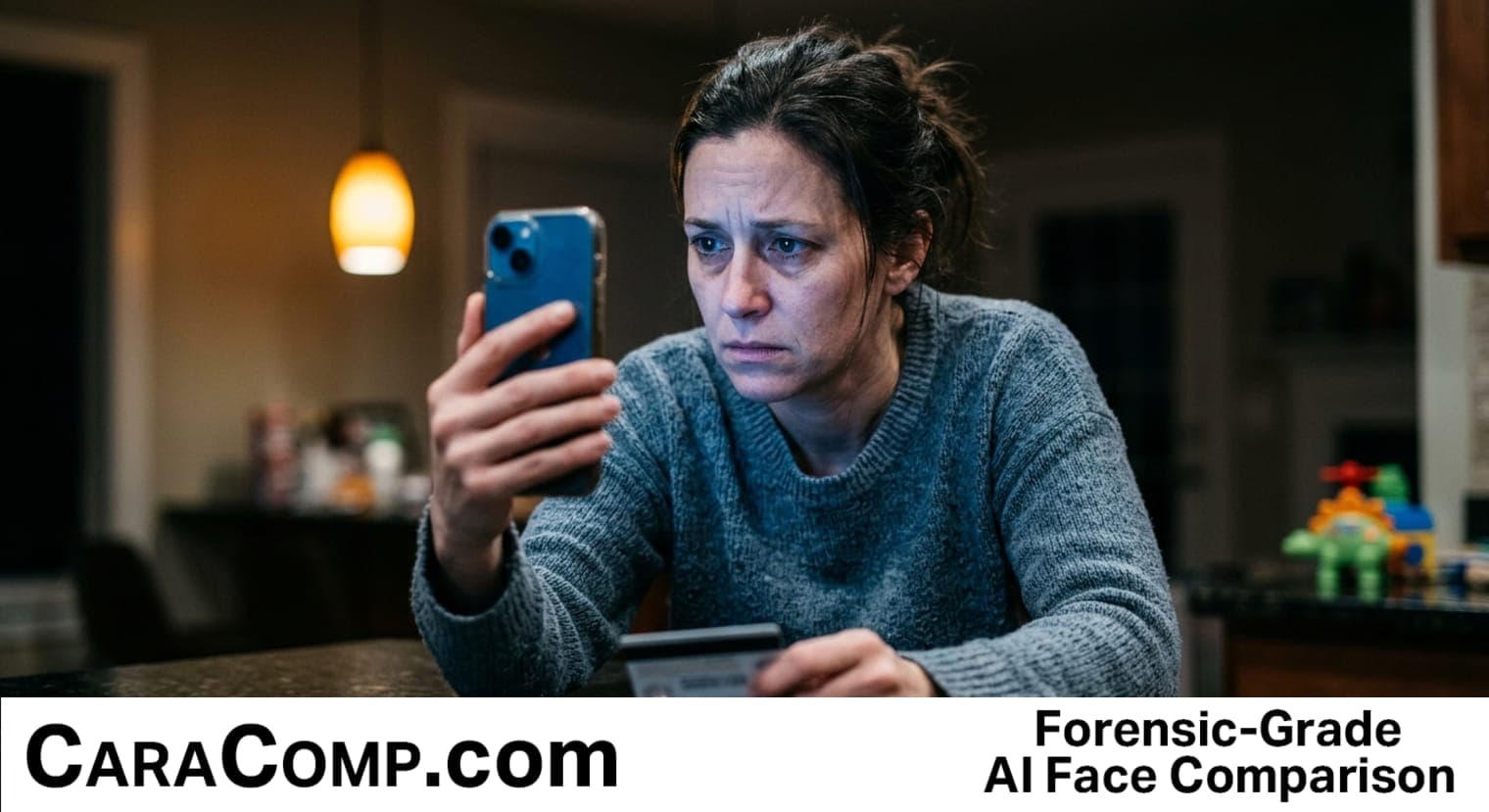
Here's a sentence that should stop you mid-scroll: YouTube age verification doesn't need to ask how old you are anymore. It already thinks it knows. Not because you typed in a birthday. Because it watched you. Your search words, what time of day you're online, how fast you scroll, what kind of videos you linger on, all of it gets fed into a system that spits out a guess: are you a kid, or an adult? And if that guess lands wrong, the fix isn't a form. It's your face.
TL;DR: YouTube age verification works by using AI to analyse your behaviour first (watch history, typing speed, search terms), and if it decides you might be under 18, it forces you to prove your age with a government ID, a credit card, or a biometric face scan, a system built to protect teens that can also quietly collect identity data from adults it misjudged.
This isn't a hypothetical. In November 2025, a 30-year-old man used YouTube to pose as a teenager and groom a 12-year-old girl. He built trust with her online, then drove to her house, and hid in her closet with a gun until her mother found him. He was convicted. That case is the reason platforms like YouTube are racing to figure out who's actually a kid on their site. But the fix they built has a second, quieter story buried inside it, and that's the one most people miss completely.
How YouTube Age Verification Actually Decides How Old You Are
Let's start with the basic mechanics, because most people picture age verification like a bouncer checking an ID at a bar. Quick glance, quick decision, done. That is not what's happening here. YouTube age verification runs in two separate stages, and understanding the split between them is the whole key to this article.
Stage one is called age estimation. This is the quiet, always-running part. YouTube's AI analyses your behaviour, not your birthday, drawing on account longevity (how long you've had the account), engagement patterns, what kind of content you watch, and even the times of day you're logged in. It's not looking at one video you clicked last Tuesday. It's building a profile out of years of activity when it has that much history to work with. According to Variety, this model rolled out across the U.S. specifically to catch teens who lie about their age at signup, which sounds reasonable, until you realize the same math applies to every user, teens and adults alike.
Stage two only kicks in if stage one flags you. This is where "verification" actually happens, and it's the part most people don't expect. If YouTube's AI decides you might be under 18, you get bumped into a restricted experience, fewer ads, no autoplay on certain content, no personalized recommendations, and you're offered a way out: prove you're an adult. That proof comes in one of three forms. A credit card. A government ID. Or a selfie, a live face scan that gets run through an age-estimation algorithm that measures things like the shape of your jaw and cheekbones to spit out a number.
YouTube AI Age Verification: What Signals Actually Trigger It
People assume it's one weird video that trips the system. It's rarely that simple. YouTube's AI age verification looks at a blend of signals over time, not a single moment. That means the system can misfire on completely innocent patterns, like a parent and teenager sharing one account, or an adult with unusually varied taste in content.
That number matters because it tells you this isn't a rare edge case anymore. Age verification is turning into basic internet infrastructure, the same way a login password became something you just expect on every app. And here's the detail that should give you pause: facial age estimation was the method that teens ages 8 to 17 recalled encountering most often, according to a technical breakdown from Xident. In other words, the industry's default answer to "prove you're old enough" is increasingly: show us your face. This article is part of a series, start with How To Protect Yourself From Identity Theft 6 Free Moves Pod.
Where YouTube Age Verification Breaks: The 18-Year-Old Boundary Problem
Here's where it gets genuinely interesting, and a little uncomfortable. Facial age-estimation algorithms can separate large age gaps more easily than they can answer the question the system is built around: is this person 17 or 19? That's exactly where accuracy can fall apart. According to research covered by All About Cookies, NIST testing found that facial age-estimation accuracy shifts depending on age, image quality, gender, region of birth, and which specific algorithm is running the math. Translation: the system is least reliable at the exact legal boundary it exists to enforce.
And accuracy doesn't just vary by age, it varies by who you are. The Electronic Frontier Foundation has flagged that these systems can perform worse for people of color, for trans and nonbinary people, and for people with disabilities. So picture a real scenario: you're a 32-year-old parent, video-calling on your phone in kitchen lighting at 6pm, maybe your skin appears too smooth under that overhead light, maybe the angle throws off the jaw measurement the algorithm relies on. The AI doesn't know any of that context. It just sees a face that doesn't match its "adult" template cleanly, and now you're in the flagged pool.
Watch History and User Identity: Why Document Uploads Get Skipped
Here's a fact that explains a lot about why platforms keep steering people toward selfies instead of documents. Document upload flows, the "just take a photo of your driver's license" option, see 15 to 40 percent of users abandon the process partway through, depending on how clunky the design is. Selfie-based checks cut that abandonment down to 5 to 10 percent when the capture takes under three seconds. So from a business standpoint, the selfie isn't just faster for the user, it's the path with the least friction. Which also happens to be the path that collects biometric data (your face, mapped and measured, the body stuff that's uniquely you) instead of a document you can shred later.
Adult users incorrectly identified as minors will have to upload a government ID, credit card or a selfie to prove their age. reported by All About Cookies
What YouTube Says: YouTube Age Verification Rollout and the Sign-Up Loop
According to YouTube's own blog, Wednesday will begin testing for an expanded version of this system in the U.S., extending age estimation to more users as part of what the company calls extending protections to teens. The stated goal is straightforward: YouTube wants to give teens age-appropriate defaults automatically, instead of relying on users to honestly self-report their birthday at sign up, something plenty of 13-year-olds have fibbed about since YouTube accounts existed.
But look at what that actually requires under the hood. To decide, the AI analyses your behaviour continuously, not once at signup. That means your identity, in the eyes of this system, isn't a fixed fact you declared once. It's a moving target the algorithm keeps re-checking. Basically, they are going to keep watching your patterns for as long as you use the platform, and if your patterns ever start resembling a minor's, you get re-routed into the verification loop, even if you've been an adult user for a decade.
Information the System Collects When It Flags You
What information does YouTube actually gather once it flags an account? If you're bumped into the verification step, you're asked to hand over one of three things, a credit card number, a scanned government ID, or a live selfie, and that selfie gets processed by a separate age-estimation model just to confirm the platform's first guess.
What You Just Learned About YouTube Age Verification
- 🧠 It's two systems, not oneage estimation runs quietly on everyone; age verification (ID, card, or selfie) only triggers if you get flagged
- 🔬 The 18-year boundary is the weak spotalgorithms are least accurate exactly where the legal line sits
- 💡 Selfies win because they're frictionless5 to 10 percent abandonment versus 15 to 40 percent for document uploads
- 🛡️ Your account privacy page matters more than everchecking your Google account privacy page shows what information is tied to your account
The Real Trap: Protection for Teens, Data Exposure for Everyone Else
Now here's the part I think everyone gets wrong, and honestly, it's an understandable mistake. Most people hear "age verification" and picture a bouncer checking an ID. Quick look, quick nod, move along, nothing kept. That mental model made sense for decades because that's literally how it worked in the physical world. A bar doesn't keep a photocopy of your license in a filing cabinet.
But YouTube's AI age verification doesn't work like a bouncer. It works like a running tally. The estimation stage builds a behavioral record of your watch history and habits over time, whether or not you're ever flagged. And if you are flagged, the verification stage doesn't just glance at a document and let you go. It requires sensitive identity evidence, such as a face scan, ID, or credit card, to clear up the system's uncertainty. Previously in this series: Police Facial Recognition Ai Tossed 94 Of 108 000 Faces Podc.
Think of it like a bar bouncer who, instead of just eyeballing your ID, photographs your face every single time you order a drink, measures your cheekbones, and files that photo away "just in case." Most nights, nothing happens. But the one night the lighting's bad and he decides you look 17 instead of 27, you're not just showing him your ID anymore. You're handing over biometric information to clear up a mistake his own system made.
| What people assume happens | What YouTube age verification actually does |
|---|---|
| Quick ID check, nothing stored | Behavioral watch history builds a running profile before any check happens |
| One-time yes/no decision | Continuous re-evaluation of user identity based on ongoing behaviour |
| Verification ends the process | A flagged account escalates to biometric face capture or ID upload |
| Applies only to accounts claiming to be teens | Applies to any user, adult included, whose patterns resemble a minor's |
This is why CaraComp treats this as a facial recognition and identity story, not just a parenting story. The AI that decides "this might be a 15-year-old" and the AI that estimates age from a selfie both use facial-analysis methods that measure landmarks, jawlines, cheekbone ratios, and skin texture mathematically. These methods are related to the technology behind unlocking your phone with your face. The difference is what's at stake when it gets the answer wrong, and what identity information a user may need to submit afterward.
Data, Controls, and Checks: What You Can Actually Do Tonight
So if this were happening to you right now, tonight, where would you even look? Start with your Google account privacy page. It shows what data YouTube has collected and, in some cases, what verification documents or selfies you've submitted. From there, check your account's ad settings and the parental controls tied to any linked family account. These controls decide what content, ads, and recommendations reach a user based on the age YouTube has assigned them, correctly or not.
If you manage a household account for a teenager, the honest move is to check it now, not after something goes wrong. Look at what checks have already run silently in the background. Ask what identity information, if any, has been uploaded. And if an adult in your house gets wrongly flagged, know there's typically an appeal path rather than an automatic, permanent lockout, though the process varies and can be frustrating.
Why the Man in the Closet Story Matters Here
Let's come back to where we started, because it's easy to get lost in algorithms and forget the actual stake. A predator posed as a teen on YouTube, built a relationship with a 12-year-old, and ended up hiding in her closet with a weapon. That's the harm age verification is genuinely trying to prevent, and it's not abstract. It's the reason the industry decided watching behavior and, when needed, scanning faces, was worth the tradeoff.
But protection and exposure aren't opposites here. They're the same mechanism pointed in two directions. The system that flags a predator posing as a teen is built on the exact same behavioral watching that can misjudge a shy 34-year-old's account, or a shared family device, or a young-looking adult on a bad lighting day. The families of four teenagers who died by suicide have already sued YouTube and other platforms, alleging the platforms' own design choices contributed to their children's deaths, according to CBS News reporting cited in the research for this piece. That lawsuit is a reminder that platform design, not just individual bad actors, carries real weight in outcomes for kids online.
YouTube age verification isn't a single ID check, it's an always-on behavioral system that uses AI to watch, estimate, and only asks for your face when its first guess is uncertain, meaning the safety net built to protect teens can just as easily pull an ordinary adult user into a biometric identity check they never expected. Up next: Biometric Authentication 40 Of Systems A Photo Can Fool.
So here's the question worth sitting with. YouTube's AI decided you look under 18 based on how you scroll, what time you're online, what you watch. Now it wants your face to settle the argument. The aha moment is that the selfie request is not the first check: it is the second check, triggered by years of behavior the system has already interpreted. If that decision landed on your account tonight, would you know where to check first, or would you be finding out live, the way most people do?
YouTube Age Verification: Frequently Asked Questions
How does YouTube's AI age verification actually determine my age without me telling it?
The system doesn't rely on the birthday you entered at signup. Instead, it uses AI to analyse your behaviour: how long you've had the account, what kind of videos you watch, your typing and scrolling speed, and even what time of day you're logged in. It compares those patterns against known behavior for teens versus adults, then makes a probability guess. If the guess lands in "possibly under 18," you get flagged for a follow-up verification step.
What happens after YouTube decides I might be a teen?
Once the system decides you might be underage, your account switches into a restricted experience: no personalized recommendations, limited ads, and certain content blocked. You're then offered a way to prove you're actually an adult, using a credit card, a government ID, or a live selfie run through a separate facial age-estimation check. This is the moment "estimation" becomes "verification," and it's the step most users don't expect the first time it happens.
Where do I check what identity data YouTube already has on my account?
Your Google account privacy page is the place to start. It shows a record of the information tied to your account, and in some cases, any identity documents or selfies you've submitted for verification. Reviewing it regularly is a smart habit, especially if you manage a shared family account where a teenager and an adult use the same device, since that shared usage pattern is exactly the kind of thing that can trigger a flag.
Can adults get wrongly flagged by YouTube's age verification system?
Yes, and it happens more than people expect. Facial age-estimation accuracy is weakest right around the 18-year-old boundary, the exact line the system is trying to enforce, and it can vary by lighting, image quality, and demographic factors. A perfectly adult user with an unusual watch history, a shared account, or a face that reads younger under bad lighting can end up in the same flagged pool as an actual teenager.
Does YouTube use facial recognition, or just facial age estimation?
It's specifically facial age estimation, not identity-matching facial recognition. The selfie you submit isn't compared against a photo database to figure out who you are. Instead, an algorithm measures features like jaw shape and cheekbone structure to estimate a number, your likely age, not your name. That distinction matters, but the underlying math, comparing facial landmarks and ratios, is related to methods used in broader facial recognition systems.
Why does YouTube ask for a selfie instead of just a document?
Because selfies are faster and users are far less likely to give up partway through. Document upload flows, where you photograph an ID, see 15 to 40 percent of people abandon the process. Selfie checks, done in under three seconds, cut that abandonment down to 5 to 10 percent. Basically, they are going with whatever keeps users completing the process, and that path also happens to be the one that captures the most sensitive biometric data.
Ready for forensic-grade facial comparison?
Full forensic reports with detailed similarity scoring. Results in seconds.
Run My First SearchMore Education
Deepfake AI App: One Photo, 225,000 School Fakes
You made a funny video with a face swap app. Here's what most people don't realize: the app kept the data, and the same tech is now behind a wave of fake porn videos hitting middle schools.
facial-recognitionFacial Recognition Software: 14 Wrongful Arrests So Far
Learn exactly how facial recognition software turns your face into data, why it fails more on some faces than others, and what to do if it ever misidentifies you.
digital-forensicsDeepfake Technology: 350 Fake Nudes Made by Two 14-Year-Olds
A teenager with a laptop and a school photo can now create a fake nude in seconds. Here's the actual technology behind deepfakes, why humans can't spot them, and the one legal fact every parent needs to know.