
What Is a Biometric Passport? The Chip Skimmed From 14 Inches
Quick answer
What is a biometric passport and what does the chip store?
A biometric passport is a paper travel document with a small embedded chip. In the U.S., the chip holds a digital copy of the holder's photo, the printed personal details and the machine-readable lines. Some countries add fingerprints or iris scans. A digital signature lets border readers detect any changes to that data.
There is a radio in your passport. So what is a biometric passport, exactly, and how far does that radio reach? Less far than a spy movie suggests. Farther than the airport brochure admits.
What is a biometric passport? It is a regular passport with a tiny chip that stores your photo and printed details, protected against undetected changes by a digital seal. Its chip can be reached by radio from farther away than most travelers expect.
What Is a Biometric Passport? A Paper Book With a Tiny Computer Inside
Open your passport and look at the front cover. See the small rectangle with a circle in it? That symbol marks a travel document embedded with a chip. (Biometric just means a measurement of your body, like your face.) In plain terms, it is a paper travel document containing a tiny computer chip.
A regular passport is paper, ink, and a photo. A biometric passport adds a thin antenna and an embedded RFID chip. (RFID stands for radio-frequency identification. It means a chip that talks by radio waves.) You may also see these called electronic passports, an embedded RFID microchip, or an embedded microchip that holds users' personal information. Same thing, different brochure. If you have a standard passport featuring that cover symbol, you are carrying one.
Here is the odd part. There is no battery in there. The biometric chip sleeps until a reader's radio field wakes it up. Hold that thought, because it matters a lot later.
Biometric Passports Hold Less Than You Think
Most people picture a surveillance vault. Biometric passports are plainer than that. In the U.S., the chip stores the holder's passport photograph, the printed biographical details, and the two lines of machine-readable characters at the bottom of the photo page, according to Okta's identity explainer. No fingerprints. No iris scans. Some countries add those, but the one item every biometric passport must contain is a digital photograph of the holder. That rule comes from ICAO Doc 9303, the international rulebook for machine-readable travel documents.
Why the face? Because biometric passports are built around the one biometric that border agencies can compare using facial recognition.
Which Data Sits on the Chip, in Plain Words?
Here are examples of what a chip can hold:
- Your name, date of birth, and birthplace (the biographical data, the same facts printed on the page)
- A digitised image of your face, the same picture as the printed photo
- The machine-readable lines from the bottom of the photo page
That is your identity data on one sliver of silicon. Depending on the issuing country, the chip may also contain other biometric information, such as fingerprints or iris scans. This article is part of a series, start with Facial Recognition False Arrest 9 Wrong Alerts 1 38m Faces.
The photo is high resolution on purpose. A sharp digital image gives facial recognition software more to work with than a scuffed paper photo. At an e-passport gate, the software turns your live face into a digital map, a set of numbers representing your biometric features. Then it compares that map to the one built from the chip's photo. That is facial recognition at work: two maps, one question, same person or not?
We spend our days on facial recognition at CaraComp, so here is the inside view: a passport photo is about the friendliest comparison image there is. It is front-on, evenly lit, and neutral. That is why the match step at a border can be so quick.
What Is a Biometric Passport Protecting Against? Security, Forgery, and One Clever Seal
Mostly, forgery. A printed page can be altered by someone skilled with a steady hand. A chip is built to be much harder to fake. Each country signs the chip's contents with a digital signature, using public key infrastructure (PKI, a system of matched digital keys: one private key to sign, one public key to check). Think of a wax seal that shatters if anyone touches what is inside. Change one single byte of signed data, and the signature verification fails. That security feature makes forging a chip expensive and difficult.
| Feature | Regular passport | Biometric passport |
|---|---|---|
| What it stores | Printed page and a printed photo | The same details plus data on the chip, including a digital photograph |
| How tampering is caught | A trained eye at border control | Signature verification by a reader |
| How it is read | By looking at it | By radio, using a reader |
| Main security worry | Skilled alteration of the page | Reading the chip from too far away |
Verification: The Handshake Before the Chip Talks
Now the part that surprised me. Access controls on many passports require the reader to use information from the printed characters on your photo page to derive a key before reading protected chip data. Picture a safe whose combination is printed on the owner's ID card. Usually, a reader scans the page to get that combination, but knowing it does not prove the reader is physically holding your book. It makes casual reading harder, though it is not a guarantee against unauthorized access.
Why Border Officers Trust the Signature
At a border control desk, the reader pulls the chip's contents, checks the signature, and then compares the chip photo with your face. That is two questions in one: has anything been changed, and is this the right person? Together they make up identity verification. The first answer comes from math. The second comes from recognition, by an officer's eyes or by software.
Do All Countries Do This Right?
Not always. The seal works only when it is set up and checked correctly. A great lock on a bad door still lets people in. Researchers note that forging a chip is hard only when all security mechanisms are fully and correctly implemented. So the protection depends on how it is put into practice.
How Far Can a Biometric Passport Chip Be Read From? The Queue Problem
Because the chip has no battery, the reader's radio field powers it. That is called induction, and it is the same trick that lets a phone charge on a wireless pad. It is also the idea behind tap-to-pay cards. Officially, the chip should answer only when a reader is a few centimeters away. Official readers behave. The question is whether anyone else can build a reader that does not.
35 cm
how far away researchers skimmed a passport chip with a homemade reader costing under $100 Previously in this series: Utah Age Verification Adult Sites Can Keep Id And Selfies.
Source: USPTO patent documentation on RFID skimming
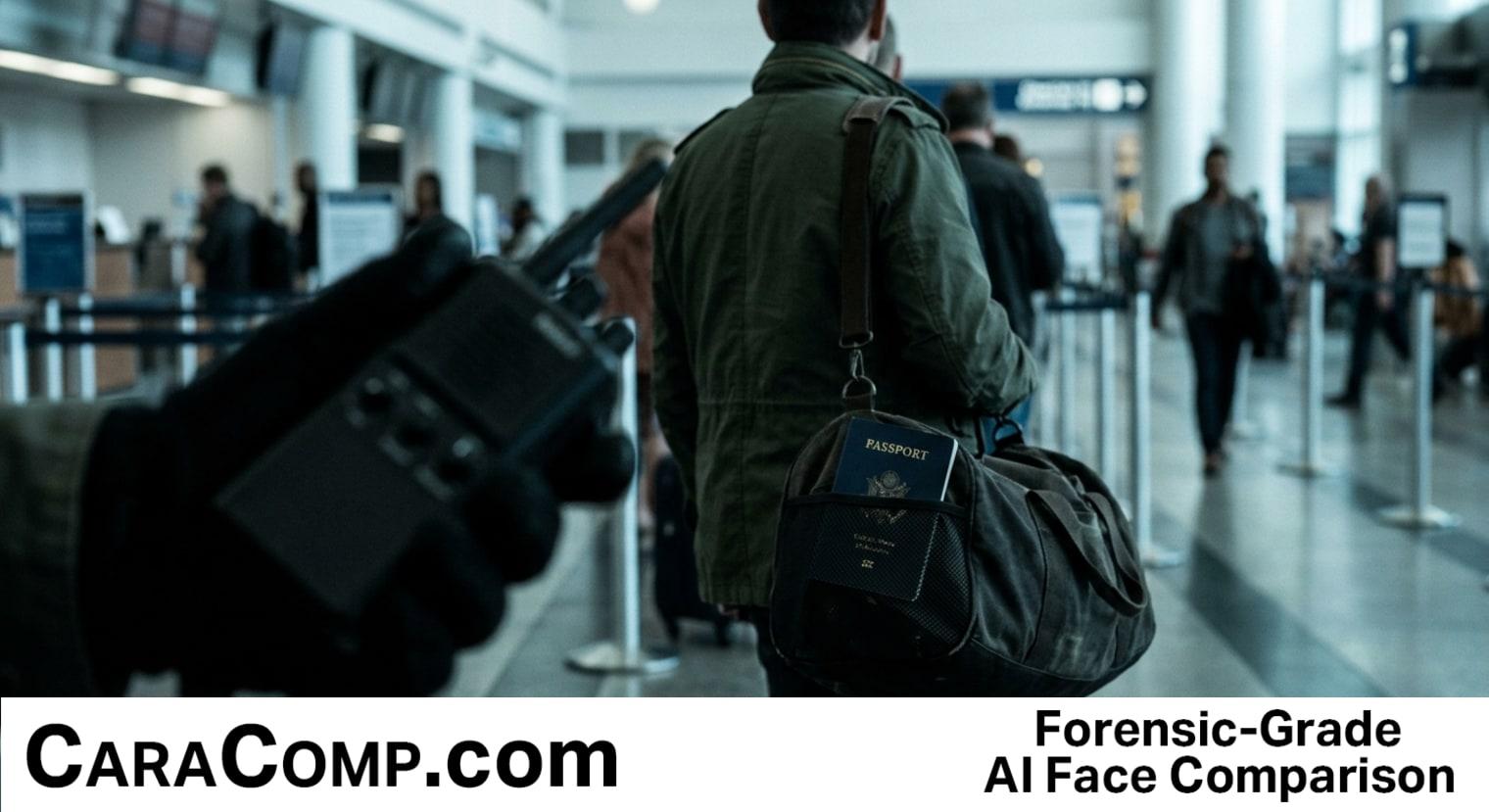
That 35 centimeters (about 14 inches) comes from a proof-of-concept skimming device described in patent filings at the USPTO. It is not a metre. It is also a lot farther than "touch it to the reader." And a metre is roughly the gap between you and the person behind you in a slow line.
There is a second, sneakier risk called eavesdropping. Here the eavesdropper does not power your chip. Someone listens to a legitimate reader's conversation with it. Trials held in October 2004 reportedly showed this was possible from about 30 feet away, as described in an academic paper on e-passport vulnerabilities. Skimming and eavesdropping are different tricks. Whether someone can recover your data depends on the access controls and the information available to them.
An adversary willing to build its own readers may achieve longer read ranges, especially if it is willing to violate applicable laws regulating radio frequency devices.
From a peer-reviewed case study of the U.S. e-passport
Read that again. Official readers follow the rules. Anyone willing to break the rules is not bound by the "few centimeters" promise. It is a cat-and-mouse game, not a solved problem.
Does a Biometric Passport Broadcast Your Identity All Day?
No. The chip has no battery and stays silent until a reader's radio field powers it. Early warnings said holders were "continuously broadcasting" their details, which sounds like a tracking beacon. It is not. The real concern is how far away that wake-up call can come from, not constant transmission.
People believe the beacon story for a fair reason: the word "contactless" sounds like it works all the time. Nobody explains the part where the chip is dead until powered. So the fear is understandable, but it points at the wrong thing. Your passport is not spying on you. The honest worry is distance.
Identity Verification Is Not Surveillance: The Aha Moment
Put the pieces together. A U.S. chip holds your photo and printed facts. It sits silent without a reader, and access controls can require a key derived from information on your photo page. Keeping the book closed makes that information harder to see. The Electronic Frontier Foundation's policy analysis also points to a simple fix: a Faraday cage (a metal-lined sleeve that blocks radio waves). Plain foil-lined passport sleeves work on that idea. Keep the book closed, keep it in a sleeve, and hand it over only at the desk. Up next: What Is A Biometric Passport A Chip Skimmed From 14 Inches.
What You Just Learned
- Small contents: a U.S. chip holds your photo and printed facts, not a hidden file on your life.
- A digital seal: one changed byte of signed data breaks the digital signature.
- A passive radio: no battery, so it only speaks when a reader wakes it.
- The real risk: distance. Researchers read chips from 35 cm, and reportedly eavesdropped from 30 feet.
What is a biometric passport? It is a paper travel document containing a tiny computer chip that stores your digital photograph and printed data, sometimes with other biometrics. The real stake is how far a radio can reach it, not what it secretly knows about you.
Recap: A biometric passport is an ordinary passport with a chip holding your photo and printed facts, sealed by a digital signature. Its weak spot is that the radio inside can be reached from farther away than people expect.
So here is the question to carry out the door. If someone behind you in the queue could reach your chip tonight, would you know where the information used to derive its access key is printed? It is on the page you are holding.
What Is a Biometric Passport: Frequently Asked Questions
What is a biometric passport compared with a regular passport?
A regular passport is printed paper with a printed photo, checked by human eyes. A biometric passport has the same pages plus an embedded RFID chip that stores a digital copy of the holder's photo and printed data. The chip carries a digital signature, so a reader can detect changes. The cover symbol of a rectangle with a circle tells you that your book has one.
Does a biometric passport store fingerprints or iris scans?
In the U.S., no. The chip stores the holder's passport photograph, the biographical data, and the machine-readable lines. Some countries may add fingerprints or iris scans. The one biometric every biometric passport must contain under the international rulebook is a digital photograph of your face.
Which countries use biometric passports for border control?
Biometric passports are issued by many countries, and they follow the shared ICAO Doc 9303 rulebook, which makes a digital photograph of the holder the common standard. That helps border control agencies compare faces. The security you get depends on correct implementation and signature checks.
Can someone read my passport chip in a queue?
Reading it is harder than the rumors say, but not impossible. The chip needs a reader's radio field to wake up, and access controls can require a key derived from the printed lines on your photo page. Researchers built a skimmer that read a chip from 35 cm for under $100, and trials reportedly showed eavesdropping from about 30 feet. A foil-lined sleeve helps.
How does identity verification work with the chip at a border?
The reader checks the digital signature to detect changes to the signed data. Then facial recognition software or an officer compares your live face with the digitised image on the chip. Facial recognition turns each face into a digital map of numbers, then measures how closely the two maps match. Both steps help verify the document and the person, though a match is not infallible.
Ready for forensic-grade facial comparison?
Full forensic reports with detailed similarity scoring. Results in seconds.
Run My First SearchMore Education
Roblox Age Verification Face Scan: Hijackers Keep Kid Status
Your kid's face gets scanned, then, according to Roblox, deleted. Learn what age verdict Roblox keeps, why it matters, and the mistake that leaves accounts exposed.
privacyChild Identity Theft: 3 in 4 Young Victims Know the Thief
A child's name can sit on a stranger's criminal record for years while nobody checks. Learn the five mistakes that let it happen and where to look first.
biometricsBiometrics Appointment: 15 Minutes, Up to 75 Years on File
A biometrics appointment feels like a quick errand. Learn where your fingerprints go afterward, why the check keeps running, and the mistakes that trip people up.