
Facial Recognition Software: 14 Wrongful Arrests So Far
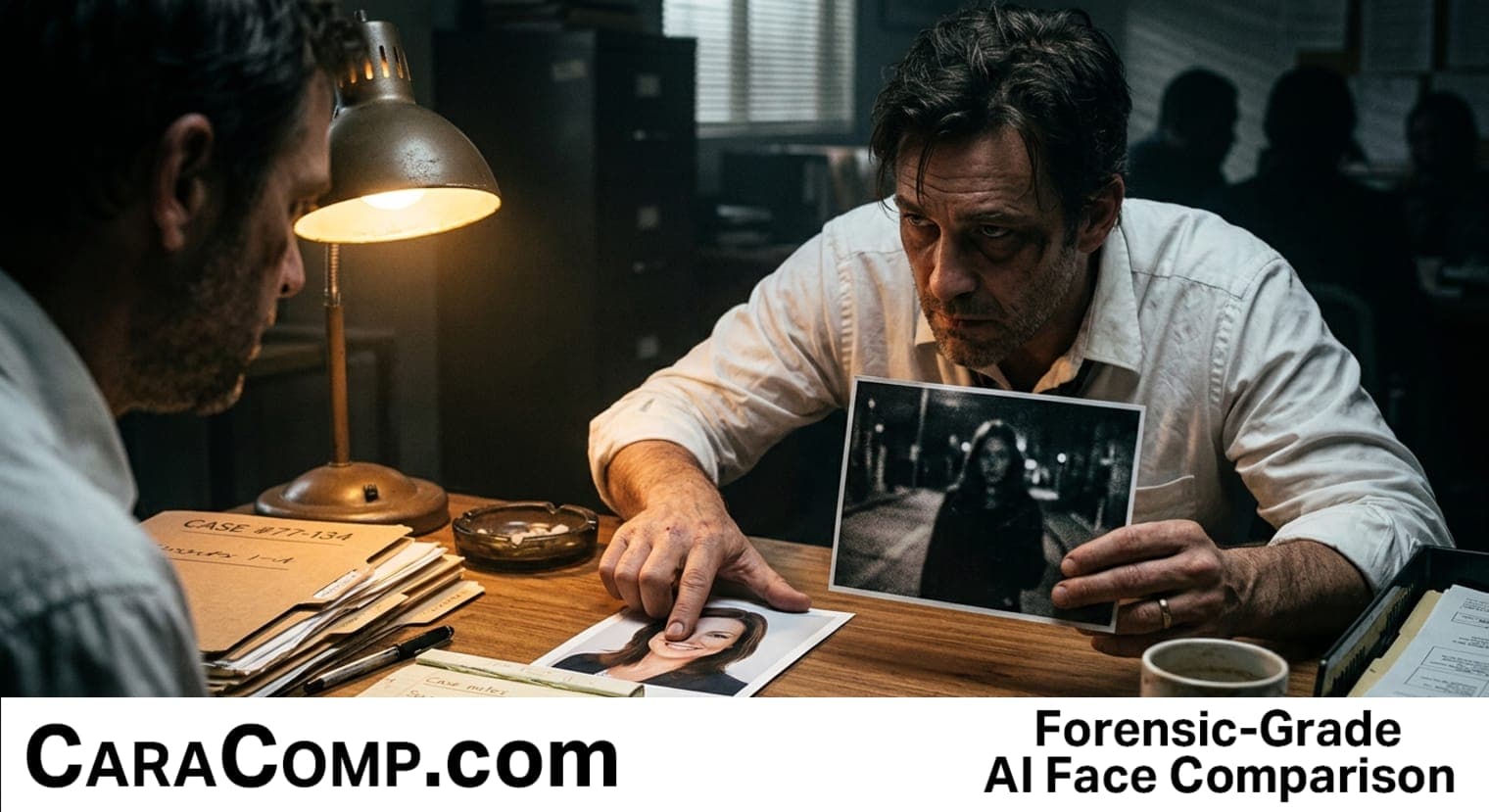
Here's a number that should bother you: an algorithm can score 99.9% accurate in a government lab and still help put an innocent person in handcuffs. Not because the math is wrong. Because the lab and the street are two completely different worlds, and nobody warned you the second one is where your face actually lives.
Facial recognition software works by turning your face into a set of measurements, comparing those measurements to a database of other faces, and handing police a list of "maybe this person" candidates that are too often treated as a confirmed identity instead of a hunch worth checking.
Facial recognition software maps your face into data points, matches them against huge databases, and produces a "best guess" list that police sometimes mistake for proof, which is how innocent people end up arrested.
At least fourteen people in the United States have been publicly identified as wrongfully arrested because of a bad match from facial recognition, according to the American Civil Liberties Union. Most of them are Black. One was a pregnant woman in Detroit named Porcha Woodruff, arrested for a carjacking she had nothing to do with. Another, Robert Williams, was cuffed on his own front lawn in front of his kids and held for 30 hours over a theft the software swore he committed. He didn't. This is not science fiction. This is what happens when a tool built to generate leads gets treated like a verdict.
How Facial Recognition Software Actually Turns Your Face Into a Match
So how does this thing actually work? Picture your face getting run through a scanner that ignores everything you'd notice about yourself, like your smile or your hairstyle, and instead zeroes in on the stuff that barely changes over time: the distance between your eyes, the width of your nose, the curve of your jawline. The software plots dozens of these points, sometimes over a hundred, and turns them into a string of numbers, kind of like a fingerprint made of geometry instead of ink. That number string is called a faceprint, and it's what actually gets compared, not a picture of you.
14+
known wrongful arrests in the US tied to flawed facial recognition matches, most involving Black individuals
Source: American Civil Liberties Union This article is part of a series, start with How To Protect Yourself From Identity Theft 6 Free Moves Pod.
Once your face becomes that string of numbers, the software checks it against millions of other faceprints sitting in a database, usually mugshots, sometimes driver's license photos, sometimes photos scraped straight off the internet. It doesn't spit out one perfect answer. It spits out a ranked list, like a search engine returning "results," except the results are human beings. A 95% "confidence" score doesn't mean the software is 95% sure it found your neighbor. It means your neighbor's face is mathematically close to the crime scene photo, out of everyone in that database. In a database with ten million faces, a 95% match can still leave hundreds of thousands of innocent lookalikes technically "close enough" to flag.
What Does Facial Detection Software Actually Measure?
Facial detection software is the first step, the part that just finds a face in an image before any matching happens. It draws a box around a head in a photo or video frame, the way your phone camera puts a little square around faces before you snap the picture. That's detection. Matching that detected face against a database to guess an identity is a separate, harder job, and that's where facial recognition software takes over.
Why Facial Recognition Software Fails More Often on Some Faces Than Others
Here's where it gets uncomfortable. The National Institute of Standards and Technology, known as NIST, is the federal lab that grades facial recognition algorithms the way Consumer Reports grades blenders. Their testing has repeatedly found that many algorithms are more accurate on lighter skin than darker skin, and more accurate on men than women. In some tests, the false positive rate, meaning the software wrongly says "match" when it isn't one, was over 100 times worse for the least accurate demographic group compared to the most accurate one, according to research summarized by the Bipartisan Policy Center. That's not a rounding error. That's a system with a built-in blind spot, and the people standing in that blind spot are the ones getting arrested.
Lighting alone can wreck the whole thing. NIST's research points to bad lighting as one of the biggest reasons matches fail. Underexposed photos wash out the fine detail on darker skin. Overexposed photos blow out detail on lighter skin. Harsh side lighting throws shadows that distort the geometry of a face entirely, the same geometry the software depends on to make its measurements. Change the light in the room and you can change whether the software recognizes a face it "knows" perfectly well under normal conditions.
Then there's the gap between the lab and the street. NIST tests these algorithms under close to ideal conditions: a person facing the camera, decent resolution, steady framing. That's how you get headlines about 99.9% accuracy. But a grainy convenience store camera running at 15 frames per second, filming someone from the side, at night, through a dirty lens, is a different universe. NIST actually runs a separate evaluation program for exactly this problem, testing facial recognition against degraded video, outdoor lighting, and long-range footage, through its Face in Video Evaluation program. The scores drop. Sometimes they drop a lot. The algorithm's skill didn't change. The input quality did.
Facial Recognition System Accuracy: Lab Score vs. Street Reality
A facial recognition system can post a near-perfect accuracy score on a government benchmark and still fail badly in the field, because the benchmark tests frontal, well-lit, high-resolution faces, while surveillance video is often blurry, dim, and shot from odd angles.
| Lab Conditions (NIST Benchmark) | Real-World Surveillance |
|---|---|
| Frontal face, direct eye level | Side angle, security camera mounted high on a wall |
| Studio-quality lighting | Parking lot lighting, streetlights, nighttime glare |
| High-resolution still photo | Low resolution video, sometimes 15 frames per second |
| Recent, clear reference photo | Old mugshot, years out of date, poor image quality |
| Accuracy often above 99% | Accuracy drops sharply, especially across demographic groups |
This is the part CaraComp spends a lot of time explaining to worried readers, because the fear isn't really about the technology itself. It's about not knowing how it decides, and not knowing what happens when it decides wrong. Once you understand that these systems output candidates, not verdicts, you stop feeling like you're at the mercy of a black box and start understanding exactly where the process is supposed to have a human double-check it, and where that check keeps getting skipped.
Who Actually Has Your Face on File in a Facial Recognition Database?
Law enforcement agencies across the country pull from several different pools of images. State driver's license and ID photo databases are one of the biggest sources, meaning you may already be in a facial recognition system just for having a license, with no crime, no arrest, nothing. Mugshot databases from past arrests are another. And in some cases, agencies have used photos scraped from public websites and social media, building databases without ever asking the people in them. Federal, state, and local enforcement agencies don't all share one national system. It's a patchwork of overlapping databases, some run by state governments, some by federal agencies, some shared informally between jurisdictions. Previously in this series: Deepfake Technology 350 Fake Nudes Made By Two 14 Year Olds .
This matters because there's no single place you can check to see "am I in a facial recognition database." If you have a driver's license, you're probably already in at least one. If you've ever been arrested, even for something later dropped, your mugshot may still be sitting in a searchable system. The lack of one central answer is exactly why this technology feels so unsettling. You can't opt out of a system you can't even see.
Face Recognition, Face Detection, and Attendance Systems: Not the Same Thing
Not every camera pointed at your face is trying to identify you for police. Schools and workplaces sometimes use facial recognition for attendance tracking, essentially clocking someone in by matching their face to a stored photo instead of a badge swipe. That's a much lower-stakes use than a police lookup against a criminal database, but it still means your faceprint is stored somewhere, by an employer or a school, under rules that vary wildly depending on your state.
The Misconception That Gets Innocent People Arrested
Most people assume that if police say "the facial recognition software matched him," that's basically the same as a fingerprint match or a DNA test. It feels scientific. It feels final. Honestly, it's an easy mistake to make, because the word "match" does a lot of heavy lifting in that sentence, and nobody explains that a facial recognition match is closer to a Google search suggestion than a signed confession.
When facial recognition technology generates false matches to innocent lookalikes, it can taint the investigation by tricking witnesses and police into mistakenly believing they've found the suspect.
American Civil Liberties Union, ACLU
Here's what actually happens in practice, and it's worse than people expect. Police run a grainy image through the software, get a ranked list of candidates, and pick the top name. That name's photo then gets slid into a lineup shown to a witness, surrounded by "filler" photos of people who often look less similar to the suspect than the software's pick does. The witness, understandably, points to the face that looks most like what they remember, which is almost always the software's suggestion. Nobody lied. Nobody acted in bad faith. But the software's guess just got laundered into an eyewitness identification, and eyewitness identification carries enormous weight in court. That's exactly the chain of events that led to Randal Quran Reid spending a week in a Georgia jail for a crime committed in Louisiana, a state he says he'd never even been to at the time.
The honest fix isn't complicated, and it's the same one investigators are trained to use for any tip: treat the match as a starting point, not an ending point. Check alibis. Check timestamps. Check whether the person was even in the state. When that basic legwork happens, wrongful arrests get caught before an arrest happens. When it doesn't, the software's guess becomes someone's nightmare.
What You Just Learned About Facial Recognition Software
- 🧠 It measures geometry, not identitythe software compares point-to-point distances on your face, not a "you-ness" it understands
- 🔬 Accuracy depends heavily on demographicsNIST found error rates over 100 times worse for some groups than others
- 💡 A "match" is a candidate, not a convictiona 95% score can still mean thousands of false candidates in a large database
- 🚨 Your face may already be on filedriver's license photos and old mugshots are common sources, with no single opt-out
What to Do If Facial Recognition Software Misidentifies You
If you're ever contacted or arrested based on a facial recognition lead, the first move is to ask directly whether facial recognition software was used to identify you and get that in writing if possible. Then contact a lawyer immediately, before answering further questions. You can also file a complaint with the specific police department involved and, separately, with the ACLU, which tracks these cases nationally. Document everything: dates, officer names, what you were told about how you were identified. The paper trail is often what eventually clears someone's name, sometimes months later.
Facial recognition software doesn't identify you, it ranks how mathematically similar your face is to a database of strangers, and the moment police treat that ranking as a confirmed identity instead of a lead worth checking, innocent people go to jail. Up next: Biometric Authentication 40 Of Systems A Photo Can Fool.
So here's the aha moment worth carrying out of this: the technology was never designed to say "this is definitely him." It was designed to say "start here." Somewhere between the algorithm's output and the handcuffs, that "start here" got mistranslated into "case closed," and people including Porcha Woodruff, Robert Williams, and Randal Quran Reid paid for that mistranslation with their freedom. The software isn't broken in the way people assume. The shortcut humans took around it is.
Facial Recognition Software: Frequently Asked Questions
Can I find out if a facial recognition system has my face on file?
There's no single national database you can check. Your face may already be in a state driver's license database, an old mugshot database, or a system built from scraped internet photos. You can file public records requests with state agencies and local police departments asking whether they use facial recognition software and what databases they pull from, but there is no one-stop lookup tool available to the public today.
Is ai-powered facial recognition software more accurate than older systems?
Modern ai-enabled facial recognition software has improved significantly over older systems, but accuracy still varies by lighting, camera angle, image age, and the demographic makeup of the person being scanned. NIST testing shows even top-performing systems have measurably higher error rates for certain groups. Better technology has narrowed some gaps, but it hasn't eliminated the accuracy differences that lead to wrongful matches.
What's the difference between cloud-based and on-device facial recognition?
Cloud-based facial recognition sends your face data to remote servers for processing and matching against large databases, which is how most law enforcement agencies and national systems operate. On-device systems, like the one that unlocks your phone, process and store your faceprint locally without sending it anywhere. Cloud-based systems can search far larger databases, but they also create more places your biometric data could be exposed or misused.
Why does facial recognition software sometimes make skin appear too smooth in enhanced images?
Some image enhancement tools used alongside facial recognition software apply smoothing filters to sharpen or clean up low-quality video before analysis. This can make skin appear too smooth, effectively inventing detail that wasn't in the original footage. That artificial smoothing can distort the very facial landmarks the software relies on, which is another reason degraded video produces unreliable matches.
Do I have a right to know if police used facial recognition software to identify me?
This depends heavily on your state and the specific law enforcement agency involved, since there is no single federal law requiring disclosure. Some jurisdictions require officers to document when facial recognition contributed to an identification. If you suspect it was used in your case, ask your attorney to formally request that information as part of discovery, since it directly affects how reliable the identification actually is.
Are there laws limiting how police can try facial recognition software before using it in an arrest?
Laws vary widely by state, and more than 20 cities and jurisdictions have banned police use of facial recognition technology entirely. Where it is allowed, some state laws require the match to be treated only as an investigative lead requiring additional verification, not standalone grounds for arrest. Federal agencies generally have more room to use the technology, since there is no comprehensive national law regulating it yet.
Ready for forensic-grade facial comparison?
Full forensic reports with detailed similarity scoring. Results in seconds.
Run My First SearchMore Education
Deepfake AI App: One Photo, 225,000 School Fakes
You made a funny video with a face swap app. Here's what most people don't realize: the app kept the data, and the same tech is now behind a wave of fake porn videos hitting middle schools.
digital-forensicsDeepfake Technology: 350 Fake Nudes Made by Two 14-Year-Olds
A teenager with a laptop and a school photo can now create a fake nude in seconds. Here's the actual technology behind deepfakes, why humans can't spot them, and the one legal fact every parent needs to know.
biometrics2K Face Scan: 13 Photos Amazon Stores Indefinitely
Your NBA 2K face scan doesn't just make a video game avatar. It creates a 3D math model of your actual face, and lawsuits say that model can sit on a server long after you stop playing.