
Facial Recognition Ethics: A "100% Match" Cuffed the Wrong Man
Quick answer
What are the main ethical issues with facial recognition?
The main ethical issue is treating a similarity score as certainty. A match only shows two faces scored above a cutoff that people chose, and error rates differ across demographic groups, according to NIST. Ethical use needs trained humans to check other evidence before anyone is detained, plus documented review steps.
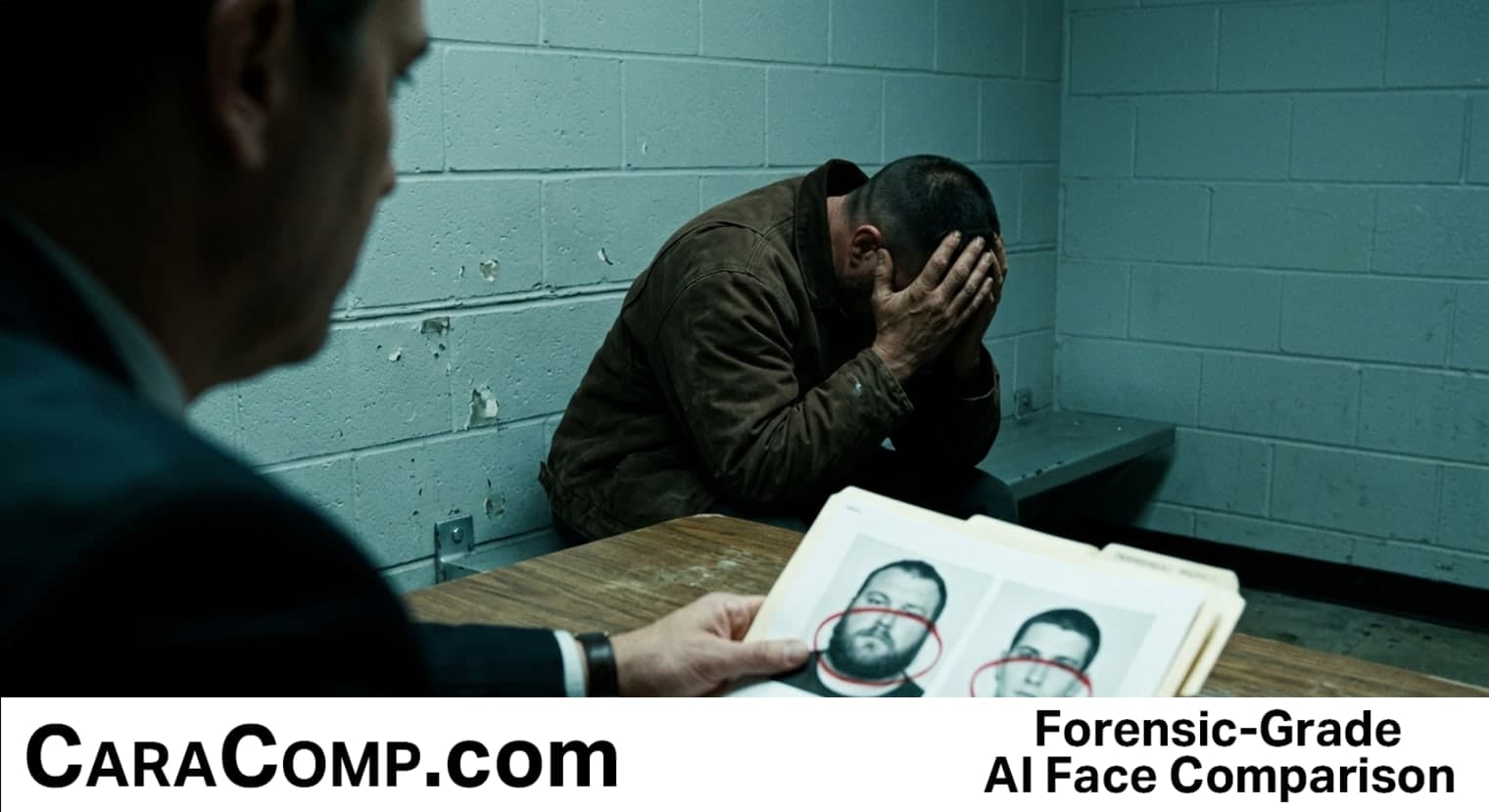
A Reno casino guest was handcuffed for four hours after a computer said his face was a "100% match" for a banned patron, a man four inches shorter than him with different colored eyes. The case is a crash course in facial recognition ethics: what a match score actually measures, why it's not proof of anything, and what should happen between the alert and the arrest.
A facial recognition "match" is a similarity score picked by engineers, not a fact about who someone is, real safety depends on the human review step that happens after the alert, not the alert itself.
Here's the detail that should stop you cold: the man arrested in Reno was four inches taller than the guy the computer said he was. Different eye color, too, blue instead of hazel. And the machine still called it a 100 percent match. Not "probably." Not "worth a second look." One hundred percent, according to Focus Gaming News, which broke the original story about Michael Killinger's wrongful arrest at a Reno casino.
That number, 100 percent, is the whole problem. It sounds like certainty. It's actually just marketing language wrapped around a math score. And the gap between what that score means and what a cop, a casino guard, or you would assume it means is exactly where things go wrong. Let's take it apart.
What A Facial Recognition Match Score Actually Is
When a camera flags a face, the system isn't comparing photos the way you'd hold two Polaroids side by side. It's converting each face into a string of numbers, a mathematical fingerprint based on things like the distance between your eyes, the width of your nose bridge, the curve of your jaw. Then it measures how close those two number-strings are to each other. Close enough, and it throws a flag.
Starts at 01:51 — this story
Watch this story, in under a minute
A new briefing every weekday — three stories, three minutes.
Subscribe on YouTubeThat "close enough" line is called a threshold, and here's the part almost nobody realizes: a human being picked that number. It's not a law of physics. According to research cited by a facial recognition blog, a low threshold, say 0.50, will misidentify roughly one face in every ten. Crank the threshold way up, to 0.999, and you're down to being wrong about once in a million. Sounds great, right? Except tightening the threshold to cut false matches also means you start missing real matches, a trade-off with no setting that fixes both problems at once.
So when a system says "100 percent," what it's really saying is: these two number-strings landed above whatever line we drew. That's not the same sentence as "this is the same person." It just sounds like it is, because humans use percentages to talk about certainty ("I'm 95% sure that's John"), and a machine's score borrows that same language without meaning the same thing. This article is part of a series, start with How To Spot A Deepfake.
Why the Reno casino facial recognition case matters beyond one arrest
Killinger wasn't an isolated glitch. According to reporting on the case, Reno police have been connected to 168 separate facial-recognition flagging incidents, and only 16 of those happened before Killinger's 2023 arrest. That means the vast majority came after his wrongful detention, after the department had every reason to know something in its process was broken. This isn't a story about one bad camera moment. It's a story about a department that never built a rulebook for what to do once the alert goes off.
Facial Recognition Ethics: The Missing Step of Human Review and Corroboration
Here's where it gets interesting, and honestly, a little infuriating. According to court records connected to the case, the Reno Police Department never trained officers on a fairly basic principle: an AI facial recognition flag is not sufficient probable cause to make an arrest on its own. The officer involved, identified in the case as Officer Jager, admitted in a deposition that additional training could have prevented the mistake.
Officer Jager acknowledged that additional training on the use of facial recognition could have prevented the wrongful arrest. as reported by This Is Reno, covering the deposition in the Killinger case
Think about what that means in practice. Somewhere between the computer flashing a red alert and handcuffs going on Killinger's wrists, nobody stopped to check the obvious stuff. Height. Eye color. Whether the guy standing in front of them actually matched the photo the system pulled up, with human eyes, not just algorithmic ones. That's not a technology failure. Facial recognition did exactly what it was built to do: it flagged a similarity and moved on. The failure was procedural, no checklist, no second look, no rule that said "stop and verify before you act."
How does facial recognition actually verify identity?
It doesn't, not by itself. A facial recognition system produces a lead, a candidate worth investigating. Actual identity verification requires a person to check image quality, compare distinctive features side by side, confirm the timeline (was this person even in the state that day?), and look for independent evidence like receipts, phone records, or witness statements. Skipping that step turns a computer's guess into an arrest.
What You Just Learned
- 🧠 Match scores are threshold-dependentengineers pick the cutoff, so "100% match" measures similarity to a chosen line, not verified identity
- 🔬 Accuracy isn't one numbererror rates swing wildly by lighting, camera angle, and demographic group, according to NIST
- 💡 Corroboration is the real safeguardchecking image quality, timeline, and physical details is what separates a lead from an identification
- ⚖️ Procedure failed, not the softwareReno's department never trained officers that a flag alone isn't probable cause
Facial Recognition Ethics: The Detective, Not the Verdict
Picture a detective working an old-fashioned case. A witness says, "I think I saw the guy, tall, dark jacket, near the exit." That's useful. It's worth following up on. But no prosecutor walks into court with just a witness's gut feeling and calls it proof. They go check the security footage, pull the timestamps, confirm the guy's alibi doesn't hold up, and only then build a case.
A facial recognition alert is that witness. It's a tip, not a verdict. The mistake people make, and it's an understandable one, because a machine spitting out "100%" feels more objective than a nervous witness, is treating the algorithm's confidence like it already did the detective work. It didn't. It just noticed a resemblance and raised its hand. Somebody still has to walk over and check. Previously in this series: Biometric Data Definition.
This is also where a lot of the current debate over facial recognition ethics actually lives, not in some abstract "is AI good or bad" argument, but in this exact gap between an alert and a verified identification. Every serious conversation about data protection, accountability, and public trust in these systems eventually lands on the same question: who checks the machine's work, and how?
Facial data, ethical issues, and where privacy law comes in
Because facial data is biometric, it's tied permanently to your body, unlike a password you can change, mishandling it creates real privacy violations, not hypothetical ones. Regulations like Europe's GDPR and various U.S. state biometric privacy laws exist specifically because a wrongful match isn't a paperwork error. It's someone getting arrested, or fired, or banned from a business, over facial data that a machine misread. That's why compliance, audit trails, and documented review steps matter as much as the underlying algorithm's raw accuracy.
Why "Systems" Without Rules Create Racial and Legal Risk
The demographic gap in facial recognition error rates isn't a rumor, it's documented. NIST's own testing found some algorithms produced false-positive rates up to 100 times higher for Black and Asian faces than for white faces. That's not a rounding error. It means the exact same "100% match" language can carry wildly different real-world reliability depending entirely on who's standing in front of the camera. A department using face recognition technology without accounting for that gap isn't just risking one wrongful arrest, it's building in a pattern of racial disparity, arrest after arrest, flag after flag.
That's the deeper reason law enforcement agencies, casinos, retailers, and anyone else using these systems need a documented process, not just for legal protection, but because it's the only thing standing between a similarity score and someone's actual rights. At CaraComp, this is the exact gap our comparison tools are built to close: giving investigators a clear, documented trail showing image quality checks, feature comparisons, and corroborating evidence, the paperwork that turns "the computer said so" into an actual, defensible finding.
Correcting the Biggest Misconception About Face Matches
Most people assume a high confidence score is basically the same as a fingerprint match or a DNA test, hard, physical proof. It's an easy mistake to make. We're used to percentages meaning certainty in everyday life: a 95% chance of rain, a 99% battery charge. So when a screen says "100% match," your brain files it next to those other percentages, as something close to fact.
But a facial match score isn't measuring a fact about the world. It's measuring the mathematical distance between two sets of numbers, filtered through a threshold a company or agency chose in advance, based on how many mistakes they were willing to tolerate. Nobody engineered a system that could eliminate errors entirely, that system doesn't exist. What they built instead was a dial: turn it one way, catch more real matches but also more false ones; turn it the other way, and you'll miss real matches to avoid false ones. Reno's system was apparently dialed toward "flag aggressively." Nobody balanced that against "then verify carefully." Up next: How To Spot A Deepfake 1 School Photo Is All It Takes.
If you ever hear "the facial recognition system flagged them," treat it the way you'd treat a tip from an anonymous caller, worth checking out, never worth acting on alone. The safety isn't in the software's confidence score. It's in whether a human actually looked closer before anything happened.
What Actually Protects You From a False Facial Recognition Match
So what do you actually do with this, sitting on your phone at 11pm wondering if this could happen to you? You ask the question the alert alone can't answer: what else backs this up? If a store, an airport, or the police ever tell you that a camera "identified" you, that sentence should trigger a follow-up question, not fear: what corroborating evidence do they have beyond the computer's score? Time-stamped video? A second form of ID? A human who actually looked at both images side by side and checked for the stuff a machine can't weigh, height, eye color, an alibi?
Killinger spent four hours in handcuffs and needed medical treatment for a shoulder injury from the arrest, according to reporting on his case. Not because a machine lied. Because nobody double-checked what it said.
Frequently Asked Questions
What does a facial recognition "match" percentage actually mean?
It means two facial images scored above a similarity cutoff that engineers chose in advance, not that the system has confirmed identity. A "100% match" is a threshold result, not proof, and low-quality photos, poor lighting, or a similar-looking stranger can still trigger a high score.
Can police arrest someone based only on a facial recognition alert?
They shouldn't, and doing so without additional corroboration has led to documented wrongful arrests, including the Reno casino case. Responsible practice treats a match as an investigative lead requiring human review, image comparison, and independent evidence like timeline or witness confirmation before any arrest.
Why do facial recognition systems make more mistakes with certain races?
NIST testing found some algorithms produce false-positive rates up to 100 times higher for Black and Asian faces compared to white faces. Differences in training data, image contrast, and camera calibration all contribute, which is why demographic-specific accuracy checks matter as much as overall accuracy claims.
Ready for forensic-grade facial comparison?
Full forensic reports with detailed similarity scoring. Results in seconds.
Run My First SearchMore Education
Biometric Information: One Face Scan Can Cost a Firm $5,000
A company can owe you money for saving your face even if nothing bad ever happens. Learn how one clause decides who pays, and where to look first.
biometricsBiometric Digital ID: One Leak Opens Every Door, Forever
One card that opens every door sounds great until it leaks. Learn how a biometric digital id really works, why a 99 percent match isn't proof, and where to look first.
privacyRemove Metadata From Photo: Hidden GPS Can Reveal a Home
Your camera quietly writes where and when you shot every picture inside the file. Learn the common mistakes that leave it there, and the quick fixes on a Mac, a PC and a phone.