
Biometric Digital ID Security: One Leak Opens Every Door
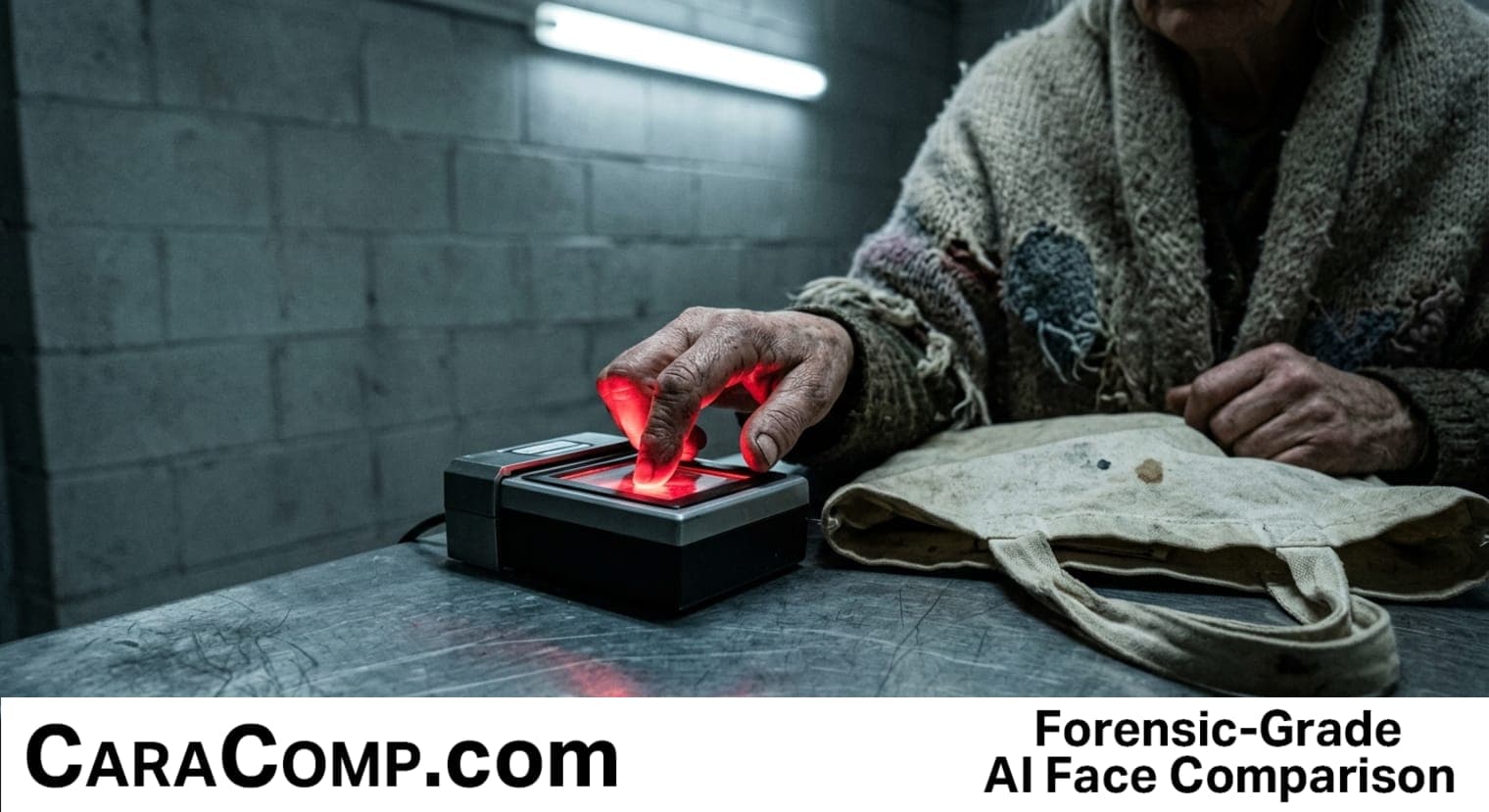
Quick answer
What is a biometric digital ID and how does it work?
A biometric digital ID is an identity system that checks your face, fingerprints or iris instead of a password or card. It stores a list of numbers measured from your body, then compares a fresh scan against it and produces a score. Because the body cannot be changed, a leaked record is hard to fix.
A biometric digital id does not keep your face. It keeps a recipe for your face: a long list of numbers a computer can compare in a blink. That list is the key to the door, and in a true one card system it opens every door at once.
A biometric digital id turns your face, fingerprints or iris into one reusable list of numbers that unlocks many services, which is convenient until one leak or one glitch hits every door at the same time.
Biometric Digital ID Explained: One Card, Every Door
Think about the last time you had to prove who you were. Maybe you slid a card across a counter. Maybe a passenger ahead of you at the airport fumbled for a license while the line grew. Every one of those moments is a small identity verification, and each one used to be separate. Your bank had its own lock. Your job had another. Your health plan had a third.
A biometric digital id is the plan to replace that pile of locks with one. Instead of a name and a birthday, the identity verification step checks your biometrics (your face, fingerprints or iris, the body stuff that is uniquely you). In plain terms, biometrics is the automated recognition of individuals based on your physical traits. A machine looks at you, measures you, and decides whether you are who you say you are.
How a digital identity turns your face into a number
Here is the part most people never hear. When you enroll in a system like this, it does not file away your selfie like a photo album. It runs software that measures your face and boils the measurements down to a biometric template. For facial data, that template is typically a vector of about 128 numbers. (A vector is just a list. Picture a recipe card with 128 ingredients, each one a measurement of your face.) The template gets encrypted for security, which means scrambled so outsiders can't read it, and stored in a central database.
Some apps start with a biometric selfie: a quick photo, plus a check that a live person is holding the phone. The selfie is only the starting point. The numbers are what the system keeps.
Then comes the "one card" part. Identifiers come in two flavors. They can be biographic, like your name, address and birthday. Or they can be biometric identifiers, like your face and fingerprints. A digital identity ties both kinds to one master number, so that number links your identity to everything you do with it. India's Aadhaar program, run by the Indian government, is the biggest example of a digital-id system. According to an arXiv comparative analysis of national digital identity systems, it has issued 1.3 billion unique identifiers, and a central repository checks every new enrollment against all the old ones to catch duplicates.
What information is actually stored, and is it safe?
The reassuring answer is that the raw photo is usually not the thing sitting in the database. The unsettling answer is that it doesn't have to be. The template is the digital credential. If someone copies that list of numbers, they may not need your actual face or finger to fool the system. They can feed the numbers in and spoof the check, and they can do it at scale.
That is why the rule of thumb in this field is that biometric data should be securely stored, and why a central pile of templates is such an attractive target. The information inside is useless to most thieves, until it isn't.
Passwordless sign-in: why a face is not a password
You will hear this technology sold as passwordless. No password to remember, no code to type. Just look at the camera. That is genuinely nicer than typing a 14-character mess on a tiny keyboard at 11pm. This article is part of a series, start with Age Verification Windows 11 Sorts Kids Into 5 Age Boxes.
But here is the catch, and it's the whole article in one sentence. A password can be changed. Your face cannot. If a password leaks, you pick a new one by lunch. If your template leaks, you can't grow a new face. Think of your face as a username that never expires.
How Does a Biometric Digital ID Work When You Walk Up to a Door?
Identity verification runs in two quick steps. First, a camera or scanner captures a fresh sample of you and converts it to numbers. Second, software compares those numbers with the stored template and scores how alike they are. If the score clears a set bar, the door opens. Nothing is "seen" the way you see a face. It is all number comparison.
Those numbers come from in-depth features of a face, such as the spacing between the eyes and the shape of the jaw. Two photos of the same person should land close together. Two strangers should land far apart. The software is really just determining how close is close enough.
What a TSA checkpoint teaches about matching
You already know this move from real life. At a TSA checkpoint, an officer handles identity verification by looking at your card, looking at you, and making a call. A facial matching system does that glance with math. One big difference: the officer can be tired, distracted or wrong, but they know you are standing right there. A database search has no idea who is standing there. It only knows numbers.
TSA PreCheck and the trade you may already have made
If you have ever signed up for TSA PreCheck, you made a small version of this deal. You handed over fingerprints and personal details once, in exchange for a faster line later. That trade is fine when it is one program with one purpose. It gets spicier when the same enrollment quietly unlocks your bank, your benefits and your job.
REAL ID: the card in your wallet is not biometric
A REAL ID is a regular card with a photo and printed details, not a form of digital identification. It proves who you are to a human or a barcode reader, but it does not carry a face template that opens your bank. That is why losing one is annoying, not catastrophic. You cancel, you get a new card, the lock gets replaced. A biometric digital id removes that safety valve, because the "lock" is you.
Biometric Digital ID Failures: When One Fingerprint Locks Every Door
Let's make this concrete with a case that is not about hackers at all. The Wire documented how poor and elderly people absorb the worst of Aadhaar authentication errors. In one case, an 80-year-old woman in a New Delhi slum lost access to her food rations for most of 2023, because her fingerprint stopped working in 2022. The backup was iris recognition, a scan of the colored ring of your eye, built to offer more accessible biometric authentication when fingers fail. It failed too, after she had cataract surgery.
Nobody hacked anything. Her body simply changed, the way bodies do. People who work in construction, farming and factories wear down their fingerprints. Age and surgery change the rest. When the digital identity is your body, and your body changes, the credential breaks everywhere it is used. Activists in India have also linked ration denials after failed checks to starvation deaths, which is why this isn't just an inconvenience story.
The master key made of numbers
Here is the picture to keep in your head. A biometric digital id is a master key cut from numbers. Normally you use it one door at a time: bank, benefits office, job check. But if someone clones that key, every door it opens is open to them. And unlike a house key, you can't call a locksmith and change a face. Previously in this series: What Is Identity Verification Apple Cash Wants Id For 1.
| Old way: separate locks | Biometric digital id: one key |
|---|---|
| Each account has its own password and a regular bank card of its own | One facial or fingerprint template unlocks many services |
| A stolen password is replaced the same day | A leaked template cannot be replaced, because your biometric data stays the same |
| A security breach at one business stays at that business | A breach at the central database can open access to every connected platform |
| Failure means one locked account | Failure can cut off access to food, money and benefits together |
Why digital identities share one weak point
Traditionally, a stolen bank password did not touch your employment check. Each service had its own lock, and that separation was quietly protecting your privacy. When many digital identities point at one central template, that separation disappears. Reports of fraud around Aadhaar describe criminals using cloned fingerprints to drain bank accounts tied to the system. Whatever the exact numbers, the shape of the security risk is clear: financial services, welfare and ID all share the same weak point.
To be fair, supporters make a real argument. They say digital ids can boost financial inclusion by letting people without much paperwork open an account and receive payments. That upside is real. The question is only whether one key should carry that much weight.
Matching identities at scale: the 98 percent trap
Now add a second kind of failure: the system saying "yes" to the wrong person. US Customs and Border Protection says its matching of departing travelers is accurate about 98 percent of the time. Sounds great. But run 98 percent across millions of scans and you get a large absolute number of mistakes. Size matters too: factors like database size, image quality and the race of the person being identified all raise the odds of a false match.
NIST, the US agency that tests this technology, found that in one-to-many searches (the kind police run, comparing one photo against a whole database) false positive rates were higher for African American women. The Federation of American Scientists covers the bias research and the wrongful arrests that followed. The ACLU counts more than a dozen wrongful arrests tied to police reliance on facial recognition.
Why a human check doesn't fix it
You might think a human reviewer catches the errors. Researchers say that safety gate is weaker than it sounds:
People have an inherent, deeply programmed proclivity to believe algorithms, and it is very hard to come up with systems that will stop police from believing that a facial recognition match must be right. Face recognition researchers, as summarized in the research behind this article
In other words, when a screen shows a name, people treat it as an answer. They build the whole investigation around it.
Is a 99 Percent Accurate Biometric Digital ID Almost Always Right?
No. Accuracy describes how often a system is right across all its tries, not whether one particular match is right. A facial search is built to rank the faces most similar to the one you gave it, so it will hand back lookalikes. Treat a top result as a lead to check, never as proof.
Why smart people get this wrong
It makes total sense that people believe the 99 percent number. One percentage sounds scientific, and everyday life trained us that way. A test score of 99 means you nearly aced it. But a facial search is not a test with one answer. It is closer to typing a word into a search box: you get a ranked list, and the top hit is only the best guess. Think of "here are the 500 faces most similar to your suspect photo." Somebody has to be at the top of that list, even when the real person isn't on it at all.
That is the mistake behind wrongful arrests. Departments have arrested people on an algorithm's suggestion alone, with no fingerprints, no eyewitness and no DNA connecting them to the crime. The tool did its job (ranking similar faces). The people misread what the job was. Up next: Biometric Digital Id One Leak Opens Every Door Forever.
At CaraComp, this is the first thing we teach about facial comparison: a match is a reason to look closer, not a reason to stop looking. The strength of a result depends on photo quality, the size of the database, and whether anything else backs it up.
If this happened tonight, where would you look first?
Say your face template, or the account tied to it, is exposed. Where do you start? Start with the account that holds the most: the one tied to your national id, your bank or your benefits. Check recent activity and turn on alerts. Then ask which other services use the same sign-in, because those are the doors the same key opens. If money moved or someone used your identity, report it to your local police and, in the US, to the FBI. A government agency that issued the ID can tell you how to lock or flag your record.
What You Just Learned About Biometric Digital ID
- Template, not photo: the system stores about 128 numbers for your face, and those numbers are the key.
- One key, many doors: separate locks used to protect you, and a shared template removes that protection.
- Bodies change: age, work and surgery can break a fingerprint or iris check across every service at once.
- 99 percent is not proof: a facial search ranks lookalikes, so one match needs backup evidence.
A biometric digital id is a master key you can never change, so biometric-enabled digital ids are only as safe as the single database behind them, and a facial match is a lead, never a verdict.
So here is the punchline. You know something, you have something, and you are something. Passwords are what you know, and cards are what you have. Both can be swapped when they go bad. A biometric digital id is built on the third kind, the one you are, and that is the one nobody can hand you a replacement for.
Biometric Digital ID: Frequently Asked Questions
Is a smart card the same thing as a biometric digital id?
Not quite. A smart card is a plastic card with a tiny chip, much like a regular bank card, and it can carry id documents or prove who you are with a tap. A biometric id adds your face, fingerprint or iris on top, so the proof is tied to your body and not only to the card. Many national id programs combine the two, which is why losing the card is less important than protecting the stored template.
What if my wallet is somehow tied to one central biometric record?
Then the real risk sits at the center, not on the phone. Electronic devices can lock with your face, and that is a fine local check. But if your identity wallet is somehow tied to one shared record, a leak there can reach everything connected to it. Ask which services use the same record, and whether a separate login is protected by something you can change, like a password or app code.
What does person based identity checking mean?
A person based check decides who you are by looking at you, such as your face or iris, instead of looking at a card or a password. The software is determining how similar a fresh sample is to a stored one, using in-depth features like the spacing of facial landmarks. It is convenient because you can't forget your face. It is risky for the same reason: you can't swap it out if the data leaks.
What should I do if my biometric data may have leaked?
Move fast on what you can change. Review the accounts tied to your biometric data, turn on activity alerts, and change passwords on any linked service. Report fraud to your local police and, in the US, to the FBI. Contact the agency or business that holds the record and ask how to flag or lock it. You can't replace a face, but you can make it harder for someone to use a copy.
How is a biometric digital id different from a regular digital identity?
A digital identity can be as simple as a verified account with a name and a password. A biometric digital id ties that account to your body, so identity verification happens with a face, finger or iris scan instead. That makes sign-in fast and passwordless, but it also makes the credential permanent. If a password leaks you change it. If a biometric digital id leaks, the thing to protect is the template itself.
Ready for forensic-grade facial comparison?
Full forensic reports with detailed similarity scoring. Results in seconds.
Run My First SearchMore Education
Biometric Information: One Face Scan Can Cost a Firm $5,000
A company can owe you money for saving your face even if nothing bad ever happens. Learn how one clause decides who pays, and where to look first.
privacyRemove Metadata From Photo: Hidden GPS Can Reveal a Home
Your camera quietly writes where and when you shot every picture inside the file. Learn the common mistakes that leave it there, and the quick fixes on a Mac, a PC and a phone.
biometricsSelfie Verification: The Photo Goes, the Face Math Stays
The photo gets deleted, but the math pulled from your face often stays. Here is how selfie verification really works, and what to check tonight.