
Biometric Consent: Japan's Biometric Data Privacy Law for Kids
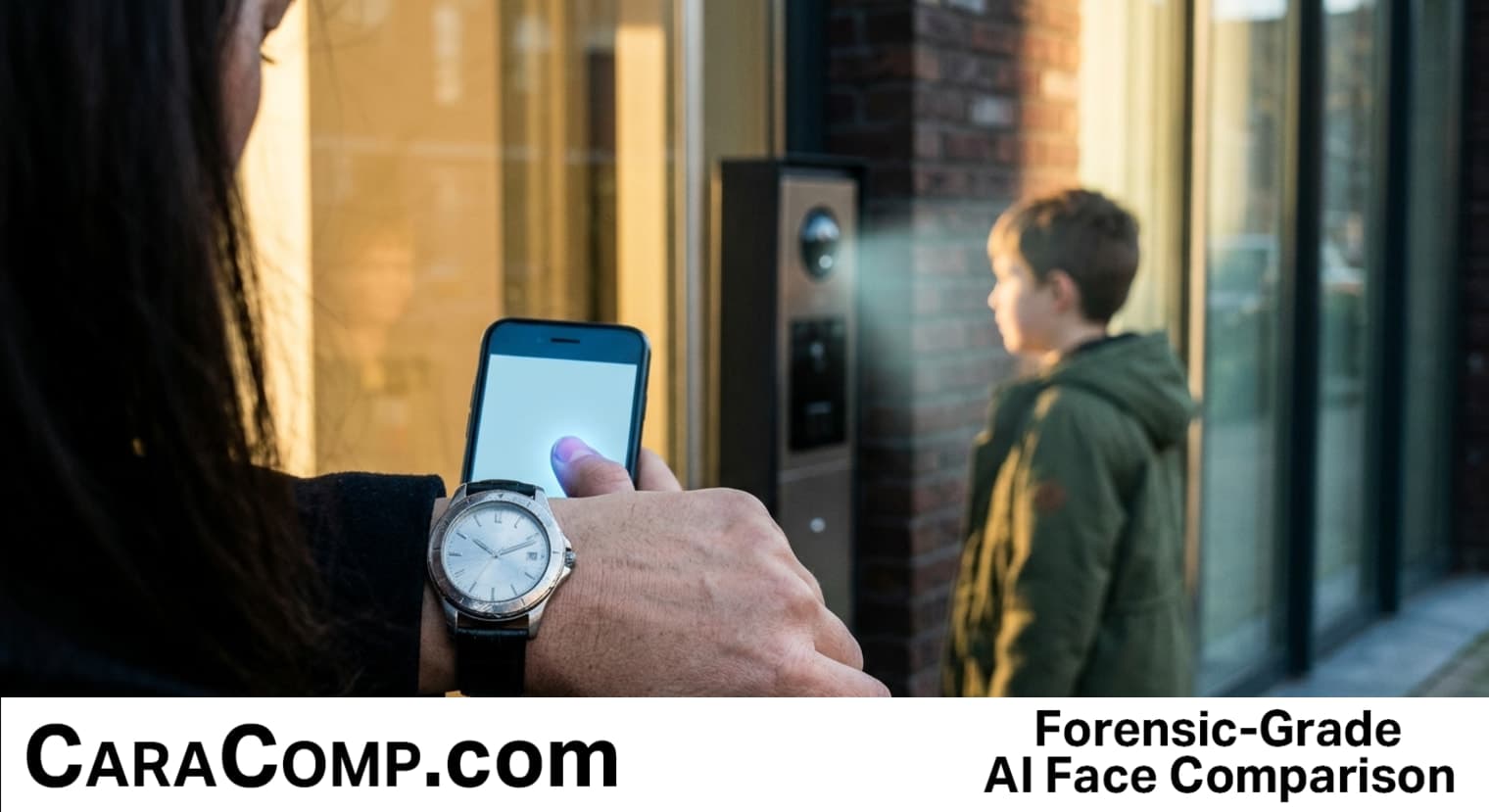
Here's the thing nobody tells you when you click "I agree" on a face scan: biometric consent is not a finish line, it's an opening question. It only covers the reason you were told at the time. Everything after that, how long they keep your face, who else gets to see it, whether your kid gets extra protection, is a separate fight. Japan just rewrote its privacy law to make that fight explicit, and it's worth fifteen minutes of your night to understand why.
TL;DR
Biometric consent (agreeing to hand over your face, fingerprint, or voice) only authorizes the exact reason you were given, not whatever an organization later decides to do with the data, and Japan's amended privacy law is one of the first to spell out, in writing, what happens when a child's face is involved.
Picture this. You're signing your kid up for an after school program. The front desk hands you a tablet: "We scan faces at pickup so only approved adults can grab your child. Tap yes to continue." You tap yes. Of course you do, it's 8am, you have a meeting, and honestly, it sounds smart. Nobody's the villain here.
But here's the question almost nobody asks in that moment, and it's the question that actually matters: yes to what, exactly? Yes to a face scan at pickup, sure. But does that same yes let the company sell the scan data to an ad network? Hand it to a school district database that never gets deleted? Feed it into some emotion-tracking software that flags "distressed" kids to a counselor's dashboard? You didn't agree to any of that. You agreed to pickup verification. And until recently, in a lot of places on Earth, the law didn't care about that distinction. It just cared whether you clicked yes, and whether that click even amounted to written consent in any meaningful sense.
Japan just decided that's not good enough anymore.
What biometric consent actually means under Japan's new rules
Japan's Personal Information Protection Commission (the government body that writes and enforces the country's privacy law) has proposed amendments that do something most privacy laws around the world still don't do cleanly: they separate "did you say yes" from "does that yes cover everything that happens next." Biometric consent, under this proposal, becomes a much narrower, more specific act, closer to a real lawful basis for handling sensitive data than a box you tick and forget. It's not a blank check. It's a key that opens exactly one door, according to MLex, which broke down the proposed amendments in detail.
Until now, biometric data (your face, your fingerprint, your voice pattern, basically any body measurement that's uniquely yours) sat in Japan's legal system as ordinary personal information. Same bucket as your mailing address or your phone number. That's genuinely surprising when you sit with it for a second: your face, something you can never change, something that can identify you in a crowd of ten thousand strangers, got treated the same as your zip code. The new proposal creates a distinct legal category, something being called "Specific Biometric Personal Information," according to MLex, with its own consent requirements attached, including a much clearer biometrics policy for how organizations collect and store it.
Children versus adults, and where the line falls at 16
Here's where it gets interesting. The amendments draw a hard line at age 16. Adults get biometric consent rules that are, in some respects, slightly more flexible, the Commission proposed letting certain data uses skip the consent step entirely when a person's rights are "clearly unlikely" to be infringed, for example when a contract genuinely requires it. But minors under 16 get the opposite treatment: no shortcuts, and stronger, more absolute rights on the back end, including the ability to demand deletion without having to prove anything went wrong first. This article is part of a series, start with Deepfake Impersonation One Fake Call Cost 25 Million Podcast.
Why "clearly unlikely to infringe" is narrower than it sounds
That phrase, "clearly unlikely to infringe," is doing a lot of quiet work in the new law, and it's worth slowing down on. It is not the same as "probably fine" or "might help." According to the Commission's proposal, this consent exception only applies in narrow situations, like when data use is strictly necessary to fulfill a contract you already agreed to. It's a high bar, deliberately, and it sets tighter consent requirements than most organizations are used to. The point is to stop companies from waving their hands and saying "eh, should be fine" every time they want to skip asking permission or treat opt-in consent as optional paperwork.
For organizations, the practical test is narrow. Biometric authentication that a user genuinely cannot avoid without breaking a contract may qualify. Analytics built on the same biometric data does not. The privacy regulator expects the record to show which biometric information was processed, for which purpose, and for how long, so that users are not left guessing about the information held on them.
16
the age threshold where Japan's amended law switches from flexible biometric consent rules to strict, parent-involved protection
Source: MLex, reporting on Japan's Personal Information Protection Commission proposal
Why does an exact age matter so much here? Because it turns a fuzzy judgment call, "was this kid old enough to really understand what they agreed to," into a bright line that regulators, parents, and companies can all point to. No arguing about maturity level in a courtroom. Sixteen means sixteen. That's the kind of detail that sounds boring until you realize it's the thing that actually makes a law enforceable instead of just aspirational.
Purpose limitation: why one "yes" does not cover everything
Now for the concept that ties this whole thing together, and it's called purpose limitation. It's a mouthful, so let's translate it immediately: purpose limitation means an organization can only use your data for the exact reason it told you when it collected it. Nothing more, unless it comes back and asks again, which is really just another way of describing dynamic consent, permission that has to be refreshed as the purpose changes.
Think of biometric consent like a hotel key card. That card opens your room. It does not open the room next door, the manager's office, or the laundry closet, even though it's the same building, the same front desk, the same "yes I'm a guest here" moment that got you the card in the first place. Japan's amended law is basically installing that same logic onto your face data, and it functions a lot like consent tracking built directly into the statute. A school scans your child's face for attendance tracking, fine, that's the room the key opens. That same scan cannot quietly get repurposed for a marketing database, a police lookup, or a "how often does this kid seem tired" behavioral profile, not without walking back to you and asking for a new key, this time with granular consent spelled out for the new purpose.
Biometric data is categorized as sensitive personal information under the EU General Data Protection Regulation and the data protection regulations of some other jurisdictions. However, it is not categorized as such under Japan's current law and no other special rules have been established for handling biometric data. Previously in this series: Uk Age Verification Pub Face Scans Miss 1 In 6 Podcast.
reported by MLex
Expiration and deletion rights compared
This is the part that should genuinely change how you read consent screens from now on. Under the proposal, an adult who wants their biometric data deleted usually has to show a reason, that the data is no longer needed, or that keeping it puts their rights at risk. That's a real burden of proof. A child, or that child's parent, doesn't have to clear that bar at all. They can just ask, and the organization has to comply. No justification required. That asymmetry is the whole ballgame, and it only works if the organization has real consent tracking in place to know which purpose each piece of biometric information was collected for in the first place.
| Who's asking | What they can demand | What they have to prove | What the biometric consent record should show | Status under proposal |
|---|---|---|---|---|
| Adult (16 and over) | Deletion, suspension of use, suspension of third party sharing | Must show data is no longer needed, or that rights or interests are at risk | Consent status logged for each stated purpose, tied to the biometric data actually collected, and shown back to the user | Proposed 2024 |
| Child under 16 (or parent) | Deletion, suspension of use, suspension of third party sharing | No justification required, request alone is enough | The request itself, plus proof the biometric information was erased, even where a child had already denied consent | Proposed 2024 |
| Any biometric data reuse for a new purpose | Must get fresh, explicit consent | Original consent does not automatically extend | A fresh consent form naming the new purpose, and the conditions under which each individual agreed to it | Proposed 2024 |
What You Just Learned Tonight
- 🧠 Biometric consent has an expiration dateunder related global frameworks, consent for biometric use typically expires at three years, or once the original purpose is satisfied, whichever comes first, so a "yes" from 2023 isn't a "yes" forever
- 🔬 Purpose limitation is the real gatekeeperagreeing to a face scan for "identity verification" does not automatically clear the way for "fraud detection" or "crowd monitoring," those need separate consent
- 💡 Children get a lower bar for deletiona parent or child can request their biometric data be deleted with no proof of harm required, adults generally have to show a reason
- 📏 "Clearly unlikely to infringe" is a narrow exceptionit's not a loophole for "probably fine," it's reserved for cases like strict contractual necessity
Does agreeing to a face scan protect you completely
No, and this is the misconception worth clearing up gently, because it's an easy one to fall into. Consent feels complete. You read a box, you tap yes, you feel like you made an informed choice and now you're covered. That instinct isn't dumb, it's just incomplete. Consent answers "did you agree to the collection." It does not answer "what happens to it after," "who else gets a copy," or "how long does it sit in a database somewhere." Those are separate questions, and under frameworks like GDPR and now Japan's amended law, they get separate answers, according to research summarized by Securiti, which tracks biometric privacy law and privacy regulation across jurisdictions.
People assume one yes covers everything for a reasonable reason: most consent screens in daily life work that way. You agree to a store's return policy, and that covers returns, forever, full stop, no follow up needed. But biometric data doesn't behave like a return policy. Your face doesn't expire, doesn't change (much), and can get matched against you decades later. That permanence is exactly why regulators started separating the yes from the reuse, building statements that inform individuals of the specific purpose right into the consent screen itself, rather than burying it in a general privacy notice. If your consent covered every future use forever, a single face scan taken when your kid was seven could theoretically follow them into a police database, a hiring algorithm, or an ad profile at seventeen, all traced back to a form you signed when you just wanted them to get picked up safely from soccer practice.
A practical habit helps here. Before you tap yes, read the biometric consent notice for three facts: which biometric data is captured, where it is stored, and how long it is kept. Then check whether the privacy notice spells out every purpose, or only the headline one. Most screens answer the first question and go quiet on the rest, which is how users end up agreeing to more than they meant to, and how a single yes turns into an open ended consent.
How Japan plans to enforce this day to day
Japan's proposal puts enforcement directly into the deletion mechanism: minors don't need to prove harm, they simply request, and the burden of compliance sits on the organization, not the family, according to MLex. That's the difference between a law that sounds good and a law you can actually use at 9pm from your kitchen table when you're annoyed at a company. For organizations, it also raises a practical question: how do you manage biometric consent at scale when every purpose change needs a fresh yes and every request for deletion needs an immediate answer, no proof of harm required.
Key Takeaway
Biometric consent only opens the door you were told about, not every door in the building, and Japan's biometric data law now makes children's deletion rights automatic rather than something you have to fight for with proof of harm.
At CaraComp, this is the exact gap we spend our time thinking about when we look at how organizations design facial recognition systems, not just whether a consent box got checked, but whether the underlying architecture even makes it possible to separate one purpose from another, or whether "consent" was quietly doing the job of covering every future use a company might dream up. The technical side and the legal side turn out to be the same question asked two different ways, and both eventually come back to privacy as the thing being protected or quietly eroded.
The three questions consent alone cannot answer
So here's where this lands, and it's simpler than the legal language makes it sound. Next time a screen tells you "we need this to verify your identity," don't just look for the yes button. Look for three things instead: why do they need this specific piece of biometric information, can it be reused for something you weren't told about, and if a child is involved, does the policy actually say something different for them. Up next: Deepfake Scams Singapore Acts As Fraud Attempts Jump 1 300.
That's the whole trick. Biometric consent was never supposed to be the entire safety net. It's the first thread. Purpose, retention, reuse limits, and children's protections are the rest of the net, and until recently, a lot of the world just... didn't weave them, and privacy suffered for it. Japan's amendments are one of the more concrete attempts to weave them in, especially for kids, and once you know to ask those three questions, you'll notice how many consent screens go quiet exactly when you ask them.
Frequently Asked Questions
How does agreeing to a face scan differ from a normal yes?
Biometric consent is agreement to let an organization collect body based identifiers, your face, fingerprint, or voice, for a stated purpose. It differs from regular consent because biometric data cannot be changed if it leaks, and under laws like Japan's amended framework, consent for biometric data only covers the original purpose and needs a real lawful basis behind it. Reusing it for something else, even with the same person's data, generally requires a fresh, separate consent rather than relying on the first yes, and written consent tends to hold up better than a quick tap if anyone ever has to prove what was agreed to. In practice, a strong record names the purpose, the retention period, and the exact biometric data captured, so the user can see what was agreed to and the privacy team can prove it later.
Does clicking agree on a face scan last forever?
No. Under frameworks discussed by Securiti and reflected in Japan's proposed amendments, biometric consent typically has a shelf life, often expiring around three years or once the stated purpose is fulfilled, whichever happens first. A single agreement does not authorize indefinite storage or unlimited future reuse under any lawful basis. If an organization wants to use the same face scan for a new purpose later, it generally needs to ask again, ideally through opt-in consent rather than a buried default setting. Treat a refreshed yes as the default: if the purpose changes, the biometric data should be collected again under new consent, and users should be told in writing what changed.
How are children treated differently from adults?
Japan's amended privacy law draws a line at age 16. Adults may occasionally see consent skipped when infringement is "clearly unlikely," such as strict contract necessity. Minors under 16 get no such shortcut, and additionally receive an easier path to deletion: a parent or child can request suspension of use or deletion of biometric data without proving harm, while adults generally must show the data is no longer needed or poses a risk to their rights, a gap that shapes how any biometrics policy for schools or apps has to be written. Schools and apps holding children's biometric data therefore need a deletion path that works on request alone, without a privacy officer weighing evidence first.
What does purpose limitation mean in practice?
Purpose limitation means an organization can only use collected data for the specific reason it disclosed at the time of collection. If a school collects a face scan for attendance verification, purpose limitation blocks reusing that same scan for marketing, law enforcement lookups, or behavioral profiling without seeking fresh, explicit consent for the new purpose. It's a separate legal check layered on top of consent, not replaced by it, and it's a big part of why regulators expect granular consent rather than one broad approval for every future use. That is also why a privacy notice should spell out each separate use of the biometric data, rather than offering one broad line about improving services.
Why weren't face scans treated as sensitive in Japan before?
Under Japan's prior law, biometric data sat in the same general category as ordinary personal information like a mailing address, with no distinct rules for its collection, storage, or reuse, according to reporting from MLex. Many other jurisdictions, including under the EU's GDPR, already classify biometric data as sensitive and subject to stricter handling and clearer consent requirements. Japan's amendments aim to close that gap by creating a dedicated legal category for it, backed by its own biometrics policy. Under the amendments, biometric data gains its own category, its own consent requirements, and its own record keeping, which changes how privacy teams classify the information they already hold.
Can a parent demand deletion without giving a reason?
Yes, under Japan's proposed amendments. A parent or the child themselves can request suspension of use, deletion, or suspension of third party sharing of the child's retained biometric data as a general rule, without needing to demonstrate that the data is unnecessary or that it poses a risk, a lower burden than what typically applies to adults requesting the same thing and a clear example of dynamic consent working in a child's favor. The organization must then delete the biometric data, log the request, and confirm back to the family; it cannot manage biometric consent by letting the record sit untouched.
Ready for forensic-grade facial comparison?
Full forensic reports with detailed similarity scoring. Results in seconds.
Run My First SearchMore Education
Biometrics: 5 Sleep Numbers Map a Woman's Cycle Daily
Stanford researchers used five simple biometric measurements to map the menstrual cycle day by day. Here's what that means for anyone wearing a smartwatch or fitness tracker.
biometricsBiometric Payment: The Fingerprint Never Leaves the Phone
Your fingerprint doesn't travel to the store when you tap to pay. Here's what actually gets sent, why it's safer than a password text, and how to spot the difference next time an app asks for your face.
biometricsBiometric Data Meaning: A Face Can Never Be Reset
A leaked password gets reset in seconds. A leaked faceprint follows you for life. Here's the actual math behind biometric data and why the rules protecting it look nothing like the rules protecting your Netflix login.