
Biometric Data Meaning: Individuals, Privacy and Security Explained
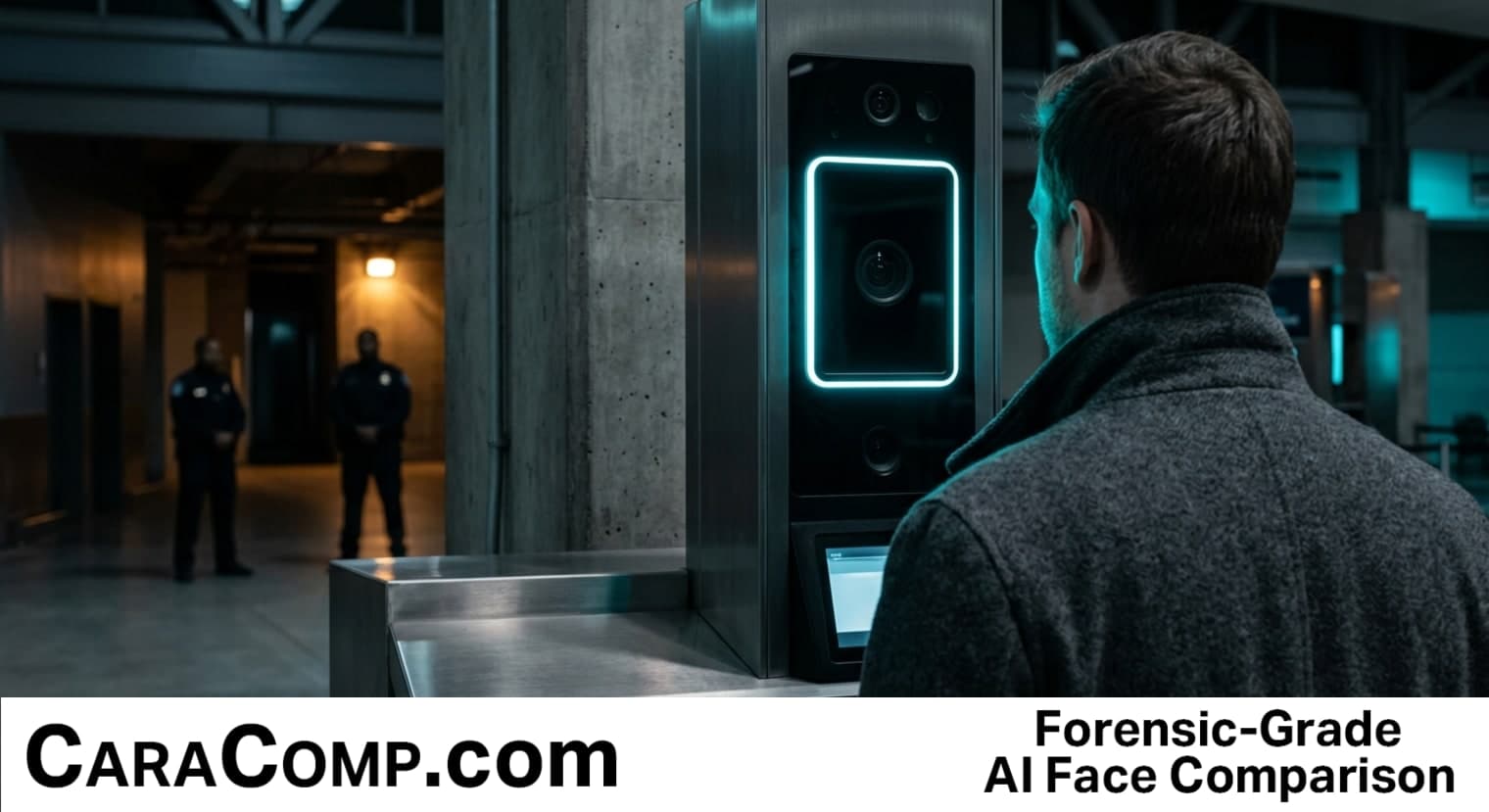
In February 2026, hackers sat inside NYC Health + Hospitals systems for three months undetected. By the time anyone noticed, they'd walked off with 1.8 million patient records, including biometric data. Here's the part that should stop you mid-scroll: those stolen biometric profiles are still dangerous today, and they'll still be dangerous in 2036. Not because nobody's tried to fix it. Because there's nothing to fix. You can't patch a face.
The biometric data meaning boils down to this: it's any measurement of your body (face geometry, fingerprint ridges, iris patterns) used to identify you, and unlike a password or account number, it cannot be reissued once it leaks.
Biometric data meaning, in plain terms, is any physical measurement (your face, your fingerprint, your iris) turned into a number that identifies you, and once that number leaks, you're stuck with it forever.
That's the whole knot this article is going to untangle. We reset passwords constantly. Forgot it, got phished, saw a weird login alert, no big deal, click "reset," pick a new one, move on with your life. Biometric data doesn't work that way. There is no "forgot your face" button. And once you understand why, a company like 4Sight Labs calling for U.S.-based standards to protect biometric data in correctional facilities stops sounding like bureaucratic noise and starts sounding like common sense. This is also where data protection, data privacy, and identity verification stop being abstract compliance terms and start being the difference between a manageable incident and a permanent one for the individuals affected.
Biometric Identifier and Biometric Data Meaning, Actually Explained for Individuals
Let's start with the basics, because "biometric data" gets thrown around like it's just another category of personal information, filed next to your email or your mailing address. It isn't. The biometric data meaning is narrower and stranger than that: it's a measurement of your actual body, converted into math, so a computer can recognize you the way your best friend recognizes your face across a crowded room. This category, broadly called biometrics, covers everything from a fingerprint sample to an iris scan, and each one relies on a biometric identifier that is unique to a single individual. Individuals rarely realize how many systems already hold this kind of data that is related to their own bodies.
Facial recognition systems do this by mapping roughly 128 landmarks on your face (the distance between your eyes, the curve of your jawline, the width of your nose bridge) and compressing all of it into a single string of numbers called a faceprint, one of the clearest examples of a process that identifies a person from their unique physical characteristics rather than from an assigned record. Fingerprint systems do something similar with the ridges and whorls on your fingertip. Iris scanners map the unique pattern in the colored part of your eye, another version of your unique physical geometry turned into code. In every case, the goal is the same: turn a body part into a code that a machine can compare against a database in a fraction of a second, in a system that recognizes human characteristics rather than paperwork. These biometric characteristics differ from a name or address because they come from the body itself, not from a record someone else assigned to you.
That OPM number is worth sitting with. Federal employees and contractors, including people who held security clearances and worked in law enforcement, had their fingerprints stolen over a decade ago. Those fingerprints are still exactly as compromised today as they were the week of the breach. There's no expiration date on stolen biometric data. There's no fraud alert that fixes it. It just sits out there, permanently valid, permanently someone else's problem to worry about. For individuals whose fingerprints were in that database, this is not a hypothetical risk. It's a permanent one, and it's a clear example of why security around biometric data has to be treated differently from security around a password, and why data privacy protections for individuals need to be secure from day one.
Biometric Data Meaning Versus a Simple Photo
Here's where most people get tripped up, and honestly, it's a reasonable place to get tripped up. If your face is already on Instagram, on your driver's license, on a thousand group photos from a decade of birthday parties, why would a facial recognition breach matter?
Because a photo and a faceprint are not the same thing, even though they both involve your face. A photo is a picture anyone can look at. A faceprint is a mathematical key, derived from that face, built specifically to unlock systems. Think of it less like your photo being public and more like the blueprint for your house key being public. Nobody cares that people know what your front door looks like. They care a lot if someone has the exact cut of the key. Once a facial recognition database is breached and those keys get out, every system that uses your face to open a door, whether that's a banking app, an airport checkpoint, or a building entrance, becomes a weak point that stays weak. You can't recut the key. It's your face, and it's yours alone among all individuals. This article is part of a series, start with Biometric Based Authentication A Face Is Just 512 Numbers.
Security, Privacy and Data Protection: Why Biometric Data Cannot Be Reset Like a Password
This is the part that actually changes how you should think about every place asking to scan your face or your finger: passwords and biometric identifiers fail in completely different ways, and treating them like the same category of risk is where the real danger for individuals hides.
A password is a shared secret between you and a system. If it leaks, the fix is trivial: you change it, the old one stops working, and the leaked version becomes worthless. Same with a credit card number, same with an account PIN. These are all things you were assigned, so they can all be reassigned.
Biometric data isn't assigned to you. It's generated by you, from parts of your body that don't get reissued. According to Identity Management Institute's overview of biometric authentication risks, this is the structural difference that makes biometric breaches categorically worse than credential breaches: the underlying identifier is fixed for life, so a single exposure creates permanent exposure, not a temporary inconvenience you fix with an email reset link. This is why real security features like biometric authentication and biometric recognition need governance built around them, not bolted on afterward. Strong data privacy practices, including how sensitive data is stored and who can query it, matter as much as the underlying technology, and privacy protections have to be secure by design, not secure by accident. Robust security and clear data protection rules also protect the individuals whose records sit inside these systems, and they preserve privacy for people who never had a say in enrollment.
Facial recognition data is a key to your identity. If stolen, you can't just change the locks.
The Conversation
Consider what that means for a place holding tens of thousands of biometric records at once. According to reporting from EIN Presswire, 4Sight Labs' correctional platform has collected over 4,000,000 hours of biometric data from more than 50,000 detainees, running at 99.99% system uptime. That's not a small filing cabinet of faceprints. That's a concentrated, high-value target sitting in one place, and every record in it belongs to someone who, unlike you scrolling this on your phone, had no real choice about whether to hand over their face and fingerprints in the first place. Features like access logging and encryption at rest help secure these systems, but they don't erase the underlying permanence problem for the individuals whose data biometric systems already hold.
| Password or account number | Biometric data | Status |
|---|---|---|
| Reset instantly after a breach | Cannot be reset once exposed | Permanent risk |
| Assigned to you by a system | Generated from your own body | Fixed for life |
| Old version becomes worthless after change | Old faceprint or fingerprint stays valid forever | No expiration |
| Breach notification actually helps you act | Breach notification cannot undo permanent exposure | Irreversible, weak privacy outcome |
| Opt-out or skip signup is usually possible | Often collected without a real opt-out, especially in custody | Limited consent, features like access controls matter |
Correctional Biometric Standards and the Purpose Problem
This is exactly why correctional biometric standards matter more than they sound like they would at first glance. In a jail or detention facility, nobody is opting out of a face scan. There's no "skip this step" button. So the safeguards have to be built in ahead of time, because there's no consent mechanism doing any of the work afterward, and privacy for these individuals depends entirely on rules set before the scan happens.
4Sight Labs' proposed framework, reported by EIN Presswire, lays out six specific protections: U.S. data residency (the data physically stays inside U.S. servers), U.S.-person access controls (only vetted domestic personnel can touch it), restrictions on third-party disclosure, mandatory cybersecurity testing, clear data ownership, and firm deletion requirements. Each piece closes a different door. Data residency stops the information from drifting to servers overseas where U.S. law can't reach it. Access controls help secure the system from anyone who hasn't been vetted. Deletion requirements stop it from sitting in storage indefinitely, quietly aging into a bigger and bigger liability the longer nobody deletes it.
Personal Information and Biometric Recognition: How Correctional Standards Secure Individuals' Data Privacy
Biometric data rights change the entire equation when someone can't say no to collection in the first place. If a facility is going to gather permanent, irreplaceable identifiers from individuals who have no ability to opt out, the ethical weight shifts entirely onto three questions being answered before a single fingerprint gets scanned. Previously in this series: Age Verification Id Malaysia Demands Face Scans By 2026 Podc.
What You Just Learned About Biometric Data Meaning
- 🧠 A faceprint is math, not a photoabout 128 facial landmarks compressed into a number, and that number is what actually gets stolen in a breach
- 🔬 Permanence is the whole problema stolen password gets reset, a stolen fingerprint from 2015 is still stolen in 2026
- 💡 Purpose, access, and deletion are the only real defensessince breach notification and opt-out don't help once the collection has already happened
- 🧠 Scale multiplies risk4,000,000 hours of biometric data from 50,000 people in one system is one very attractive target
Think about the three questions this way: why is the data being collected in the first place, who is allowed to look at it once it's collected, and exactly when does it get deleted. Ask those upfront and you've set enforceable limits on collection and retention, which is the core of real data protection for individuals. Skip them and you've built a database that sits there forever, growing more dangerous every year it isn't deleted, because someone eventually finds a way in. The OPM breach happened in 2015. The fingerprints are still out there. Nobody's coming to fix that. There's nothing left to fix.
Biometric Data Rights and Existing Law
Illinois has already built legal language around this exact permanence problem through its Biometric Information Privacy Act, which treats biometric identifiers differently from other personal information precisely because they can't be changed once compromised, according to academic research on biometric template irreplaceability published on arXiv. It's one of the few U.S. legal frameworks that explicitly treats "you can't get a new face" as a fact worth writing into statute, rather than something everyone just assumes and nobody actually protects, keeping individuals' privacy intact.
Why Biometrics, Features and Correctional Biometric Standards Matter Beyond Jails
Here's the thing that makes this bigger than one industry. Correctional facilities are just the sharpest, clearest example of a much wider problem: any place collecting biometric data from individuals who can't meaningfully refuse (patients under anesthesia, employees required to clock in with a fingerprint, kids scanned for school lunch programs) inherits the same permanence problem, whether anyone bothers to say so out loud or not.
The NYC Health + Hospitals breach proves the point outside the corrections context entirely. Patients didn't choose to have their biometric data exposed. They chose to get medical care. According to breach analysis published by InfoFina, attackers were inside those hospital systems undetected for three months, from November 2025 through February 2026, before the exposure of 1.8 million records came to light. That's not a corrections story. That's a hospital story with the exact same irreversible math running underneath it, and it shows why security has to be built into any system holding a biometric sample, not added after a breach.
This is genuinely the core of what CaraComp spends its time thinking through with facial recognition systems: the technology itself isn't the danger. A faceprint sitting in a well-governed, well-deleted, access-controlled system is a completely different animal from the same faceprint sitting in a database nobody's watching. The tech is neutral. The governance around it, including basic data protection habits and consistent privacy standards for individuals, is where all the actual risk either gets contained or gets ignored.
Correctional Biometric Standards in Practice, Made Secure
What would this actually look like day to day, if a facility took correctional biometric standards seriously? A detainee's fingerprint gets scanned for identification purposes only, stored on U.S.-based servers, viewable by a specific, named, vetted list of personnel, never sold or shared with unrelated third parties, and deleted on a defined schedule tied to the person's release or case closure, not just "kept indefinitely because deleting things is annoying." Features like scheduled deletion and named access lists are what make a system secure by default, and that's the difference between a system built around risk and a system built to protect data privacy and genuine data protection for the individuals inside it.
Biometric Data Meaning: The Aha Moment Individuals Actually Need
So here's where all of this lands. Every time an organization asks for your face, your fingerprint, or your iris, they are not asking for a piece of information about you. They're asking for a piece of your body, converted into a number that will identify you for the rest of your life, no exceptions, no do-overs.
The biometric data meaning that actually matters is this: you can reset a password, but you cannot reset your face, so any organization collecting it should answer why, who, and when before it collects a single scan, not after something goes wrong. Up next: Biometric Based Authentication A Face Is Just 512 Numbers Po.
That's the aha moment, and it's a genuinely useful one to carry around: next time you're asked to scan your face to enter a building, unlock an app, or clock into work, ask yourself the same three questions 4Sight Labs is asking regulators to require upfront. Why do they need this. Who gets to see it. When does it disappear. If an organization can't answer all three before it scans you, that's not a paperwork gap. That's a permanent liability with your face already inside it, and a lasting privacy problem for the individuals it belongs to.
Biometric Data Meaning: Frequently Asked Questions
What is the biometric data meaning in simple terms?
Biometric data means any measurement taken from your body, such as your face geometry, fingerprint ridges, or iris pattern, that gets converted into a number a computer can use to identify you. This is the core of biometric data meaning: it's personal information that comes from your body rather than from a record someone assigned you, so it cannot be reassigned or changed. That's why a leak or breach involving biometric data creates a permanent risk rather than a temporary one for the individuals involved, and why data protection and data privacy matter more here than almost anywhere else.
Can you reset a faceprint the way you reset a password?
No. You can reset a password in seconds because it's an assigned secret between you and a system. A faceprint is derived from your actual facial geometry, roughly 128 landmarks like eye distance and jawline shape, and there's no way to reissue a new face. Once a faceprint is exposed in a breach, it stays exposed permanently, which is exactly why security experts describe biometric data as having no reset button, no matter how strong the surrounding security otherwise is, and no matter how well the system is meant to secure and protect privacy.
Why do correctional biometric standards focus on data residency and deletion?
Correctional biometric standards focus on data residency, access controls, and deletion because individuals in custody typically cannot opt out of biometric collection the way someone might refuse a face scan at a store. Since consent isn't realistically available, the protection has to come from limits set before collection starts: keeping data on U.S. servers, restricting who can access it, and setting a firm deletion date, according to reporting on 4Sight Labs' proposed framework. This is data protection and privacy built around biometric authentication systems and biometric recognition features, not added after the fact.
Does skin appear too smooth in a stolen or reconstructed biometric image?
That concern usually applies to AI-generated or deepfake images rather than stolen biometric templates, which are mathematical vectors, not visual pictures. A biometric template itself doesn't have a visible "look," smooth skin or otherwise, because it's a string of numbers describing biometric characteristics like facial geometry, not an image file. The real risk with a stolen faceprint isn't how it looks, it's that the underlying biometric identifier can never be replaced once it's exposed.
What happened in the OPM fingerprint breach and why does it still matter?
In 2015, the U.S. Office of Personnel Management was breached, and attackers stole fingerprints belonging to 5.6 million federal employees and contractors, including people who held security clearances and worked in law enforcement. Because fingerprints cannot be reissued, those records remain permanently compromised more than a decade later. It's one of the clearest real-world examples of why biometric data rights, data protection, and deletion requirements matter more than standard breach notification for the individuals whose data privacy is at stake.
How is a faceprint different from a photo posted online?
A photo is simply an image anyone can view, while a faceprint is a mathematical encoding derived from that face, built specifically so systems using biometric authentication and biometric recognition can compare and identify you. The risk isn't that your photo exists publicly, it's that if a facial recognition database is breached, the faceprint template, effectively a biometric sample turned into code, can unlock real systems, like a banking app or building access, and that unlocking key can never be changed the way a password can, which is exactly why security and privacy have to be built in from the start.
Ready for forensic-grade facial comparison?
Full forensic reports with detailed similarity scoring. Results in seconds.
Run My First SearchMore Education
Biometric Data Privacy: Walmart Keeps 512 Face Numbers
A store can delete your photo and still keep a mathematical map of your face for years. Here's what that actually means, and the four questions to ask before you agree to any biometric policy.
privacyWhat Is Biometric Information: One Clause Decides Who Pays
An insurance fight over face-scan data reveals a myth a lot of businesses believe: that having insurance means you're covered no matter what. Here's the fine-print detail that decides who actually pays.
biometricsBiometric based authentication: a face is just 512 numbers
You'll learn why modern face matching turns your face into 512 numbers instead of comparing photos, and why a high similarity score is a clue for investigators, not a verdict.