
Behavioral Biometrics: Kansas County Stops 2 Home Thefts
Quick answer
What is behavioral biometrics and how does it stop fraud?
Behavioral biometrics confirms who someone is by how they act, such as typing rhythm, swipe pressure or how they hold a phone. It builds a baseline of normal habits and flags sessions that differ, even when the password is correct. Banks use it in the background to catch account takeovers without extra steps.
Here's a sentence that should ruin your evening: someone can legally become the owner of your house on paper without ever setting foot on your property, without breaking a window, and without you finding out for months. All it takes is a forged signature and a county clerk who has no way to check whether the person filing the paperwork is actually you. Behavioral biometrics is part of the wider identity-verification approach meant to close that gap. No alarm goes off. No dog barks. The theft happens quietly, inside a filing cabinet, or these days, a database, thirty miles from your kitchen table.
A small Kansas county is using face-based identity verification, a close cousin of behavioral biometrics, the technology that identifies people by how they act and move rather than just how they look, to catch property fraud in real time, and it's already worked twice in three months.
Property deed fraud is really an identity-verification problem in disguise, and Leavenworth County, Kansas just proved that adding a face-matching checkpoint to property records catches fraud attempts that would otherwise sail through untouched.
Why property fraud is really an identity problem
Let's start with the part nobody tells you when you buy a house. That stack of papers you signed at closing? It doesn't get locked in a vault. It becomes a public record, sitting in a county office, available for anyone to look up, your name, your address, your legal description of the property, sometimes even your signature. That's by design. Public records are supposed to be public. But it also means a fraudster doesn't need to break into your house. They just need to walk into (or log into) the county recorder's office, fill out a form that looks like a deed transfer or a lien, and sign your name.
TerriLois Mashburn, the Register of Deeds for Leavenworth County, Kansas, put it about as bluntly as anyone could.
"It's pathetically simple to steal property at this point," because "we're dealing with sometimes 150-year-old land laws and the fraudsters are dealing with 22nd-century technology." TerriLois Mashburn, KCTV5
That gap, century-old paper rules meeting modern fraud tools, is exactly why identity checks are creeping into county offices that have nothing to do with facial recognition cameras on street corners or airport gates. This is a records office. A place that used to just stamp documents. Now it's becoming a front line for identity verification, alongside behavioral biometrics, where a system confirms you're really you by how you behave when you interact with it.
What does "behavioral biometrics" mean in plain English
Behavioral biometrics measures the small, hard-to-fake patterns in how a person moves, types, or holds a phone, the rhythm of your typing, the angle you hold your device, the pressure of your swipe. It's different from a face scan or fingerprint because it looks at what you do, not just what you are. Banks use it quietly in the background to flag when "you" logging into your account suddenly behaves like someone else. This article is part of a series, start with Deepfake Audio. This article is part of a series, start with Deepfake Audio.
How a biometric lien lock actually works
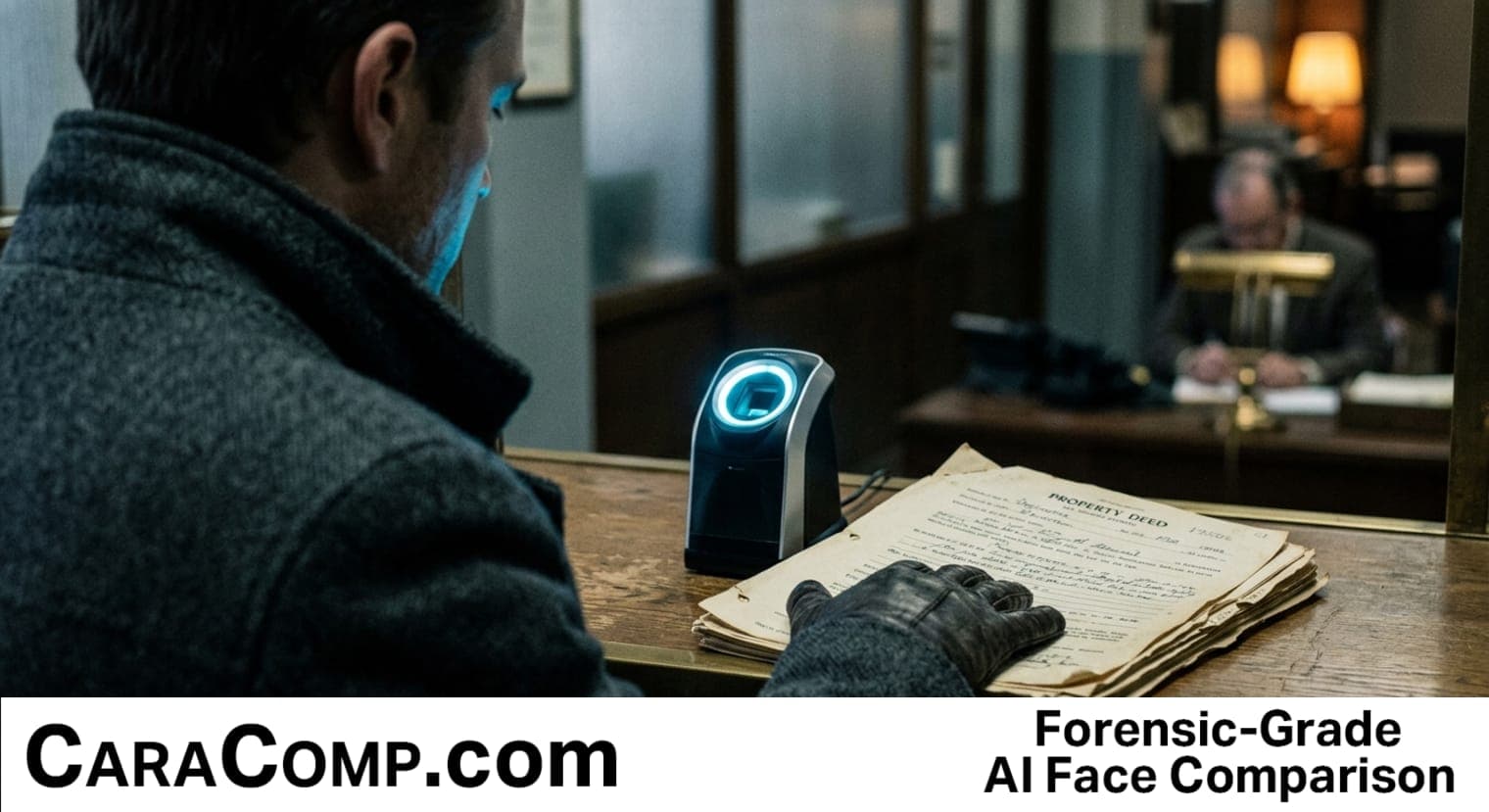
Here's where it gets genuinely clever. Leavenworth County rolled out something called a Self-Imposed Biometric Lien, basically a voluntary freeze that homeowners can place on their own property. You go in, you get scanned by a 3D liveness camera (a camera specifically built to tell the difference between a real, living face and a photo, a video, or a deepfake held up in front of it), and that scan gets tied to your property record. From that point on, if anyone tries to sell, transfer, or take out a new mortgage against that property, they have to show up in person and pass that same face match. Paperwork alone won't cut it anymore.
Think about what that does to the math for a fraudster. Before the lien, stealing a property on paper was a remote crime. You could do it from another state, another country, another continent, using nothing but a printer, a notary stamp you faked, and some public records you pulled online. After the lien, it becomes a face-to-face crime. The fraudster has to physically show up, in front of a liveness detection camera, and somehow pass as the real homeowner. That's the difference between mailing a fake check and walking into a bank and handing it to a teller while they stare at your face. One is low-risk. The other is a great way to get arrested.
Two catches in three months might not sound like a lot. But remember, this is a county of roughly 84,000 people, and the program is entirely voluntary, meaning most homeowners haven't even signed up yet. According to Leavenworth County's own records, more than 30 fraud cases have been attempted or completed there since January 2021. Two catches from a small, opt-in pilot in its first three months isn't a fluke. It's a signal that this kind of front-line identity check is finding fraud that the old system would have simply waved through.
Behavioral biometric fraud prevention in banks and title companies
Banks already use behavioral biometric fraud prevention to protect your bank account, watching how you type your password, how you scroll, even how you hold your phone during a mobile banking session, and flagging anything that doesn't match your normal digital fingerprint. Title companies and county offices are borrowing the same logic for real estate: verify the person, not just the paperwork, at the exact moment of the transaction.
The misconception that leaves homeowners exposed
Now let's clear up the thing almost everyone gets wrong, because it's a very reasonable thing to believe. Most people assume that if someone tried to fraudulently transfer their house, their bank would catch it. Or their mortgage company. Or, honestly, somebody official whose whole job is supposedly to protect this kind of thing. It feels like there must be a gatekeeper somewhere.
There isn't. Not really. County recorders check that a document is formatted correctly, the right stamps, the right notary seal, the right legal boilerplate. What they can't check, historically, is whether the person who signed the document is actually the person who owns the property. A forged signature that looks reasonably close to the real one will usually sail right through. You, the actual owner, generally find out about all this reactively: when you go to refinance and discover a stranger's lien sitting on your title, or when a property tax bill shows up with someone else's name on it. By then the fraud has already happened. You're just now finding the wreckage.
It makes sense why people assume otherwise. We're used to systems that check identity everywhere else, swiping a card at the pharmacy, tapping a face ID to unlock a phone, showing ID at the airport. It feels backwards that the system protecting the single biggest asset most people own has, for a century and a half, run on not much more than "does this signature look about right?" Less than 10% of white-collar crimes ever get formally reported, so the fraud you hear about is very likely a small slice of what's actually happening. Previously in this series: Australia Deepfake Romance Six Fingers 180 000 Gone Podcast. Previously in this series: Ai Deepfake Laws Lag As Cloned Voices Drain Family Cash.
What You Just Learned
- 🧠 Deed fraud needs no break-ina forged signature and public records are enough to file a fraudulent claim on your home
- 🔬 Biometric liens flip the burdeninstead of catching fraud after the fact, they force a live face match before anything can change on the deed
- 💡 Behavioral biometrics complements thisby watching how you interact with an account or device, not just what your face or fingerprint looks like
- 💡 The scale is real30+ fraud attempts hit one mid-size Kansas county since 2021, and that's likely an undercount
Detection versus prevention: the behavioral biometrics distinction that matters
People sometimes hear "biometric lien" and assume it makes fraud impossible. It doesn't, and that's actually the more honest, more useful way to think about it. What it does is convert a silent crime into a loud one. Before, a fraudster could file paperwork remotely and disappear into the digital noise, and nobody would notice until a bank pulled the title months later. Now, anyone trying to touch that property has to show up, get scanned, and get matched, and if they can't pass, the system flags it immediately, alerting the actual homeowner right then, not eighteen months later during a refinance.
That's the real shift happening across identity verification generally, and it's the same logic driving behavioral analytics tools banks now use to watch account activity in real time instead of just auditing statements at month's end. The goal isn't a system that's unbreakable. It's a system that makes fraud loud, visible, and risky instead of quiet, invisible, and easy. A fraudster who has to appear on camera and get matched against a real face is taking on a completely different level of risk than one mailing in a fake form from a laptop in another state.
This is also, frankly, the same territory CaraComp spends its time in, the mechanics of how facial recognition and identity verification actually distinguish a real, present person from a photo, a recording, or someone pretending. Property records turn out to be a surprisingly good example of it, because the stakes are so concrete: not a locked phone, but the deed to your house.
Property fraud isn't a document problem, it's an identity problem wearing a document's clothes. Any system that verifies the person, not just the paperwork, at the moment of filing catches fraud that century-old rules simply can't see.
What you can actually do about behavioral biometrics gaps in your own county
You probably don't live in Leavenworth County, Kansas. Fair enough. But most county recorder or register-of-deeds offices across the country now offer some version of a free property fraud alert, a notification that fires the moment any document gets filed against your address. It's not a face scan. It's not a lien lock. It's just an email or text saying "hey, something got filed on your property, go check it." That's it. That's the whole system, and in most places it costs nothing and takes about five minutes to set up.
So here's the question worth sitting with: if your county offered a free alert every time someone filed a document against your property, would you actually turn it on? Most people wouldn't, not because it's hard, but because it never occurs to them that their house could be stolen on paper while they're sitting in it, watching TV, blissfully unaware that somewhere across town, a stranger just typed their name into a form. Up next: Behavioral Biometrics Kansas County Stops 2 Home Thefts. Up next: Behavioral Biometrics Kansas County Stops 2 Home Thefts.
Frequently Asked Questions
What is behavioral biometrics and how does it detect fraud?
Behavioral biometrics is a way to confirm someone's identity by analyzing how they physically interact with a device or system, typing rhythm, mouse movement, swipe pressure, even how they hold a phone. Instead of checking one static feature like a face or fingerprint, it builds a pattern of a person's normal behavior and flags sessions that don't match. Banks use this constantly in the background to catch account takeovers without ever asking you to prove anything extra.
How is a biometric lien lock different from facial recognition surveillance?
A biometric lien lock is opt-in and only activates when someone tries to change your property records, it's not constant monitoring. Facial recognition surveillance, like police cameras scanning crowds, runs continuously and without individual consent. The lien lock is closer to two-factor authentication for your house deed: a one-time face match required only at a specific, risky moment, not ongoing tracking of your movements.
Can someone steal my house without me knowing?
Yes, and it happens more than most people realize. A fraudster only needs a forged signature and access to public property records to file a fake deed or lien. Since county offices historically verify documents, not people, homeowners often don't discover the fraud until they try to refinance, sell, or get a surprise tax bill months later.
How does behavioral biometric fraud prevention work in banking?
Banks quietly measure how you normally interact with your account, typing speed, navigation patterns, device angle, and compare live sessions against that baseline. If a login suddenly behaves very differently, even with the correct password, the system can trigger extra verification or freeze the session. It's a background layer of fraud prevention that doesn't interrupt legitimate users but catches impostors using stolen credentials.
Is the Leavenworth County lien lock program free?
According to reporting on the program, the Self-Imposed Biometric Lien has a modest cost, roughly around $100, and enrollment is voluntary. Separately, many counties, including Leavenworth, also offer free property fraud alert systems that simply notify owners by email or text whenever any document gets filed against their property, no biometric scan required.
What industries use behavioral biometrics besides banks and county offices?
Behavioral biometrics shows up anywhere fraud prevention and passwordless security matter: e-commerce checkout pages watching for bot-like clicking patterns, insurance claims platforms flagging inconsistent applicant behavior, and healthcare portals verifying patient identity through interaction patterns rather than passwords alone. Any organization managing sensitive accounts or financial transactions increasingly layers this kind of behavioral analytics on top of traditional login checks.
Ready for forensic-grade facial comparison?
Full forensic reports with detailed similarity scoring. Results in seconds.
Run My First SearchMore Education
Biometric Information: One Face Scan Can Cost a Firm $5,000
A company can owe you money for saving your face even if nothing bad ever happens. Learn how one clause decides who pays, and where to look first.
biometricsBiometric Digital ID: One Leak Opens Every Door, Forever
One card that opens every door sounds great until it leaks. Learn how a biometric digital id really works, why a 99 percent match isn't proof, and where to look first.
privacyRemove Metadata From Photo: Hidden GPS Can Reveal a Home
Your camera quietly writes where and when you shot every picture inside the file. Learn the common mistakes that leave it there, and the quick fixes on a Mac, a PC and a phone.