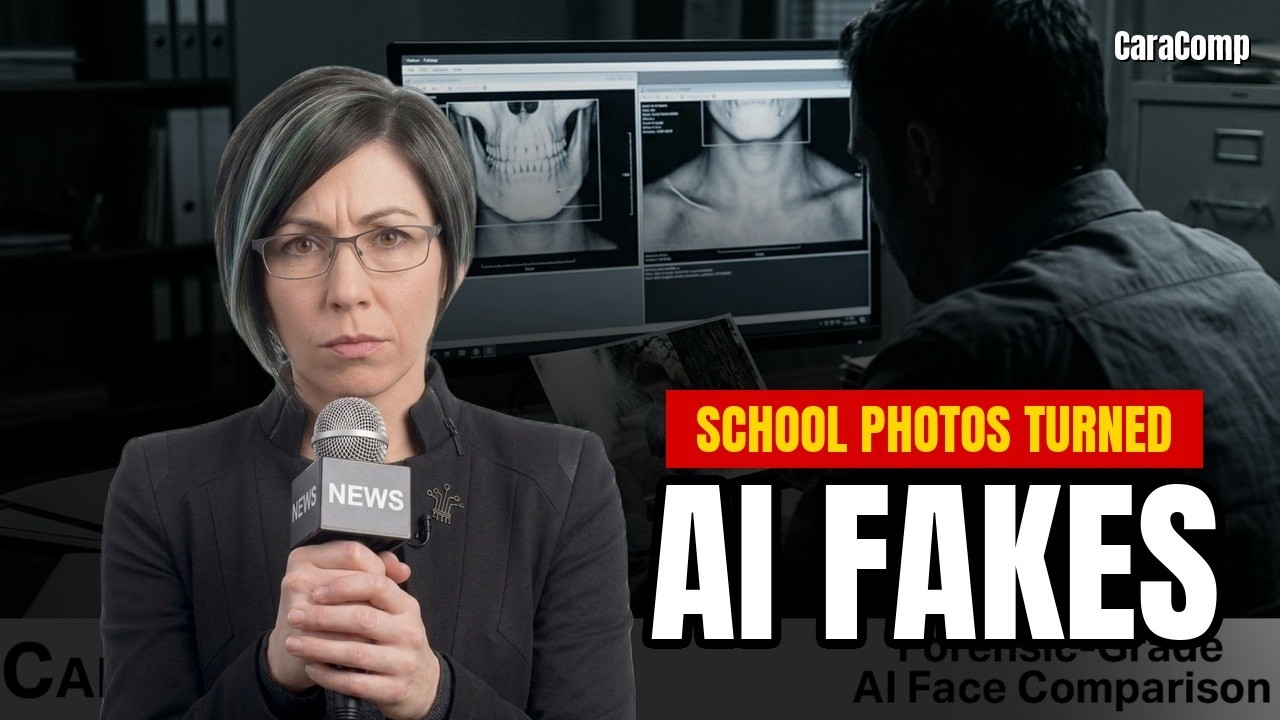
One public school photo is all it takes.
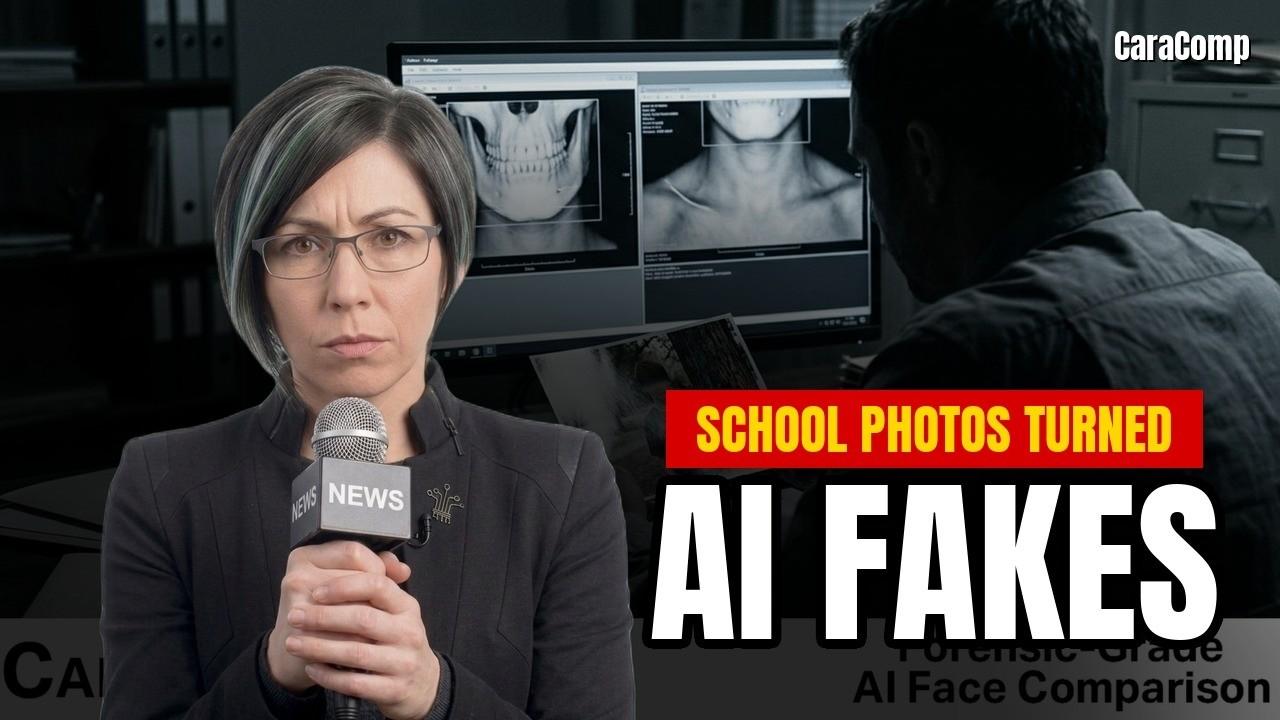
Picture a girl at an elite Sydney school, posing for a photo at a school event. Police are looking into claims a senior student turned photos like hers into fake explicit images. It's called a deepfake, a fake picture made by A.I. to look real. Your kid's photos are probably online right now too.
One public school photo is all it takes.
According to ABC News, reports of this abuse in Australia have doubled in about eighteen months. At least one case surfaces in Australian schools every week. Investigators can compare faces to find where each fake started.
If one reaches you, don't share it. Not even to warn people. Call the school or the police.
In Sydney, kids' faces were taken without asking. Now Apple is asking for one.
Picture your kid holding an iPhone, turning their head left, right, up and down. The phone is guessing their age. It's Apple's new identity verification process in iOS 27.2. The head turns prove it's a <phoneme alphabet="ipa" ph="laɪv">live</phoneme> face, not a printed photo. That beats uploading a driver's license, which can leak.
Nobody outside Apple has checked that the selfie is gone.
According to 9to5Mac, Apple says no one can see the image, not even Apple. Researchers warn a company could delete a photo but keep a number map of the face. Nobody says Apple does that.
You can change a password. Your child can't change their face. Read the consent screen together first.
Apple asks if a face looks old enough. Most I.D. checks never ask whose face it is.
A bouncer glances at a card for three seconds. The hologram shines. The barcode beeps green. Knowing how to tell if an I.D. is fake is now hard, even for trained officers. Landlords and shops face the same problem.
A green barcode beep doesn't prove a card is real.
According to U.S. Patent Office filings, fake I.D. makers openly sell cards that pass barcode scans. A borrowed real card is even trickier. The plastic is real. The government file agrees. That's why banks stack checks, and one compares the face to the photo.
The I.D. that fools you might not be fake at all. It might just belong to someone else.
A school photo. A selfie. A plastic card. Each story turns on one question. Whose face is this, and who controls it? Faces now open doors, prove age, and get copied. So ask for the proof behind every promise.
Every source, all three articles, and today's CaraComp podcast episodes are waiting in the description. Read one before bed. See you tomorrow.