Biometric Authentication Meaning and
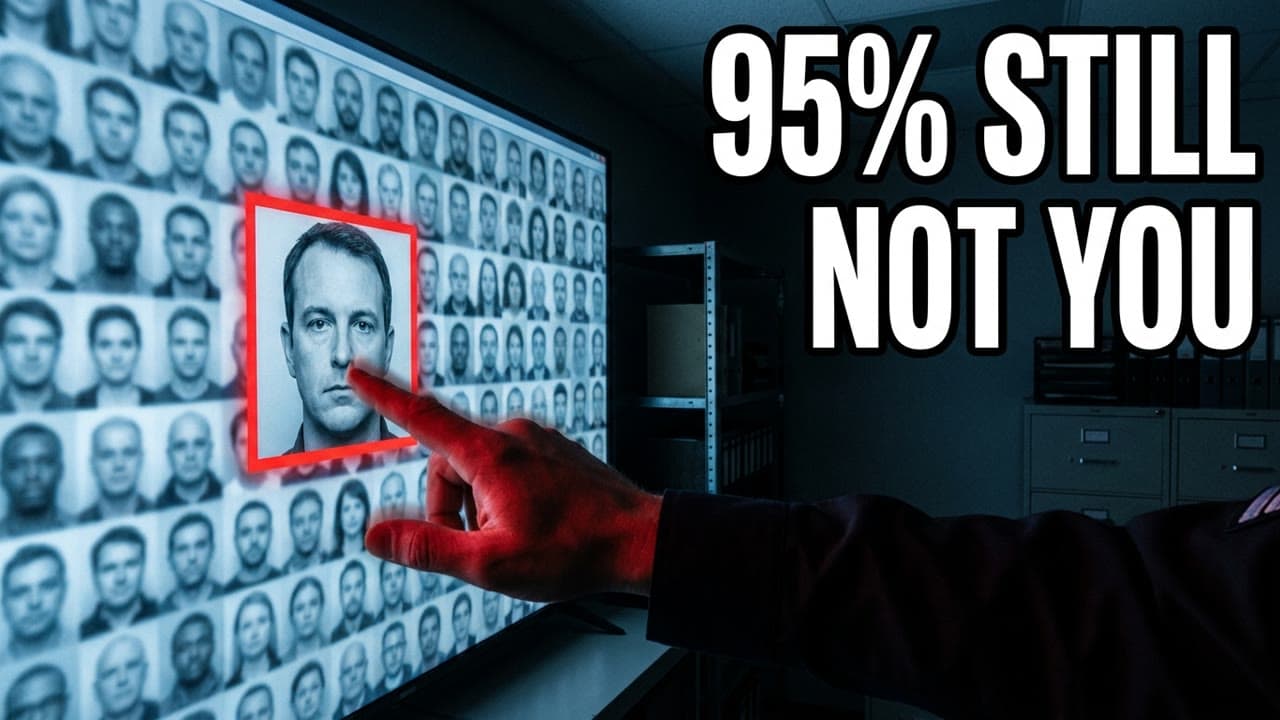
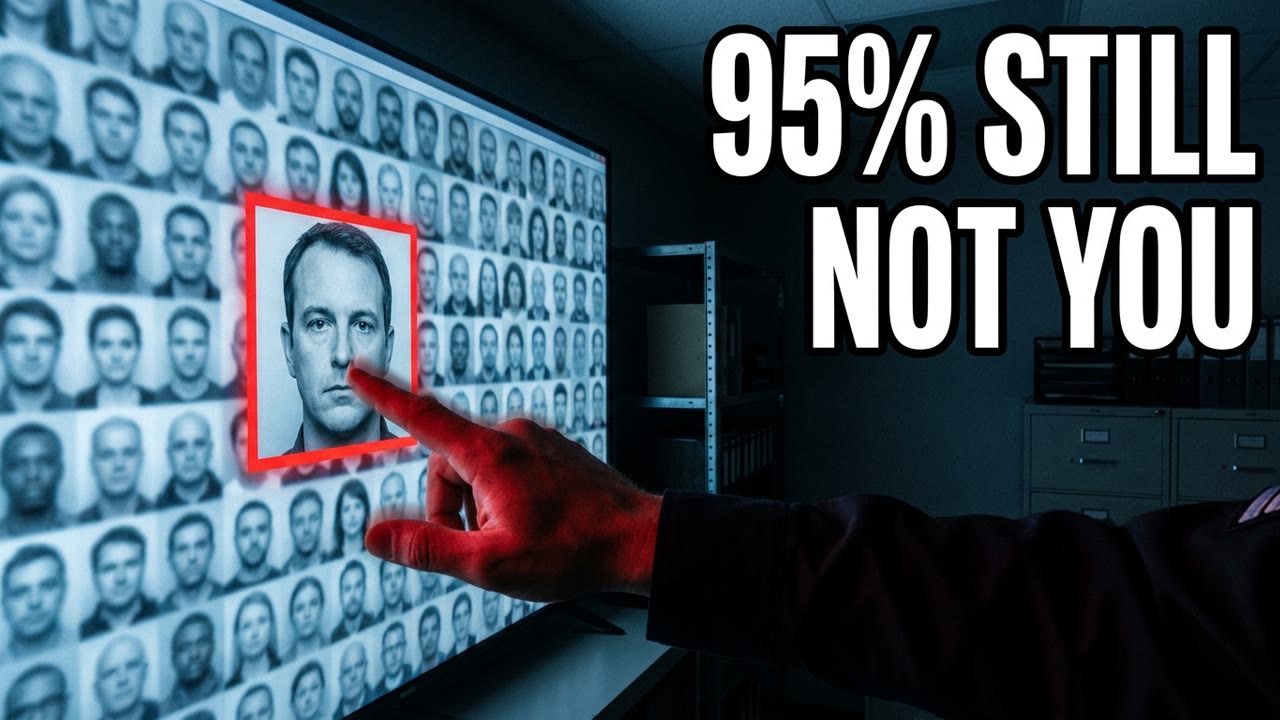
You could be arrested for a stranger's crime. Police search a pile of faces with one photo. Your face could be in that pile. The ACLU says innocent people were already arrested this way. Your phone asks a far smaller question. If a computer picked you, who would check? By the end, you'll know what a match can't prove.
Say one face check is wrong once in 1 million. Across 10 million faces, that's about 10 wrong people.
Biometric authentication means your body proves it's you. Your phone turns your face into numbers. Then your phone checks you against one saved face.
What if the real thief isn't in the pile? Police still search millions of faces.
You never asked to be in that search. Your phone tests a claim you make. A police search makes the claim for you.
Follow one police face search from start to finish.
A search starts with grainy store video. Nobody can film that moment again. NIST, the government's test lab, found blur means more mistakes.
Police get back a ranked list of lookalikes. The ACLU found some officers calling unchecked results a 100% match.
The Washington Post read records police shared. Many agencies arrested people on an AI match. Nothing else tied those people to the crime.
Police rarely say they ran a face search. The person picked may never find out.
If this helps, a like and a subscribe help us keep it coming.
You'd think a careful setting would protect you. But a person picks the setting, and you never see it.
NIST tested one strict setting. About one pick in 33,000 was wrong. But about one real match in 800 got missed. Lower one mistake, and the other rises.
One popular computer sign-in is set differently. Its makers accept turning away up to about 1 in 10 owners. Police rarely see the setting behind a score.
Most people hear a 95% match as 95% sure. The score only means two pictures look close.
In a big search, every face gets a score. Your face can score high next to a stranger's.
The ACLU tracks these arrests online. Some officers treat a face match as the final answer. Innocent people got cuffed on that trust.
Your phone only asks: is this you? A police search asks: who looks closest? And somebody always comes out closest, thief or not. In November 2022, Georgia man Randal Reid was arrested as that somebody.
Store video of a Louisiana theft went into a face search. Reid spent 6 days in a Georgia jail. He had never even been to Louisiana.
If you're accused, ask if a computer picked you. Have your lawyer ask for the search records. Ask how blurry the photo was.
On your own phone, pair your face with a passcode. A thief then needs your face and your code.
A match should only start the work. Then someone has to check that lead. Police need proof no computer made. Without that proof, a match proves nothing.
The CaraComp write-up goes deeper on match versus proof. Cara Candelario wrote it on October 15, 2026.
The Federation of American Scientists weighed in. Errors run higher for women and Black people. Black women are hit the hardest.
Ask your city council if police use face search. Ask if state law makes police admit a face search. Tell your children a lookalike isn't a criminal.
The ACLU counts at least 14 wrongful arrests like this. Most of the people were Black. Nobody knows how many never surfaced.
Police can still pick your face from a pile. Now you know a lookalike is not proof.
Tonight, type one question into your phone's notes. Write: did a computer pick me? Then show that note to everyone at home.
No federal law makes police tell you a computer picked you. Learn to ask that question tonight, before you need it.
Every day we take one story like this and make it simple. Subscribe and tap the bell. Tomorrow's is free too. See you in today's briefing. If this helps, a like and a subscribe help us keep it coming.