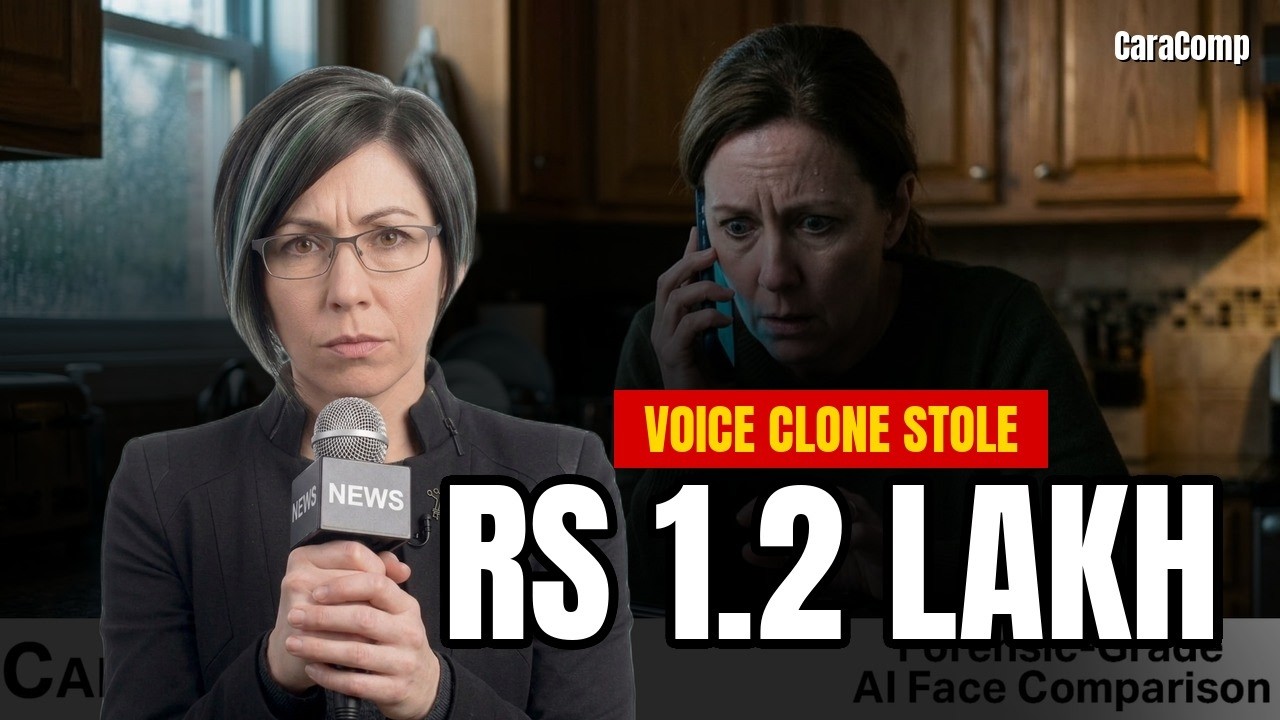
She sent one point two lakh rupees to a copied voice.

A florist in Kolkata, India, got two calls one November evening. The caller sounded just like someone she'd known for years. There was an emergency.
She sent one point two lakh rupees to a copied voice.
According to News Mobile, early findings point to A.I. voice cloning. Software likely learned the real person's voice, down to tone and pace. These tools can copy a voice from just a few seconds of sound. A voicemail can be enough. That puts anyone who's ever posted a video within reach. For fraud teams, a voice can't count as an I.D. check.
Hang up and call back on a number you already saved. The right voice proves nothing.
Her friend's voice was copied without asking. Faces get copied too.
A woman scrolls late at night. An ad shows a face she knows.
The person in the picture never agreed to be there.
According to Yahoo News, researchers at Copyleaks found nearly fifty apps that make sexual deepfakes. They turn an ordinary photo into a fake nude. Reports said the apps were mainly pushed through TikTok ads. TikTok's response? It says it couldn't find those ads running. It says the examples looked like regular posts and a profile page. Ad or post, the harm to the person in the picture is the same.
Not finding a fake isn't proof it was never there. Report it. Don't share it, even to warn friends.
Those apps fake a real face. A store camera misread one.
A couple went into a Budgens shop in the U.K. The store's camera said the wife had stolen 'loads of meat.' Both said they hadn't been in for months.
A camera's guess got a shopper marched to the door.
Facial recognition in stores compares your face to a list of flagged faces. Alike enough? It sends an alert. According to N.B.C. News, U.S. regulators found Rite Aid ran face scans in secret for nearly a decade. Staff acting on false alerts followed shoppers, searched them and called police. Followed. Searched. Over a guess.
If a store stops you, ask what the claim is based on. A match is a question, not an answer.
A voice, a photo, a face. In all three stories, people trusted something because it looked or sounded right. The florist trusted a voice. A busy feed felt safe. A store trusted its screen. The fix is the same every time, check before you act.
Every source, all three articles, and today's podcast deep-dives are in the description. Thanks for watching CaraComp. See you tomorrow.